
Hosting a long dinner party or enjoying an extended weekend lunch with family is one of life’s simple pleasures, but the experience can quickly be cut short by uncomfortable seating. While standard armless chairs are common, choosing a dining chair with armrests can dramatically improve your comfort during long meals. Armrests provide essential upper body support, allowing you to relax your shoulders and maintain a natural posture throughout hours of conversation.
However, finding the right armrest dining chair in Singapore requires balancing ergonomics, material choices, and spatial constraints. Because Singaporean homes often feature compact dining areas, you must also ensure these wider chairs fit seamlessly around your table. By understanding what makes an armrest comfortable and knowing how to measure your space, you can select chairs that turn your dining room into a welcoming hub for extended gatherings.
Understanding Armrest Ergonomics for Long Meals
To understand why armrests are so beneficial during long meals, it helps to look at how we sit. When you sit in an armless chair for an extended period, your shoulders and upper back muscles must work constantly to support the weight of your arms. Over time, this continuous muscle activation leads to fatigue, causing you to slouch forward or lean heavily on the dining table. This poor posture places extra strain on your lower back and neck, making you feel restless and eager to leave the table.
Products mentioned in this guide
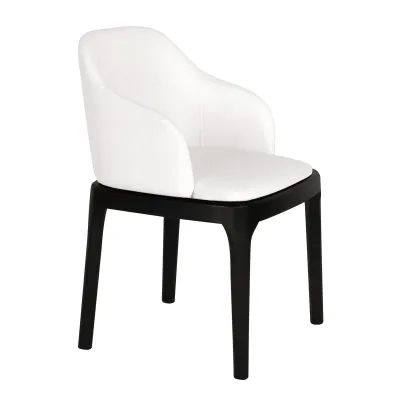
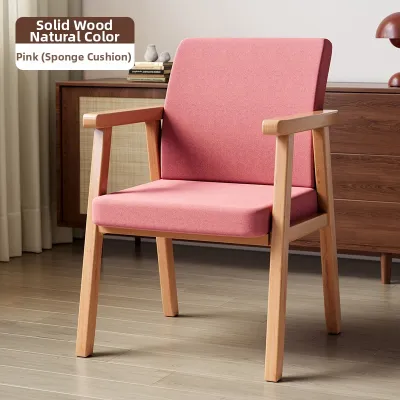
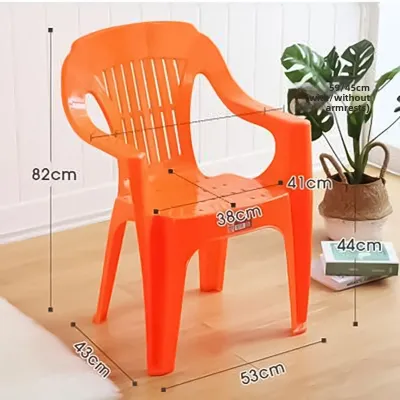
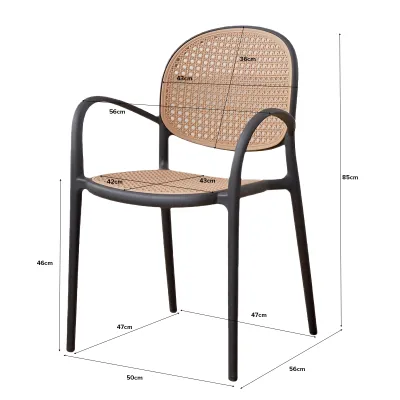
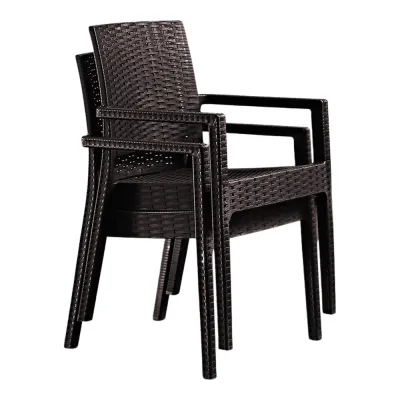
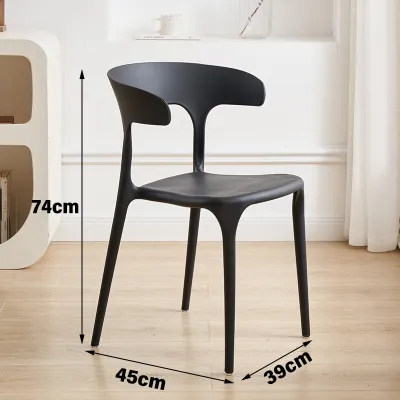
Prices are valid at publication and may change. Please refer to the product page for the latest price.
A well-designed armrest acts as a relief valve for your upper body. By supporting the weight of your forearms, armrests reduce the load on your trapezius muscles and cervical spine. This simple support allows your shoulders to drop into a relaxed, natural position, which in turn helps keep your spine aligned. When your body is properly supported, you can sit comfortably for hours without the constant urge to shift or stand up.
Beyond physical support, armrests also facilitate natural movement and social interaction. During a long meal, you do not remain static; you lean forward to eat, turn sideways to speak to a neighbor, and lean back to relax between courses. Armrests provide stable pivot points that help you shift your weight smoothly. They also define a comfortable personal space, giving you a dedicated area to rest your arms without encroaching on the person sitting next to you.
What to Look for in a Comfortable Dining Chair Armrest
When evaluating different dining chairs, the armrests should be assessed with a critical eye. Not all armrests are created equal, and a poorly designed armrest can cause more discomfort than no armrest at all. To find a chair that truly supports long-duration sitting, focus on several key design elements.

- Height and Profile: The height of the armrest is the most critical factor for shoulder comfort. When you sit back in the chair, your elbows should rest gently on the armrests at roughly a 90-degree angle, without your shoulders being pushed upward or pulling downward. If the armrests are too high, your shoulders will shrug, leading to neck tension. If they are too low, you will have to lean to one side to use them, misaligning your spine.
- Surface and Padding: Consider the tactile experience of the armrest. Upholstered armrests with high-density foam padding offer the softest support, preventing pressure points on your elbows. However, in Singapore's warm and humid climate, heavily padded fabric can sometimes feel warm. If you prefer solid wood or metal armrests, look for models with rounded, gently curved edges rather than sharp, angular profiles. The wood should feel smooth and cool to the touch, with a subtle contour that matches the natural curve of your forearm.
- Width and Shape: The distance between the two armrests determines how spacious the chair feels. The interior seating width should be generous enough to accommodate different body types comfortably, typically measuring at least 48 to 52 centimeters. Armrests that flare slightly outward toward the front offer a more open, inviting feel and make it easier to sit down and stand up without feeling wedged into the chair.
- Structural Integrity: Because people naturally lean on armrests when standing up or shifting weight, the armrests must be exceptionally stable. When testing a chair, apply moderate downward pressure on the front and sides of the armrests. There should be absolutely no wobble, flexing, or creaking. Look for chairs with integrated frames, where the armrest is a continuous extension of the leg or backrest, as these designs offer superior long-term durability compared to armrests that are simply bolted on as an afterthought.
Checking Table Clearance and Spatial Fit
Before purchasing armrest dining chairs, you must verify that they will physically fit your existing dining table and room layout. Because armrest chairs are wider and taller than standard dining chairs, spatial planning is essential to avoid a cramped dining area.
- Vertical Clearance: The most common mistake when buying armrest chairs is choosing a model that cannot slide under the dining table. Measure the distance from the floor to the underside of your table's apron (the structural frame directly beneath the tabletop). Next, measure from the floor to the highest point of the chair's armrests. To allow the chair to slide fully under the table when not in use, you need a clearance gap of at least 2 to 5 centimeters. If the armrests collide with the table apron, the chairs will stick out, blocking valuable walkway space in your dining room.
- Horizontal Spacing: Armrest chairs typically have a wider footprint than armless models, often measuring between 55 and 65 centimeters in total width. To ensure your guests have enough elbow room, allocate at least 70 to 75 centimeters of table length per chair. For example, a standard 1.6-meter dining table can comfortably accommodate two armrest chairs along each long side, whereas trying to squeeze three chairs along that same side will result in bumped elbows and a cramped dining experience.
- Floor and Rug Compatibility: Because armrest chairs are heavier and bulkier, they require more effort to pull out and push in. Ensure the chair legs are fitted with high-quality glides that suit your flooring. For hard floors like vinyl, engineered wood, or marble, thick felt pads are essential to prevent scratching. If you have a dining rug, it must be large enough so that when a guest pulls the chair back to stand up, the rear legs of the chair remain on the rug. If the rug is too small, the chair legs will catch on the edge of the carpet, making movement frustrating and potentially damaging the rug.
How to Research Brands and Test Chairs Before Buying
Finding the perfect armrest dining chair requires a systematic approach to researching brands and conducting thorough in-person testing. Since comfort is highly subjective, relying solely on online photos can lead to disappointing purchases.
Start by identifying furniture brands in Singapore that emphasize ergonomic design and high-quality craftsmanship. Look for retailers that provide comprehensive product specifications on their websites, including detailed measurements of seat height, armrest height, and total width. Brands that specialize in solid wood furniture, Scandinavian design, or custom upholstery are excellent starting points, as they often prioritize structural integrity and user comfort over mass-production aesthetics.
Once you have shortlisted a few promising models, visit the physical showrooms to test them. Do not simply sit in the chair for a few seconds and stand back up. To truly evaluate a chair for long meals, perform a realistic testing routine:
- Sit for at least 10 to 15 minutes: Bring a book, browse your phone, or chat with a companion while sitting in the chair to see how your body feels after the initial novelty wears off.
- Mimic dining movements: Lean forward as if eating, turn your torso from side to side, and rest your elbows on the armrests to check for any pinching or pressure points.
- Test with a showroom table: If possible, pull the chair up to a dining table in the showroom that matches the height of your table at home (typically 75 centimeters) to check the vertical clearance and arm position.
Finally, review the manufacturer’s warranty and material specifications. For high-use dining chairs, look for commercial-grade fabric options with a high Martindale rub count (ideally 20,000 rubs or higher) to ensure the upholstery on the armrests does not wear thin from constant contact with skin oils and clothing. Check the warranty terms to ensure the frame and joints are covered against structural defects for at least two to five years, giving you peace of mind that your investment will last.
Frequently Asked Questions (FAQ)
Can I add aftermarket armrest pads to existing dining chairs?
Yes, you can purchase aftermarket armrest pads, which typically attach using elastic straps or hook-and-loop fasteners. While these pads can add immediate cushioning to hard wooden or metal armrests, they are often designed for office chairs and may look out of place in a formal dining room. Additionally, slip-on pads can slide around during use. For a more seamless and permanent solution, consider consulting a local Singapore furniture upholsterer to custom-craft padded fabric or leather sleeves that match your chairs’ existing design.
What is the ideal height difference between a dining table and chair armrests?
To ensure comfortable arm placement and easy storage, the ideal vertical gap between the top of the chair armrest and the underside of the table apron is between 2 and 5 centimeters. Most standard dining tables in Singapore have a height of 75 centimeters, with the apron sitting around 68 to 70 centimeters from the floor. Therefore, look for dining chairs with an armrest height of 62 to 66 centimeters. Always measure your specific table before buying, as table designs and apron thicknesses vary widely.
Are upholstered armrests harder to maintain than wooden ones?
Upholstered armrests do require more careful maintenance than wooden ones because they are in constant contact with hands, which can transfer skin oils, lotion, and food residue. While wooden armrests can be easily wiped clean with a damp cloth, fabric armrests can absorb spills and develop dark patches over time. To minimize maintenance, choose upholstered chairs featuring performance fabrics treated with stain-resistant coatings, or opt for top-grain leather or high-quality synthetic leather, which can be wiped clean easily and resist moisture absorption.
Community discussion
Share your experience or ask a question. Comments are reviewed before publication.