
Replacing worn-out chair rollers is one of the quickest ways to restore smooth movement to your home office setup and protect your flooring from deep, unsightly scratches. Over time, office chair wheels accumulate dust, hair, and grit, leading to stiff rotation or complete jams that can ruin parquet, vinyl, or tiled floors. Fortunately, you do not need to purchase an entirely new chair to resolve this issue.
By learning how to identify your specific caster type, gathering a few basic household tools, and applying controlled physical leverage, you can swap out damaged rollers in under thirty minutes. This guide provides a clear, step-by-step method to safely extract old chair rollers and install new ones without cracking or warping the chair’s star base.
Identify Your Chair Roller Type and Stem Size
Before purchasing replacement parts from an online marketplace or a local hardware store, you must determine the exact mounting style and dimensions of your current chair rollers. Not all office chair wheels are interchangeable, and forcing an incompatible stem into your chair base can permanently split the socket.
Products mentioned in this guide
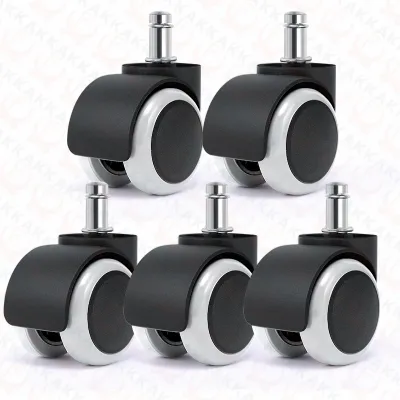

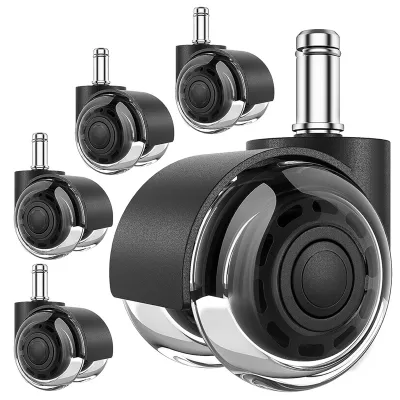
![[SG Ready Stock]Office Chair Caster Wheels 3 Inch Universal Mute Whee 5PCS/Set Replacement 60KG Swivel Rubber Soft Safe Rol](https://img.lazcdn.com/g/p/3309f2fd04dad1bc1715850d1e17710a.jpg_400x400q80.jpg_.webp)
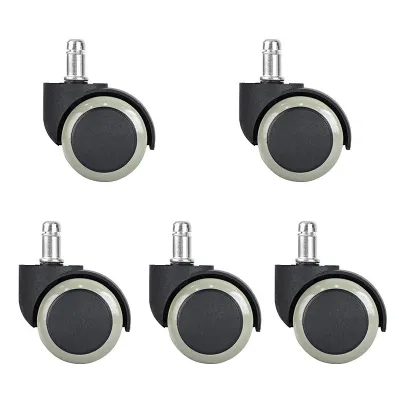
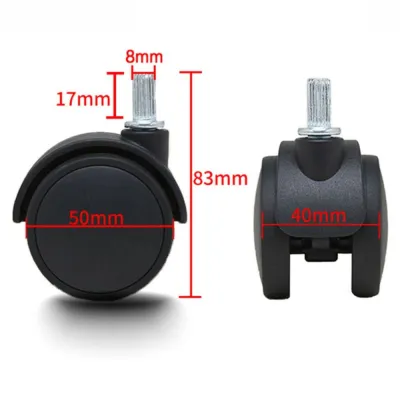

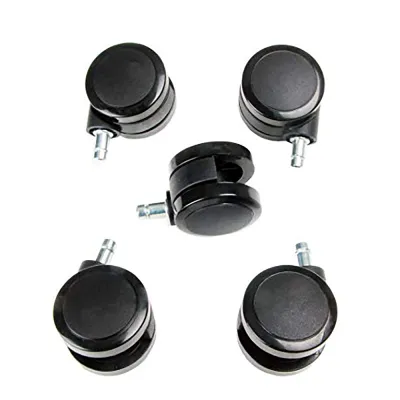
Prices are valid at publication and may change. Please refer to the product page for the latest price.
Most modern office chairs utilize one of three primary mounting designs:
- Grip Ring Stems: These feature a small metal split-ring near the top of the stem. The ring compresses as it enters the socket and expands inside to lock the caster in place. This is the most common design for home and office chairs.
- Threaded Stems: These stems act like bolts, screwing directly into a threaded metal socket built into the chair base.
- Plate Mounts: Commonly found on heavy wooden chairs or utility stools, these casters are secured to the base using a flat metal plate and multiple small screws.
To find your correct size, you must extract at least one old roller to measure its stem. Use a ruler or a pair of digital calipers to measure the stem’s diameter and length. For grip ring stems, the standard size in many households is 11mm in diameter by 22mm in length, though some specific furniture brands use a slightly narrower 10mm stem. Even a single millimeter of difference will prevent a replacement from fitting or cause it to wobble loosely.
Additionally, take note of your chair’s base material. Molded nylon or hard plastic bases are flexible but can crack under sudden, uneven prying forces. Metal bases made of steel or aluminum are highly rigid but can suffer from stripped threads or bent sockets if handled roughly. Wooden bases are the most delicate, requiring careful handling to avoid splitting the grain around the mounting hole.
Gather the Right Tools for Safe Removal
Using the wrong tools is the leading cause of broken chair bases during a caster replacement. You do not need heavy-duty industrial equipment, but having the correct hand tools nearby will make the extraction process smooth and damage-free.

Prepare the following items before you begin:
- Flathead Screwdriver: A sturdy screwdriver with a wide, flat tip is ideal for prying stubborn grip ring stems out of their sockets.
- Needle-Nose Pliers: Useful for gripping exposed metal stems if the plastic wheel casing breaks away during removal.
- Rubber Mallet: A soft-faced mallet allows you to apply controlled, blunt force without denting metal or shattering plastic components.
- Penetrating Lubricant: A mild spray lubricant helps loosen rusted, corroded, or tightly wedged metal stems.
- Protective Padding: A thick microfiber cloth, a piece of heavy cardboard, or an old towel will protect the chair base from tool scratches.
Avoid using heavy metal claw hammers or long crowbars directly against the chair base. These tools apply massive, concentrated leverage that can easily snap plastic star legs or permanently deform metal sockets, rendering the entire chair useless.
Step-by-Step Guide to Removing Old Chair Rollers
Extracting old casters requires patience and a systematic approach. By setting up a stable workspace and using controlled movements, you can remove even the most stubborn rollers without putting unnecessary stress on the chair frame.
1. Prepare Your Workspace
Clear a flat, open area on your floor. Lay down a soft blanket or a large piece of cardboard to protect both your floor and the chair’s backrest from scratches. Flip the office chair completely upside down so the star base points toward the ceiling. Situate yourself comfortably next to the base so you can hold it steady with one hand while working.
2. Extracting Grip Ring Stems
To remove a standard grip ring caster, grip the wheel assembly firmly with both hands. Pull straight upward away from the base while applying a slight twisting motion. In many cases, the caster will pop out of the socket with moderate hand pressure.
If the caster refuses to budge, wrap your flathead screwdriver tip in a thin microfiber cloth to protect the base. Slide the flat tip into the small gap between the top of the caster housing and the chair base. Gently pry upward, rotating the chair base slightly to apply leverage from different sides. This multi-directional pressure helps compress the internal metal grip ring, allowing the stem to slide out smoothly.
3. Removing Threaded Stems
Threaded stems cannot be pulled straight out. Look closely at the junction where the metal stem meets the chair base. If there is a flat, hexagonal nut integrated into the stem, fit an open-ended wrench or a pair of pliers onto it and turn counterclockwise to unscrew the caster.
In humid climates, metal stems can rust inside the socket over time, locking the threads in place. If the stem is seized, spray a small amount of penetrating lubricant directly into the joint. Let it sit for ten to fifteen minutes to dissolve the corrosion before attempting to unscrew it again.
4. Know When to Stop
If you apply significant force and the plastic base begins to flex, turn white from stress, or emit cracking sounds, stop immediately. Do not continue prying. Reassess the angle of your tool, apply a small amount of lubricant to reduce friction inside the socket, and try twisting the caster back and forth to break the internal seal before applying upward pressure again.
How to Install the New Chair Rollers Correctly
Once the old casters are out, installing the new ones is a satisfying process. Taking a few moments to clean the sockets and align the new parts correctly ensures your chair will roll quietly and remain perfectly level.
1. Clean the Sockets
Before inserting the new rollers, look inside the empty sockets. You will likely find a buildup of dust, hair, and old grease. Use a dry cotton swab or a rolled-up paper towel to clean out this debris. Removing this grime ensures the new stem can slide all the way to the bottom of the socket and seat securely.
2. Insert Grip Ring Stems
Align the stem of the new caster directly over the center of the socket. Ensure the stem is perfectly straight and not tilting to one side. Push down firmly with the palm of your hand until you feel the grip ring compress and slide into the hole. You will typically hear a distinct click when the caster seats fully.
If hand pressure is not enough to seat the stem, place a folded towel over the wheels of the caster to cushion the impact. Use a rubber mallet to tap the center of the wheel assembly gently. Avoid striking the caster at an angle, as this can bend the metal stem or crack the wheel housing.
3. Secure Threaded Stems
For threaded replacements, align the screw thread with the socket opening. Turn the caster clockwise by hand to start the threads. Always begin hand-tightening to ensure the stem is not cross-threaded, which can permanently ruin the socket threads. Once the stem is threaded in securely, use a wrench to snug it up against the base. Tighten it until it is firm, but do not over-torque, as this can strip the socket.
4. Perform a Visual Alignment Check
Once all five casters are installed, inspect each connection point. The shoulder of each caster stem must sit completely flush against the underside of the chair base. If you spot any visible gaps, tilting, or uneven heights, remove that caster and check for debris or a bent stem before reinserting it.
Test and Maintain Your Replaced Chair Rollers
With the new rollers installed, you can return the chair to its upright position. Before sitting down fully, perform a quick safety and performance check to ensure everything is locked in place.
Place the chair on a flat, hard surface. Sit down slowly, letting your full body weight gradually press the stems into their final, secure positions within the sockets. Roll slowly in a small circle, then in straight lines. The movement should feel smooth, silent, and effortless, without any pulling to one side.
Listen closely for any clicking, squeaking, or grinding noises. A clicking sound often indicates that one of the grip rings has not fully expanded inside its socket, while a wobble suggests an unevenly seated stem. If you notice any height differences, double-check that all stems are pushed completely flush into the base.
To extend the lifespan of your new rollers, establish a simple maintenance routine. Every few months, flip the chair over to inspect the axles. Use a pair of tweezers to pull out any trapped hair, threads, or carpet fibers before they wrap tightly around the wheel bearings. Keeping the axles clear prevents friction buildup, ensuring your chair glides smoothly for years to come.
Frequently Asked Questions (FAQ)
Can I replace chair rollers on any type of office chair?
Yes, the vast majority of office chairs are designed with replaceable casters. However, you must match the exact stem type and measurements of your original parts. While standard office chairs use universal grip ring stems, specialized ergonomic chairs, heavy-duty gaming chairs, or antique wooden furniture may require proprietary sizes, threaded stems, or plate-mounted designs. Always measure your original stem before purchasing replacements.
What should I do if the old caster stem breaks off inside the base?
If the plastic wheel breaks away and leaves the metal stem stuck inside the socket, do not panic. Use a pair of needle-nose pliers or locking pliers to grip the exposed portion of the metal stem firmly. Twist the stem back and forth while pulling outward to release the grip ring. If the stem is broken flush with the socket and cannot be gripped, avoid drilling into it, as this will ruin the socket walls. In this scenario, it is safest to replace the star base entirely or consult a professional furniture repair service.
Community discussion
Share your experience or ask a question. Comments are reviewed before publication.