
Sitting at a desk for long hours often leads to lower back discomfort, tight hips, and dangling feet, especially when your chair must be raised to match a fixed desk height. To position your desk footrest for proper ergonomics, you must adjust its height so your knees and hips rest at a slightly open angle of roughly 90 to 100 degrees, tilt the platform to support your ankles in a natural resting position, and place it directly under your feet so your thighs remain fully supported by the seat cushion without pressure behind the knees. When your feet are left dangling or are forced into awkward angles, your entire posture suffers, leading to fatigue and strain that can easily be prevented with a few simple adjustments.
Many home office setups rely on standard furniture dimensions that do not accommodate every body type. A fixed-height desk often forces shorter individuals to raise their chairs to a level where their feet can no longer reach the floor comfortably. Conversely, taller individuals might find themselves slouching to match a low keyboard height. In both scenarios, a footrest acts as an adjustable floor, bridging the gap between your body’s natural proportions and the rigid constraints of your workspace. By understanding how to position this simple tool, you can transform your daily sitting experience and protect your physical well-being.
Why does footrest placement matter for your posture?
Proper footrest placement is essential because it establishes a stable base of support for your lower body, which directly influences the alignment of your pelvis and spine. When your feet are fully supported, the weight of your legs is distributed evenly, reducing the mechanical strain on your lower back and thighs. Without this support, your body naturally attempts to compensate, leading to poor posture and discomfort.
Products mentioned in this guide
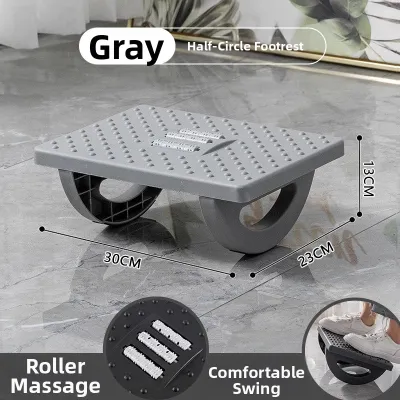
115 Lazada user ratings
It’s a pretty good deal overall, just had to tie it down since it came a bit loose, but the value for the price is still quite nice.
It feels really smooth to the touch, doesn't irritate me, and I've even kicked the habit of crossing my legs. Hehe 😁
Getting ready to buy another one, it's been great for the past two days, especially friendly for shorter people.
It works really well. It helps me stop crossing my legs at work while also providing a nice foot massage.
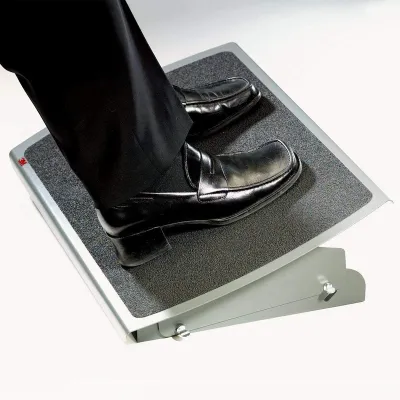

2 Lazada user ratings
Definitely a must have for any chairs as table height may not always be optimal. Great to use too when lay back flat. Comfort:Great comfort …Read full reviewShow less
Definitely a must have for any chairs as table height may not always be optimal. Great to use too when lay back flat. Comfort:Great comfort and pairs perfect with the omni pro Adjustability:Available to different height of users


Prices are valid at publication and may change. Please refer to the product page for the latest price.
When your feet dangle or rest only on your toes, your pelvis tends to tilt backward. This posterior pelvic tilt flattens the natural lumbar curve of your lower spine, placing excessive pressure on your spinal discs and forcing the surrounding muscles to overwork just to keep you upright. Over a long workday, this constant muscular tension manifests as a dull, persistent ache in your lower back.
Furthermore, a footrest is crucial when your desk is too high for your natural leg length. Raising your chair to reach the keyboard comfortably often leaves your thighs pressing hard against the front edge of the seat pan. This pressure can compress the blood vessels and nerves running down the back of your legs, leading to poor circulation and discomfort. A properly placed footrest lifts your feet, relieves this pressure point, and restores healthy blood flow.
You can easily observe the signs of poor lower body support in your daily routine. If you find yourself constantly shifting your weight, crossing your legs, or tucking your feet under your chair, your body is signaling that it lacks a stable foundation. Recognizing these cues is the first step toward creating an ergonomic setup that supports your health and productivity.
How do you determine the correct height for your footrest?
To find the correct height for your footrest, you must first adjust your chair so your elbows align comfortably with your desk surface, then fill the remaining gap between your feet and the floor with the footrest. The height is correct when your feet rest flat on the platform, your thighs are parallel to the floor, and your knees are level with or slightly lower than your hips. This sequence ensures that both your upper and lower body are supported in their optimal ergonomic positions.

When setting up your workspace, always prioritize your upper body alignment first. Raise or lower your office chair so that your shoulders are relaxed, your elbows are bent at approximately a 90-degree angle, and your forearms rest comfortably on the desk or keyboard tray. Once your upper body is positioned correctly, look down at your feet. If they do not rest flat and firmly on the floor, or if you feel pressure on the back of your thighs, you need a footrest to bridge the remaining distance.
Next, adjust the height of your footrest to achieve a comfortable, slightly open angle at your knees and hips. Rather than forcing a rigid 90-degree angle, aim for a range between 90 and 100 degrees, which allows for better blood circulation and reduces hip flexor tightness. Your thighs should rest lightly on the seat cushion without being lifted off it entirely, and there should be no upward pressure pushing your knees toward your chest.
To verify the height, perform a simple physical check. Slide your hand under your thigh near the front edge of your chair. You should feel light contact between your thigh and the seat cushion. If your thigh is lifted completely off the seat, your footrest is too high, which concentrates your body weight on your sit bones. If you feel heavy pressure on the underside of your thigh, your footrest is too low, meaning your legs are still dangling and lack adequate support.
What is the ideal angle and foot placement on the footrest?
The ideal angle for a footrest matches the natural resting angle of your ankles, typically between 10 and 25 degrees of tilt, with your entire foot placed flat on the surface. This configuration distributes your body weight evenly across your heels and the balls of your feet while preventing your ankles from locking in an awkward position. A slight incline encourages a relaxed posture and promotes active movement throughout the day.
Placing your entire foot flat on the footrest is critical for even weight distribution. Avoid resting only your toes or your heels on the platform, as this forces the muscles in your calves and shins to remain contracted, leading to cramping and fatigue. The footrest surface should be wide enough to accommodate your natural stance, allowing you to keep your feet roughly hip-width apart for optimal stability.
An angled platform is highly beneficial because it mimics the natural angle your feet take when you extend your legs slightly forward. A completely flat footrest forces your ankles into a strict 90-degree angle, which can feel restrictive over long periods. A gentle tilt of 15 to 20 degrees allows your ankles to rest in a neutral position, reducing tension in the Achilles tendon and encouraging subtle rocking motions that stimulate blood flow.
While positioning your footrest, ensure that its front edge or the desk frame does not press into your calves. There should always be a clear gap of about two to three fingers between the back of your knees and the front edge of your chair seat. This gap prevents compression of the popliteal fossa, the area behind the knee containing vital blood vessels and nerves, ensuring that your circulation remains unrestricted.
How can you tell if your footrest is positioned incorrectly?
You can tell your footrest is positioned incorrectly if you experience physical symptoms like numbness, tingling, or muscle fatigue in your legs, or if you find yourself constantly shifting your posture to find comfort. These signs indicate that the footrest is either at the wrong height, placed at an extreme angle, or sitting too far from your natural reach. Paying attention to these subtle warning signs allows you to make necessary adjustments before chronic pain develops.
Physical signals in your lower extremities are clear indicators of a poor setup. If you feel a pins-and-needles sensation, cold toes, or a dull ache in your calves after sitting for less than an hour, your footrest may be restricting your circulation. This often happens when the footrest is too low, causing the chair seat to press into your thighs, or when it is too high, forcing your knees into an excessively sharp bend.
Postural cues are also highly telling. If you find yourself sliding forward in your chair, slouching, or perching on the very edge of the seat, your body is likely trying to bring your feet closer to the floor because the footrest is too low or too far away. Conversely, if you feel like you are leaning backward excessively or struggling to reach your keyboard, your footrest might be too high, pushing your entire body out of alignment.
Observe your spontaneous leg movements during the day. If you frequently cross your legs at the knees or ankles, tuck your feet under your chair frame, or wrap your ankles around the chair’s base, your footrest is not providing the stable foundation your body craves. These habits are subconscious attempts to find support and relieve pressure, indicating that your footrest needs to be repositioned or adjusted.
What common mistakes should you avoid when using a desk footrest?
The most common mistakes when using a desk footrest include pushing the platform too far under the desk, which overextends your legs, and using a static footrest that cannot be adjusted when you change your footwear or chair height. Avoiding these errors ensures that your lower body remains in a neutral, supported posture throughout the workday. Recognizing these pitfalls helps you maintain the ergonomic benefits of your setup over time.
One frequent mistake is relying on a footrest to fix a chair that is fundamentally the wrong size. If your office chair has a seat pan that is too deep for your leg length, a footrest will not prevent the seat edge from pressing into the back of your knees. In this case, you must first address the chair’s fit—perhaps by adding a lumbar support cushion to push your torso forward—before adjusting your footrest.
Another common error is pushing the footrest too far forward under the desk. This forces you to extend your legs fully, locking your knees and pulling your lower back away from the chair’s backrest. To avoid this, position the footrest directly under your feet where they naturally fall when your knees are bent at a comfortable 90-to-100-degree angle.
Additionally, many users treat their footrest as a static, “set-and-forget” object. Your ergonomic needs change depending on the shoes you wear, the tasks you perform, and even your fatigue levels throughout the day. If you switch from thick-soled outdoor shoes to flat indoor slippers, or if you adjust your chair height to work on a different task, you must take a moment to readjust your footrest height and angle accordingly.
When should you adjust or replace your current footrest?
You should adjust or replace your footrest when you change your desk setup, switch to shoes with a different heel height, or notice that your current model lacks the adjustability needed to keep your knees and hips aligned. Upgrading is necessary if your existing footrest is too small to support your entire foot or slips easily across the floor during use. Regular evaluation ensures your workspace continues to support your physical health.
Take time to inspect your current footrest’s adjustability. If you have transitioned to a new desk or a different office chair, a fixed-height footrest may no longer bridge the gap effectively. If your footrest cannot be raised, lowered, or tilted to match your new seating position, it is time to replace it with a highly adjustable model that offers multiple height and angle settings.
Consider the surface area and texture of your footrest as well. A platform that is too narrow or short can restrict your movement, forcing you to keep your feet in a rigid, uncomfortable position. If your feet slip off the edges, or if the footrest slides across the floor every time you shift your weight, look for an upgrade with a spacious, textured surface and a non-slip rubber base to ensure stability.
Ultimately, your daily comfort is the best guide. If you have carefully adjusted your chair and desk but still experience lower back tension, leg fatigue, or poor circulation, your current footrest may not be meeting your ergonomic needs. Investing in a versatile, adjustable footrest that accommodates your natural movements will help you maintain a healthy, pain-free posture throughout your working hours.

Community discussion
Share your experience or ask a question. Comments are reviewed before publication.