
To find the right rack storage shelf, you must balance your physical room constraints with the dimensions of the items you plan to store. This process requires precise measurements of your floor area, vertical clearance, and access pathways, followed by matching these figures to standard shelf sizes.
In Singapore homes, where space in HDB bomb shelters, kitchen alcoves, and bedroom corners is highly optimized, even a few centimeters can determine whether a storage unit fits or blocks a doorway. Taking the time to measure systematically prevents the hassle of returns and ensures your home remains safe and easy to navigate.
Step 1: Measure Your Available Space Accurately
Start by preparing the physical space where you plan to install the shelving. Use a reliable metal measuring tape rather than a fabric tape or a smartphone app, as metal tapes remain rigid over long distances and provide more accurate readings.
Products mentioned in this guide
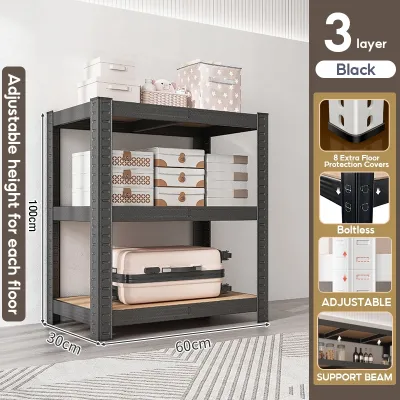
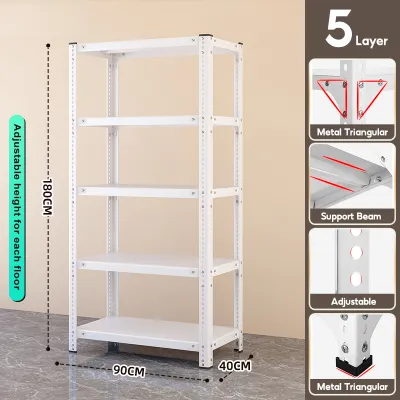
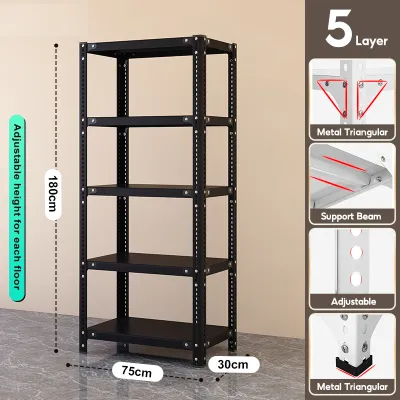
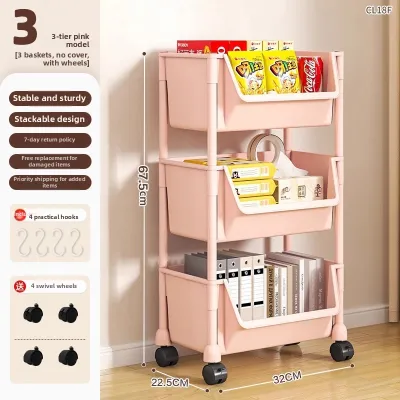
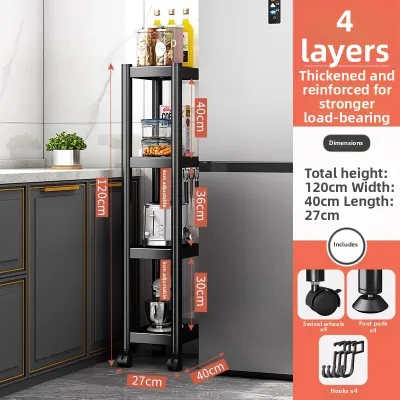

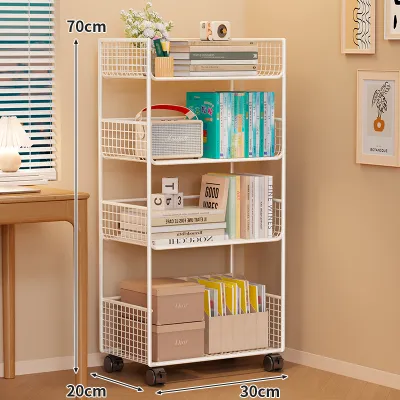
Prices are valid at publication and may change. Please refer to the product page for the latest price.
Measure the three primary dimensions: width, depth, and height of the exact spot where the shelf will stand. Do not assume your walls are perfectly straight; measure at the bottom, middle, and top of the wall to identify any slight variances.
Look closely for hidden obstacles that could obstruct the shelf. Skirting boards along the floor can reduce the actual width by a few centimeters, preventing a tight fit against the wall. Note the locations of power outlets, light switches, window sills, and wall-mounted pipes or electrical trunking.
Measure the height up to the lowest ceiling point. Keep an eye out for structural beams, air conditioning units, or light fixtures that hang down and could block a tall rack.
Check the access route from your building’s entrance to the final room. A shelf that fits your room is useless if it cannot get there. Measure the height and width of your entry doorways, narrow hallway turns, stairwells, and the lift cabin. If you are buying a pre-assembled unit, these transit dimensions are critical. For flat-packed modular shelves, ensure the box dimensions can clear these spaces.
Account for operational clearance around the shelf. Ensure there is enough space in front of the rack for you to stand, bend down, and retrieve items comfortably. If the shelf is near a door or wardrobe, verify that those doors can swing fully open without hitting the rack.
Step 2: Understand Standard Rack Storage Shelf Dimensions
Familiarize yourself with standard size tiers to narrow down your search. Most freestanding utility racks and boltless storage shelves come in predictable size increments, making it easier to plan your layout.

Widths typically range from narrow options around 60 cm to wide industrial-style units spanning 120 cm to 180 cm. Choosing the right width depends on whether you are filling a small bedroom corner or lining an entire wall in an HDB storeroom.
Depths generally fall into three main categories: shallow (30 cm to 40 cm), medium (45 cm to 60 cm), and deep (over 60 cm). Shallow shelves work well for books, pantry items, and small storage bins without eating up valuable floor space. Medium depths are highly versatile, accommodating standard plastic storage boxes. Deep shelves are typically reserved for large, bulky items, but they require a spacious room to avoid making the area feel cramped.
Heights vary widely, from low-profile units under 100 cm to tall vertical racks reaching 180 cm to 240 cm. Utilizing vertical space is an excellent way to maximize storage in compact homes, provided you can safely reach the top shelves.
Consider adjustable and modular configurations. Many modern rack storage shelves feature adjustable support beams, allowing you to change the height of individual tiers to match your items. Modular units can also be linked side-by-side or configured into L-shapes to fit snugly into corner layouts.
Step 3: Match Shelf Dimensions to Your Room Layout
Integrating a new shelf requires balancing storage capacity with room usability. Start by evaluating the traffic flow. A deep shelf placed in a high-traffic hallway or a narrow kitchen alcove can create a bottleneck, making daily movement frustrating.
Consider the visual weight of the furniture. A tall, dark metal rack can overwhelm a small bedroom, whereas a lower, open-frame shelf maintains a sense of openness.
Assess your load-bearing requirements. Different materials and joint designs support different weights. Heavy-duty metal boltless racks are ideal for heavy storage boxes, tools, or kitchen appliances, while lighter wooden or wire shelves are suitable for decorative items and linens. Always check the manufacturer’s specified load capacity per shelf tier rather than guessing.
Determine your anchoring needs. Tall, narrow shelves have a higher center of gravity and pose a tip-over risk, especially when loaded unevenly. If your shelf is over 150 cm tall, plan to anchor it securely to the wall. Check your wall type—such as concrete, drywall, or brick—to ensure you use the correct wall plugs and screws.
Step 4: Avoid Common Sizing and Installation Mistakes
One of the most frequent mistakes is ignoring “dead space” caused by architectural irregularities. Floors are rarely perfectly level, and walls are seldom perfectly plumb. A shelf that fits tightly on paper might jam during installation if the wall bows slightly outward or the floor slopes.
Avoid maxing out your space completely. Leaving a small buffer of 2 to 5 cm on either side of the shelf makes installation much easier and prevents the metal frame from scratching your walls. This breathing room also facilitates air circulation, which is essential for preventing mold and dust buildup in humid climates.
Never skip verifying the assembly instructions before purchasing. Some heavy-duty racks require rubber mallets, specific wrenches, or two people for safe assembly. Understanding these requirements beforehand ensures you have the necessary tools and help ready on delivery day.
Frequently Asked Questions (FAQ)
How much clearance should I leave behind a storage shelf?
It is generally recommended to leave a gap of at least 2 to 5 cm between the back of the shelf and the wall. This space accommodates skirting boards at the base and prevents the shelf frame from rubbing against the wall paint. Additionally, this gap promotes air circulation, which helps prevent moisture buildup and mold growth behind the unit. If you plan to run electrical cords or cables behind the shelf, check the manufacturer’s guidelines to ensure you leave sufficient clearance for plugs and wires without pinching them.
Can I use a deep rack storage shelf in a narrow hallway?
Using a deep shelf in a narrow hallway is generally not recommended as it can severely restrict movement and create safety hazards. For safe passage, hallways should maintain a clear walkway width of at least 90 cm. If your hallway is narrow, consider shallow shelving units with a depth of 30 cm or less, or opt for wall-mounted ledges that keep the floor clear. Always measure the remaining walkway space with the shelf in place to ensure you can walk through comfortably and carry items without bumping into the frame.
Community discussion
Share your experience or ask a question. Comments are reviewed before publication.