
Finding a replacement cover that fits your sofa or chair properly requires a systematic approach to measurement. A cover that is too small will strain at the seams and potentially tear, while an oversized cover will sag, bunch, and slide out of place every time you sit down. By taking precise physical dimensions of your furniture’s frame, cushions, and unique contours, you can confidently select a slipcover that looks tailored and stays secure.
To achieve a seamless fit, you must look beyond basic length and width. Furniture shapes vary widely, from clean-lined modern designs to traditional pieces with rolled arms and contoured backs. Understanding how to navigate these structural variations ensures your replacement cover accommodates every curve and angle of your existing furniture.
Tools You Need Before You Start Measuring
Before you begin pulling measurements, gathering the correct tools will prevent errors and save you from having to repeat the process. A flexible metal measuring tape is the most reliable tool for this task. Unlike cloth or plastic sewing tapes, which can stretch over time or bend too easily, a metal tape remains rigid over long spans while still allowing enough flexibility to wrap around curved armrests.
Products mentioned in this guide
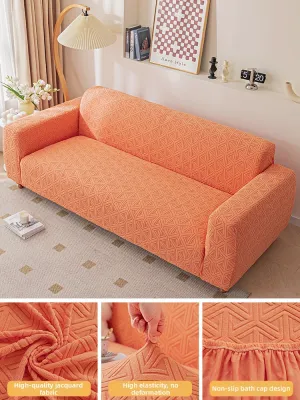
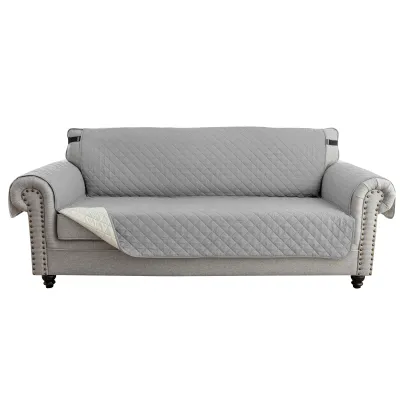
Prices are valid at publication and may change. Please refer to the product page for the latest price.
You will also need a reliable way to record your dimensions immediately. Keep a notepad and pen nearby, or open a dedicated note-taking application on your mobile device. Writing down each dimension as you measure it prevents memory errors, which are incredibly common when juggling multiple numbers for width, depth, and height.
For larger furniture pieces, such as three-seater sofas or multi-piece sectionals, having a helper is highly recommended. A second person can hold the hook end of the measuring tape securely against one outer edge while you pull the tape to the opposite side. This prevents the tape from slipping or sagging, ensuring your horizontal measurements are completely level and accurate.
How to Measure Standard Sofas and Armchairs
Measuring a standard sofa or armchair requires capturing three primary dimensions: total width, total depth, and total height. To measure the width, place your measuring tape at the outermost point of one armrest and extend it straight across to the outermost point of the opposite armrest. This is your “outside arm to outside arm” measurement, which represents the maximum width of the furniture frame.

Next, determine the total depth of the furniture. Measure from the frontmost edge of the seat frame or seat cushion (whichever extends furthest forward) straight back to the backmost point of the sofa’s rear frame. If your sofa has a significant slant or a curved backrest, you may also need to measure the diagonal depth. To do this, run the tape from the top outer corner of the backrest down to the bottom front corner of the seat frame.
To measure the total height, run the tape vertically from the floor up to the highest point of the backrest frame. If your sofa has loose back cushions that rise higher than the frame itself, measure to the top of the cushions as well, as some covers are designed to envelope the entire silhouette.
Special attention must be paid to T-cushions, which are seat cushions that extend outward in front of the armrests, forming a “T” shape. If your furniture features T-cushions, you must measure the width of the cushion at its widest front section, as well as the width of the narrower section that sits between the armrests. Standard rectangular covers will not fit T-cushions properly, so identifying this shape early is crucial for selecting a compatible cover style.
Measuring L-Shaped and Sectional Sofas
L-shaped and sectional sofas cannot be measured as a single, continuous piece of furniture. Instead, you must treat each individual section—such as the main sofa body, the corner unit, and the chaise lounge—as a separate component. Measuring each section individually allows you to determine whether you need a specialized multi-piece cover set or multiple individual covers.
Start by identifying the orientation of your sectional, particularly the chaise lounge. Stand directly in front of your sofa, facing it. If the chaise extends forward on your left-hand side, you have a left-facing sectional; if it extends on your right-hand side, it is a right-facing sectional. This distinction is critical, as many pre-made sectional covers are cut specifically for one orientation and cannot be reversed.
For the chaise section, measure the width of the chaise seat, the total length from the backrest to the front foot of the chaise, and the height of the backrest. For the main sofa section, measure the width from the inner corner where it meets the chaise to the outer armrest.
Additionally, examine the connecting joints or gaps between the sectional pieces. If your sectional clips together with metal brackets, measure the clearance around these joints. Some multi-piece covers require you to separate the sections to tuck the fabric into the gaps, so knowing how your pieces connect will help you choose between a single-piece elastic cover and a multi-cover system.
Measuring Dining Chairs and Stools
Dining chairs and bar stools require a different set of measurements due to their exposed legs and varied backrest designs. Begin by measuring the seat cushion itself. Measure the seat width at its widest point (usually the front edge) and the seat depth from the front edge to the base of the backrest.
Next, measure the backrest height and width. For the height, measure from the top of the seat cushion up to the very top of the backrest. For the width, measure across the widest part of the backrest. If your dining chairs have tapered backrests that narrow toward the top, or curved designs that wrap slightly around the sitter, take measurements at both the widest and narrowest points to ensure the cover fabric can accommodate the shape without bunching.
You must also measure the height from the top of the seat cushion down to the floor. This is especially important if you are purchasing a cover with a hanging skirt or ruffle, as you want to ensure the fabric does not drag on the floor or sit too high.
Finally, check the distance between the chair legs at both the front and sides. If your chosen cover features ties, straps, or an elastic skirt that wraps around the legs, knowing the leg spacing and thickness ensures these securing mechanisms can fasten properly without slipping or putting excessive tension on the fabric.
Common Measuring Mistakes to Avoid
One of the most frequent mistakes when measuring furniture is focusing solely on the seating area while ignoring the thickness of the armrests. A cover must wrap over the entire frame, so failing to include wide, rolled arms in your total width measurement will result in a cover that is far too small to pull down over the sides. Always measure from the absolute outermost edges of the frame.
Another common error is failing to keep the measuring tape level and taut. Letting the tape sag in the middle or pulling it too tightly around curves will skew your dimensions, leading to inaccurate readings. Keep the tape straight and parallel to the floor for horizontal measurements, and perpendicular to the floor for vertical measurements.
It is also easy to overlook the depth of the backrest frame itself. Many people measure the seat depth but forget that the backrest has its own thickness that the cover must wrap around. Ensure your depth measurement spans from the very front of the seat to the very back of the frame.
Lastly, never rely on memory or a single set of numbers. Always double-check your recorded measurements by measuring a second time. A simple transposition of numbers—such as writing down 180 centimeters instead of 108 centimeters—can lead to ordering the wrong size entirely.
Matching Your Measurements to Cover Sizing Charts
Once you have recorded all your dimensions, you must compare them to the manufacturer’s sizing charts. Most replacement covers are sold in size ranges rather than exact dimensions. For example, a three-seater sofa cover might be listed as fitting sofas from 180 to 230 centimeters in width.
If your furniture’s dimensions fall directly on the boundary between two sizes, it is generally best to choose the larger size. A cover that is slightly too large can be tucked into the crevices of the sofa and secured with foam rollers or tuck grips. A cover that is too small, however, will be impossible to install or will put so much tension on the seams that they may split over time.
When reviewing product specifications, pay close attention to the fabric stretch percentage and seam allowances. Covers made from high-spandex blends offer more flexibility and can conform to slightly unusual shapes, whereas woven cotton or polyester covers have very little stretch and require highly precise measurements. Check the product details to see if the manufacturer specifies the maximum stretch limits for each dimension.
Frequently Asked Questions (FAQ)
Should I measure the furniture with or without the cushions?
For most standard slipcovers, you should measure your furniture with all cushions in place. This ensures the cover accommodates the full volume of the sofa or chair as it is actually used. However, if you are purchasing a multi-piece cover set that features separate covers for individual seat and back cushions, you should measure the main frame and each cushion separately according to the manufacturer’s instructions.
What if my sofa dimensions fall between two cover sizes?
If your measurements sit right on the border between two sizes, select the larger size. Excess fabric can easily be tucked deep into the seat creases and secured with tucking foam or rolled magazines to create a neat, tailored look. If you choose the smaller size, the fabric will stretch too tightly, which can flatten your cushions, pull the seams apart, and cause the cover to slip out of place when sat upon.
Do stretchy covers require exact measurements?
While elastic and spandex-blend covers are highly forgiving and can adapt to a wider variety of shapes, they still require accurate measurements. If you exceed the manufacturer’s recommended size range, the fabric will overstretch, making it thin, semi-transparent, and prone to tearing. Staying within the specified dimension brackets ensures the cover retains its shape, color density, and durability.
Community discussion
Share your experience or ask a question. Comments are reviewed before publication.