
Finding a shoe rack cover that fits perfectly requires measuring the absolute maximum external dimensions of your rack—width, height, and depth—and then adjusting those numbers based on the cover’s material and closure style. A cover that is too tight will strain the seams and zippers, while one that is too loose will sag, collect dust, and obstruct nearby walkways. By taking precise measurements of the frame and accounting for the overhang of your footwear, you can select a cover that keeps your entryway neat and your shoes protected.
Tools You Need Before Measuring
Gathering the right tools is the first step to ensuring your measurements are highly accurate. While it might be tempting to grab a flexible cloth tailor’s tape from a sewing kit, doing so is a common mistake. Cloth tapes easily sag, stretch, or bend around corners, which can artificially inflate your measurements and lead to a loose, ill-fitting cover. Instead, always use a rigid metal measuring tape that stays straight and taut over long distances.
You will also want to keep a reliable recording method close at hand. Having a notepad, a smartphone, or a digital note-taking app ready allows you to write down each dimension immediately. Attempting to memorize multiple numbers for width, height, and depth often leads to minor errors that can ruin the fit of your cover.
Products mentioned in this guide
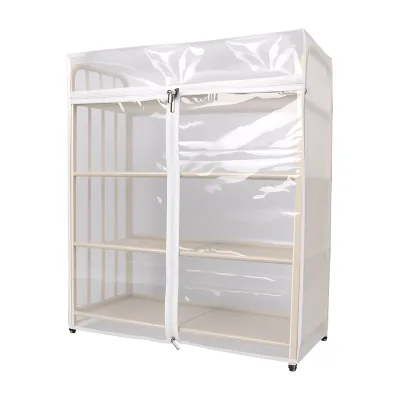
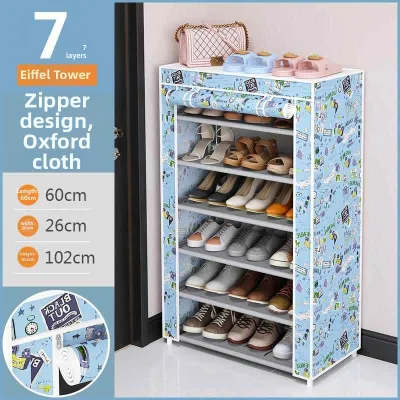
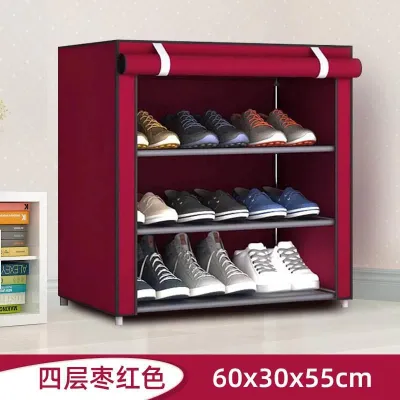
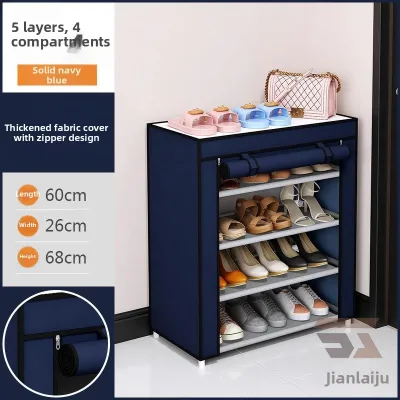
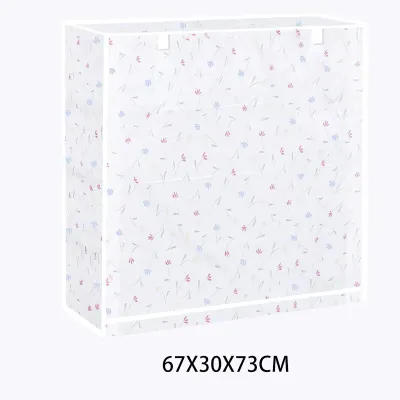
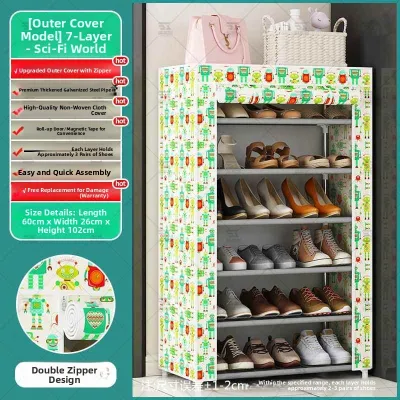
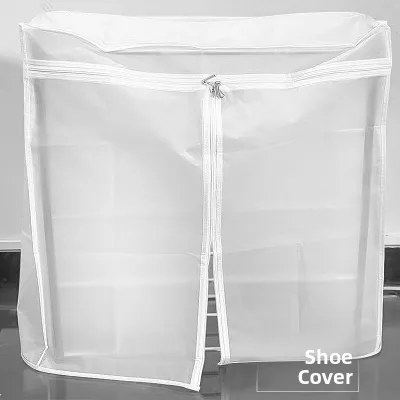
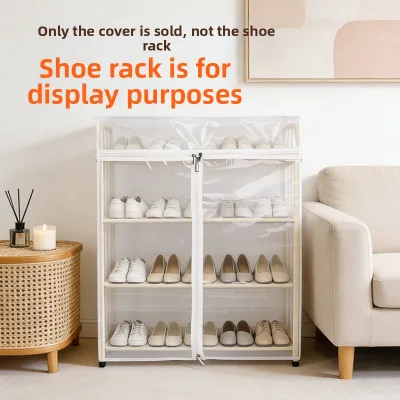
Prices are valid at publication and may change. Please refer to the product page for the latest price.
Depending on the height of your storage system, you may need a sturdy step stool. Many vertical shoe organizers utilize vertical space to maximize compact entryways, making the top edge difficult to reach safely. A step stool ensures you can read the tape measure at eye level, eliminating parallax errors.
Finally, clear the shoe rack of any temporary items, decorative objects, or overhanging footwear before you begin. Removing these items establishes a clean, unobstructed baseline of the physical frame, allowing you to capture the true structural boundaries without interference.
Step-by-Step Guide to Measuring Your Shoe Rack
To find a cover that slips on smoothly without tearing, you must capture the absolute outermost footprint of your existing shoe rack. This means measuring the entire external structure rather than simply measuring the individual shelving boards where the shoes sit.

Frame structures are rarely perfectly symmetrical, especially after years of holding heavy footwear. You should measure each dimension in multiple spots—specifically at the top, middle, and bottom—to account for any manufacturing variances, slight frame bowing, or structural settling. Always use the largest of these measurements as your baseline.
Measuring Width (Left to Right)
To measure the width, extend your metal measuring tape horizontally from the outermost edge of the left frame to the outermost edge of the right frame. Ensure the tape remains perfectly parallel to the floor to prevent diagonal distortion, which can make your reading artificially long.
Do not limit your measurement to the vertical support posts alone. Be sure to include any protruding elements such as side hooks, decorative handles, structural bolts, or extended support feet that flare outward at the base. If your cover has to stretch over these components, ignoring them will make the final fit incredibly tight or cause the fabric to rip at stress points.
Measuring Height (Top to Bottom)
To capture the vertical height, place the hook of your measuring tape flat against the floor, or at the very bottom of the lowest support feet if the rack is elevated. Extend the tape straight up to the highest point of the structure, keeping the tape perfectly vertical.
Pay close attention to the top of your shoe rack. If your unit features decorative finials, top caps, upper storage rails, or an integrated coat rack, these must be included in the total height calculation. If you select a cover that is too short, the bottom of your rack will remain exposed to dust, defeating the purpose of the cover.
Measuring Depth (Front to Back)
Measuring depth requires extending your tape from the absolute back edge of the frame to the absolute front edge. This dimension is highly critical because an incorrect depth measurement will cause the front door flaps of your cover to bulge outward or fail to zip closed entirely.
A crucial step that many homeowners overlook is measuring the depth while your typical footwear is actually placed on the shelves. Many shoe designs, particularly larger sneakers, athletic shoes, or high heels, often overhang the front or back edge of the shelf boards. To ensure the cover can close completely without squishing your shoes, measure the distance from the back of the frame to the tip of the most prominent shoe toe.
You must also consider the spatial constraints of your room or corridor. In Singapore, many shoe racks are placed in narrow entryways or along common HDB corridors where space is at a premium. Ensure that the added bulk of the cover, including any front-rolling fabric doors, does not obstruct walkways or prevent nearby doors from opening smoothly. Always cross-reference your measurements with local corridor clearance guidelines to maintain safe escape paths.
Adjusting Measurements for the Cover Design
Once you have recorded your raw physical dimensions, you cannot simply buy a cover that matches those exact numbers. The physical design, material properties, and construction of the cover dictate whether you need to add a small clearance margin to your measurements.
Material Allowance
The elasticity of the fabric plays a major role in how the cover fits. Non-stretch fabrics, such as standard non-woven polypropylene or heavy-duty Oxford cloth, have zero give. If your shoe rack measures exactly 80 cm wide, a non-stretch cover that is also exactly 80 cm wide will be nearly impossible to slide on without ripping. For these rigid fabrics, it is generally recommended to add a 1 to 2 cm allowance to the width and depth. Conversely, if you are opting for a stretchy, elasticized fabric cover, you should choose a size that closely matches or is slightly smaller than your raw dimensions to ensure a snug, wrinkle-free fit. Always check the manufacturer’s specific sizing guidelines to verify their recommended allowance.
Bottom Openings and Dust Flaps
Many high-quality shoe rack covers feature bottom dust flaps or weighted hems designed to seal the bottom gap and block crawling pests. To ensure these flaps function correctly, measure the exact vertical distance between the bottom shelf and the floor. If the cover is too long, the weighted hem will drag on the floor, collecting dirt and creating a tripping hazard; if it is too short, dust and pests can easily slip underneath.
Zipper and Door Placements
If you are selecting a cover with roll-up zippered doors, consider your daily routine. Note the height of your most frequently accessed shelves—such as where you keep your daily-wear sandals or work shoes. You want to ensure the cover’s zipper placement and door openings align naturally with these shelves so you do not have to struggle with awkward angles or roll up the entire front panel just to grab your primary pair of shoes.
Seam and Hem Shrinkage
Fabric manufacturing is not an exact science, and sewn seams or folded hems can cause slight dimensional variances in the finished product. When browsing product listings, look for the manufacturer’s specified “internal usable dimensions” rather than the raw external fabric cut. The internal dimensions represent the actual space available for your rack, accounting for the space lost to interior seams and stitching.
How to Read Product Dimensions When Shopping
Reading online product listings requires a careful eye, as marketing terms can sometimes be misleading. To avoid the hassle of returns, you must understand how manufacturers represent their sizing data on e-commerce platforms and retail packaging.
Internal vs. External Dimensions
Always look for a clear distinction between the cover’s total external footprint and its internal clearance space. The external footprint tells you how much physical space the covered rack will occupy in your home, which is vital for tight spaces. However, the internal clearance is what actually accommodates your rack. Ensure the internal clearance dimensions are equal to or slightly larger than the maximum outer measurements you recorded earlier.
Tier Count vs. Actual Height
It is incredibly common for covers to be marketed using generic tier counts, such as a “4-tier shoe rack cover” or a “6-tier cover.” However, tier counts are not standardized across different brands. A 4-tier rack from one manufacturer might be 70 cm tall, while a 4-tier rack from another could be 90 cm tall due to larger gaps between shelves. Never rely on tier counts alone; always compare the actual height in centimeters, and check the individual shelf clearance to make sure your tallest shoes, such as boots or heels, will fit comfortably inside.
Universal or Adjustable Covers
If you are considering a “universal” or “one-size-fits-most” cover, proceed with caution. These covers often use adjustable straps, drawstrings, or elastic bands to accommodate various rack shapes. When evaluating these products, carefully check the minimum and maximum expansion limits provided in the technical specifications. If your shoe rack falls at the absolute maximum limit, the cover may be under too much tension, leading to premature wear on the seams or zippers.
Common Measuring Mistakes to Avoid
Avoiding a few common pitfalls during the measurement process can save you from the frustration of receiving a cover that is impossible to use. The most frequent mistake is measuring only the flat shelving boards while completely ignoring the thickness of the vertical support poles or frame. These poles can add several centimeters to the overall width and depth, which will prevent a tight-fitting cover from sliding down.
Another typical error is forgetting to account for the depth added by shoes that overhang the front edge of the shelves. If you measure an empty rack and buy a cover based on those dimensions, you will find that the cover bulges awkwardly once your shoes are loaded, putting immense pressure on the zippers and seams.
Many buyers also make the mistake of assuming all shoe racks of the same tier count share identical dimensions. As discussed, height, width, and depth vary wildly between brands, so you must always take physical measurements of your specific unit rather than relying on generic product descriptions.
Finally, do not use a flexible cloth tape measure that can bend or sag around the frame. This almost always results in inflated, inaccurate dimensions that lead to a baggy, loose cover that looks untidy and fails to keep out dust effectively. Stick to a rigid metal tape measure for all steps.
Frequently Asked Questions (FAQ)
Can I use a generic fabric or bedsheet as a shoe rack cover?
While a generic fabric drape or old bedsheet can provide basic dust protection, it lacks the structured features that make a purpose-built shoe rack cover highly functional. Dedicated covers feature zippered access doors, tailored corner reinforcements, and bottom dust flaps that stay secure. If you choose to use a generic fabric, you will need to measure for a much larger drape to cover the entire frame, and you must plan for DIY fastening methods like clips or ties to prevent the fabric from slipping off or blowing around in drafty entryways.
What if my shoe rack has an irregular shape or sloped shelves?
For non-standard shoe racks, such as slanted display units or corner-fitting racks, you must measure the absolute maximum width, height, and depth at the widest and tallest points of the irregular shape. Standard rectangular covers will not conform well to these shapes, often leaving large gaps or failing to zip closed. In these cases, it is best to look for highly flexible, stretchable fabric covers that can conform to irregular angles, or consider custom-order options that are tailored specifically to your rack’s unique geometry.
Community discussion
Share your experience or ask a question. Comments are reviewed before publication.