
To choose the right corner book shelf size, you must measure the exact wall lengths extending from the corner apex, the floor-to-ceiling height at multiple points, and the available room depth, then subtract clearances for skirting boards, doors, and walkways. Failing to account for uneven walls or baseboards often results in a wobbly unit or a shelf that blocks vital pathways. By taking precise measurements and subtracting safety margins, you can select a corner bookshelf that fits perfectly, remains stable, and complements your room’s layout.
Selecting a corner book shelf is an excellent way to maximise underutilised space, turning a bare nook into a functional home library or display area. However, because corners are rarely perfectly square and walls are seldom completely flat, relying on guesswork can lead to costly purchasing mistakes. A systematic approach to measuring ensures that your new furniture not only fits the physical space but also aligns with the structural and aesthetic flow of your home.
Step-by-Step Guide to Measuring Your Corner Space
Before browsing online marketplaces or visiting furniture showrooms, you need to establish a precise set of baseline measurements. Having these numbers ready allows you to filter out unsuitable models immediately and focus on units that match your space.
Products mentioned in this guide
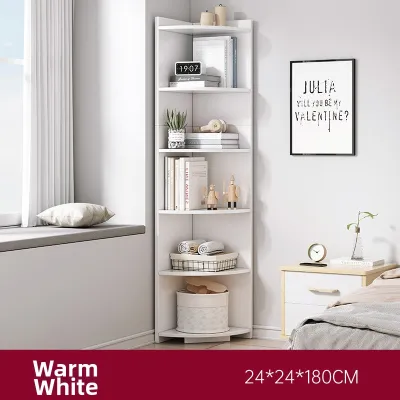
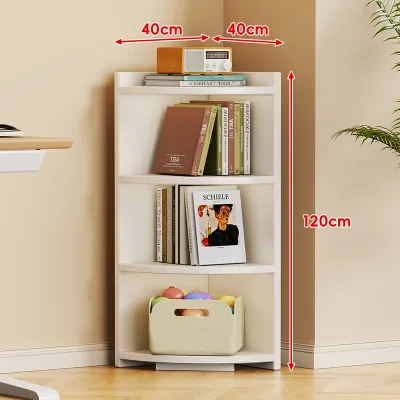
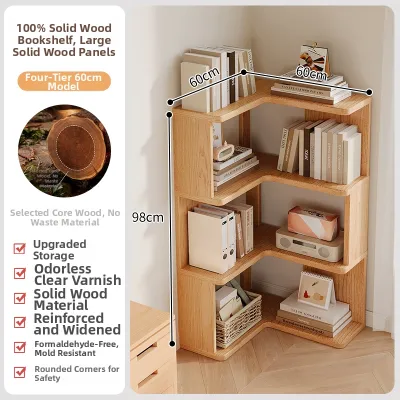
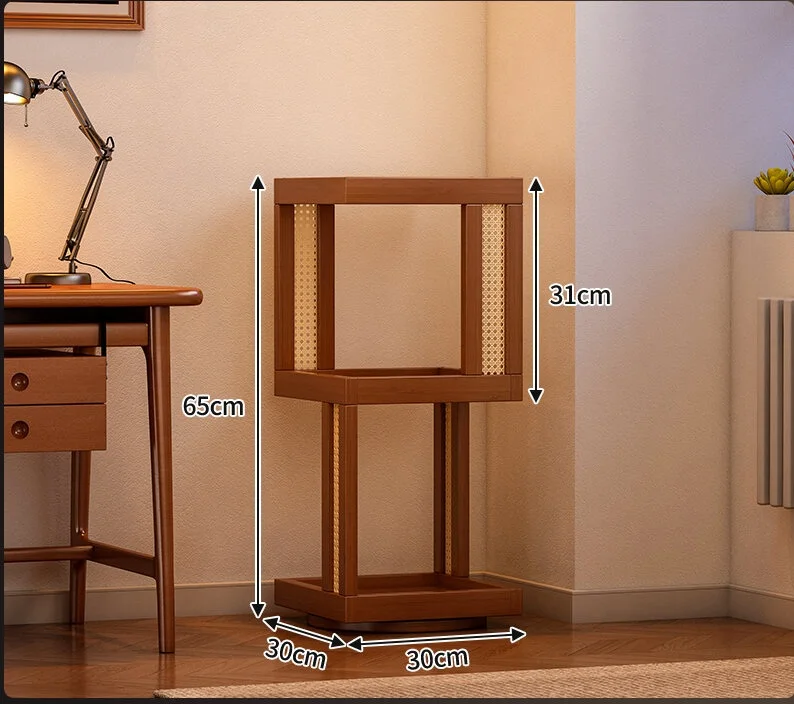
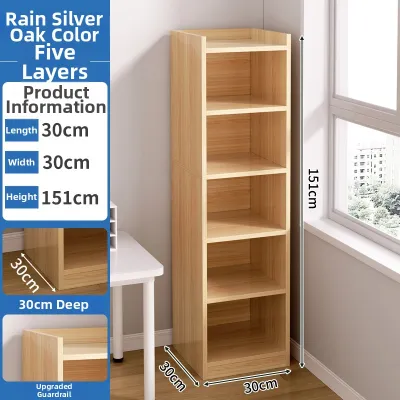
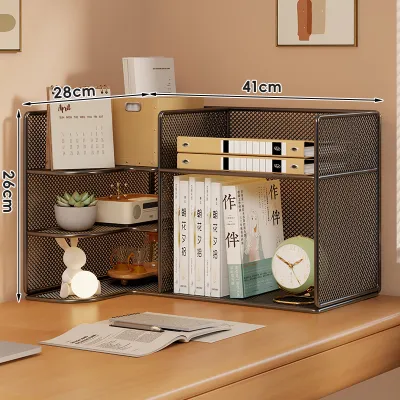
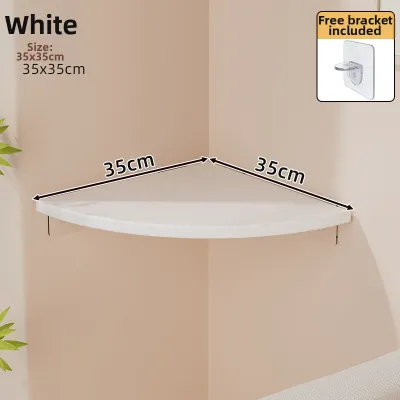
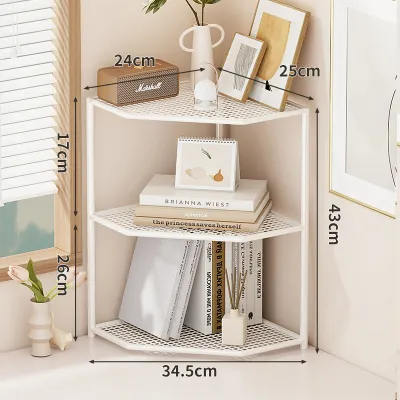
Prices are valid at publication and may change. Please refer to the product page for the latest price.
Start by gathering the right tools for the job. A high-quality metal tape measure is essential; avoid soft fabric tailor tapes, as they stretch over time and can introduce errors of several millimetres or centimetres. Keep a notepad or digital drawing app handy to sketch the corner layout and record each measurement as you take it.
Stick to a single unit of measurement throughout the entire process. In Singapore, working in centimetres (cm) or millimetres (mm) is highly recommended, as most furniture retailers and manufacturers list product specifications in these units. Mixing inches and centimetres often leads to calculation errors during conversion.
Begin by measuring the length of both walls extending outwards from the corner apex. Do not assume your walls form a perfect 90-degree angle or are completely flat. Take three separate horizontal measurements for each wall: one along the floor, one at waist height, and one near the ceiling. Walls in both older HDB flats and modern condominiums frequently bow, tilt, or have uneven plastering, and these variations can prevent a rigid wooden or metal unit from sitting flush.
Next, measure the floor-to-ceiling height at multiple points within the corner area. Floors can slope slightly, and plasterboard ceilings can sag or have uneven installations. If you plan to buy a tall bookshelf, knowing the exact height at the shallowest point of the ceiling prevents the unit from getting wedged or damaged during assembly.
Always record the smallest measurements for both width and height. This “minimum limit” represents the absolute maximum boundary of your physical space. Using the smallest recorded numbers ensures that the bookshelf will actually slide into place without scraping your walls or ceiling.
Finally, do not forget to measure your home’s entryways, main door frame, and lift dimensions. Many corner bookshelves are delivered fully assembled or in large, heavy flat-packs that might not fit into standard HDB passenger lifts or narrow condominium corridors. Verifying these delivery clearances beforehand saves significant frustration, potential delivery failures, and return fees.
Accounting for Room Obstacles and Daily Clearances
A corner might look completely empty at first glance, but close inspection often reveals minor architectural details and utilities that can disrupt your furniture placement. Factoring in these obstacles early prevents installation headaches later.

Skirting boards, also known as baseboards, are the most common obstacle to a flush furniture fit. These wooden, tile, or PVC strips run along the bottom of the wall, typically protruding 1 to 2 cm. If your corner book shelf has a solid, flat back without a bottom cutout, the skirting board will prevent it from sitting flush against the wall, creating an awkward gap at the top and compromising its structural stability.
Map out all electrical outlets, internet ports, light switches, and telephone jacks located near the corner. Placing a heavy, fully loaded bookshelf directly in front of an active outlet blocks access and can bend power cords dangerously against the wall. If you must cover an outlet, ensure the bookshelf has an open-back design or a built-in cable management port to route cords safely.
Measure the swing radius of nearby doors, windows, and built-in wardrobe doors. A corner bookshelf that is too deep or wide can block a door from opening fully, or worse, get struck and damaged by a door handle. Open all doors and windows to their maximum angles and measure the distance from the outer edge of the frame to the corner to determine your clear clearance zone.
Ensure there is adequate walkway space remaining after the bookshelf is positioned. In high-traffic zones, such as hallways or active study rooms, you should leave at least 60 to 70 cm of clear walkway space. This allows family members to pass comfortably without bumping into the sharp corners of the shelf.
Consider the type of flooring in your room. Thick carpets, uneven parquet, or slightly sloped floor tiles can cause a tall bookshelf to tilt. If your floor is uneven, look for bookshelves equipped with adjustable leveling feet, which allow you to compensate for minor floor variations and keep the unit perfectly stable.
Translating Room Measurements into Bookshelf Specifications
Once you have recorded your raw room dimensions and mapped out all obstacles, you can translate these limits into actual product specifications. This step bridges the gap between your physical room and the product listings you will compare.
Determining the Ideal Width and Depth
To find the maximum allowable width for each side of the corner unit, take your shortest wall measurement and subtract a safety margin of at least 5 to 10 cm. This margin provides visual breathing room, prevents the corner from looking overcrowded, and allows space for adjacent furniture or curtains.
Your room’s overall depth dictates the ideal shelf depth. In narrow rooms or tight study nooks, a deep shelf will choke the space and restrict movement; a shallow shelf (around 20 to 25 cm deep) is far more appropriate. In larger living areas, a deeper unit (30 to 40 cm) provides excellent stability and a stronger visual presence.
Always check the internal shelf depth rather than just the external depth listed by the manufacturer. If you plan to store large reference books, binders, or decorative storage bins, verify that the actual shelf surface can accommodate their dimensions without them overhanging. Overhanging items not only look untidy but can also shift the unit’s centre of gravity forward.
Planning for Height and Vertical Storage
Compare standard-height bookshelves (typically 120 to 150 cm) with tall, floor-to-ceiling models (180 to 220 cm or higher). Tall units maximise vertical storage in compact Singaporean apartments, making them ideal for avid readers, but they carry different structural and visual requirements.
Consider the visual weight of tall units in rooms with lower ceilings. A dark, massive, floor-to-ceiling corner book shelf can make a small room feel incredibly cramped and dark. To balance the room’s proportions, choose a lighter wood finish, a white painted frame, or an open-back design that lets the wall colour show through, reducing the visual bulk.
Prioritise safety by evaluating how you will anchor a tall unit. Any bookshelf taller than 120 cm requires secure anchoring to prevent tip-over accidents, especially in households with children or pets. Before purchasing, check your wall type; concrete walls (common in Singapore’s HDB flats) require a hammer drill and masonry plugs, while drywall partitions require specialized toggle bolts.
Common Measuring and Sizing Mistakes to Avoid
Even experienced homeowners can fall into common traps when sourcing corner furniture. Being aware of these pitfalls helps you avoid the hassle of returns or dealing with a poorly fitting unit.
Avoid the classic “measure once” mistake and the assumption that your walls meet at a perfect 90-degree angle. Older buildings often have settled over time, causing walls to lean slightly. If your corner is slightly acute (less than 90 degrees), a rigid, pre-assembled corner unit will not push all the way back, leaving a large wedge-shaped gap behind it.
Never buy a bookshelf that matches the exact maximum dimensions of your measured space. You must leave a clearance of at least 2 to 3 cm on all sides to allow for assembly maneuvering, ventilation, and cleaning. If you purchase a flat-pack unit, you will need extra physical space to assemble the pieces on the floor before standing the bookshelf upright.
Do not ignore the “visual fit” of the furniture within the room. A massive corner book shelf might physically fit the corner but can overwhelm the room’s proportions, block natural light from a nearby window, or cast deep shadows over your workspace. Use painter’s tape to outline the footprint of the bookshelf on the floor and wall to help you visualise its true scale before buying.
Remember to account for the thickness of the bookshelf’s back panel and any decorative base or crown molding overhangs. Manufacturers often list the dimensions of the main body, omitting the extra centimetres added by top trim or base molding. This oversight can cause the unit to collide with adjacent walls or door frames during installation.
Finally, check the load capacity and joint construction of the bookshelf, especially if you plan to store heavy textbooks or ceramic ornaments. A material name alone does not guarantee durability; inspect the manufacturer’s care instructions and verify that the shelves are rated for your intended weight load to prevent sagging or structural failure over time.
Frequently Asked Questions (FAQ)
Can I place a corner bookshelf over a skirting board?
Placing a flat-backed bookshelf directly against a wall with a skirting board will cause the unit to lean forward, creating a severe stability hazard and an unsightly gap at the top. To solve this, look for bookshelves designed with a recessed base cutout that accommodates standard skirting heights. Alternatively, you can use sturdy wall spacers at the top of the unit to keep it perfectly vertical before anchoring it, or carefully remove a section of the skirting board behind the unit if you own the property and want a completely flush fit.
How much clearance should I leave around the bookshelf?
It is highly recommended to leave a gap of at least 1 to 2 cm between the back of the bookshelf and the walls to allow for natural airflow, which prevents moisture buildup and mold growth—a common issue in humid climates like Singapore. Additionally, ensure there is at least 3 to 5 cm of clearance from nearby door frames to prevent accidental collisions. If the bookshelf features integrated LED lighting or electronic charging stations, consult the manufacturer’s instructions for specific ventilation clearances to prevent heat buildup.
Community discussion
Share your experience or ask a question. Comments are reviewed before publication.