
To choose a corner shelf that fits your home perfectly, you must measure three primary dimensions: the width along both intersecting walls, the maximum allowable depth extending into the room, and the total vertical clearance. Because walls are rarely perfectly straight, you also need to verify the corner angle and account for physical obstructions like skirting boards, electrical outlets, and door swings. Taking these precise steps ensures your new furniture fits seamlessly without blocking walkways or requiring costly returns.
In compact living spaces, such as Singapore’s high-rise HDB flats and condominiums, maximizing floor area is essential. A corner shelf is an excellent way to utilize underused space, but a mismatch of even a few millimeters can prevent a unit from sitting flush. By taking a systematic approach to measuring, you can confidently select either a freestanding bookcase or a floating shelf assembly that matches your room’s exact physical profile.
Why Accurate Corner Measurements Matter Before You Buy
Corners present unique spatial challenges that flat walls do not. When you place a standard bookcase against a flat wall, minor wall bowing or slightly uneven floors rarely prevent installation. A corner shelf, however, must interface with two walls simultaneously. Any deviation in wall angle, surface texture, or floor level is magnified, potentially leaving unsightly gaps, causing the unit to wobble, or preventing it from fitting into the corner at all.
Products mentioned in this guide
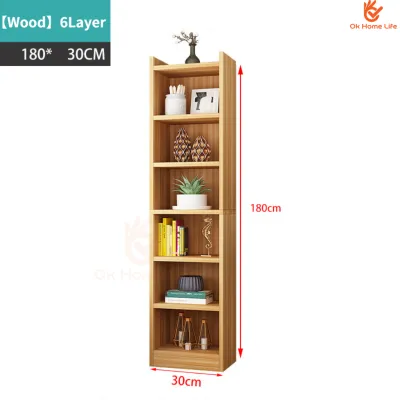
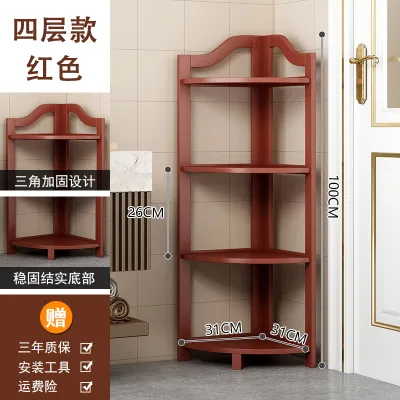
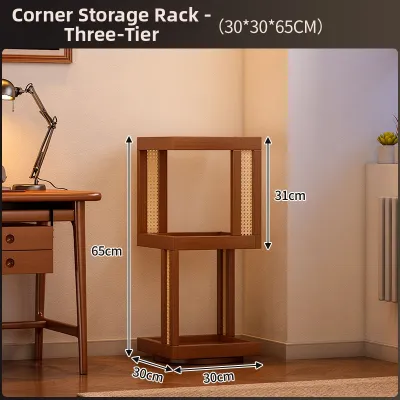
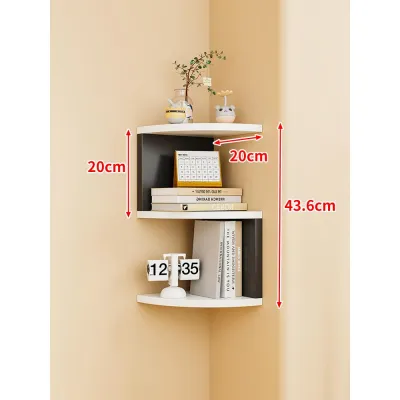
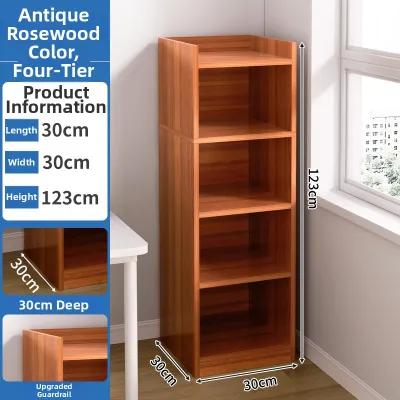
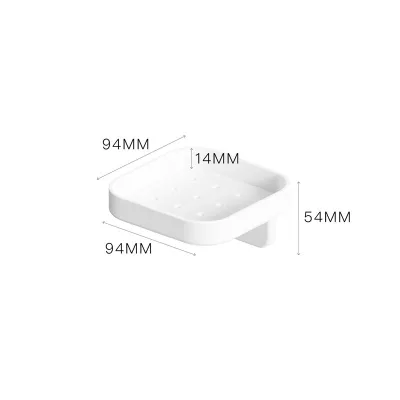
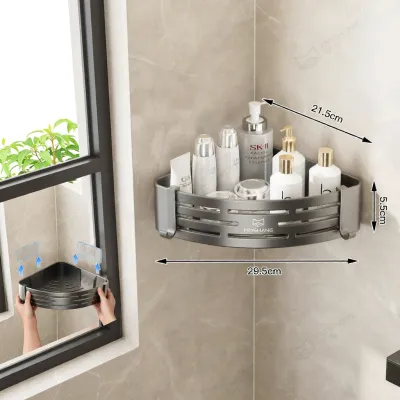
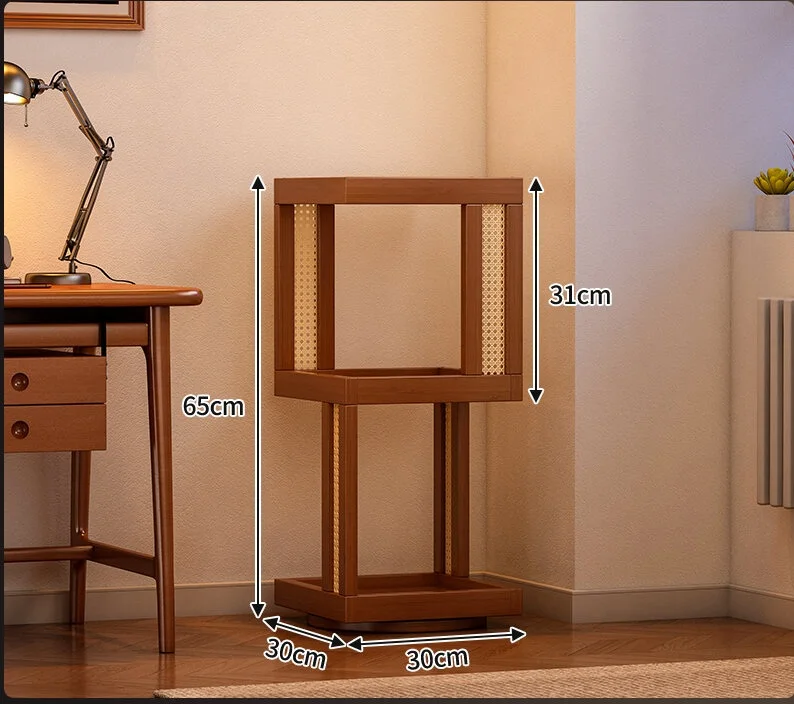
Prices are valid at publication and may change. Please refer to the product page for the latest price.
The stakes are particularly high when choosing between freestanding corner bookcases and floating corner shelves. Freestanding units rely on stable floor contact and often require anchoring to both walls for safety, especially if they are tall and top-heavy. Floating shelves require secure mounting into wall studs or solid masonry. If your measurements are off, you risk purchasing a unit that blocks light switches, collides with window frames, or protrudes into high-traffic walkways, creating a safety hazard.
Furthermore, returning bulky furniture in Singapore can be a logistical headache. Many local retailers charge restocking fees, and navigating narrow HDB corridors or passenger lifts with an oversized, heavy package is a frustrating experience. Ensuring your measurements are correct before ordering saves time, money, and physical effort.
Essential Tools for Measuring Your Corner Space
Before pulling out your furniture catalog, gather the correct tools to ensure your measurements are accurate. Using makeshift tools like sewing tapes or plastic rulers will introduce errors that can ruin your installation plans.

- Metal Tape Measure: A high-quality, locking metal tape measure is the most critical tool. The rigid metal blade remains straight over long distances, allowing you to measure wall lengths and heights accurately without sagging.
- Laser Measure: While optional, a laser measure is highly useful for checking high ceilings or measuring long distances across a room to verify overall clearance.
- Carpenter’s Square: Also known as a framing square, this L-shaped tool is indispensable for checking whether your walls meet at a true 90-degree angle.
- Notepad or Digital Device: Keep a dedicated space to sketch your corner layout and record multiple measurements. Labeling the left wall, right wall, height, and obstacle distances clearly will prevent confusion later.
- Pencil and Painter's Tape: Use painter's tape to temporarily mark potential shelf boundaries on the wall. This helps you visualize the physical footprint of the shelf without damaging the paint.
Step-by-Step Guide to Measuring Corner Dimensions
Measuring the Width (Wall Lengths)
To determine the maximum width of your corner shelf, you must measure the available wall space extending outward from the corner crease on both sides. Do not assume that both walls can accommodate the same size shelf, as doors, windows, or architectural columns often limit one side more than the other.
Begin by placing the hook of your metal tape measure directly into the corner crease where the two walls meet. Extend the tape horizontally along the left wall to the point where you want the shelf to end, or where an obstacle like a door frame begins. Repeat this exact process for the right wall.
Because walls are rarely perfectly plumb, they can bow outward or lean inward. To account for this, take these horizontal measurements at three different heights: at the floor level, at the midpoint of the wall, and at the intended top height of the shelf. If you notice discrepancies between these three figures, always use the smallest measurement as your guide. This ensures the shelf will fit past the narrowest point of the wall during installation.
Determining the Depth (Projection)
The depth of a corner shelf dictates how far it projects outward into your living space. Measuring depth correctly is vital to ensure the unit does not encroach on your room’s primary traffic paths or make the space feel cramped.
To measure the allowable depth, determine how far you want the front edge of the shelf to extend from the corner. For a triangular corner shelf, the depth is typically measured from the rear corner crease straight out to the center of the front curved or flat edge. For L-shaped corner bookcases, you must measure the depth of the individual shelves extending along each wall, as well as the total projection of the outer corner.
Walk around the room to assess the traffic flow. If the corner is near a main walkway, leave at least 90 centimeters of clear floor space in front of the projected shelf edge. This allows household members to pass comfortably without bumping into the furniture.
Checking the Height and Vertical Clearance
Vertical clearance is a critical consideration, particularly for tall, freestanding corner bookcases that extend close to the ceiling. You must ensure the unit can stand upright and that you have enough space to assemble and position it.
Measure the vertical distance from the floor to the ceiling directly in the corner. If your home has a sloped ceiling, take measurements at both the deepest part of the corner and the outer edge where the front of the shelf will stand.
Next, identify any overhead obstacles. In Singapore, wall-mounted air conditioning units, copper piping, trunking, and decorative plaster cornices or crown moldings are common. Measure from the floor to the lowest point of these obstacles. If you plan to place a tall bookcase beneath an air conditioning unit, leave at least 30 to 40 centimeters of clearance below the appliance to allow for proper airflow and routine servicing. Additionally, if a freestanding unit must be assembled flat on the floor and then raised upright, check the diagonal height of the bookcase against your ceiling height to ensure it will not get wedged during the lift.
Hidden Obstacles That Affect Corner Shelf Fit
Accounting for Skirting Boards
Skirting boards run along the bottom of walls and are a primary reason why freestanding furniture fails to sit flush. If a shelf cannot sit flush against both walls, it will leave a triangular gap behind it, reducing stability and looking untidy.
To plan around this, measure the height and thickness of your skirting boards. Standard skirting boards in Singapore apartments typically project 10 to 20 millimeters from the wall.
You have three main options to address this issue:
- Choose a shelf with a baseboard cutout: Many modern freestanding corner bookcases feature a pre-cut notch at the bottom rear corners designed to clear standard skirting boards.
- Mount floating shelves high enough: If you are installing floating corner shelves, simply plan to mount the lowest tier well above the height of the skirting board.
- Modify the furniture or wall: If you are comfortable with DIY, you can notch the back of a wooden shelf yourself, or temporarily remove the section of skirting board behind the unit. Always check your tenancy agreement or condo renovation guidelines before making permanent alterations to the property.
Navigating Power Outlets and Light Switches
Electrical fixtures are easily overlooked when planning furniture placement, but blocking them can render your room highly impractical.
Examine both walls of the corner for power sockets, light switches, telephone jacks, or fiber optic termination points. Measure the distance from the corner crease to the nearest edge of each outlet, as well as the height from the floor to the bottom and top of the fixtures.
Compare these measurements against the specifications of your chosen corner shelf. If you are buying a solid-backed bookcase, the back panels may completely cover your outlets. You can resolve this by choosing an open-backed shelf design, selecting a unit with built-in cable management cutouts, or carefully cutting access holes in the back panel during assembly. Ensure you retain safe, unhindered access to switches and plugs.
Ensuring Door and Walkway Clearance
A corner shelf should enhance your room’s storage, not restrict its usability. You must ensure the shelf does not interfere with the movement of doors, windows, or other furniture.
Measure the swing radius of any nearby doors, including bedroom doors, wardrobe doors, and cabinet drawers. Open the doors fully and measure the distance from the door edge to the corner. Your shelf must sit entirely outside this swing arc to prevent collisions that could damage both the door and the shelf.
Additionally, consider the visual and physical flow of the room. In compact layouts, placing a deep corner shelf next to an entry door can create a visual bottleneck, making the room feel smaller. Use your painter’s tape to outline the shelf’s footprint on the floor and walk past it for a day to ensure it does not disrupt your daily movement.
How to Verify if Your Corner is a True 90 Degrees
Many homeowners assume that interior walls meet at a perfect 90-degree angle, but this is rarely the case. Settling, plastering imperfections, and construction tolerances mean that corners are often slightly acute (less than 90 degrees) or obtuse (greater than 90 degrees).
To check your corner quickly, place a carpenter’s square flat against both walls at the height where you plan to install the shelf. If you see a gap between the tool and the wall near the corner crease, or at the outer edges of the square, your corner is out of square.
For a more precise measurement over a larger area, use the classic geometric 3-4-5 triangle method:
- Measure exactly 30 centimeters from the corner crease along the left wall and make a small pencil mark.
- Measure exactly 40 centimeters from the corner crease along the right wall and make a second pencil mark.
- Use your tape measure to measure the straight-line diagonal distance between the two pencil marks.
- If the diagonal distance is exactly 50 centimeters, your corner is a perfect 90-degree angle.
If the diagonal measurement is less than 50 centimeters, the corner is acute, meaning a rigid, pre-assembled 90-degree freestanding bookcase will not push fully into the corner. If the diagonal is greater than 50 centimeters, the corner is obtuse, which will leave a gap behind the shelf.
If your walls are significantly out of square, adjustable floating shelves are often a better choice than rigid freestanding units. Floating shelves can be mounted slightly forward or shimmed to look level, whereas a large freestanding unit will wobble or sit crookedly against the walls.
Translating Your Measurements to Corner Shelf Sizes
Once you have recorded all your measurements and accounted for obstacles, you are ready to shop. When browsing online marketplaces or local furniture stores in Singapore, you must carefully translate your room’s physical dimensions into the product’s listed specifications.
Start by filtering products using your maximum width, depth, and height limits. Remember to subtract the thickness of your skirting boards from your available wall width if the shelf does not feature a baseboard cutout. For example, if your wall space is 40 centimeters but you have a 1.5-centimeter skirting board without a cutout on the shelf, your maximum shelf width must not exceed 38.5 centimeters.
Next, consider the structural requirements of your home. In Singapore, wall construction varies significantly. Many HDB flats feature solid concrete or precast internal walls, while newer condominiums and landed properties may use drywall partition walls.
- Solid Concrete Walls: Ideal for supporting heavy floating shelves, but they require a masonry drill, robust wall plugs, and proper anchoring hardware.
- Drywall Partition Walls: Require you to locate the vertical timber or metal studs using a stud finder. Floating shelves must be anchored directly into these studs to support any significant weight.
Before finalizing your purchase, always read the manufacturer’s assembly instructions and clearance guidelines. Check the packaged dimensions of the product to ensure the box can fit through your front door, corridor, and passenger lift. If you are purchasing a heavy wooden corner bookcase, verify the maximum load capacity per shelf to ensure it can safely support your books, plants, or decorative items.
Frequently Asked Questions (FAQ)
Can I install a floating corner shelf on drywall?
Yes, you can install a floating corner shelf on drywall, but you must take specific structural precautions. Drywall alone does not have the structural integrity to support heavy loads, such as a collection of books or heavy ceramic pots. To ensure safety, you must locate the wall studs behind the drywall using a stud finder and secure the shelf brackets directly into them. If a stud is not available at your desired location, you must use high-quality, heavy-duty toggle bolts or hollow-wall anchors designed specifically for drywall. Always check the manufacturer’s weight capacity limits and avoid overloading the shelf.
Do corner bookcases come in standard sizes?
No, corner bookcases do not come in a single, universal standard size. Because designs vary widely—ranging from triangular units and curved radial shelves to expansive L-shaped modular bookcases—dimensions differ significantly between brands and models. While you will find common height ranges (such as 120 to 180 centimeters) and width ranges (such as 30 to 60 centimeters per side), you should never buy a unit based on assumed standard sizing. Your specific room measurements, wall angles, and obstacle clearances must always dictate the final size you choose to ensure a safe and stable fit.
Community discussion
Share your experience or ask a question. Comments are reviewed before publication.