
Choosing the perfect bamboo rack for your closet requires more than matching a single width and height. To avoid a costly mismatch, you must map out the three-dimensional volume of your closet, account for structural irregularities, and leave adequate clearance for moving parts. Measuring accurately ensures your storage system fits seamlessly and remains functional over time.
By taking precise physical measurements and understanding how bamboo furniture interacts with your closet’s layout, you can maximize your storage potential. This guide walks you through the exact steps to measure your space, plan for clearances, and select a bamboo rack that fits your needs perfectly.
How to Accurately Measure Your Closet Width, Height, and Depth
To capture the true usable volume of your closet, you must perform a thorough physical measurement. Avoid using soft fabric sewing tapes, which can sag and stretch, leading to inaccurate readings. Instead, use a rigid metal tape measure. For the greatest precision, keep your units consistent throughout the entire process—measuring in centimeters (cm) is generally best, as most furniture specifications in Singapore are listed in centimeters or millimeters.
Products mentioned in this guide
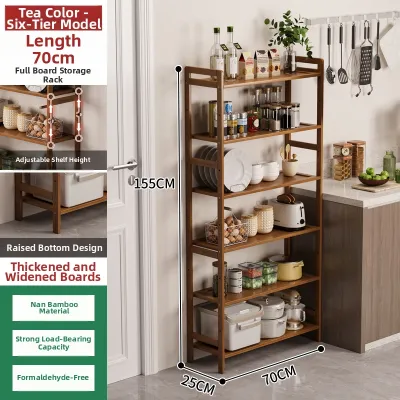
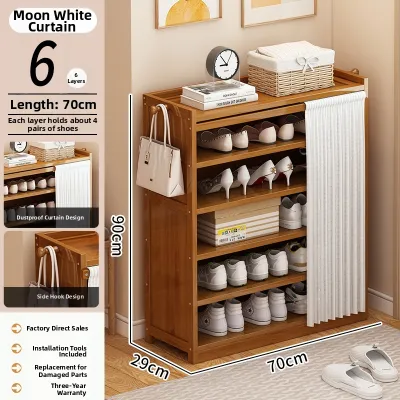
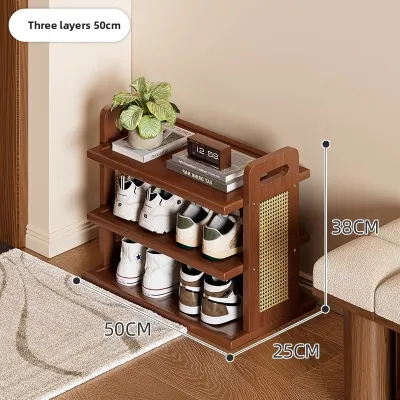
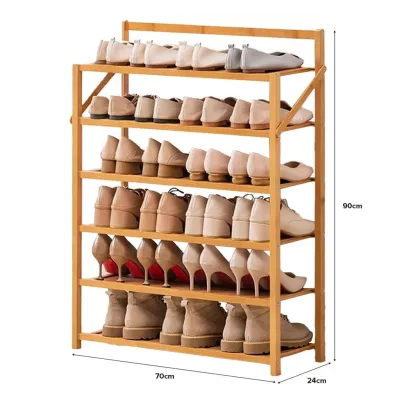
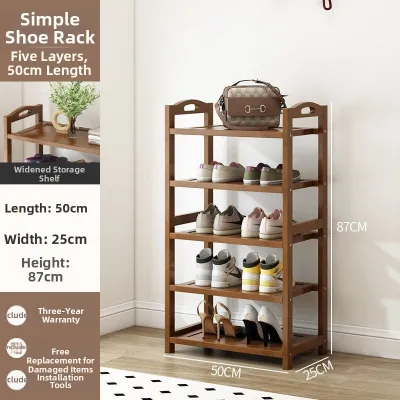
Prices are valid at publication and may change. Please refer to the product page for the latest price.
When measuring the width of your closet cavity, do not assume the walls are perfectly parallel. Architectural settling and plastering variations often cause walls to bow or taper. To account for this, measure the width at three distinct points: near the top, across the middle, and along the bottom. Record all three numbers. The smallest of these three measurements represents the absolute maximum width of the bamboo rack you can buy. For a safe fit, subtract at least 1 to 2 cm from this smallest number to allow for ease of installation.
Measuring the depth of your closet requires similar care. Extend your tape measure from the back wall to the front frame of the closet or the inner track of a sliding door. Be highly observant of any obstacles that protrude into this space. Baseboards, cornices, molding, or existing shelf tracks can reduce the usable depth by several centimeters. If your closet has a baseboard that is 1.5 cm thick, your rack will be pushed forward by that exact distance, meaning you must subtract 1.5 cm from your total depth measurement to ensure the unit does not protrude.
Finally, measure the height from the solid floor to the ceiling or the lowest overhead obstruction, such as an existing fixed hanging rod or a low-hanging light fixture. If your closet features a sloped ceiling or decorative bulkheads, measure the height at the shallowest point. Knowing the exact vertical clearance ensures you do not purchase a freestanding rack that is too tall to stand upright or blocks essential fixtures.
Planning for Door Clearance, Drawers, and Walking Space
A bamboo rack that fits perfectly inside the closet cavity can still cause daily frustration if it blocks doors or prevents drawers from opening. If your closet features hinged doors, you must calculate their swing radius. Open the doors fully and measure the path they travel. The bamboo rack must not sit within this swing zone, or it will prevent the doors from closing completely or opening wide enough for you to access your clothes.

For sliding doors, the challenge is different. Sliding doors overlap, meaning only one side of the closet is open at any given time. If your bamboo rack has built-in drawers, pull-out trays, or trouser hangers, you must ensure these features align with the open door space. If a drawer is positioned directly behind the door overlap, you will not be able to pull it out. Measure the width of the door opening when slid fully to one side, and ensure any pull-out components on your rack are narrower than this opening and positioned to clear the door edge.
Aisle width and physical ergonomics are critical, particularly for walk-in closets or deep reach-in wardrobes. You need comfortable space to stand, turn, bend down to reach lower shelves, and lift heavy storage boxes. A minimum aisle width of 60 cm is highly recommended for comfortable movement. If the aisle is narrower than 50 cm, the space will feel cramped, and you may find yourself constantly bumping into the rack.
Additionally, if your closet is located in a walk-in dressing room, check the swing path of the main bedroom entry door. The door must be able to open fully without striking the bamboo rack. If the door path overlaps with the proposed rack location, you will need to choose a shallower rack or position it further along the wall to prevent damage to both the door and the furniture.
Translating Measurements into Bamboo Rack Specifications
Once you have recorded your closet’s physical dimensions, you must translate these numbers into the actual specifications of a bamboo rack. It is crucial to understand that a product’s listed external dimensions are rarely identical to its internal, usable storage space. For example, a rack with an external width of 80 cm may only offer 74 cm of actual shelf width once you subtract the thickness of the vertical bamboo support posts. Always check the manufacturer’s detailed product specifications or technical drawings to verify the exact shelf dimensions.
Furthermore, Singapore’s tropical climate brings high humidity levels, which can affect organic materials like bamboo. When translating your measurements, you must also look at the physical construction and finish of the rack to ensure it can withstand daily use in a humid environment without warping or degrading.
Evaluating Load Capacity and Shelf Spacing
Do not assume that all bamboo racks are built to support heavy winter coats, dense stacks of books, or heavy luggage. While bamboo is a highly durable and tensile material, the actual weight capacity of a rack depends entirely on the thickness of the shelves, the presence of support beams, and the quality of the assembly joints.
- Check the Weight Limits: Always verify the manufacturer's stated weight limit per shelf and the total weight capacity of the entire unit. A typical lightweight bamboo rack might support 10 kg per shelf, while a heavy-duty model might support up to 20 kg or more.
- Assess Shelf Spacing: Look for racks with adjustable shelf heights. Having pre-drilled adjustment holes allows you to customize the vertical space to fit specific items, such as tall boots, medium-sized storage bins, or short folded garments, maximizing your vertical storage efficiency.
- Compare Footprint to Usable Depth: Ensure the external depth of the rack accommodates your storage boxes without them overhanging. Overhanging boxes can block sliding doors or make the rack front-heavy, increasing the risk of tipping.
Inspecting Bamboo Construction and Finish
To ensure your bamboo rack remains stable and free from mold in Singapore’s humid air, you must carefully inspect its construction details and protective coatings before making a purchase.
- Verify the Surface Finish: Check the product specifications to confirm that the bamboo has been treated with a protective sealant, varnish, or lacquer. A sealed surface prevents ambient moisture from penetrating the bamboo fibers, which is essential for preventing mold growth and warping.
- Examine the Joint Construction: Look for racks assembled with sturdy metal-to-metal hardware, such as hex screws or cam locks, rather than simple wood screws or wooden dowels. Metal joints provide superior structural stability, prevent swaying, and allow you to re-tighten the frame if it loosens over time.
- Review Care Instructions: Always check the manufacturer's care guidelines. Standard care typically involves wiping the bamboo with a dry or slightly damp cloth and avoiding placement in areas with standing water or direct, intense sunlight, which can cause the material to crack.
Common Measuring and Sizing Mistakes to Avoid
One of the most frequent mistakes when choosing a bamboo rack is assuming that your closet walls are perfectly straight, corners are exactly 90 degrees, or the floor is completely level. In reality, minor structural shifts are common. If you buy a rack that matches your closet’s nominal width exactly, even a tiny 5 mm tilt in the wall can prevent the rack from fitting into the space. Always leave a safety margin of at least 2 to 3 cm on all sides to accommodate these natural structural imperfections.
Another critical step that is often overlooked is measuring the delivery path. A bamboo rack must travel from the delivery vehicle to its final spot in your closet. You must measure the height and width of your apartment building’s lift doors, the internal dimensions of the lift cabin, narrow corridors, your front door frame, and any tight turns in your hallway. If the rack is delivered pre-assembled or in exceptionally long flat-pack boxes, a tight corner or a small lift can make delivery impossible.
Finally, do not ignore the rack’s external hardware. Many product listings only state the dimensions of the main frame, omitting protruding parts like screw heads, hanging side hooks, decorative top cornices, or extended feet designed for stability. These small protrusions can easily add 2 to 4 cm to the overall width or depth. Always review the detailed product diagrams or contact the manufacturer to confirm whether the listed dimensions include all external hardware.
Frequently Asked Questions (FAQ)
Can I assemble a bamboo rack inside a small closet if it doesn't fit through the door?
Yes, many flat-pack bamboo racks can be assembled directly inside a small closet cavity. However, you must ensure there is enough physical floor space inside or immediately adjacent to the closet to lay out the panels, maneuver tools like screwdrivers or hex keys, and safely stand the unit upright once assembled. Always check the manufacturer’s assembly instructions prior to purchase to verify the minimum clearance space required for a safe and successful assembly.
How do I know if a bamboo rack is stable enough for heavy items?
To determine stability, rely strictly on the manufacturer’s official weight capacity ratings rather than visual estimates. To maximize the stability of your rack, place your heaviest items—such as shoes, heavy storage organizers, or thick winter coats—on the bottom shelves to keep the center of gravity as low as possible. Additionally, look for bamboo racks that feature back cross-bracing, solid back panels, or triangular side supports, as these design elements significantly reduce lateral swaying.
Do I need to anchor a freestanding bamboo rack to the closet wall?
Anchoring is highly recommended for any freestanding bamboo rack that is tall (typically over 120 cm) or narrow, as these dimensions are highly susceptible to tipping if overloaded or pulled. This safety precaution is especially critical in households with young children or pets who might climb on the shelves. Check if the manufacturer includes an anti-tip anchoring kit with the rack. Because most closet walls in Singapore are constructed from solid concrete or masonry, you must verify your wall type and use appropriate masonry wall plugs and screws rather than standard drywall anchors to ensure a secure hold.
Community discussion
Share your experience or ask a question. Comments are reviewed before publication.