
To find a replacement chair cover (椅子套罩) that fits like a glove, you must measure the absolute widest, deepest, and tallest points of your furniture’s frame rather than relying on generic size labels. A successful fit depends on capturing three critical dimensions: the total backrest height, the seat depth from front to back, and the seat width at its broadest point. By matching these exact physical measurements against the stretch tolerances of your chosen fabric, you can avoid the common pitfalls of sagging fabric, exposed frames, or popped seams.
In Singapore’s humid climate, finding the right replacement cover is an excellent way to protect dining, office, and accent chairs from wear and sweat without investing in entirely new furniture. However, because furniture designs vary wildly across local retailers, guessing your chair’s dimensions almost always results in a sloppy appearance. Taking five minutes to measure your chair systematically ensures that your new slipcover looks like custom upholstery rather than a temporary drape.
Why Guessing Your Chair Size Leads to Poor Fits
Relying on vague descriptions like “standard dining chair” or “medium office chair” is the most common reason replacement slipcovers fail to look neat. Furniture manufacturers do not follow universal sizing standards, meaning a “standard” chair from one brand can be several centimeters wider or deeper than one from another. When you buy a cover based on guesswork, you risk receiving a product that is either too small to stretch over the frame or too large, leaving excess fabric to bunch up and slide around.
Products mentioned in this guide
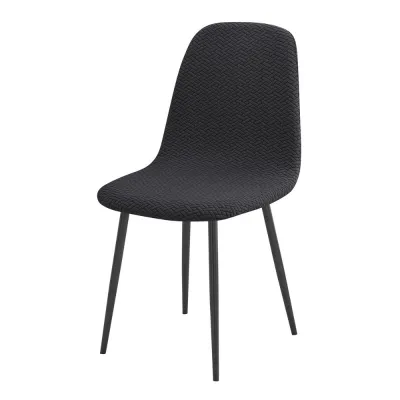
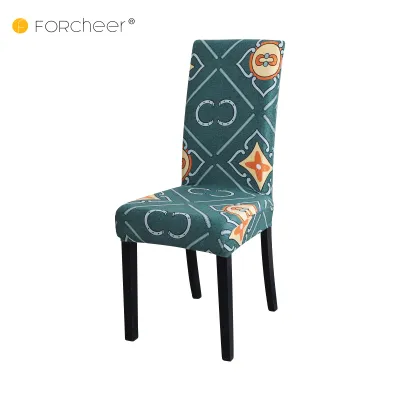
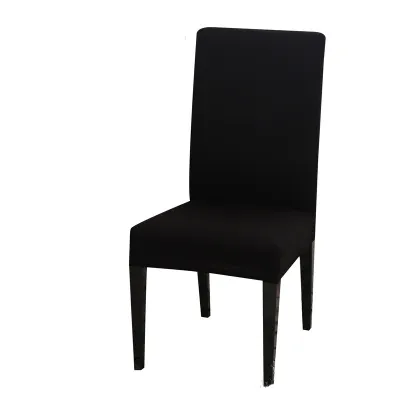
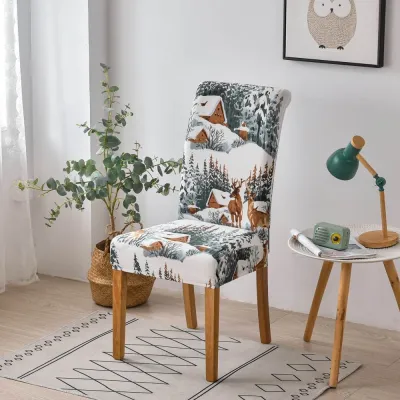
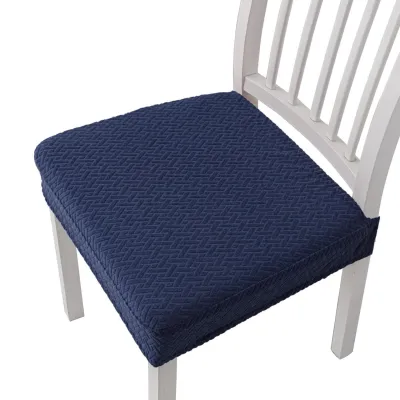
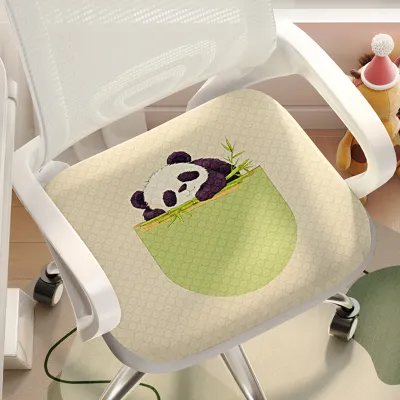
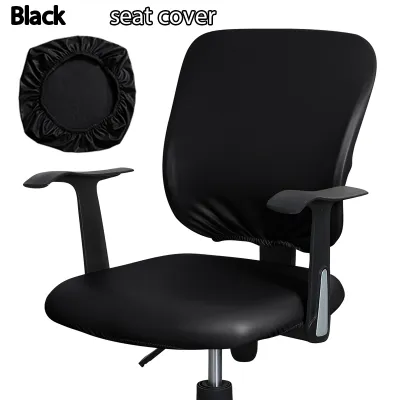
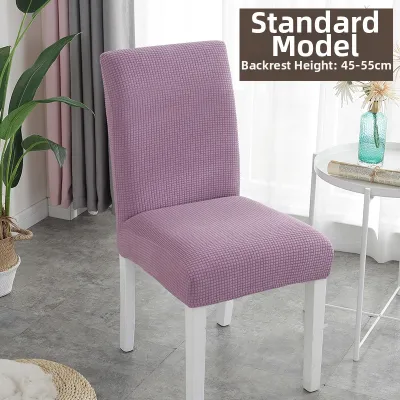
Prices are valid at publication and may change. Please refer to the product page for the latest price.
A cover that is too tight undergoes constant tension, particularly at the corners and seams. Over time, this stress weakens the stitching, leading to premature tearing and frayed edges, especially on stretchable fabrics like polyester-spandex blends. Furthermore, an overstretched cover often flattens the cushioning underneath, reducing the overall comfort of your seating.
Conversely, an oversized cover creates a messy, unkempt aesthetic in your living space. Excess material pools at the base of the seat, slips out of the crevices when someone sits down, and requires constant tucking and adjusting. In high-traffic household areas, loose fabric can even pose a tripping hazard or easily snag on passing objects, ruining both the cover and the visual appeal of your home.
Essential Tools for Taking Precise Chair Measurements
Before you begin measuring, gathering the correct tools is essential for capturing accurate dimensions. The most important tool is a flexible tailor’s measuring tape, which easily contours to the rounded edges, plush cushions, and curved backrests of modern furniture. Avoid using a rigid metal construction tape measure; these do not bend smoothly around upholstery, which often leads to overestimating dimensions or scratching delicate wooden frames.

You will also need a notebook or a smartphone to record each measurement immediately. It is easy to confuse width and depth numbers when measuring multiple parts of a chair, so writing them down with clear labels (e.g., “Seat Width Front” and “Seat Width Back”) prevents costly ordering mistakes. If you are measuring a large armchair, a deep wingback, or a heavy accent chair, having a second person hold one end of the tape level ensures you capture the true maximum dimensions without the tape slipping out of place.
How to Measure Specific Chair Types Accurately
Achieving a tailored fit requires understanding that different chair styles demand different measuring approaches. The golden rule of measuring for any replacement chair cover (椅子套罩) is to measure the physical frame at its widest, deepest, and tallest points. Always keep the measuring tape taut against the surface of the chair, but do not compress the soft foam or fiber filling of the cushions, as this will result in a cover that is too tight.
If your chair has removable seat cushions and you intend to cover the entire piece as a single unit, measure the frame with the cushions in place. If you plan to use a multi-piece cover set that wraps the cushions separately, you must measure the empty frame and the individual cushions as distinct entities. Let us break down the exact steps required for the most common chair types found in Singaporean homes.
Dining Chairs (Backless and High-Back)
Dining chairs are highly susceptible to spills and wear, making them prime candidates for protective slipcovers. To measure a standard high-back dining chair, start with the seat width. Because many dining chairs taper—meaning they are wider at the front and narrower near the backrest—you must measure the width at both the front edge and the rear joint where the seat meets the backrest. Use the larger of these two numbers when selecting your cover size.
Next, measure the seat depth by placing the tape at the very front edge of the seat cushion and running it straight back to the point where it meets the backrest. For the backrest height, measure from the top seam of the seat cushion straight up to the highest point of the wooden or upholstered frame. Finally, measure the backrest width at its widest point, which is typically near the top or middle of the back. If you have a backless dining stool, you only need to measure the seat’s diameter (for round stools) or the width and depth (for square stools), along with the thickness of the seat cushion.
Armchairs and Accent Chairs
Armchairs and accent chairs feature complex, three-dimensional shapes that require careful mapping. Begin by measuring the overall width of the chair, which is the distance from the outermost edge of the left armrest to the outermost edge of the right armrest. This is a critical dimension, as many standard slipcovers are designed around specific arm-to-arm maximum widths.
Next, measure the armrest height and width. Place your tape measure on the top of the seat cushion and run it vertically up to the highest point of the armrest to find the arm height, then measure the thickness of the armrest from the inner side to the outer side. For wingback or barrel chairs, you must also capture the diagonal depth, measuring from the outer front corner of the armrest diagonally back to the furthest point of the backrest. To ensure a snug fit around curved barrel backs, wrap the tape around the backrest’s outer circumference from one side seam to the other.
Office and Gaming Chairs
Ergonomic office chairs and gaming chairs present unique challenges due to their adjustable parts, contoured lumbar supports, and segmented designs. Because these chairs often feature separate moving parts, many replacement covers are sold as two-piece sets containing a separate backrest cover and seat pan cover. You must measure these two components independently to ensure both pieces fit without interfering with the adjustment levers.
Measure the backrest height from its bottom edge (just above the seat pan) to the very top, accounting for any built-in headrests or neck pillows. For the backrest width, measure across the widest section, taking care to include the depth of any protruding lumbar curves or side bolsters. When measuring the seat pan, record the width at the widest point and the depth from the front waterfall edge to the back crack. Note that highly contoured gaming chairs with bucket-style seats and integrated armrests often require specialized, model-specific covers rather than universal stretch covers, as standard fabrics cannot conform to deep ergonomic recesses.
Matching Your Measurements to Replacement Cover Size Charts
Once you have recorded all your dimensions, the next step is to compare them with the manufacturer’s size charts on your chosen online marketplace. Most modern replacement chair covers (椅子套罩) are made from highly elastic materials, such as polyester blended with 5% to 15% spandex or elastane. Because of this elasticity, size charts usually display a range of compatible dimensions (for example, “fits seat widths from 40 cm to 50 cm”) rather than a single fixed number.
When analyzing these charts, always check where your chair’s measurements fall within the recommended ranges. If your dimensions are near the upper limit of a size range, it is highly recommended to size up to the next bracket. Sizing up prevents the fabric from overstretching, which can make the cover look translucent, expose the original upholstery underneath, or cause the seams to split under pressure.
Additionally, read the product descriptions carefully for design exclusions. Many universal slipcovers are incompatible with chairs that feature integrated reclining mechanisms, side-mounted adjustment knobs, or heavily carved wooden frames with sharp decorative points. If your chair has wooden trim along the top of the backrest, ensure the cover has reinforced corners or a thicker fabric weight to prevent the wood from wearing a hole through the material over time.
Common Measuring Mistakes That Ruin the Fit
One of the most frequent errors when preparing to buy a replacement cover is measuring only the removable seat cushion instead of the entire chair frame. If the slipcover is designed to wrap over the entire body of the chair, measuring only the cushion will result in a cover that is far too small to pull down over the structural back and base. Always confirm whether the cover you are buying is a “cushion cover” or a “full-frame slipcover” before finalizing your measurements.
Another common mistake is forgetting to account for thick padding on armrests and backrests. Upholstered accent chairs often have plush, overstuffed arms that add significant volume; measuring just the flat seating surface will leave you with a cover that cannot stretch over the bulky sides. Always measure the outermost boundaries of the padded areas to ensure the fabric has enough slack to accommodate the volume.
Finally, never assume that all chairs of a certain type are identical. A dining chair from a local Singaporean furniture shop may have a significantly lower backrest or a more tapered seat than a similar-looking model imported from overseas. Treat every chair as a unique shape, and take fresh measurements for every single piece of furniture you plan to cover, even if they belong to the same dining set, as minor manufacturing variances can accumulate.
Frequently Asked Questions (FAQ)
Can I use a regular string or bedsheet to measure my chair?
While you can use a string to trace the contours of your chair, it is not recommended because it introduces a high margin of error. You would have to transfer the string measurements onto a rigid ruler, which easily leads to slipping and inaccurate calculations. A flexible tailor’s measuring tape remains the only reliable tool for capturing precise dimensions on curved furniture surfaces.
What if my chair has a highly irregular or asymmetrical shape?
For highly irregular or asymmetrical chairs, measure the absolute widest, deepest, and tallest points of the frame to establish the minimum fabric envelope required. In these scenarios, universal slipcovers rarely provide a clean look; instead, opt for highly elastic multi-piece cover sets or consider ordering a custom-made slipcover tailored specifically to your chair’s unique geometry.
Do I need to measure the chair legs for a standard slipcover?
For most modern replacement covers, measuring the legs is unnecessary because the fabric is designed to secure around the base of the seat frame using elastic bands or tie-downs. However, if you are purchasing a traditional, full-length skirted slipcover that hangs down to cover the entire structure, you must measure the height from the top of the seat cushion down to the floor to ensure the skirt does not drag or bunch up on the ground.
Community discussion
Share your experience or ask a question. Comments are reviewed before publication.