
Selecting the right bed frame requires balancing personal comfort with the physical limits of your bedroom. To ensure a new bed frame fits without overcrowding your space, you must measure the room’s exact footprint and subtract the outer dimensions of the frame, leaving a minimum of 60 to 75 centimeters of open walking space on all active sides. This clearance ensures you can move freely, open wardrobe doors, and make your bed without feeling cramped.
Many homeowners make the mistake of choosing a bed frame based solely on standard mattress sizes, only to find that the actual frame is significantly wider or longer due to headboards, footboards, and upholstered panels. By taking precise measurements of your walls, accounting for architectural features like columns and door swings, and mapping out the layout beforehand, you can confidently select a frame that fits both your mattress and your lifestyle.
Tools You Need Before You Start Measuring
Before pulling out any furniture catalogs, gather the right tools to ensure your measurements are accurate. A high-quality metal tape measure is essential; fabric sewing tapes stretch over time and sag over long distances, leading to inaccurate readings. Choose a tape measure with a locking mechanism and a width of at least 25 millimeters so it remains rigid when extended across the room.
Products mentioned in this guide

1 Lazada user ratings
Quality is ok; small storage but useful
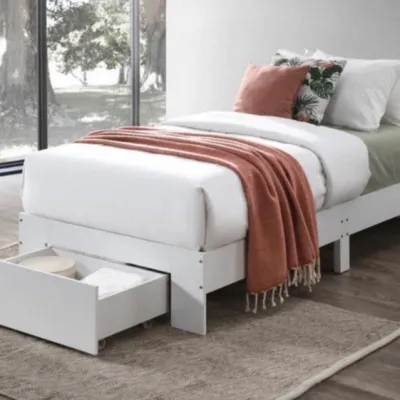

7 Lazada user ratings
🎨Design:overall look nice. however the back support of the bed frame is only a board of 8inch height , not like the 2 sides, which is 76cm h…Read full reviewShow less
🎨Design:overall look nice. however the back support of the bed frame is only a board of 8inch height , not like the 2 sides, which is 76cm height. Lucky my mattress is 8inch in thickness, so it fit well and won't see a gap between the mattress back support, see pic attached. delivery and assemble of bed is different group of staff.
Good quality materials, Durable wooden frame, very accommodating seller. 🎨Design: Exactly as shown on picture
My cats like atas cat can food. Sellers delivery is super fast.

123 Lazada user ratings
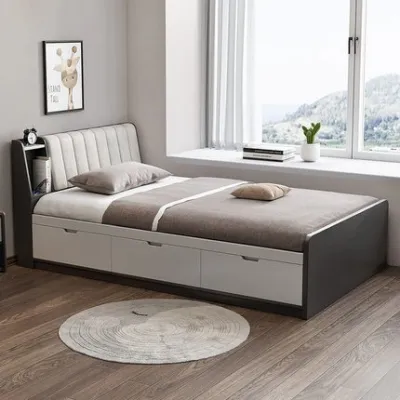
Assembly and installation was quick and good. The storage frame feels good to lift without major effort. Just not sure how stable or long th…Read full reviewShow less
Assembly and installation was quick and good. The storage frame feels good to lift without major effort. Just not sure how stable or long the wood platform will last as when I stepped on top of it while trying to readjust the frame (I am 70kg), there was sounds of wood cracking... I guess only time will tell. They also have disposal service at a price.
Delivered on scheduled date and time. Guys who set up the bed base are really professional and was done in less than half hour. Very spaciou…Read full reviewShow less
Delivered on scheduled date and time. Guys who set up the bed base are really professional and was done in less than half hour. Very spacious and can keep lots of items which hardly in use and wasted to be thrown. For light gray, material is suede and nice to touch. 3rd purchase, this time for my son. Thanks.
🎨Design: Powerful hydraulics with warranty, Sturdy bed frame structure, very friendly and knowledgable installers. Highly recommend
High-quality imported fabric, Convenient storage space, Powerful hydraulics with warranty,
Prices are valid at publication and may change. Please refer to the product page for the latest price.
You will also need a way to record your findings. A clipboard with graph paper allows you to draw a rough sketch of your room to scale, where each square represents a set distance (such as 10 or 20 centimeters). Alternatively, you can use a digital floor plan application on your tablet or smartphone to log dimensions directly. Keep a sharp pencil and an eraser handy for quick adjustments, a step stool to help you reach high corners or window frames, and ask a helper to hold the opposite end of the tape measure for long wall spans.
Step-by-Step Guide to Measuring Your Bedroom Dimensions
Measuring a bedroom involves more than just running a tape measure along one baseboard. Walls are rarely completely straight, and floors can slope slightly, meaning a single measurement can easily mislead you when planning a tight furniture layout. To get an accurate picture of your space, you must systematically measure the room at multiple heights and angles.

Measuring Floor Space and Wall Lengths
Begin by clearing the perimeter of your room as much as possible so you can access the corners. Measure the length of each wall at three distinct heights: at the floor level along the skirting boards, at chest height, and near the ceiling. This three-point check helps identify structural bulges, warped drywall, or plaster unevenness that could prevent a flush fit for a tall headboard or a wide frame.
Next, check if your room is square by measuring diagonally from one corner to the opposite corner, forming an “X” across the floor plan. If the two diagonal measurements are identical or within a few millimeters of each other, your room is square. If there is a significant difference, your walls are out of alignment, meaning you will need to allow for extra clearance when placing a rectangular bed frame against them.
Do not forget to measure the thickness of your baseboards or skirting boards. These wooden or tiled trims run along the bottom of the wall and typically protrude between 1 to 2.5 centimeters into the room. Because bed frames sit on the floor, their legs or solid bases will press against the skirting boards rather than the actual wall, which effectively reduces your usable floor space and pushes the entire bed further into the room.
Accounting for HDB Room Constraints and Architectural Features
In Singapore, residential layouts—particularly in HDB flats and modern condominiums—often feature unique architectural elements that restrict where you can place a bed. Built-in wardrobes are a primary consideration; you must measure the depth of these units and ensure your bed frame does not block their doors or drawers. Look out for structural columns or pillars that protrude from corners, as these create recessed niches that might be too narrow for standard bed frames.
Bay windows and recessed walls also require careful planning. If your room has a bay window, measure its height from the floor and its depth to see if a low-profile bed frame can slide partially underneath, or if a high headboard will block the natural light and window handles. Additionally, locate all wall-mounted air-conditioning units, power outlets, light switches, and data ports. Placing a heavy headboard directly in front of these utilities can block access to plugs or obstruct the downward airflow of your air conditioner.
Finally, measure the swing radius of your bedroom door and any en-suite bathroom doors. Open the doors fully and measure the distance from the hinge to the outer edge of the door leaf, then trace this arc on your floor plan. Your proposed bed frame must sit entirely outside this swing path to prevent accidental collisions and ensure you can enter and exit the room safely.
Calculating the Ideal Bed Frame Size and Walking Clearance
Once you have mapped your room’s physical boundaries, you can calculate the maximum footprint available for your bed frame. This step requires distinguishing between mattress sizes and the actual outer dimensions of the frame, which are almost always larger.
Standard Walking Clearances Around the Bed
For comfortable daily movement, interior design guidelines recommend maintaining a minimum walking clearance of 60 centimeters around all open sides of the bed. If you share the bedroom with a partner, increasing this clearance to 75 or 90 centimeters is highly recommended to prevent bumping into each other. This space is not just for walking; you also need room to comfortably bend down to change the bedsheets, pull open under-bed storage drawers, and navigate safely in the dark.
If the path between the foot of your bed and the opposite wall serves as the primary walkway to an en-suite bathroom or the bedroom door, prioritize clearance in this zone. A cramped walkway of less than 50 centimeters will quickly become a daily frustration and a tripping hazard. If space is tight, consider placing the bed against one wall to consolidate your walking space on a single, wider side, though this is generally most suited for single or super-single beds rather than queen or king sizes.
Factoring in Wardrobe Doors and Other Furniture
Your bed frame must coexist harmoniously with other furniture in the room. If you have a wardrobe with hinged doors, measure the width of the doors to determine their swing path. You must leave enough clearance between the edge of the bed frame and the closed wardrobe so that the doors can swing open a full 90 degrees without striking the frame or mattress. For sliding wardrobe doors, ensure there is enough standing room (at least 60 centimeters) in front of the tracks so you can stand and browse your clothes comfortably.
Consider other furniture items like bedside tables, chest of drawers, and dressing tables. Bedside tables should sit flush with or slightly behind the headboard, but they must not block access to built-in wardrobe drawers or nearby power outlets. If your bed frame features integrated storage drawers that pull out from the sides, measure the depth of these drawers when fully extended to ensure they do not collide with bedside tables or adjacent walls.
Do not overlook vertical clearances and fixtures. Check the position of ceiling fans and hanging light fixtures relative to where your bed will sit. A tall bed frame with a high mattress can bring you close to a low-hanging ceiling fan. Ensure the bed is positioned so that the fan blades do not spin directly over the headboard area, and verify that your curtains or blinds have enough space to hang freely behind or beside the headboard without being crushed.
Common Measuring Mistakes to Avoid
One of the most frequent errors is assuming that a “queen-size” bed frame has the exact same dimensions as a queen-size mattress. While a standard Singapore queen mattress measures 152 centimeters wide by 190 centimeters long, an upholstered, wooden, or storage bed frame can easily add 10 to 30 centimeters to both the width and length. Always check the manufacturer’s specified outer dimensions of the frame, not just the mattress compatibility label.
Another common oversight is ignoring the thickness of skirting boards and window trim. Failing to account for these small protrusions can result in a bed frame that is just a centimeter too wide to fit into a designated alcove. Additionally, many buyers forget to measure their home’s entry points. Even if a bed frame fits perfectly inside your bedroom, it must first fit through your front door, lift car, corridors, and bedroom doorway during delivery. Always measure these entry clearances, especially if you are purchasing a solid, non-demountable frame or a large headboard.
How to Verify Your Measurements Before Buying
Before finalizing your purchase, perform a physical simulation of the bed frame in your room. Use painter’s tape or lay down sheets of newspaper on the floor to outline the exact outer dimensions of the proposed bed frame. Make sure to include the extra depth of the headboard and any protruding legs or decorative frames.
With the outline marked on the floor, spend a day living around it. Walk along the sides, simulate opening your wardrobe doors, sit at your desk, and walk to the bathroom. This physical mockup will immediately reveal if the walking clearance feels too tight or if you have underestimated the impact of the bed’s footprint on your daily routine. Finally, double-check the retailer’s product specification sheet online to verify the total assembled length, width, and height of the frame before placing your order.
Frequently Asked Questions (FAQ)
Does a bed frame add extra length and width to the mattress size?
Yes, almost all bed frames add extra length and width to standard mattress dimensions. While metal platform frames might sit flush with the mattress, upholstered frames, wooden frames with headboards and footboards, and sleigh beds can add significant bulk. A headboard alone can add 5 to 20 centimeters of depth, while thick side rails can increase the width by 10 centimeters or more. Always refer to the manufacturer’s detailed product specifications for the total outer dimensions.
What is the minimum room size needed for a queen-size bed frame?
To comfortably accommodate a standard queen-size bed frame (which averages around 160 centimeters wide by 210 centimeters long) while maintaining the recommended 60 centimeters of walking clearance on three sides, your bedroom should ideally measure at least 2.8 meters by 3.2 meters. If your room is smaller, you may need to consider a space-saving frame design, such as a slim platform bed without a headboard, or position one side of the bed against a wall to maximize the remaining floor space.

Community discussion
Share your experience or ask a question. Comments are reviewed before publication.