
To choose the right size rotating book shelf, you must measure three critical dimensions: the physical base diameter, the maximum rotation diameter (the “sweep zone”), and the vertical height, while leaving a safety clearance buffer of at least 5 to 10 cm around the outer rotation path. This ensures the unit can spin freely without scraping your walls, knocking into adjacent furniture, or pinching your fingers.
In space-constrained homes, such as Singapore’s HDB flats and condominiums, maximizing vertical storage is a smart way to keep rooms organized. A rotating book shelf offers 360-degree access to your entire reading collection while occupying a remarkably small footprint. However, unlike traditional static bookcases that sit flush against a wall, a spinning unit has dynamic spatial requirements that demand careful planning before purchase.
By taking precise measurements of your floor footprint, overhead clearances, and room traffic patterns, you can select a shelf that functions smoothly and complements your living space. This guide details exactly how to measure your room to find the perfect fit.
Products mentioned in this guide
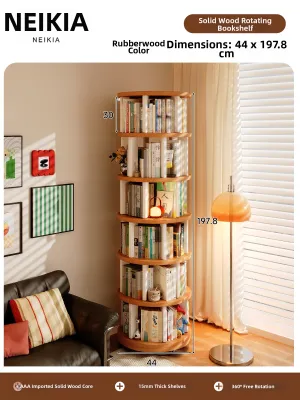
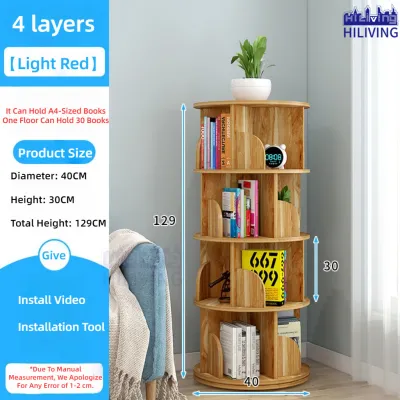
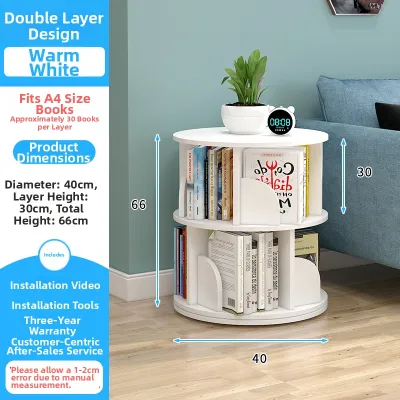
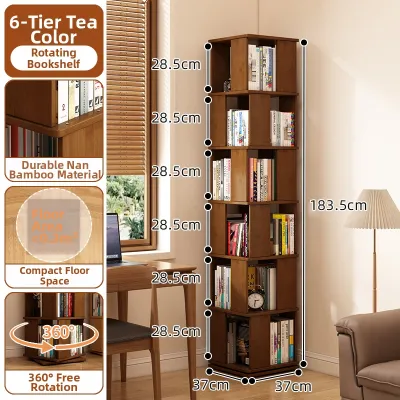
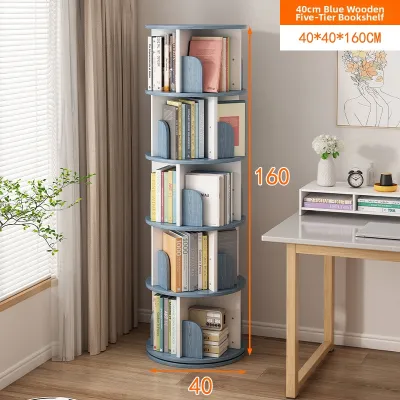
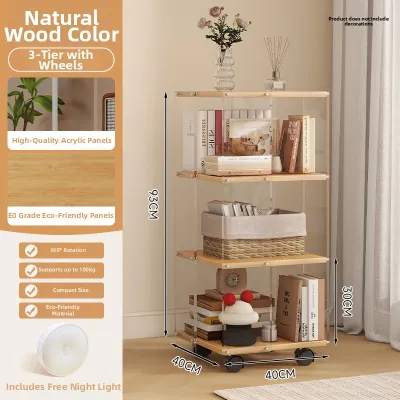
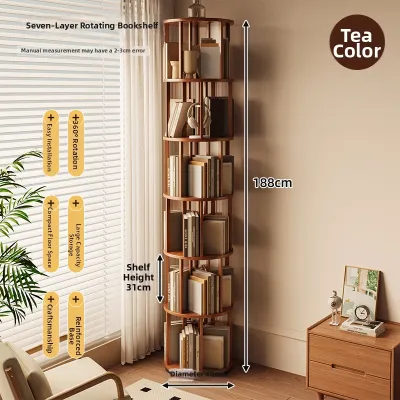
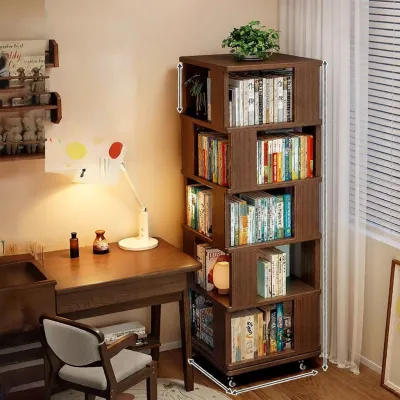
Prices are valid at publication and may change. Please refer to the product page for the latest price.
Key Dimensions: Base, Height, and the "Sweep Zone"
To plan your space effectively, you must first understand the unique geometry of a rotating book shelf. Traditional shelving units only require you to measure width, depth, and height. A rotating unit, however, introduces a circular motion that changes how much physical space it actually occupies during use.
There is a critical difference between the static base diameter and the maximum rotation diameter. The base diameter is the measurement of the stationary bottom plate that rests on your floor. The maximum rotation diameter is the widest circular path carved out by the outermost corners of the shelves as they spin. For square-shelved rotating units, the rotation diameter is always significantly larger than the flat width of the shelves due to diagonal geometry. For example, a square shelf measuring 40 cm by 40 cm has a diagonal rotation diameter of approximately 56.6 cm. This means the unit requires a much larger circular footprint than its static dimensions suggest.
The “sweep zone” or “swing radius” represents the complete 360-degree cylindrical volume of space that the bookcase occupies while spinning. It is not just a flat circle on the floor; it is a three-dimensional column of active space. Any object—whether a wall, a desk, a curtain, or a light switch—that enters this sweep zone will obstruct the shelf’s movement or suffer damage from repetitive collisions.
Total height is another vital factor to consider in relation to standard room proportions. In Singapore, residential ceiling heights typically range from 2.6 to 2.8 metres. While a standard static bookcase might stand 180 cm tall, a rotating bookcase of the same height can feel much more imposing because of its bulk. Additionally, the rotating mechanism—usually a heavy-duty steel ball-bearing turntable base—adds an extra 3 to 8 cm of height to the bottom of the unit. Some models also feature decorative top finials or protective top-tier railings that extend the overall height further than the main shelving body.
How to Measure Your Space for a 360-Degree Spin
Measuring for a rotating furniture piece requires a dynamic approach. You cannot simply measure along the skirting board and assume the unit will fit. You must actively map out the entire rotational path on your floor and check for any three-dimensional obstructions in the surrounding air space.

Measuring the Floor Footprint and Full Rotation Zone
To calculate the exact floor space required for safe and unobstructed operation, start by identifying the precise center point where you want the rotating book shelf to stand. Mark this spot on the floor with a small piece of removable painter’s tape. This center point will serve as the anchor for all your physical measurements.
Next, determine the maximum rotation radius of the shelf model you plan to buy. The rotation radius is half of the maximum rotation diameter specified by the manufacturer. If the product listing only provides the flat shelf width, calculate the diagonal corner-to-corner measurement to find the true rotation diameter, then divide that number by two.
Once you have the physical rotation radius, you must add a mandatory “hand clearance” buffer. A buffer of 5 to 10 cm should be added to the physical radius to calculate the true, usable sweep zone. This extra space ensures that when you or your family members reach out to spin the shelf, your fingers and knuckles will not get pinched or scraped against the wall or adjacent furniture. It also accounts for books that might occasionally overhang the edges of the shelves.
To visualize this complete zone, tie a piece of string equal to your calculated usable sweep radius (physical radius plus the hand buffer) to a pencil. Hold the other end of the string firmly at your marked floor center point and draw a light pencil circle on the floor, or lay down painter’s tape along the outer edge of the circle. This physical mapping allows you to see exactly how much floor space the spinning unit will claim.
Checking Vertical Clearances and Overhead Obstructions
Once the floor footprint is mapped, you must evaluate the vertical column of space directly above your circle. Use a reliable steel tape measure to find the exact floor-to-ceiling height at the center point of your planned placement. Do not assume your ceiling is perfectly level across the entire room, as minor structural settling can create height variances.
Compare this ceiling measurement against the total height of the rotating book shelf, making sure to include the height of the rotating base mechanism and any top decorative trim. If you are placing the shelf in a tight spot, ensure there is at least 10 cm of clearance between the top of the shelf and the ceiling to allow for comfortable assembly and positioning.
Next, scan the vertical column for common architectural and household obstacles. In Singaporean homes, you must pay close attention to the positioning of wall-mounted air conditioning units, skirting boards, ceiling fans, pendant lights, and window ledge protrusions. Skirting boards are especially tricky; they prevent the stationary base of the shelf from sitting flush against the wall joint, which effectively pushes the center point of your shelf further out into the room. If your skirting boards are 1.5 cm thick, your mapped center point must shift outward by at least that same distance, which in turn moves the entire sweep zone closer to other furniture or walkways.
Integrating the Shelf into Your Room Layout and Traffic Flow
A rotating book shelf should enhance your room’s functionality, not turn your daily movement into an obstacle course. Integrating the unit successfully requires balancing the shelf’s sweep zone with the natural traffic flow of your household.
Maintain minimum walkway clearances to ensure comfortable movement around the spinning unit. In standard interior design, active pathways and corridors should ideally remain at least 70 to 90 cm wide. If you place a rotating shelf in a narrow hallway or near the entrance of a bedroom, make sure that even when the shelf is spinning at its widest angle, the remaining walkway space does not fall below 60 cm. This prevents residents from constantly bumping into the shelf as they walk past.
Carefully evaluate the distance between the shelf and any swinging doors, wardrobe doors, or cabinet drawers. A standard bedroom door in an HDB flat requires a clear opening arc of about 80 to 90 cm. If the door’s swing radius intersects with the shelf’s sweep zone, you risk a loud, damaging collision every time someone enters the room. Keep the entire sweep zone of the shelf completely outside the path of any operable doors or drawers.
For corner placement, which is highly popular for space optimization, you must calculate a specific corner offset. You cannot push the center of a rotating shelf directly into a 90-degree corner. The center pivot point of the shelf must be positioned at a distance greater than the total usable sweep radius (including the hand buffer) from both adjacent walls. If your shelf has a rotation radius of 25 cm and you want a 10 cm hand buffer, the center point must be placed at least 35 cm away from both the rear and side walls. This ensures the corners of the spinning shelves never scrape the paint or wallpaper.
In open-space placements, such as using the shelf as a room divider between a living room and a dining area, the unit can sit closer to seating arrangements. However, you must still ensure that nearby dining chairs or sofa armrests do not drift into the sweep zone when in use.
Balancing Physical Space with Book Storage Capacity
Choosing the right size is not just about fitting the furniture into your room; it is also about ensuring the shelf can actually hold your literary collection. You must balance the physical external dimensions of the unit with its internal storage capacity.
To estimate your book volume, count your existing books or measure your current shelf usage. On average, a standard novel is about 2 to 3 cm thick. A typical rotating book shelf tier with a 45 cm diameter can hold roughly 20 to 30 standard books. Therefore, a 4-tier rotating shelf can accommodate approximately 80 to 120 books, while a tall 5-tier or 6-tier unit can hold up to 150 to 180 books. If you have a large collection of heavy academic textbooks or oversized design albums, you will need a model with taller tier heights (at least 30 to 35 cm per tier) and a wider base diameter for stability.
Weight distribution is incredibly important for any rotating furniture piece. Rotating shelves rely on a central spindle or a ring of ball bearings to spin smoothly. If you load one side of the shelf heavily with heavy encyclopedias while leaving the other sides empty or filled with light paperback novels, you will shift the unit’s center of gravity. This uneven load puts severe lateral stress on the bearing mechanism, making the rotation feel stiff, noisy, or jerky. Over time, this can permanently warp the bearings or cause the entire unit to wobble and tip.
To maintain smooth bearing operation and prolong the lifespan of your shelf, always distribute the weight of your books evenly across all four quadrants of each tier. Additionally, place your heaviest books on the lowest tiers to keep the center of gravity as low as possible. Always check the manufacturer’s specified maximum weight limit per tier—which typically ranges from 10 to 15 kg—and never exceed it.
Common Measuring and Placement Mistakes to Avoid
Many homeowners make simple, avoidable errors when purchasing a rotating book shelf. Being aware of these common pitfalls can save you from the hassle of returning a heavy piece of furniture or damaging your home.
- Forgetting the hand clearance gap: This is the most common complaint among buyers. If you measure only the physical rotation diameter of the shelf and place it exactly that distance from a wall, you will inevitably scrape your knuckles against the wall every time you spin the unit to find a book. Always include the 5 to 10 cm buffer.
- Ignoring uneven floors: A rotating shelf must sit on a perfectly level surface. If your floor has a slight slope or uneven tiles, gravity will cause the shelf to drift and spin on its own, or it will require significant force to spin against the incline. This uneven pressure quickly wears out the bearings. Use a spirit level to check the floor before assembling the unit.
- Neglecting delivery access checks: Before clicking buy, you must ensure the packaged or pre-assembled unit can actually reach your room. Measure the interior dimensions of your apartment building's lift, the width of your main entrance door, and any tight corners in your hallways. A large, heavy box containing a multi-tier rotating shelf can be incredibly difficult to maneuver through narrow HDB corridors and standard 80 cm bedroom doorways.
If you discover that your floor is slightly uneven or your walls are not perfectly square, do not force the installation. Check the manufacturer’s instructions for leveling options, or consult a professional handyman to ensure the shelf is safely anchored and stabilized.
Frequently Asked Questions (FAQ)
How much extra gap should I leave between the shelf and the wall?
You should leave a minimum buffer zone of 5 to 10 cm beyond the maximum calculated rotation radius of the shelf. This extra gap prevents the spinning corners from scraping your wall paint or wallpaper, accommodates minor wall imperfections and skirting boards, and provides comfortable clearance for your hands when turning the unit.
Can I place a rotating book shelf on a thick carpet or rug?
It is highly recommended to place a rotating book shelf on a hard, level surface such as tile, vinyl, or hardwood. Thick pile carpets and plush rugs cause the central bearing plate to sink unevenly, which strains the rotating mechanism, makes spinning difficult, and creates a serious tipping hazard when the shelf is fully loaded with books. If you must place the shelf on a carpeted floor, lay down a rigid, flat wooden or acrylic base board first to distribute the weight evenly and provide a stable surface for the turntable base.
Community discussion
Share your experience or ask a question. Comments are reviewed before publication.