
Selecting the right slim drawer organizer for your HDB flat requires a shift in focus from the external appearance of your furniture to its internal dimensions. To ensure a seamless fit that maximizes storage without jamming, you must measure the exact internal usable space of your drawer cavity rather than the outer drawer face. By taking precise measurements of the interior floor’s width, depth, and height, and subtracting a small clearance margin for hardware, you can confidently choose organizers that slide in smoothly and leave zero wasted space.
Why Standard Organizers Fail in HDB Drawers
Built-in wardrobes, kitchen cabinets, and study desks in Singapore’s HDB flats are highly optimized for space, which often means they feature non-standard, shallow, or narrow drawer dimensions. Many mass-market drawer organizers are designed for larger, freestanding international furniture lines, resulting in dimensions that are either too wide to fit or too deep to allow the drawer to close. When you force a standard organizer into a compact HDB drawer, you often end up with awkward gaps, or worse, a drawer that gets stuck halfway.
Using a slim drawer organizer allows you to utilize every millimeter of these compact storage areas. These slim profiles are specifically engineered to fit narrow configurations, making them ideal for separating cutlery in kitchen drawers, organizing accessories in built-in wardrobes, or sorting stationery in study desks. Without precise measurements, however, even a slim organizer can fail to fit if it does not account for the unique internal construction of your built-in cabinetry.
Products mentioned in this guide
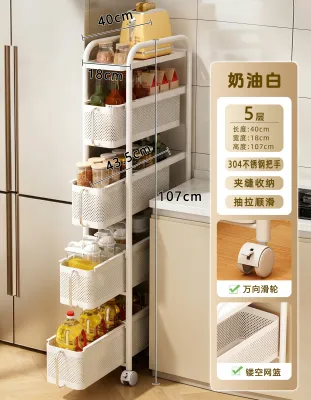
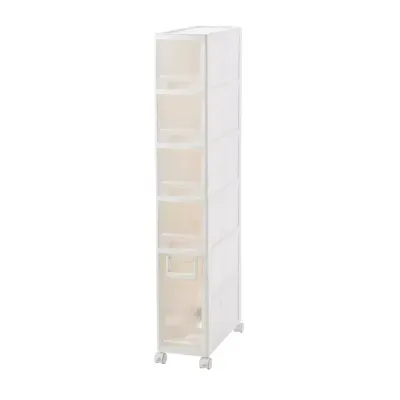
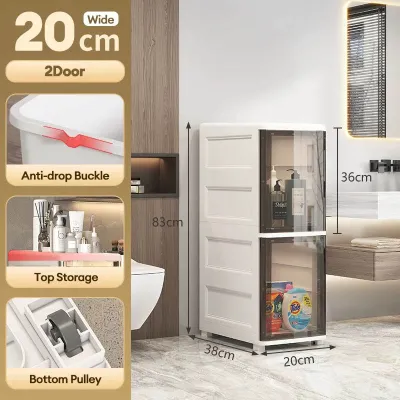
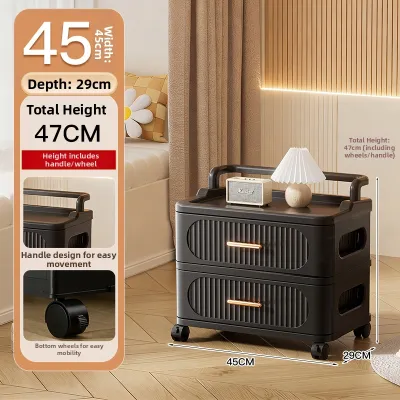

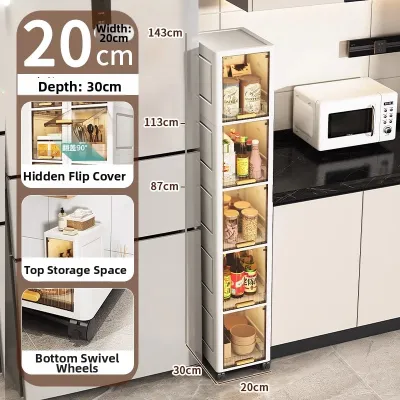
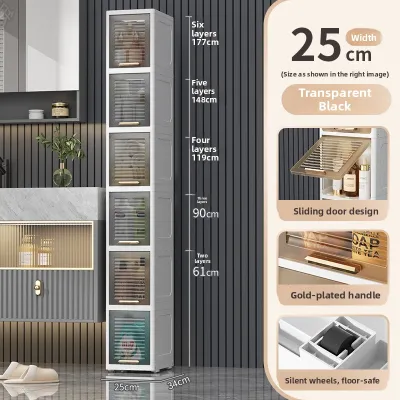
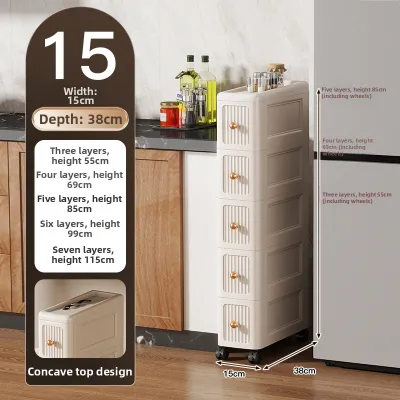
Prices are valid at publication and may change. Please refer to the product page for the latest price.
Step-by-Step Guide to Measuring Your Drawers
Achieving an organized drawer starts with a systematic approach to gathering your dimensions. Relying on guesswork or visual estimation often leads to frustrating returns and mismatched storage bins. By following a structured measuring process, you can map out the exact footprint of your drawer interior and identify potential physical obstacles before making a purchase.

Measuring Internal Width, Depth, and Height
To begin, empty the drawer completely so that you have clear access to the interior floor and walls. Always use a rigid metal tape measure for this task; flexible sewing tapes can sag or bend, leading to inaccurate readings that can throw off your calculations by several millimeters. Keep your tape measure perfectly flat against the surfaces as you take your dimensions.
Measure the internal width of the drawer floor from the inside of the left panel to the inside of the right panel. It is crucial to take this measurement at both the front and the back of the drawer, as wooden drawers can warp slightly over time or may not have been perfectly square during assembly. If there is a discrepancy between the two numbers, always use the smaller measurement as your baseline.
Next, measure the internal depth from the inside of the front panel to the inside of the back panel. Again, take this measurement on both the left and right sides of the drawer floor to account for any structural irregularities. Finally, measure the internal height from the drawer floor to the top edge of the drawer side panel, or to the lowest point of the cabinet frame directly above the drawer if the drawer sits flush with the frame.
Accounting for Drawer Hardware and Clearances
One of the most common reasons organizers fail to fit is the presence of hidden hardware that protrudes into the usable drawer space. Examine the sides of your drawer for runner tracks, soft-close mechanisms, or side-mounted drawer slides. If these components are installed on the inside of the drawer cavity, measure the distance between the inner edges of the hardware rather than the wooden panels themselves, as this represents your true usable width.
You must also account for any locking mechanisms, screws, or structural brackets that sit inside the drawer. If your drawer has a front panel overhang or a decorative lip, check whether this lip reduces the vertical clearance when the drawer is pulled open. An organizer might fit comfortably inside the drawer floor but could get caught on the upper cabinet frame as you slide the drawer outward.
To prevent these issues, deduct a safety clearance margin of approximately 5 to 10 millimeters from your final width, depth, and height measurements. This small buffer ensures that the organizer can be placed into and removed from the drawer easily, and allows the drawer to glide open and closed without any friction or jamming.
Translating Measurements into Organizer Sizes
Once you have your finalized internal dimensions, you can begin comparing them against product specifications. Manufacturers of slim drawer organizers typically list the external dimensions of their products, which you must match against your adjusted drawer measurements. This step requires deciding whether a single large organizer or a combination of smaller modular units will best serve your storage needs.
Choosing the Right Width and Depth Configurations
When planning your layout, you do not have to find a single organizer that matches your drawer dimensions perfectly. In fact, combining multiple narrow, slim organizers is often a much more efficient way to fill an irregular or wide drawer space. For example, if your drawer has an internal width of 30 centimeters, you might combine two 10-centimeter-wide slim organizers and leave a 10-centimeter open lane for larger items.
Consider how the depth of the organizers aligns with your drawer depth. If your drawer is shallower than standard sizes, look for modular trays that can be placed sideways (transversely) to maximize the footprint. Always prioritize checking the manufacturer’s listed external dimensions rather than relying on generic size labels like “small” or “medium,” as these terms vary widely between brands.
Maximizing Vertical Space Without Jamming
Utilizing the vertical dimension of your drawer is key to doubling your storage capacity, but it must be done carefully to avoid blocking the drawer mechanism. For shallow drawers, such as those typically found in HDB kitchen islands or vanity units, low-profile slim organizers with a height of 4 to 5 centimeters are usually necessary.
If you have a deeper drawer, you can explore stackable slim organizers that slide over one another on integrated tracks. When planning a stacked setup, ensure the combined height of the stacked organizers, plus a 10-millimeter safety buffer, is less than the clearance height of the cabinet opening. To verify this before purchasing, place a temporary household object of the same height inside the drawer and test if the drawer closes smoothly without catching.
Common Measuring Mistakes to Avoid
The most frequent error when shopping for organizers is measuring the external drawer front instead of the internal cavity. The decorative front panel of an HDB drawer is almost always significantly larger than the actual storage box behind it. Relying on external face measurements will result in purchasing an organizer that is far too large for the actual internal space.
Another common mistake is assuming that all drawers in a single piece of furniture are identical. Even in factory-assembled or professionally installed built-in wardrobes, drawers that appear identical from the outside can have different internal depths or heights due to the placement of runner tracks, bottom supports, or structural dividers. Always measure each individual drawer that you plan to organize rather than measuring one and multiplying the results.
Finally, do not overlook the impact of drawer liners or non-slip mats. If you plan to install a thick cushioned liner at the bottom of your drawer, place the liner inside the drawer before taking your final height measurements, as even a few millimeters of liner thickness can affect the clearance of tight-fitting stackable organizers.
Frequently Asked Questions (FAQ)
Can I use tension rods or custom dividers instead of buying slim organizers?
Tension rods and custom-cut dividers are highly effective for dividing large, deep drawers into broad sections, but they often struggle in shallow or narrow HDB drawers. Because tension rods rely on pressure against the drawer walls, they can cause thin drawer sides to bow or warp over time if overtightened. Slim tray organizers are generally superior for holding small, loose items like jewelry, cosmetics, or cutlery, as they feature solid bottoms that contain spills and prevent tiny objects from slipping underneath the dividers.
What if my drawer dimensions do not match any standard slim organizer sizes?
If your drawer dimensions do not align with standard organizer sizes, the best approach is to use a modular system of smaller, individual slim trays. You can mix and match different lengths and widths to cover as much of the drawer floor as possible. To secure these smaller trays and prevent them from sliding around when you open and close the drawer, place a cut-to-size non-slip drawer liner underneath them, or use small adhesive gel pads on the bottom corners of each organizer.
Community discussion
Share your experience or ask a question. Comments are reviewed before publication.