
Replacing worn or outdated drawer handles is one of the quickest ways to refresh your kitchen cabinets, wardrobe, or study desk. However, buying a replacement that does not align with your existing drill holes leads to unnecessary frustration, extra drilling, or unsightly gaps. To ensure a seamless swap without modifying your furniture, you must determine the exact distance between the screw holes. This guide explains how to measure your drawer hardware accurately so you can confidently select a replacement that fits perfectly on the first try.
Gather the Right Tools for Accurate Measurement
Achieving a perfect fit starts with using the correct measuring instruments. A flexible sewing tape measure or a plastic school ruler can easily bend or warp, leading to slight errors that make a new handle impossible to install. Instead, opt for a rigid metal tape measure or a precision machinist ruler. These tools remain perfectly flat against the drawer surface, ensuring your readings are completely straight.
For those who want the highest level of accuracy, digital calipers are an excellent choice. Calipers allow you to measure down to the fraction of a millimeter and often feature a button to toggle instantly between metric and imperial units. This is particularly helpful because hardware listings online may use either millimeters or inches depending on where they are manufactured. Avoid relying on visual estimation or holding an old handle up to a computer screen, as even a two-millimeter discrepancy can prevent the mounting screws from threading properly.
Products mentioned in this guide
![[Factory Direct]Modern Metal Wardrobe Cabinet Drawer Handle For Home Room Furniture Hardware Kitchen Cupboard Dresser Closet Handle Single Hole 96-192mm](https://img.lazcdn.com/g/p/522d1221bfa2ad183a011ad2b296797a.jpg_webp_400x400q80.jpg_.webp)

![[OKLIFE. SG]Aluminium Alloy Black Door Handles Wood Door Drawer Handle Pulls Silver Gold Furniture Handle](https://img.lazcdn.com/g/p/abbe67dcf784f159671c8c9012709bbd.jpg_400x400q80.jpg_.webp)
Prices are valid at publication and may change. Please refer to the product page for the latest price.
How to Measure the Center-to-Center Hole Spacing
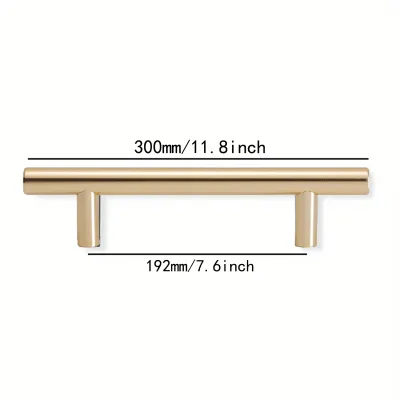
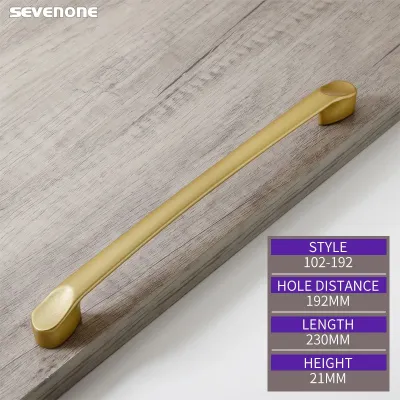
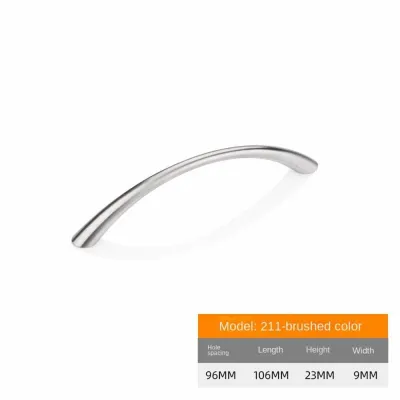
The most critical dimension for any two-hole drawer handle is the center-to-center distance. This is the spacing between the middle points of the two pre-drilled screw holes in your drawer front. To get an accurate reading, it is best to remove the existing handle entirely so you can access the bare holes without any hardware obstructing your tools.

To measure using the standard center-to-center method, place the hook of your metal tape measure or the edge of your ruler at the exact center of the left screw hole. Stretch the tape horizontally and read the measurement at the exact center of the right screw hole. Because finding the absolute center of an open hole by eye can sometimes be tricky, you can use a reliable alternative: the edge-to-edge method. Simply measure from the far-left edge of the left hole to the far-left edge of the right hole. This distance is mathematically identical to the center-to-center measurement and eliminates any guesswork.
Always record your measurements in both millimeters and inches. In Singapore, furniture hardware is commonly specified in millimeters, with standard industry sizes like 96mm, 128mm, and 160mm being highly prevalent. However, some imported classic or rustic handles are still listed in inches, such as 3 inches (which is approximately 76.2mm) or 4 inches. Having both numbers written down allows you to cross-reference product descriptions on any local or international ecommerce platform without needing to do quick math on your phone while shopping.
Check Overall Length and Projection for a Proportionate Fit
While the hole spacing determines whether a handle can be physically installed, other dimensions dictate how the hardware looks and functions in your space. The first of these is the overall length of the handle. A modern T-bar handle, for example, often extends well past the screw posts. You must measure this total end-to-end length to ensure the handle does not overhang the edges of the drawer front or collide with adjacent cabinet doors when opened.
Next, consider the projection depth, which is the distance the handle sticks out from the face of the drawer. A handle with too little projection can make it difficult to slip your fingers behind it, especially for family members with larger hands or limited grip strength. Conversely, a handle that projects too far might catch on clothing or obstruct walkways in tight galley kitchens or narrow corridors. Measure your current handle’s projection as a baseline, and decide if you need more or less clearance.
Finally, take note of the handle’s width and thickness. If your drawers feature recessed panels, shaker-style framing, or decorative molding, a wide handle base might not sit flat against the wood. Ensure the mounting footprint of the new hardware fits entirely within the flat portion of your drawer face to prevent stability issues or gaps where dust can accumulate.
What to Do If Your Measurements Are Non-Standard
If your measurements do not align perfectly with standard retail sizes, do not panic. Minor manufacturing tolerances are common in both furniture and hardware production. Often, a discrepancy of one millimeter or less is easily accommodated by the natural play or clearance inside standard pre-drilled holes, allowing you to gently guide the screws into place.
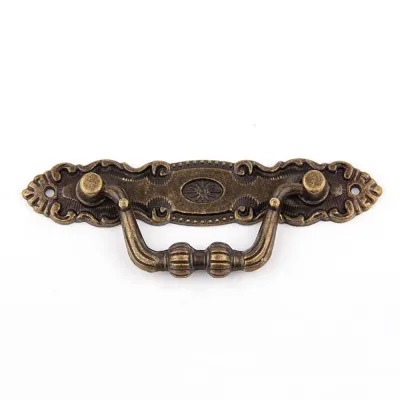
If the gap is slightly larger but you still want to avoid drilling new holes, look for adjustable handles or hardware with oversized mounting bases. Some handles feature backplates or wide feet that cover a range of positions, effectively concealing slightly misaligned holes. Another option is to search for “cup pulls” or handles with wide backplates that completely cover the old holes, allowing you to drill new ones nearby without exposing the old, unused openings.
Never force a mismatched handle into place by cross-threading the screws or bending the hardware. Forcing the fit can strip the internal threads of the handle, damage the screw heads, or even crack the wooden drawer front. If you cannot find a suitable replacement size and cannot use a concealing backplate, the safest approach is to fill the existing holes with a high-quality wood filler, sand the surface smooth, touch up the paint or varnish, and drill fresh holes to match your preferred standard handle size.
Frequently Asked Questions (FAQ)
Can I replace a single-hole knob with a two-hole handle?
Yes, you can transition from a single-hole knob to a two-hole handle, but it requires some extra preparation. Since your drawer currently only has one hole, you will need to drill at least one new hole to accommodate the second screw post of the new handle. If you want the new handle to be perfectly centered on the drawer, you may actually need to drill two new holes and fill the original center hole with wood filler. Always check the structural integrity of the drawer front before drilling, ensuring the wood is not split or weakened around the existing hole.
What if my existing drawer handle has more than two screw holes?
Multi-hole or specialty handles are less common but do exist, particularly on heavy filing cabinets or vintage furniture. To replace these, you must measure the center-to-center distance between every single pair of holes. Finding an exact off-the-shelf retail replacement for multi-hole configurations can be incredibly difficult. If you cannot find a matching piece, your best options are to order a custom handle, use a wide backplate to cover all the existing holes while drilling new ones, or professionally fill and refinish the drawer front so you can start fresh with a standard two-hole setup.
Community discussion
Share your experience or ask a question. Comments are reviewed before publication.