
To buy the right size of replacement chair socks, you must measure the exact diameter or width of your chair legs at their base using a precise tool like a rigid ruler, caliper, or flexible tape measure. Matching these dimensions to the correct shape and stretch capacity of the sock prevents them from slipping off or tearing. This guide details how to measure round, square, and rectangular legs, interpret sizing charts, and ensure a secure fit that protects your home’s flooring.
Tools You Need for Accurate Chair Leg Measurement
To get a precise measurement for your chair socks, you need the right tools on hand. Guessing the size of your chair legs by eye or using an imprecise tool like a standard sewing tape measure draped loosely can lead to loose, slipping socks or tight fabric that splits under pressure. Gathering a few specific measuring instruments ensures your replacement parts fit perfectly from day one.
First, secure a rigid ruler or a pair of digital calipers. Calipers are highly recommended for round legs because they slide shut directly against the widest points of the wood or metal, providing an exact diameter reading without parallax error. If you do not have calipers, a clear plastic ruler works well because you can see the edges of the chair leg directly through the markings.
Products mentioned in this guide
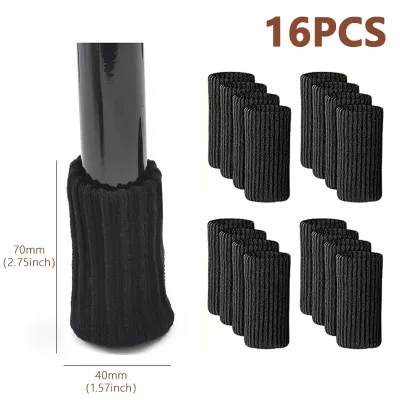
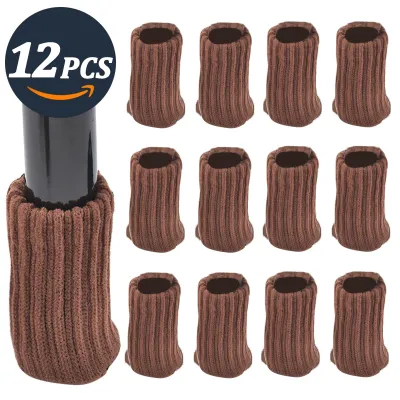
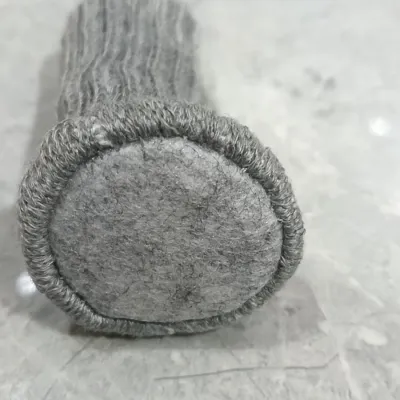
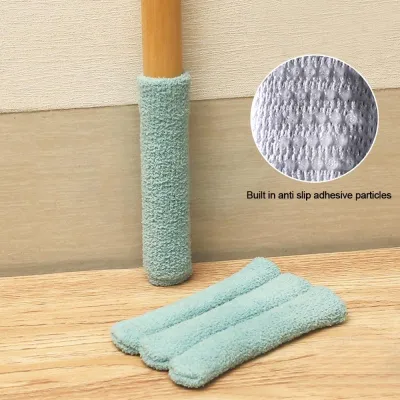
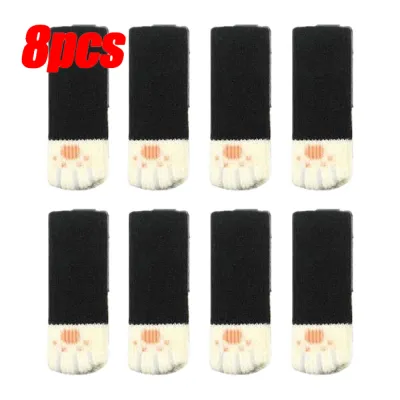
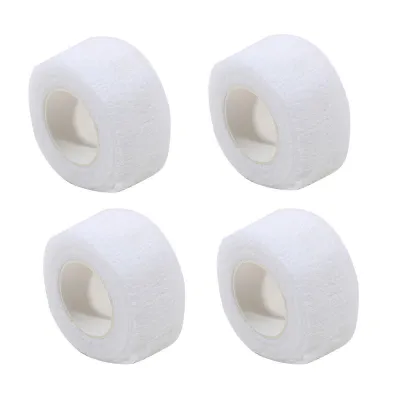
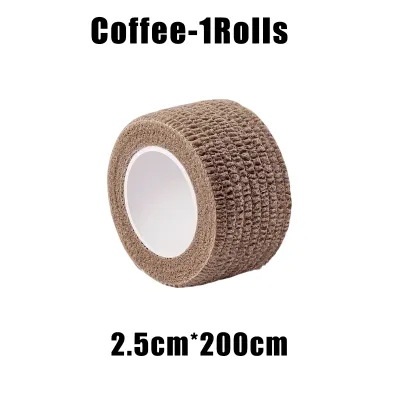
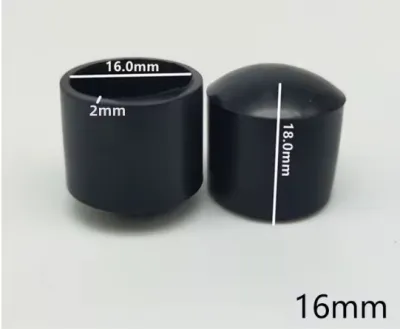
Prices are valid at publication and may change. Please refer to the product page for the latest price.
Next, keep a flexible measuring tape nearby. This is particularly useful for measuring the circumference of round legs or wrapping around irregular shapes to verify your calculations. If you do not have a flexible tape, a simple piece of non-stretchy string wrapped around the leg and then measured against a flat ruler serves as an excellent alternative.
Always use a notepad and pen to write down the dimensions of each leg immediately. It is easy to confuse the measurements of the front and back legs, which often differ in thickness or angle. For the highest level of accuracy, record your measurements in millimeters or centimeters rather than fractions of an inch, as most replacement accessories on ecommerce platforms use metric sizing.
Finally, prepare your workspace. Ensure the room has bright, clear lighting so you can read the fine tick marks on your ruler or calipers. Clear any clutter around the base of the chairs so you can easily tilt them, access all sides of each leg, and work comfortably without straining your posture.
Identify the Shape and Profile of Your Chair Legs
Before taking any measurements, you must identify the geometric shape and vertical profile of your chair legs. Chair socks are manufactured to stretch and conform to specific shapes. Placing a sock designed for one profile onto another can cause uneven stress on the fabric, leading to premature wear, tearing at the corners, or sliding off entirely when the chair is dragged.

Look directly at the bottom cross-section of the chair leg where it makes contact with the floor. Most chair legs fall into three primary categories: round, square, or rectangular. Some modern furniture designs feature oval, triangular, or highly irregular organic shapes, which require a different approach to measurement and specialized elastic covers.
Next, observe the vertical profile of the leg from the floor up to about ten centimeters high. A straight leg maintains a uniform width and shape along its entire length. A tapered leg, which is common in mid-century modern and Scandinavian-style furniture, starts wider at the top and narrows down toward the floor.
Understanding this distinction is critical because a tapered leg exerts uneven pressure on a chair sock. If you only measure the very bottom of a tapered leg, the upper portion of the sock may stretch beyond its limits and tear. Conversely, if you only measure the upper portion, the bottom of the sock will be too loose, causing it to sag, gather dust, and eventually slip off during daily use.
Matching the sock shape to the leg shape ensures the structural integrity of the protective material. For example, putting a round sock on a sharp, square wooden leg forces the fabric to stretch excessively over the four corners. This concentrated friction quickly punctures the material, leaving your parquet or vinyl flooring vulnerable to deep scratches.
How to Measure Round Chair Legs
Measuring cylindrical or round chair legs is a straightforward process, but it requires precision to ensure the elastic material of the sock grips the surface firmly. The goal is to determine the exact diameter of the base and, if possible, verify this measurement using the circumference.
To measure the diameter, turn the chair upside down or tilt it securely against a wall. Place your rigid ruler or digital calipers across the exact center of the leg’s bottom surface. Ensure you are measuring the widest point of the circle; placing the ruler off-center will result in an underestimation of the true diameter, leading to a sock that is too tight.
If you are using a ruler, look straight down at the markings to avoid parallax error, which occurs when viewing the ruler from an angle. Note the measurement in millimeters. For example, a standard dining chair leg might measure 25 millimeters across. Write this down as the base diameter.
To verify this measurement, wrap your flexible measuring tape snugly around the leg just above the base. This gives you the circumference. If you are using a string, wrap it once around, mark the intersection point with a fine pen, and lay the string flat against your ruler. To check your math, divide the circumference by 3.14 (Pi) to confirm it matches your measured diameter.
For tapered round legs, you must take two separate measurements. First, measure the diameter at the very bottom where the leg touches the floor. Second, measure the diameter at the height where the top of the sock will sit, which is typically five to seven centimeters up the leg. These two numbers will help you select a sock that accommodates the taper without slipping down.
Never assume all four legs on a single chair are identical. Due to manufacturing tolerances, hand-finishing, or structural design, front legs are sometimes thicker than back legs to support more weight. Measure at least one front leg and one back leg on each chair to ensure complete accuracy across your entire furniture set.
How to Measure Square and Rectangular Chair Legs
Square and rectangular chair legs present unique challenges because of their sharp corners and flat faces. To find a chair sock that fits securely without tearing, you must measure both the flat sides and the diagonal distance across the corners, as the diagonal represents the maximum stretch point the sock must endure.
For square legs, place your rigid ruler flat against one side of the base and measure the width from corner to corner. Because square legs have equal sides, you only need to measure one flat face, but it is wise to check a second side to confirm the leg is truly square. Write this width down in millimeters.
For rectangular legs, you must measure two adjacent sides. Place your ruler against the shorter side to find the width, and then against the longer side to find the length. For example, a rectangular metal leg might measure 20 millimeters by 40 millimeters. These two distinct dimensions are critical when looking for specialized rectangular chair socks.
The most important measurement for any angular leg is the diagonal. This is the straight-line distance from one corner to the opposite corner across the center of the leg’s base. To measure this, place your ruler diagonally across the bottom of the leg. The diagonal is always significantly longer than the side width, and the chair sock must stretch to this maximum dimension to slide over the leg.
If your angular legs are tapered, the sides and diagonals will shrink as they approach the floor. Measure the width, length, and diagonal at the base, and then repeat these measurements at the height where the top of the sock will rest. This ensures the sock’s elastic collar can stretch over the wider upper section while remaining tight enough at the bottom.
Keep in mind that wooden square legs often have slightly rounded or chamfered corners. If the corners are heavily rounded, note this down, as it reduces the sharp friction points on the fabric. If the corners are sharp and unfinished, the fabric of the sock will experience high stress, making a reinforced bottom or a silicone-lined sock a much safer choice.
How to Read Sizing Charts and Stretch Limits
Once you have your precise measurements recorded in millimeters, you are ready to browse online marketplaces or local home improvement stores. However, reading sizing charts can be confusing because manufacturers use different formats, ranges, and stretch tolerances. Understanding how to translate your physical measurements into these charts is key to a successful purchase.
Most chair socks are sold in size ranges rather than single fixed dimensions. For example, a product listing might state that a medium size fits round legs with a diameter of 22 to 30 millimeters. This range exists because the woven fabric or silicone body is highly elastic and designed to stretch to fit multiple sizes securely.
When your measurement falls near the absolute limit of a size range, always consider the stretch limits of the material. If your round chair leg is 30 millimeters in diameter and the medium size fits up to 30 millimeters, the sock will be stretched to its maximum capacity. This high tension can cause the fabric fibers to thin out, reducing their lifespan, or cause the integrated felt pad at the bottom to detach under lateral movement.
In this scenario, it is often better to opt for the next size up, provided the minimum limit of that larger size is still smaller than your leg’s diameter. For example, if the large size fits 28 to 38 millimeters, a 30-millimeter leg sits comfortably within the lower end of the range, ensuring a snug fit without excessive material stress.
Pay close attention to the shape compatibility notes in the product description. A listing may state “fits square legs from 20 to 25 millimeters.” This means the manufacturer has already accounted for the diagonal stretch of a square leg within that width range. Do not use a round sizing chart for square legs unless the chart explicitly provides the corresponding diagonal limits.
Additionally, consider the internal construction of the chair socks. Many modern designs feature thick silicone caps on the inside or heavy felt pads glued to the bottom. These components add internal bulk, which slightly reduces the available stretch space. If your chair legs are made of a high-friction material like rough wood or matte metal, they will be harder to slide into the socks, requiring a slightly more generous size.
Install and Verify a Secure Fit
After your replacement chair socks arrive, proper installation and verification are the final steps to protecting your floors. Installing them incorrectly can cause the socks to sit crookedly, which leads to uneven wear on the felt pads and causes the fabric to slip down over time.
To install the socks, first ensure the chair legs are completely clean and dry. Dust, grit, or old adhesive residue on the wood or metal can act like sandpaper, wearing down the inside of the sock or scratching your floor if it slips out. Wipe each leg thoroughly with a damp cloth and let it dry completely before proceeding.
In Singapore’s humid climate, dust and moisture can accumulate quickly under furniture, so cleaning the legs thoroughly before installation prevents mold or grime from getting trapped inside the sock. If you have wooden legs, ensure they are completely dry to prevent moisture from warping the wood under the tight elastic cover.
Stretch the opening of the sock wide with your fingers and slide it over the bottom of the chair leg. Pull the sock upward gradually, working your way around the leg to ensure the fabric stretches evenly. Avoid pulling solely from the top elastic band, as this can overstretch the collar and damage the elastic threads; instead, push the sock up from the bottom pad.
Once the sock is on, align it so the reinforced bottom or integrated felt pad sits perfectly flat against the floor-facing surface of the leg. If you are installing socks on square or rectangular legs, make sure the corners of the sock align precisely with the corners of the leg. Crooked alignment puts uneven tension on the seams, causing them to split.
To verify a secure fit, perform three simple checks:
- Check for gaps: Look closely at the sides and bottom of the sock. The material should cling tightly to the leg with no loose pockets, sags, or bunching of fabric.
- The tug test: Gently grasp the top of the sock and tug it downward. If it slides off with minimal effort, the sock is too large and will likely fall off when the chair is pushed or pulled.
- The slide test: Place the chair upright on your floor and sit on it. Slide the chair back and forth a few times. The socks should stay firmly in place without twisting, sliding down, or puckering at the base.
If you notice the bottom pad puckering or folding upward during the slide test, the sock is too tight and is being forced out of shape. If the sock slides down the leg when you lift the chair, it is too loose. In either case, do not force the fit; return the socks and adjust your target size based on these observations to find the perfect match.
Frequently Asked Questions (FAQ)
What if my chair legs are heavily tapered or irregularly shaped?
If your chair legs have an extreme taper or an irregular shape like an oval or triangle, standard straight chair socks may not stay in place. For tapered legs, measure the absolute widest point and the narrowest point of the area the sock will cover. Look for specialized socks that feature a ribbed, highly elasticized top collar that can cinch tightly around the narrower section while stretching over the wider part. If the taper is too extreme for fabric socks, consider alternative floor protectors, such as wrap-around felt straps with hook-and-loop fasteners, which can be adjusted to fit any angle or thickness.
Should I measure the chair leg with the existing floor protectors attached?
No, you must completely remove all old floor protectors before taking your measurements. This includes old worn-out felt pads, nail-on plastic glides, rubber caps, or any residual adhesive from previous tape-on protectors. Measuring over these items will inflate the true dimensions of your chair legs, leading you to purchase replacement socks that are too large. Once the old protectors are removed, clean the bare wood or metal surface thoroughly to remove any sticky residue, ensuring your new chair socks can grip the leg directly and securely.
Do chair socks work on chairs with casters or wheels?
No, chair socks are designed exclusively for stationary chair legs and are not compatible with casters or wheels. Attempting to fit a chair sock over a wheel will restrict its rolling movement, cause the fabric to tear almost immediately under the weight of the chair, and pose a safety hazard if the sock slips off and jams the wheel. If you need to protect your floors from rolling office chairs, look for specialized soft polyurethane caster wheels designed for hard floors, or place a clear, rigid chair mat over your flooring to prevent wear.
Community discussion
Share your experience or ask a question. Comments are reviewed before publication.