
To find the exact cabinet handle that fits your existing setup without drilling new holes, you must determine the “center-to-center” distance of the screw holes. This measurement is the precise distance between the center of one screw hole and the center of the other. While overall handle length is important for the visual look of your kitchen or bathroom, it does not dictate whether the hardware will align with your cabinet’s pre-drilled holes.
Focusing on the center-to-center dimension ensures a seamless, drop-in replacement process. In Singapore, where modern built-in cabinetry is standard in most HDB flats and condominiums, hardware dimensions are almost universally specified in millimeters. Measuring accurately in metric units will prevent the frustration of ordering incompatible hardware and help you maintain the integrity of your cabinetry.
Essential Tools for Accurate Cabinet Measurements
Before you begin measuring, gathering the right tools will ensure your readings are precise and your cabinet surfaces remain undamaged. You do not need highly specialized equipment, but using the correct basic tools makes a significant difference in the accuracy of your final measurements.
Products mentioned in this guide
![[Factory Direct]Modern Metal Wardrobe Cabinet Drawer Handle For Home Room Furniture Hardware Kitchen Cupboard Dresser Closet Handle Single Hole 96-192mm](https://img.lazcdn.com/g/p/522d1221bfa2ad183a011ad2b296797a.jpg_webp_400x400q80.jpg_.webp)
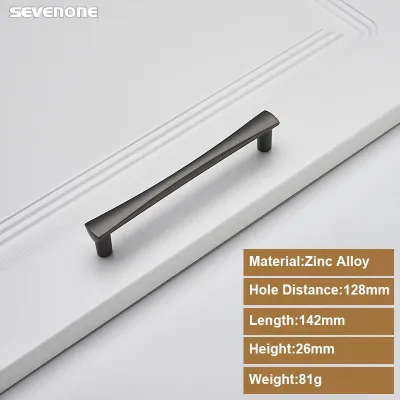
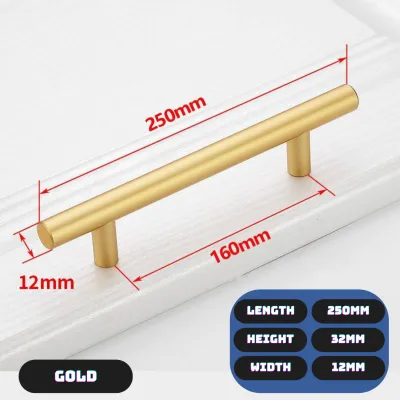
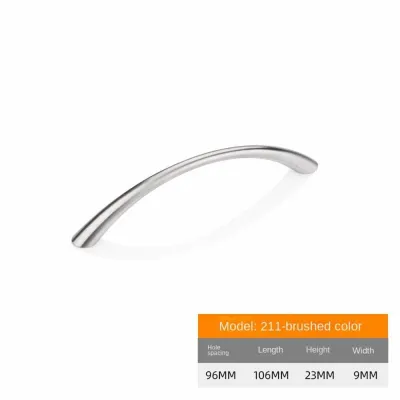
![[SG Seller]Stainless Steel Kitchen Handle Cupboard Drawe Door Cabinet T Bar Handle Pull Knob cabinet knobs](https://img.lazcdn.com/g/p/fd2576fe5abeef53e168a0d34e3e578d.jpg_400x400q80.jpg_.webp)
![[SG] Solid Brass Handle Vintage Cabinet Pulls Retro Brass Drawer Handles Cabinet Knobs and Handles Home Hardware](https://img.lazcdn.com/g/p/077e64ee79d886acae62d61c8e3daebc.jpg_400x400q80.jpg_.webp)
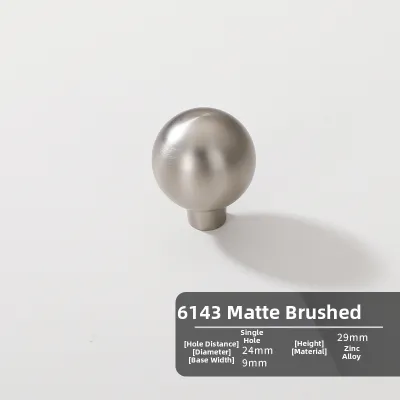
Prices are valid at publication and may change. Please refer to the product page for the latest price.
Prepare the following items before starting:
- A metal tape measure: Choose one with clear millimeter (mm) markings. Millimeters are the industry standard for cabinet hardware in Singapore and global markets. Avoid using inches or fractional measurements, as converting these later introduces a high margin of error.
- A digital caliper (optional but highly recommended): This tool is invaluable for measuring exact screw diameters and the precise thickness of your cabinet doors or drawer fronts.
- A manual screwdriver: Use this to remove your existing handles. Avoid power drills for this step, as they can easily slip and strip the screw heads or scratch the cabinet finish.
- A soft microfiber cloth: Place this behind your screwdriver or tool while working. This simple barrier prevents accidental scratches on delicate high-gloss acrylic, laminate, or solid wood finishes.
- A notepad or smartphone: Use this to write down each measurement immediately to avoid relying on memory when browsing online stores or visiting local hardware retailers.
How to Measure the Center-to-Center Hole Spacing
The term “center-to-center” refers to the exact distance from the midpoint of one screw hole to the midpoint of the adjacent screw hole. This is the single most critical dimension for buying replacement cabinet handles.

A common mistake is measuring the overall length of the handle from end to end and assuming this is the size to purchase. If you buy a handle based solely on its total length, the screw posts will rarely align with your existing cabinet holes. To avoid this, use one of the two methods below to find the true center-to-center distance.
Method 1: Measuring with the Handle Removed (Most Accurate)
Removing the existing hardware is the most reliable way to measure because it eliminates visual obstructions and allows you to measure the bare cabinet surface directly.
- Step 1: Use your manual screwdriver to carefully loosen the screws from the inside of the cabinet door or drawer. Support the handle with your other hand so it does not fall and damage the floor or cabinet face. Keep the original screws safe, as they can serve as a reference later.
- Step 2: Place the hook of your metal tape measure exactly in the center of the left screw hole on the front of the cabinet door.
- Step 3: Extend the tape measure horizontally to the center of the right screw hole.
- Step 4: Read the measurement directly in millimeters.
If your cabinet holes have become slightly worn, enlarged, or uneven over years of use, finding the absolute center can be challenging. To overcome this, measure from the far-left edge of the first hole to the far-left edge of the second hole. Because both holes are the same diameter, the distance from left edge to left edge is mathematically identical to the center-to-center distance. You can double-check this by measuring from right edge to right edge to ensure consistency.
Method 2: Measuring with the Handle Attached
If you are currently living in a rented property or prefer not to remove your hardware before purchasing new pieces, you can still obtain a reasonably accurate measurement with the handle in place.
To do this, open the cabinet door or drawer and locate the screw heads on the inside. Position your tape measure to find the distance between the center of one screw head and the center of the other. If the screws are concealed or recessed deeply into the wood, you will need to measure from the front of the door instead.
When measuring from the front, identify the center of the handle’s mounting posts where they meet the cabinet surface. Align your tape measure as closely as possible to these midpoints. Keep in mind that bulky handle designs, curved edges, or decorative bases can obscure your view, which increases the risk of a minor measurement error. If you use this method, always cross-reference your reading with standard industry sizes to confirm its accuracy.
Beyond Hole Spacing: Other Crucial Dimensions to Record
While finding the correct center-to-center measurement ensures that your new handle can be physically screwed into place, it is only the first step. To ensure the new hardware functions perfectly and looks visually balanced, you must record several secondary dimensions.
Failing to measure these secondary dimensions can lead to practical issues, such as handles hitting adjacent walls, drawers catching on clothing, or screws that are too short to secure the hardware.
Overall Length and Door Clearance
The overall length of a handle is the total distance from one physical end to the other. Even if two handles share the exact same hole spacing, their overall lengths can vary dramatically depending on whether they are sleek T-bars, modern pull loops, or ornate classic handles.
Measure the overall length of your current handle and compare it to the space available on your drawer front or cabinet door. Next, check your cabinet clearance by measuring the distance from the outer edge of the current handle to the nearest physical obstacle. This includes adjacent cabinet doors, drawer banks, corner walls, or large appliances like refrigerators.
If your new handle has a longer overall length than the old one, it could overhang the edge of the drawer or prevent an adjacent cabinet door from opening fully. Ensure that any replacement handle you choose remains well within the boundaries of your cabinet panels to maintain full functionality.
Screw Thickness and Cabinet Door Depth
Cabinet screws are not one-size-fits-all, and using the wrong size can damage the threads of your new handles or fail to hold them securely.
First, determine the screw diameter. Most standard modern cabinet handles use M4 machine screws, which have a diameter of approximately 4mm. You can verify this by measuring the thread diameter of your existing screws with a digital caliper or by taking an old screw to a local hardware shop to test against a thread gauge.
Second, measure the exact thickness of your cabinet door or drawer front. In Singapore, standard cabinet doors made of engineered wood or MDF are typically 18mm thick, but drawer fronts with double-front construction can be significantly thicker.
Most replacement handles are packaged with standard 22mm or 25mm screws. If your cabinet doors are unusually thick or thin, these standard screws may not fit. Knowing your door thickness allows you to purchase separate, correctly sized screws ahead of time, saving you an extra trip to the hardware store.
Recognizing Standard Hole Spacing Measurements
Modern cabinet hardware manufacturing relies heavily on standardized sizing systems. Understanding these standards allows you to validate your measurements and shop with confidence.
The vast majority of contemporary cabinetry utilizes the “32mm system.” Under this system, the distance between screw holes is almost always a multiple of 32 millimeters. When you measure your cabinet hole spacing, your reading will likely align with one of these common industry standards:
- 64 mm
- 96 mm
- 128 mm
- 160 mm
- 192 mm
- 224 mm
If you measure your hole spacing and get a reading of 95mm or 97mm, it is highly likely that your cabinets conform to the standard 96mm size. Minor discrepancies of 1mm to 2mm are common and are usually caused by wood expansion due to Singapore’s humid climate, slight manufacturing tolerances, or minor human error during measurement.
However, be cautious about forcing a standard interpretation if your measurement is significantly different. For example, if you measure exactly 100mm, do not assume it is a 96mm standard. Some older cabinets, custom carpentry, or specific regional designs use true 100mm or other non-standard spacings. Forcing a 96mm handle into a 100mm space will strip the screws or damage the cabinet doors.
What to Do If Your Cabinets Have Non-Standard Spacing
If your measurements reveal a non-standard hole spacing, finding a direct drop-in replacement can be challenging. Fortunately, you do not have to settle for drilling new holes in your cabinet doors, which can ruin their appearance and structural integrity.
Consider these practical workarounds to update your hardware without modifying your cabinets:
- Option 1: Choose handles with a backplate (escutcheon). A backplate is a flat metal piece that sits between the handle and the cabinet door. Many modern handles come with integrated or separate backplates that are wide enough to cover old, non-standard holes completely. This allows you to mount a new, standard-sized handle over the top of the old holes without them being visible.
- Option 2: Switch to single-hole knobs. If your current cabinet has two holes but you cannot find a matching handle, you can install a single-hole knob in one of the existing holes. You will then need to fill the second, unused hole with a matching wood filler or cover it with a decorative backplate designed for single knobs.
- Option 3: Use adjustable handles. Some specialized hardware designs feature adjustable feet or posts that slide along the length of the handle bar. This allows you to customize the distance between the posts to match your exact non-standard cabinet hole spacing.
Safety and Risk Boundary: If you decide to fill old holes with wood filler and drill new ones, remember that this is an irreversible modification. If you are renting your home, lack experience with woodworking tools, or have cabinets made of delicate materials like glass, high-gloss acrylic, or premium wood veneers, do not attempt to drill new holes yourself. Stop and consult a professional carpenter or handyman to avoid costly damage to your cabinetry.
Pre-Purchase Checklist to Avoid Drilling New Holes
Before you finalize your order online or head to a local hardware store, use this quick checklist to ensure your new cabinet handles will fit perfectly:
- Center-to-center spacing: Confirm your measurement matches a standard size (e.g., 96mm, 128mm) or that you have chosen an adjustable option.
- Maximum overall length: Ensure the outer edges of the new handle do not interfere with adjacent doors, drawers, or walls.
- Screw thread size: Verify if your cabinets require standard M4 screws or a different diameter.
- Cabinet door thickness: Note down the thickness of both your standard doors and your deeper drawer fronts.
- Required screw length: Calculate this by adding your door thickness to the depth of the handle's screw receiver, ensuring the screw is long enough to secure the handle without bottoming out.
- Handle projection: Check how far the handle sticks out from the cabinet face to ensure it will not catch on clothing or block walkways in narrow kitchen layouts.
Always double-check the product specifications on the retailer’s page. Look specifically for terms like “hole centers,” “center-to-center,” or “C-C” rather than just the overall product length to guarantee a perfect fit.
Frequently Asked Questions (FAQ)
Can I use a handle with a longer overall length if the hole spacing matches?
Yes, you can absolutely use a handle with a longer overall length, provided that the center-to-center hole spacing matches your existing cabinet holes exactly. Many modern T-bar handles feature long, stylish overhanging ends that extend far past the screw posts. When choosing these designs, always verify your clearance measurements to ensure the extra length does not overlap the edges of your drawer fronts or strike adjacent walls and cabinets when opened.
What if my cabinet doors are too thick for the screws included with the new handles?
Standard screws included with replacement handles are typically designed for standard 18mm cabinet doors. If your drawer fronts or custom solid wood doors are thicker, you will need to purchase separate machine screws (usually M4 size) from a local hardware store. To find the correct screw length, measure your cabinet door thickness, add the depth of the handle’s screw receiver, and add an extra 2mm to 3mm to ensure the screw threads can bite securely into the handle without bottoming out.
Community discussion
Share your experience or ask a question. Comments are reviewed before publication.