
Finding the perfect under-bed drawer storage cabinet (抽屉收纳柜) is one of the most effective ways to maximize space in compact bedrooms. In space-conscious homes, utilizing the empty void beneath your bed frame can instantly clear up closet clutter and keep seasonal items organized. However, purchasing a storage unit based on a rough guess often leads to frustrating issues, such as drawers that scrape against the floor, get jammed under the frame, or collide with nearby furniture.
To find a drawer cabinet that slides in and out smoothly, you must determine the absolute lowest point of your bed frame, account for hidden structural elements, and subtract a safety clearance margin. Taking ten minutes to measure your bed clearance correctly will save you the hassle of returning bulky items and ensure your storage setup is highly functional from day one.
Why Exact Bed Clearance Measurements Matter
When shopping for an under-bed drawer storage cabinet, relying on the nominal dimensions provided by furniture manufacturers can be a costly mistake. A product listing might state that a drawer is 15 centimetres high, but this figure often excludes the height of the wheels or casters. Similarly, your bed frame’s product manual might list a clearance of 18 centimetres, but this measurement is typically taken at the outer edge, ignoring structural sag or lower-hanging components in the center.
Products mentioned in this guide
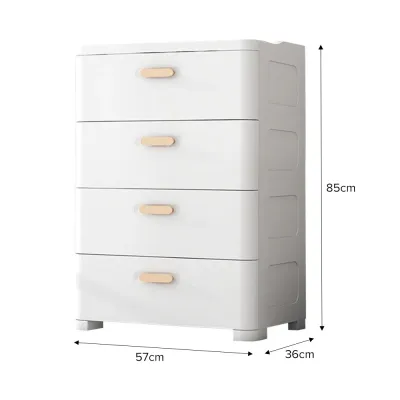



Prices are valid at publication and may change. Please refer to the product page for the latest price.
Bed frames are rarely completely open voids. Many designs feature hidden obstructions such as center support legs, horizontal crossbars, metal brackets, or decorative side lips that hang lower than the rest of the frame. If you do not account for these elements, your new drawer cabinet will likely collide with a structural bar or get wedged under a sagging slat.
Furthermore, a drawer requires a small amount of extra breathing room to slide in and out without scraping. If the fit is too tight, even a tiny piece of debris on the floor or a slight bowing of the drawer lid can cause the unit to jam. Taking precise measurements ensures you select a storage cabinet that operates effortlessly and preserves both your flooring and your bed frame from scratches.
Taking the time to measure your space properly is a simple preventative step. Returning large, pre-assembled plastic or wooden cabinets is incredibly inconvenient, especially if you have to transport them back to a physical store or coordinate a courier pickup. A few minutes of careful planning guarantees a seamless fit.
Essential Tools for Measuring Under-Bed Space
To get accurate measurements in the tight, dark space beneath a bed, you will need a few basic tools. Having these on hand before you start will prevent errors and make the process much easier.

- A sturdy metal tape measure: Avoid using flexible fabric sewing tapes, as they sag over long distances and can easily give inaccurate, inflated readings.
- A flashlight or smartphone light: The area under a bed is naturally dark, making it difficult to spot recessed support brackets, low-hanging slats, or center legs that sit further back.
- A notepad or smartphone: You will need to record multiple measurements across different points of the bed frame, so writing them down immediately prevents confusion.
- A cardboard box or packing carton (optional): If you have a box close to your desired drawer size, you can use it to perform a physical simulation test before making a purchase.
Step-by-Step Guide to Measuring Height and Width
Measuring for an under-bed drawer storage cabinet involves analyzing both the vertical clearance and the horizontal footprint. Because floors and bed frames are rarely perfectly level, you must take multiple measurements to find the true minimum clearance.
Measuring the Vertical Clearance (Height)
To find the maximum usable height for your drawer cabinet, you must measure the distance from the floor to the absolute lowest point of the bed frame. This is rarely the bottom of the side rails; more often, it is the underside of the wooden slats, a center support beam, or a metal bracket.
Start by placing your metal tape measure flat on the floor and extending it vertically until it touches the lowest hanging element of the frame. Repeat this measurement at all four corners of the bed, as well as in the dead center. Floors can slope slightly, and older wooden bed frames often sag in the middle under the weight of the mattress. Use the absolute lowest measurement of all your test points as your baseline height.
If your bed sits on a thick carpet or a plush rug, you must adjust your measuring technique. When a loaded drawer is placed on a carpet, its wheels will compress the carpet fibers. To simulate this, press your tape measure firmly down into the carpet pile until you hit the solid floor beneath, and use that point as your starting measurement. This ensures your drawer won’t drag or get stuck when fully loaded with heavy items.
Finally, remember to look closely at the product specifications of the drawer storage cabinet you intend to buy. Some manufacturers list the height of the drawer box itself but omit the height of the casters or wheels in the main description. Always verify whether the listed height is the “total height including wheels” to avoid buying a unit that is too tall.
Measuring the Horizontal Clearance (Width and Depth)
Once you know your maximum height, you need to determine the width and depth of the available footprint. This step ensures that the drawer cabinet can fit between the bed legs and slide out completely without hitting obstacles.
To measure the width, find the distance between the inner edges of the bed’s legs. If your bed frame has tapered legs that angle inward toward the floor, make sure to measure the distance at the very bottom of the legs where the space is narrowest. This floor-level measurement dictates the maximum width of any drawer you can slide under the bed.
To measure the depth, extend your tape measure from the outer edge of the bed frame toward the center. If your bed is pushed against a wall, measure from the outer frame edge to the wall’s baseboard rather than the wall itself. If you plan to access storage from both sides of the bed, measure from the outer edge of the frame to the center support beam to determine the maximum depth for two opposing drawers.
Be sure to inspect the entire underside of the frame for any diagonal corner braces or horizontal crossbars. These structural reinforcements can severely limit how far a deep drawer can slide back, so your measurement should stop at the point where any such obstruction begins.
Calculating the Ideal Drawer Cabinet Dimensions
Once you have gathered your raw measurements, you should not buy a drawer that matches those numbers exactly. You must apply safety margins to ensure the drawer glides smoothly and remains highly functional.
The Clearance Gap Rule
For vertical clearance, always subtract at least 1 to 2 centimetres (approximately 0.5 to 0.8 inches) from your lowest height measurement. This safety buffer accounts for minor floor unevenness, dust accumulation, and the slight upward bowing that can occur if you pack the drawer tightly with clothes or blankets. If your lowest clearance measurement is 18 cm, your ideal maximum drawer height should be no more than 16 to 17 cm.
Width and Depth Margins
For horizontal measurements, leave a gap of at least 1 to 2 centimetres on each side of the drawer. When you pull a drawer out, you will rarely pull it in a perfectly straight line; a small horizontal buffer prevents the drawer from scraping against the bed legs or side rails if it slides out at a slight angle.
To help guide your search, refer to this general clearance reference table to map your bed’s profile to the recommended drawer dimensions:
| Bed Frame Profile | Measured Clearance Range | Recommended Max Drawer Height | Recommended Max Drawer Depth |
|---|---|---|---|
| Low-Profile | 10 to 15 cm | 8 to 13 cm | 40 to 50 cm (verify center leg clearance) |
| Standard | 16 to 25 cm | 14 to 23 cm | 50 to 70 cm |
| High-Clearance | Over 25 cm | 23 to 35 cm | 60 to 80 cm (ensure structural stability) |
Balancing Capacity and Usability
While it is tempting to maximize storage volume by choosing the largest possible drawer, keep usability in mind. A drawer that perfectly fills the under-bed space can be difficult to grip. Ensure there is enough space for your hand to easily reach the handle or the integrated pull-tab without scraping your knuckles against the bottom of the bed frame.
Common Measurement Mistakes to Avoid
Many homeowners end up with ill-fitting storage because they overlook minor structural details. Avoiding these common pitfalls will ensure your measurements are highly accurate.
- Ignoring Center Support Legs: Queen and king-size beds almost always feature one or more center support legs to handle weight distribution. If you buy a single, wide drawer cabinet, it will collide with these legs. Always measure the clear zones on either side of the center support.
- Forgetting the Baseboard: If your bed is pushed flush against a wall, the baseboard at the bottom of the wall will protrude by 1 to 2 centimetres. This prevents the bed frame—and consequently, your storage drawer—from sliding all the way back.
- Assuming Bed Legs are Vertical: Tapered or angled legs are common in modern furniture design. Always measure the horizontal clearance at the floor level, as this is where the legs are closest together.
- Overlooking the Pull-Out Path: It is easy to focus entirely on the space under the bed while forgetting about the room around it. In tight bedroom layouts, nearby furniture like bedside tables, wardrobes, or even an open bedroom door can block the path of your drawer. Ensure you have clear floor space equal to or greater than the full depth of the drawer when it is pulled completely open.
- Mixing Measurement Units: Do not switch between centimeters and inches during your calculations. Stick to centimeters, as most local furniture and storage listings use metric measurements, which minimizes the risk of rounding errors.
- Neglecting Load Capacity and Stability: When choosing pre-assembled drawers, check the manufacturer's load capacity. Overloading a drawer can cause its base to sag, scraping your flooring and making it incredibly difficult to slide.
Testing the Fit Before You Buy
Before committing to a purchase, you can easily verify your measurements using a simple, zero-cost physical test. This step is highly recommended if you are purchasing premium wooden drawers or large plastic storage units.
Find a cardboard box, or tape several pieces of cardboard together, to match the exact external dimensions of the drawer cabinet you plan to buy. Be sure to include the height of the wheels in your cardboard mockup.
Slide this mockup under your bed at various points. Check if it clears the side rails, passes easily over your rug or carpet, and slides back without hitting any center support legs or crossbars. This test also allows you to check if you can comfortably grip the edges of the box to pull it out, ensuring your hands have plenty of clearance. If the cardboard mockup slides in and out effortlessly, you can purchase your new drawer cabinet with complete confidence.
Frequently Asked Questions (FAQ)
Can I use an under-bed drawer on a thick carpet?
Yes, you can use under-bed drawers on carpet, but you must account for increased rolling resistance and reduced vertical clearance. Thick carpet piles compress under weight, lowering the effective clearance of your bed frame. When choosing a drawer cabinet for carpeted floors, select models with large, wide wheels or casters, as narrow wheels tend to sink and get stuck. Alternatively, placing a thin, rigid plastic mat under the bed can create a smooth, low-friction track for the wheels to roll on.
What if my bed has a center support leg blocking the space?
If a center support leg divides the space under your bed, do not attempt to fit a single wide drawer. Instead, purchase two narrower, independent drawer cabinets that can sit on either side of the support leg. Never remove, adjust, or modify a center support leg unless the bed manufacturer’s instructions explicitly state it is safe to do so. Removing structural support legs will compromise the stability of your bed frame, potentially damage the frame, and void your warranty.
Community discussion
Share your experience or ask a question. Comments are reviewed before publication.