
To select the correct undermount drawer slider, you must match the physical dimensions of your drawer box and cabinet interior with the precise specifications of the hardware. Unlike traditional side-mounted slides, undermount sliders sit completely beneath the drawer box, hiding the metal hardware from view while providing smooth, stable movement. This design requires highly specific clearances, drawer side thicknesses, and depth measurements to function properly. Taking accurate measurements before purchasing ensures a seamless installation and prevents the drawer from binding, sticking, or failing to close.
Understanding Key Undermount Drawer Slider Specifications
Undermount drawer slides are engineered to support specific weight limits and operate within precise physical boundaries. Understanding these specifications helps you choose hardware that matches both your cabinet design and how you intend to use the drawer.
Load capacity ratings dictate how much weight the slide can support when fully extended. Standard residential undermount slides typically support around 30 kg to 40 kg, which is sufficient for typical cutlery, clothing, or office supplies. Heavy-duty models are available for deep pot drawers or pantry pull-outs, often rated for 50 kg or more. When estimating your drawer’s weight, remember to include the weight of the wooden drawer box itself along with the maximum anticipated weight of its contents.
Products mentioned in this guide

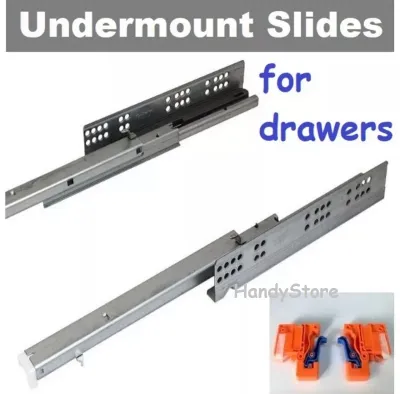

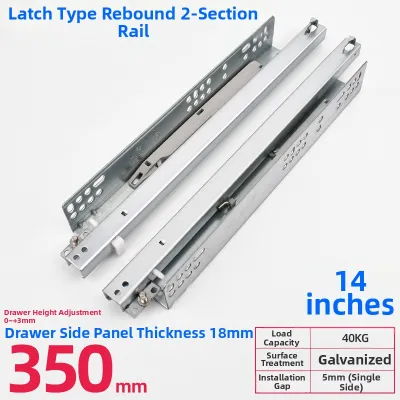
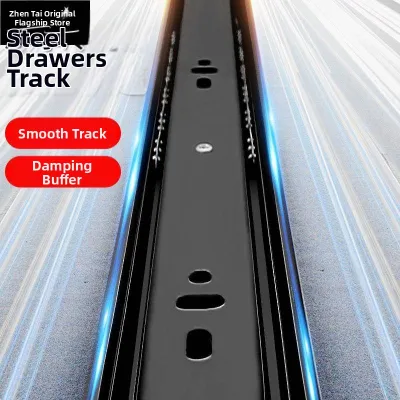
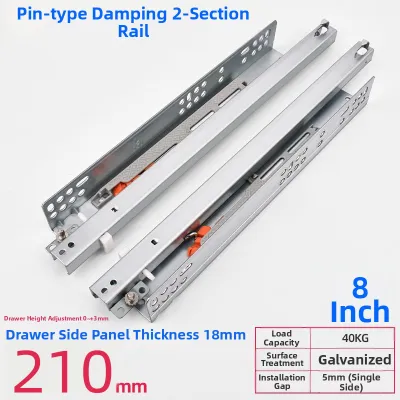
Prices are valid at publication and may change. Please refer to the product page for the latest price.
Slide length options are standardized and usually run in 50 mm increments, such as 300 mm, 350 mm, 400 mm, 450 mm, and 500 mm. The slide length must correspond closely to the external depth of your drawer box. Choosing a slide that is too long will prevent the drawer from closing fully, while a slide that is too short will reduce the usable extension and support of the drawer.
Extension types determine how far the drawer pulls out from the cabinet face. Full-extension slides allow the entire drawer box to clear the cabinet frame, giving you complete access to the items stored at the very back. Partial-extension slides, which are often more budget-friendly, leave a portion of the drawer box inside the cabinet cavity when opened.
Drawer side thickness and bottom panel clearance are critical physical constraints. Undermount slides wrap around the bottom edges of the drawer sides, meaning they are designed for specific wood thicknesses, commonly 12 mm, 15 mm, or 16 mm. Additionally, the drawer bottom must be recessed upward to create a specific clearance space underneath, allowing room for the slide mechanisms and locking devices to sit flush.
Step-by-Step Guide to Measuring Your Cabinet and Drawer
Accurate measurement is the most critical phase of selecting undermount hardware. You will need a reliable tape measure, a pencil, and a notepad to record dimensions down to the nearest millimeter.

First, measure the drawer box depth. This is the external measurement of the drawer box from the front panel (excluding the decorative drawer front) to the back panel. Do not include the thickness of the decorative drawer face that matches your cabinet doors, as the slide attaches directly to the structural drawer box.
Next, measure the cabinet interior depth. This is the clear, unobstructed distance from the inside front face of the cabinet frame to the back wall of the cabinet. If your cabinets have a back panel, measure to the front face of that panel. Ensure there are no protruding screws, backing supports, or structural blocks that could shorten this usable depth.
Calculate the required width clearance between the drawer box and the cabinet interior walls. For undermount slides to glide smoothly, the drawer box must be narrower than the cabinet opening by a very specific margin. Typically, this requires a total clearance of 10 mm to 12 mm (roughly 5 mm to 6 mm on each side), but you must verify this against the manufacturer’s installation template. Measure the cabinet opening width at the front, middle, and back to ensure the cabinet is square.
Verifying Drawer Box Construction and Bottom Clearance
Before purchasing undermount hardware, you must confirm that your existing drawer box construction can physically accommodate the slides. Traditional drawer boxes designed for side-mount slides often require modification to work with undermount systems.
Check the thickness of the drawer side panels. Most undermount slides are designed for side panels that are exactly 16 mm thick or thinner. If your drawer sides are 19 mm thick, standard undermount slides will not fit because the locking clips and slide tracks will not align properly. You may need to source specialized slides designed for thicker wood or construct new drawer boxes.
Inspect the underside of the drawer box. Undermount slides require the drawer bottom panel to be recessed or inset, typically creating a 12 mm to 15 mm deep recess beneath the drawer floor. The side panels must extend downward past the drawer bottom to hide the slide tracks. Additionally, you will need to verify if the slide requires pre-drilled holes in the back panel of the drawer box to hook the slide hooks, or if you need to install plastic or metal locking clips on the front underside corners.
Matching Your Measurements to Slider Sizes
Once you have gathered your physical measurements, you can match them to the standard sizes available at hardware suppliers. This step bridges the gap between your cabinet’s physical reality and the specifications on the product box.
As a general rule, your slide length should match your drawer box depth exactly. For example, if your drawer box depth is 450 mm, you should select a 450 mm undermount slide. If your drawer box depth falls between standard sizes, such as 435 mm, you will generally need to round down to the nearest standard slide size, which would be 400 mm, to ensure the slide does not protrude past the back of the drawer.
Always compare your slide length to the available cabinet interior depth. The cabinet interior depth must be deeper than the slide length to allow for rear mounting brackets and clearance. Typically, you need at least 10 mm to 20 mm of extra space behind the slide. For a 450 mm slide, your cabinet interior depth should be at least 460 mm to 470 mm.
Before making a purchase, download and review the manufacturer’s technical specification sheet. These sheets provide exact diagrams showing the required drawer box width based on your cabinet opening, the exact placement of locking clips, and the required rear hook hole positions. Cross-referencing your physical measurements with these diagrams prevents costly purchasing mistakes.
Installation Readiness and Safety Checks
Preparing your workspace and verifying structural integrity before installation prevents damage to your cabinetry and ensures the long-term reliability of your drawer system.
Assess the strength of your cabinet walls. Undermount slides carry the entire weight of the drawer from underneath, transferring that load to the cabinet sides or rear brackets. Ensure the cabinet walls are constructed of sturdy material, such as plywood or solid wood, and are free from water damage or warping. Use the mounting screws provided by the manufacturer, or select screws of the appropriate length and thread type that will not pierce through the exterior of your cabinet.
Identify potential obstructions inside the cabinet cavity. Look for plumbing pipes, electrical conduit, shelf support pins, or door hinges that might interfere with the path of the drawer or the mounting position of the slides. If you are retrofitting a sink cabinet, you may need shorter slides to clear the drainage pipes.
If you discover that your cabinet is significantly out of square, or if your drawer boxes are made of material that cannot be easily modified, it may be best to consult a professional carpenter. Attempting to force undermount slides into an uneven cabinet can cause the bearings to wear out prematurely or cause the drawer to bind during use.
Frequently Asked Questions (FAQ)
Can I install undermount slides on any existing drawer?
No, you cannot install undermount slides on every existing drawer without modifications. Undermount slides require specific drawer box construction, including side panels that are typically 16 mm thick or less and a recessed bottom panel that provides clearance underneath. If your existing drawer was built for side-mount slides, the bottom panel is often flush with the bottom of the sides, meaning there is no space to hide the undermount hardware. In such cases, you must either modify the drawer box by recessing the bottom panel or build a new drawer box entirely.
What is the standard clearance needed under the drawer box?
The standard vertical clearance required under the drawer box typically ranges from 12 mm to 15 mm, depending on the specific slide model. This space is measured from the bottom edge of the drawer side panels to the underside of the drawer bottom panel. This recess is necessary to accommodate the thickness of the slide tracks and the front locking clips. Always check the manufacturer’s specification sheet for the exact vertical clearance requirement before cutting or assembling your drawer box.
Community discussion
Share your experience or ask a question. Comments are reviewed before publication.