
Replacing a worn or broken pulley roller is essential for restoring smooth operation to sliding wardrobe doors, heavy drawers, and track-based furniture. Because manufacturers use highly specific hardware, guessing the size or type often leads to misaligned tracks, jammed doors, or damaged frames. To find the exact replacement, you must systematically measure the wheel’s outer diameter, thickness, axle diameter, and mounting bracket configuration. This guide walks you through the exact measurement process, specification matching, and safe installation steps required to identify and install the correct replacement pulley roller for your specific furniture piece.
Identify Your Furniture's Pulley System Type
Before purchasing any replacement hardware, you must determine the specific mechanism and load-bearing role of the pulley. Sliding furniture typically relies on one of three configurations: top-hung systems, bottom-rolling systems, or side-mounted drawer systems. Top-hung systems suspend the door from an upper track, meaning the rollers bear the entire tensile load and must be exceptionally secure. Bottom-rolling systems place the weight directly on the lower track, where the rollers roll along the floor or base rail while top guides keep the door upright. Side-mounted drawer systems use rollers integrated into metal runners along the sides of the drawer box to facilitate horizontal movement.
Understanding where the primary weight is distributed helps you assess the physical demands on the replacement part. Heavy wardrobe doors, especially those made of solid wood or thick glass, require heavy-duty rollers with robust internal bearings. If you install a light-duty roller on a heavy bottom-rolling wardrobe door, the wheel may deform or crack under the constant pressure. Always estimate the weight of the door panel or drawer assembly to ensure the replacement hardware is rated for the correct load capacity.
Products mentioned in this guide
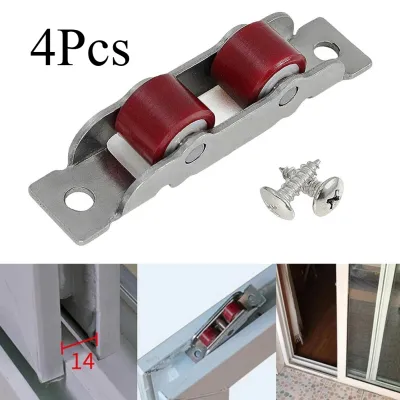
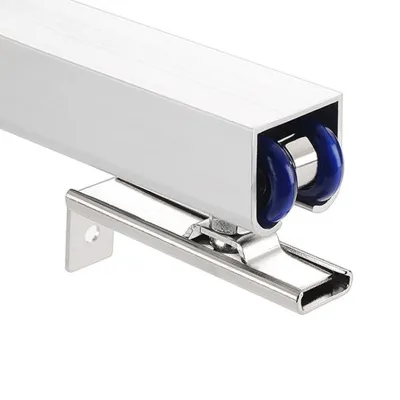
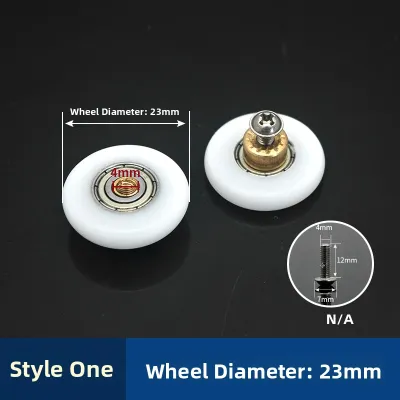
Prices are valid at publication and may change. Please refer to the product page for the latest price.
Additionally, you must inspect the track profile to ensure the new wheel shape matches the existing rail geometry. Tracks generally feature a U-shaped groove, a V-shaped ridge, or a flat running surface. A concave wheel designed for a V-shaped ridge will fail to roll smoothly on a flat track, while a flat wheel will derail constantly on a V-shaped track. Matching the wheel profile to the track profile is just as critical as matching the physical dimensions.
Step-by-Step Guide to Measuring the Existing Pulley Roller
To obtain accurate measurements, you must remove the existing pulley roller from the furniture. Attempting to measure a roller while it is still mounted inside a dark wardrobe track or drawer runner almost always results in errors. Prepare a clean, flat workspace and gather the necessary tools before beginning the extraction process.

You will need a set of digital calipers for precise measurements, as standard tape measures lack the resolution required for millimeter-level accuracy. A flathead and Phillips screwdriver are necessary for removing mounting screws, and a pair of needle-nose pliers can help release retaining clips or snap-rings. Lay down a soft towel or blanket on your workspace to protect the furniture’s finish and prevent loose screws from rolling away.
To safely detach a sliding wardrobe door, slide it to the middle of the track, lift the door upward into the top channel, and swing the bottom of the door outward to clear the lower rail. For heavy doors, always have a second person assist you to prevent the panel from slipping and cracking. Once the door is free, lay it flat on your protected workspace to access the pulley housing assembly without putting stress on the frame.
Measuring Wheel Diameter and Thickness
Once the pulley assembly is removed, use your digital calipers to measure the outer diameter of the wheel. Place the jaws of the caliper across the widest part of the wheel, ensuring they sit flat against the outer edges. Record this measurement in millimeters, as replacement parts are almost universally categorized by metric dimensions. Even a single millimeter of difference can prevent the wheel from fitting inside the track channel or cause the door to sit unevenly.
Next, measure the wheel thickness, which is the width of the wheel from one side to the other. If the replacement wheel is too wide, it will rub against the inner walls of the track housing, creating friction, squeaking, and eventual failure. If the wheel is too narrow, it may wobble within the track, causing the door to slide unevenly or derail during use.
Finally, examine the wheel profile closely. Look at the outer edge of the wheel to determine if it is flat, concave (curved inward to ride on a ridge), or convex (curved outward to ride in a groove). Compare this profile directly to the shape of your metal or plastic track. If your track has a raised center ridge, you must select a concave wheel that cradles that ridge perfectly to maintain alignment.
Identifying Axle Type and Mounting Style
The wheel must attach securely to the furniture frame or bracket, which requires matching the axle type and mounting style. Measure the axle diameter by placing the caliper jaws inside the center bore of the wheel or around the axle pin itself. You must also identify the retention system used to hold the wheel in place, such as a threaded bolt, a permanent rivet, a snap-ring, or a tension clip. If the axle is riveted, you will likely need to replace the entire bracket assembly rather than just the wheel.
Examine the mounting bracket style to ensure it matches your furniture’s preparation cutouts. Common styles include flush-mount brackets that sit flat against the wood, surface-mount brackets that screw onto the face of the frame, and adjustable spring-loaded housings hidden inside the door stile. Adjustable housings are particularly common in modern sliding wardrobes, allowing you to turn a screw to raise or lower the door for perfect alignment.
If you need to replace the entire pulley housing assembly, use your calipers to measure the exact distance between the mounting screw holes, measuring from the center of one hole to the center of the other. If the screw hole spacing on the replacement bracket does not match your existing door, you will have to drill new holes, which can weaken the wood or composite frame. Matching the bracket footprint ensures a straightforward, drop-in replacement.
Selecting the Compatible Replacement Pulley Roller
Choosing the right replacement involves balancing material performance, environmental conditions, and assembly options. Pulley wheels are commonly made from nylon, steel, brass, or polyurethane. Nylon wheels offer quiet operation and are gentle on aluminum tracks, making them ideal for interior wardrobe doors, though they have lower load capacities. Steel and brass wheels are exceptionally durable and can support heavy glass or solid wood doors, but they generate more noise and can wear down soft aluminum tracks over time. Polyurethane wheels provide a middle ground, offering quiet rolling with moderate load support.
Environmental factors play a major role in the longevity of your replacement hardware. In high-humidity environments, such as Singapore’s tropical climate, moisture can quickly rust standard steel bearings and brackets. For bathrooms, kitchens, or semi-outdoor areas, prioritize rollers with stainless steel or brass bearings and corrosion-proof nylon or zinc-plated housings. Sealed bearings are highly recommended for these areas, as they prevent moisture and dust from entering the internal rolling elements.
Decide whether to replace only the individual wheel or the entire pulley housing assembly. If the metal bracket is bent, the adjustment screw is stripped, or the internal spring has lost its tension, replacing just the wheel will not solve your sliding issues. Purchasing a complete assembly is often the most reliable route, as it ensures all components are brand new and perfectly matched.
Before finalizing your purchase, verify the manufacturer’s stated load rating on the replacement packaging. Compare this rating against the estimated weight of your door or drawer. If a wardrobe door weighs 30 kilograms, ensure the combined load capacity of the two replacement rollers exceeds this weight with a safe margin. Never exceed the manufacturer’s specified limits, as overloaded rollers will fail prematurely and may damage the track.
Safe Removal and Installation of the New Pulley
With your replacement parts ready, begin the physical installation by removing the old hardware. If you are replacing only the wheel on a riveted bracket, you may need to carefully drill out the old rivet using a metal-rated drill bit, taking care not to bend the bracket. For screw-in assemblies, use the correct screwdriver size to avoid stripping the screw heads. If you encounter rusted or stubborn screws, apply a small drop of penetrating oil and let it sit for a few minutes before attempting to turn them.
Insert the new pulley assembly into the mounting slot or bracket housing. Align the screw holes carefully and thread the mounting screws by hand first to prevent cross-threading. Tighten the screws securely, but avoid over-tightening, especially when working with plastic housings or composite wood frames, as excessive force can crack the plastic or strip the wood fibers. If the assembly features an adjustable screw, set it to the middle position initially to allow room for fine-tuning later.
Stop immediately if you encounter resistance, if the replacement part does not slide easily into the housing, or if the screw threads begin to strip. Forcing a mismatched pulley into a tight space can crack the door frame or warp the track, leading to expensive structural damage. If the replacement part does not fit perfectly, re-measure your dimensions and verify the specifications before proceeding.
Testing and Troubleshooting the Replacement
Once the new pulley roller is installed, lift the door or drawer back onto its track to test the mechanism. Slide the door slowly through its full range of motion several times, listening for any unusual scraping or clicking sounds. Watch the bottom and top edges of the door to ensure it glides smoothly without binding, wobbling, or jumping out of the track.
If the door sits unevenly or fails to close flush against the side frame, locate the adjustment screws on the pulley housings. Turning these screws clockwise typically raises that side of the door, while turning them counterclockwise lowers it. Make small, half-turn adjustments on each side, testing the movement after each turn, until the door is perfectly level and seals tightly against the frame.
If you find that the door still sticks or wobbles after adjusting the rollers, inspect the track itself. A bent, warped, or structurally compromised track cannot be corrected by new rollers alone. If the track is severely dented or worn down, you should stop DIY adjustments and consult a professional furniture repair service to replace or realign the track system safely.
Frequently Asked Questions (FAQ)
Can I use a slightly smaller or larger pulley roller if the exact size is unavailable?
Using an incorrectly sized pulley roller is not recommended because it alters the alignment of the entire sliding system. If you install a wheel that is too small, the bottom of the door or drawer may drag along the track frame, causing excessive friction, scratches, and physical damage to both the furniture and the floor. Conversely, a wheel that is too large can cause the door to sit too high, leading to binding against the top track, jamming during operation, or putting excessive pressure on the roller housing. Always aim for an exact dimensional match to preserve the original design clearance.
Do I need to lubricate the new pulley roller bearings after installation?
Whether you need to lubricate your new pulley depends entirely on the bearing design. Many modern high-quality rollers feature sealed precision bearings, which are pre-lubricated at the factory and sealed to keep out dust and moisture; these should never be lubricated, as adding oil can break down the internal factory grease. If your rollers have open bearings, they may benefit from a light application of dry silicone spray. Avoid using heavy grease, WD-40, or household cooking oils, as these substances attract dust, hair, and grit, which will quickly clog the bearings and degrade nylon or plastic wheels.

Community discussion
Share your experience or ask a question. Comments are reviewed before publication.