
Selecting the right adjustable leg support for your tables and cabinets is a straightforward process that begins with defining your primary goal. Whether you need to level a wobbly piece of furniture on an uneven floor or intentionally change the overall height of a piece, the right hardware makes all the difference.
To make an accurate choice, you must take precise measurements of your furniture’s base, assess the surrounding floor clearance, and match the physical specifications of the hardware to your specific cabinet or table. Taking these steps ensures your furniture remains stable, safe, and fully functional in your living space.
By focusing on load capacity, mounting styles, and environmental conditions, you can confidently select leg supports that protect both your furniture and your floors.
Products mentioned in this guide
![[SG] 4PCS Adjustable Furniture Legs Aluminum Alloy Cabinet Leg Stand Square Non-slip Table Sofa Bed Leg Support](https://img.lazcdn.com/g/p/873a9a1412a7707f95a32d0075781b11.jpg_400x400q80.jpg_.webp)
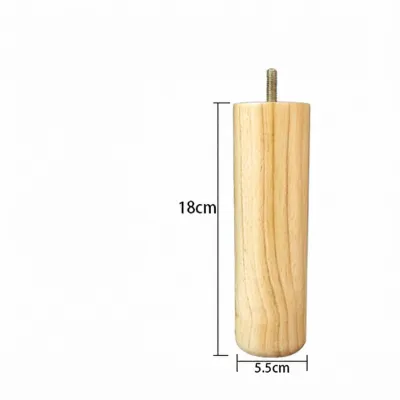
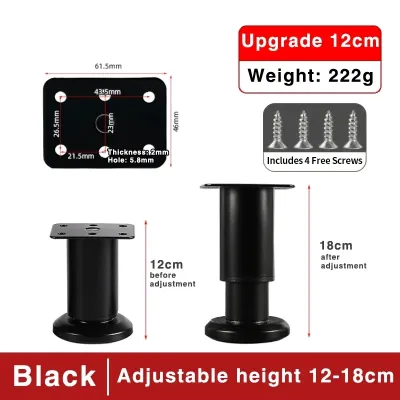
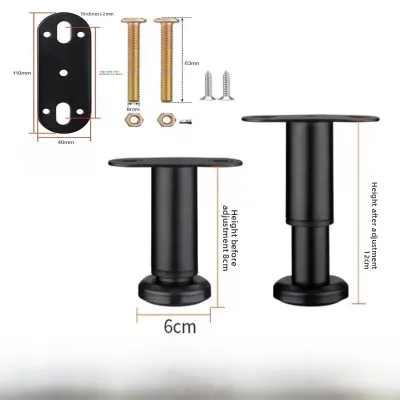
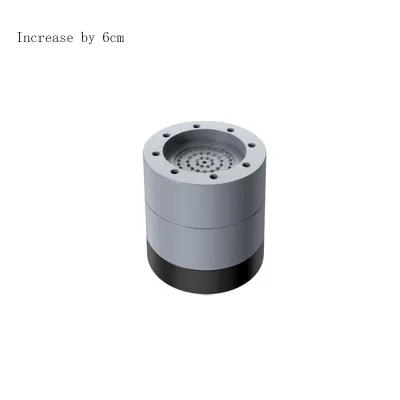
Prices are valid at publication and may change. Please refer to the product page for the latest price.
Assess Your Furniture and Space Requirements
Before purchasing any hardware, you must clarify whether you need to correct minor floor unevenness or make a substantial height adjustment. Leveling typically requires a small adjustment range, often under 20 millimeters, to compensate for sloped tiles or uneven concrete screeds. In contrast, raising a table to match a counter or lifting a cabinet to clear a high baseboard requires a much larger adjustment range.
Next, examine the physical environment where the furniture will sit. In many homes, especially compact apartments, space is at a premium, and furniture must fit tightly against walls or alongside other appliances. Check the floor clearance and look for obstacles like thick baseboards, electrical outlets, or gaps between kitchen appliances that might limit the maximum diameter of the leg support.
Finally, evaluate the structural condition of your furniture’s base. Older cabinets or tables made of particleboard can degrade over time, especially in humid environments like kitchens or bathrooms. Inspect the underside for signs of swelling, cracking, or crumbling around existing screw holes to determine if you need to reinforce the base with a solid wood block or a metal mounting plate before installing new hardware.
Step-by-Step Guide to Measuring for Adjustable Legs
Accurate measurements are the foundation of a successful furniture upgrade. Before browsing online catalogs or visiting a hardware store, gather a reliable measuring tape, a pencil, and a notebook to record the exact dimensions of your furniture base and the surrounding floor area.

Measuring the Existing Furniture Base
Begin by measuring the thickness of the bottom panel of your cabinet or the mounting surface of your table. This measurement is critical because it determines the maximum length of the screws you can use without piercing through to the inside of the cabinet or the top of the table. If your furniture has pre-existing leg sockets or threaded inserts, measure their inner diameter and thread pitch carefully.
Next, determine the distance from the outer edge of the furniture to the proposed mounting point. Placing the legs too close to the edge can cause the mounting plates to overhang, which looks untidy and can weaken the joint. Conversely, placing them too far inward can compromise the stability of the furniture, making it prone to tipping.
For cabinets with drawers or low internal shelves, check the internal clearance above the mounting area. Some heavy-duty adjustable legs require mounting bolts or T-nuts that protrude through the bottom panel. You must ensure these fasteners do not interfere with the smooth operation of drawers, pull-out trays, or sliding doors inside the cabinet.
Determining the Required Adjustment Range
To find the necessary adjustment range, you must measure the slope of your floor. Place a spirit level on top of the furniture or directly on the floor area where the piece will stand. Lift the lower end of the level until the bubble is perfectly centered, and measure the gap between the bottom of the level and the floor to find the maximum height discrepancy.
Once you have this figure, add a safety margin of at least 5 to 10 millimeters. This margin ensures that the adjustable leg support has enough remaining thread to accommodate unexpected floor variations without being extended to its absolute physical limit, which can compromise its stability.
Do not forget to factor in any future flooring changes. If you plan to add thick rugs, vinyl planks, or ceramic tiles in the near future, calculate how these materials will affect the overall height and clearance. Choosing a leg support with a slightly wider adjustment range will save you from having to replace the hardware later.
Key Specifications to Match When Selecting Leg Supports
Matching the technical specifications of the adjustable leg support to your furniture is essential for safety and long-term durability.
Load Capacity: Always check the manufacturer’s rated load capacity per leg. To calculate the total capacity you need, add the weight of the empty furniture to the maximum weight of the items it will hold, then divide this total by the number of legs you plan to install. To ensure a safe margin, select legs where the combined capacity exceeds this calculated weight by at least 20 to 30 percent to account for uneven weight distribution.
Mounting Type: Compare the available attachment methods with your furniture’s base material. Screw-in threads are ideal for pre-drilled wooden legs, while bolt-on flanges or mounting plates offer a broader surface area that distributes weight more evenly across engineered wood bases. If you are working with thin or fragile materials, consider using insert nuts or heavy-duty brackets that lock securely into the base.
Material and Finish: Do not assume that all metal or plastic legs perform the same way in every environment. Verify the manufacturer’s environmental suitability claims, especially if you are installing legs in high-moisture areas like kitchens, bathrooms, or semi-outdoor balconies. For these spaces, look for materials with verified rust-resistant finishes or high-density plastics designed to withstand damp conditions.
Adjustment Mechanism: Consider how easy the legs will be to adjust once the furniture is fully loaded. Internal thread systems require you to turn the entire foot of the leg, which can be difficult if the furniture is heavy or placed close to a wall. External lock-nut systems allow you to make adjustments using a wrench from the side, providing greater leverage and making it easier to lock the leg securely in place.
Installation and Final Leveling Checks
Once you have selected and installed your adjustable leg supports, the final step is to level the furniture and verify its stability. Place your spirit level on the top surface of the table or cabinet, checking both the front-to-back and side-to-side alignments. Adjust each leg incrementally, turning the adjustment mechanism a small amount at a time rather than trying to correct the entire slope with a single leg.
After making adjustments, gently rock the furniture to check for any wobble. All legs must bear weight equally; if one leg is slightly shorter than the others, it will spin freely or fail to touch the floor, transferring excess load to the remaining legs. Ensure that you have not over-extended the threads beyond the manufacturer’s recommended maximum height, as this significantly reduces the lateral stability of the leg.
Pay close attention to how the furniture base reacts during this process. If you hear cracking sounds, notice the base panel bowing, or find that the threads are stripping under the weight, stop immediately. These are clear signs that the base material is too weak or the hardware is incompatible, and you should consult a professional to reinforce the structure before proceeding.
Frequently Asked Questions (FAQ)
How do I know if my cabinet base can support screw-in adjustable legs?
To determine if your cabinet base can handle screw-in legs, inspect the material and thickness of the bottom panel. Solid wood and high-density plywood are generally strong enough to hold direct wood screws securely. However, if your cabinet is made of thin particleboard or medium-density fibreboard (MDF), direct screws may strip the material or pull out under load. For these softer or thinner materials, you should use mounting plates or threaded insert nuts, which distribute the weight over a larger surface area and provide a much stronger connection.
Can I mix different adjustable leg brands on the same table?
It is highly recommended to avoid mixing different brands of adjustable legs on a single piece of furniture. Even if they look similar, different manufacturers often use different thread pitches, load ratings, and adjustment ranges. Mixing them can lead to uneven weight distribution, where one leg carries more load than designed, potentially causing it to fail. To ensure uniform stability, consistent height adjustment, and safe load sharing, always purchase and install identical legs from the same manufacturer.
Community discussion
Share your experience or ask a question. Comments are reviewed before publication.