
Replacing a stiff, squeaking, or broken roller wheel on an office chair, mobile drawer unit, or kitchen trolley is an excellent way to restore smooth movement and extend the lifespan of your furniture. However, purchasing replacement casters is not a guessing game. A replacement wheel that is off by even a single millimeter can fail to fit into its socket, wobble unstablely, or damage your flooring. To identify the correct roller wheel size, you must systematically determine the mounting type, measure the mounting hardware’s precise dimensions using specialized tools, and select a wheel diameter and material that match your furniture’s load requirements and floor surface.
Essential Tools for Measuring Roller Wheels
Having the proper tools on hand before you begin prevents damage to both the furniture frame and the caster itself. While a standard tape measure works well for measuring overall wheel height, it lacks the precision required to measure stem diameters, where fractions of a millimeter dictate compatibility. For accurate stem measurements, a digital or vernier caliper is an indispensable tool that provides sub-millimeter accuracy.
You will also need a flathead screwdriver to pry loose stubborn plate mounts, and a small pry bar or heavy-duty pliers to extract tight grip ring stems. Because old casters can accumulate dirt, grease, and sharp metal burrs over years of rolling across floors, wearing a sturdy pair of work gloves is highly recommended to protect your hands during the removal process.
Products mentioned in this guide
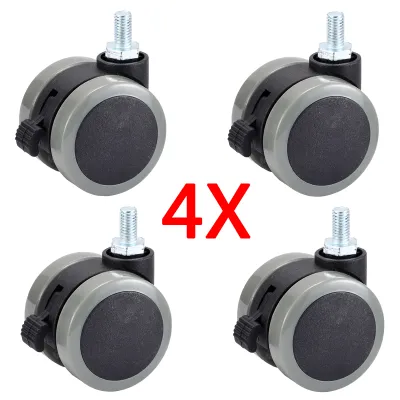
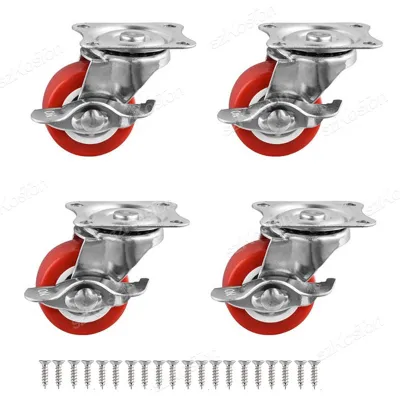
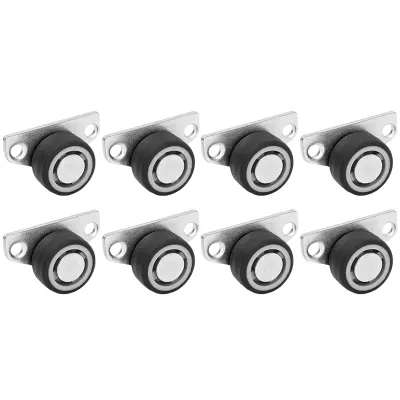
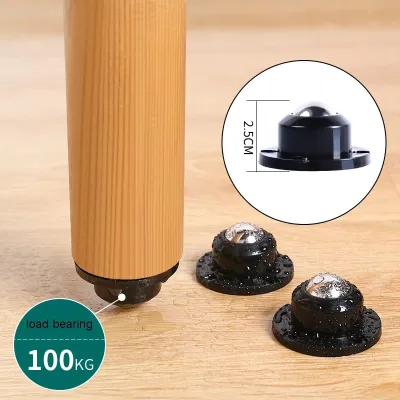
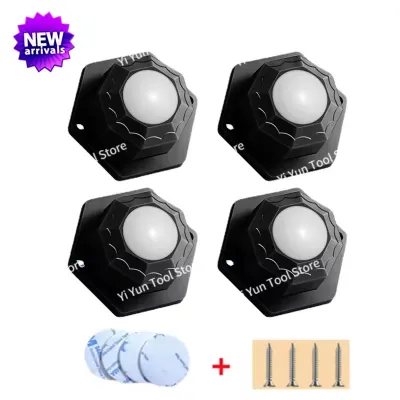
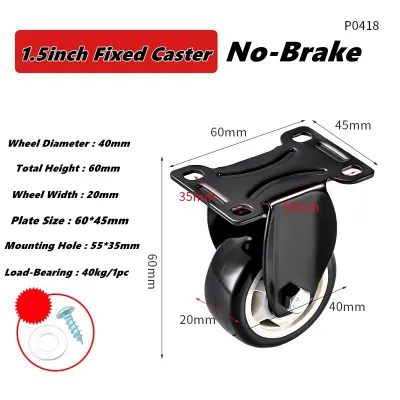
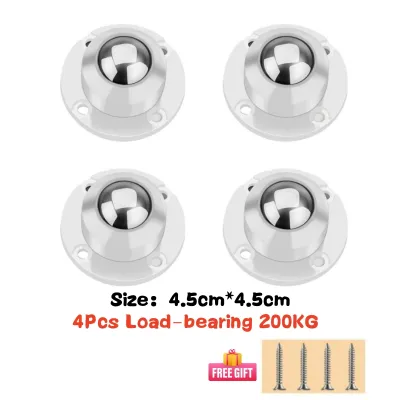
![[SG Seller]Truslink 5PCs 3 Inch Office Chair Caster Wheels Roller Rollerblade Style Castor Wheel Replacement PU Wheel](https://img.lazcdn.com/g/p/4157aea7284404087fad9be9f0d36a0d.png_400x400q80.png_.webp)
Prices are valid at publication and may change. Please refer to the product page for the latest price.
Step 1: Safely Remove the Existing Caster
Before attempting to remove any roller wheel, you must prepare the furniture to prevent accidents or structural damage. Begin by completely emptying all drawers, shelves, or compartments to reduce the overall weight. If you are working on a heavy cabinet, wardrobe, or kitchen island, do not attempt to tilt or lift it alone. Lay down a soft blanket or large piece of cardboard on the floor to prevent scratching the furniture’s top or your floor tiles during the process.

Use secure wooden blocks to prop up the base safely, or have a second person support the weight while you work underneath. Never place your hands or fingers directly under unsupported furniture edges, as a sudden slip can cause severe crushing injuries. Always check the furniture manufacturer’s care and assembly instructions first to see if there are specific disassembly recommendations.
The method you use to extract the old caster depends entirely on how it is attached. For grip ring stems, slip a flat pry bar or the claw of a hammer under the caster housing, placing a soft cloth underneath to protect the wood or metal finish from scratches. Gently apply leverage to pop the stem out of its socket. If the caster has a threaded stem, rotate the entire wheel housing counterclockwise to unscrew it. For plate-mounted casters, use a screwdriver to remove the mounting screws. As you work, keep a small tray nearby to collect all original screws, washers, and brackets; keeping these parts intact is crucial if you need to reinstall them or match their thread sizes later.
Step 2: Identify Your Mounting Type
Once the caster is free, the next step is to identify its mounting mechanism. Replacement casters are broadly categorized into stem-mounted and plate-mounted designs. Selecting the wrong category will make installation impossible, so visual identification is your primary filter when shopping online or in hardware stores. If the stem is completely missing or broken off inside the furniture, inspect the remaining socket hole or contact the manufacturer to determine what kind of mounting hardware was originally used.
Stem-Mounted Casters
Stem-mounted casters feature a metal rod extending upward from the wheel housing that inserts directly into a hole or socket in the furniture. The two most common varieties are grip ring stems and threaded stems. Grip ring stems are easily recognized by a small, split metal ring or ridge wrapped around the top portion of the stem. This ring compresses when pushed into the socket, relying on friction and tension to hold the wheel securely in place. They are standard on most office chairs and lightweight metal tubular furniture.
Threaded stems, on the other hand, look like thick bolts with spiral screw threads. They screw directly into a pre-tapped metal hole or a threaded wooden insert, making them a popular choice for wooden table legs, shelving units, and traditional furniture. If the stem is missing entirely, you must check the socket hole to see if it contains internal threads.
Plate-Mounted Casters
Plate-mounted casters utilize a flat, square, or rectangular metal plate welded to the top of the wheel housing. This plate contains pre-drilled screw holes at each corner, allowing you to secure the caster directly to a flat wooden or metal surface. Because the plate distributes the furniture’s weight over a much larger surface area than a narrow stem, plate mounts are the industry standard for heavy-duty applications, such as large filing cabinets, mobile kitchen islands, and heavy storage chests.
These are typically top-plate mounts, which screw flat against the bottom of the furniture, though some specialized designs use side-plate mounts that screw into the vertical side of a furniture leg for added lateral stability. If you are dealing with a less common type, such as push-in socket casters, you will need to inspect the plastic or brass sleeve inside the wooden leg to ensure it is intact before buying a replacement.
Step 3: Measure the Stem or Plate Specifications
Precision is the most critical factor when measuring mounting hardware. Even a minute deviation can render a replacement wheel useless. If you attempt to force a stem that is too large into a socket, you risk cracking the furniture leg; if the stem is too small, the wheel will wobble or fall out whenever the furniture is lifted.
To measure grip ring stems, use your digital calipers to measure the stem’s diameter. It is vital to measure the thickest part of the metal shaft below the grip ring, not the ring itself. Next, measure the stem’s length from the flat collar at the base of the stem (where it meets the wheel housing) all the way to the very tip of the rod.
To measure threaded stems, measure the major diameter, which is the outside diameter across the widest part of the screw threads. You must also measure the length of the threaded portion from the base collar to the tip. Thread pitch—the spacing between individual threads—is also critical. To determine the thread pitch, count the number of threads within a specific distance (such as 10mm or half an inch). For metric threads, the pitch is the distance between threads in millimeters (e.g., 1.25mm or 1.5mm). For imperial threads, it is measured in Threads Per Inch (TPI). If you do not have a thread gauge or digital calipers, a practical solution is to take the old caster to a local hardware store to test it against a thread matching board.
To measure plate mounts, use a tape measure or calipers to record three key dimensions: the overall length and width of the plate, the screw hole diameter, and the center-to-center hole spacing. To measure hole spacing, measure the distance from the center of one screw hole to the center of the adjacent hole, both horizontally and vertically. Matching this spacing ensures you can reuse the existing screw holes without drilling new ones, which could weaken the wood.
Step 4: Measure the Wheel Diameter and Tread Width
While the mounting hardware determines whether a wheel can be installed, the wheel’s dimensions determine how the furniture behaves once it is on the floor. To measure the wheel diameter, place your tape measure or calipers across the center of the wheel from the top edge to the bottom edge, excluding the metal or plastic housing surrounding it. Next, measure the tread width, which is the thickness of the outer tire surface that makes direct contact with the floor.
Altering these dimensions when buying replacements will affect your furniture’s performance. Choosing a larger wheel diameter makes it much easier to roll over uneven thresholds, floor transitions, or thick rugs. However, a larger wheel also raises the furniture’s overall height, which can alter ergonomics (such as making an office chair too high for a desk) or prevent a drawer unit from sliding under a counter. Conversely, selecting smaller wheels reduces clearance, which may cause the bottom frame of a heavy cabinet to drag on the floor or carpet.
Step 5: Calculate Load Capacity and Choose the Right Material
To prevent premature wheel failure, flat spots, or structural collapse, you must calculate the required load capacity for your new casters. To find the minimum load rating needed per wheel, use the following formula:
Divide the total weight of the furniture plus its maximum expected payload by the number of wheels, then add a 20% to 25% safety margin. For example, if a cabinet and its contents weigh 100kg and use four wheels, each wheel should be rated for at least 30kg. Adding this safety margin is crucial because floors are rarely perfectly level; often, only three of the four wheels bear the brunt of the weight at any given moment. Never exceed the manufacturer’s rated capacity for an individual caster.
Additionally, you must select a wheel material compatible with your flooring. In many Singapore apartments, hard floor surfaces such as homogeneous tiles, luxury vinyl tiles (LVT), and varnished parquet are common. For these surfaces, soft-tread materials like polyurethane (PU) or soft rubber are highly recommended. These materials cushion the load, prevent unsightly scratches, and glide quietly. Furthermore, Singapore’s high humidity can accelerate rust on non-treated steel brackets and bearings, so choosing wheels with zinc-plated, chrome-plated, or stainless steel metal parts is a smart choice to resist corrosion.
For carpeted rooms, hard-tread materials like nylon or hard plastic are preferred because they minimize rolling resistance and prevent the wheels from sinking into the fibers. Always check the furniture manufacturer’s care instructions to ensure the chosen wheel material is safe for your specific floor finish. If the original wheels performed well without leaving marks, try to match that material; if they caused floor damage, use this opportunity to upgrade to a floor-friendly alternative.
Reference Guide: Typical Roller Sizes for Common Furniture
While you must always take physical measurements to guarantee compatibility, understanding industry-standard sizes can help you navigate product listings. Keep in mind that these are common reference points, not absolute rules:
- Office Chairs: These almost universally utilize a 2-inch to 3-inch (50mm to 75mm) wheel diameter. The standard mounting style is a grip ring stem measuring 7/16 inches (approximately 11mm) in diameter and 7/8 inches (22mm) in length.
- Light Drawer Units and Carts: These mobile storage units typically use 1.5-inch to 2-inch (38mm to 50mm) wheels. They are generally fitted with smaller grip ring stems or light-duty, four-hole plate mounts.
- Heavy Cabinets and Kitchen Islands: Designed to hold substantial weight, these pieces usually require 3-inch to 5-inch (75mm to 125mm) heavy-duty plate-mount casters with robust steel brackets and high load capacities.
If your measurements fall directly between standard imperial and metric sizes (for example, measuring a stem at 10.5mm), check the original part for wear and tear. Over time, metal stems can wear down slightly from friction. Many homes in Singapore feature a mix of European furniture (which uses metric sizes like 10mm stems) and American or global brands (which often use imperial sizes like 7/16 inch, which is 11.1mm). When in doubt, consult the furniture manufacturer’s original manual or contact a specialist hardware supplier to avoid purchasing an incompatible size.
Frequently Asked Questions (FAQ)
Can I replace my plate-mount casters with stem-mount casters?
Converting a piece of furniture from plate-mount to stem-mount casters is generally not recommended unless you are prepared to perform extensive modifications. To make this switch, you would need to drill precise, deep holes into the center of the furniture legs and install specialized metal or plastic socket inserts to hold the stems. This process can easily split or weaken wooden legs, compromise the structural integrity of the furniture, and void any active manufacturer warranties. It is always safest and most reliable to stick to the original mounting style.
What should I do if my roller wheel stem is stuck and won't pull out?
Over time, moisture, humidity, and dirt can cause metal stems to rust or bind inside their sockets. If a stem is stuck, apply a small amount of penetrating oil (such as WD-40) directly around the joint where the stem enters the socket. Allow the oil to sit for about 15 minutes to penetrate the rust. Next, wrap a thick cloth around the caster base to protect the finish, grip it firmly with pliers, and twist gently while pulling outward. Alternatively, you can use a specialized caster removal tool or tap the underside of the wheel housing gently with a rubber mallet. If the furniture base or wooden leg begins to crack, splinter, or show signs of stress, stop immediately and consult a professional furniture repair service.
Do I need to replace all the roller wheels at the same time?
It is highly recommended to replace all the roller wheels on a single piece of furniture at the same time, even if only one is broken. Mixing old and new wheels—or combining different brands—often leads to minor discrepancies in wheel diameter, height, and swivel radius. These tiny differences can cause the furniture to wobble, tilt, or roll unevenly. Over time, an uneven load distribution puts excessive stress on the remaining joints and sockets, which can damage the furniture frame and cause the new wheels to wear out prematurely.
Community discussion
Share your experience or ask a question. Comments are reviewed before publication.