
To find the correct replacement wheel for your furniture, you must identify its mounting style, measure its key dimensions, and select a material compatible with your flooring. A mismatch in any of these areas can lead to wobbly office chairs, scratched parquet, or unstable cabinets. Taking precise measurements before purchasing ensures that your furniture remains stable, safe, and easy to maneuver.
In Singapore homes, where flooring types range from delicate engineered wood to hard ceramic tiles, choosing the right replacement caster is essential for protecting your property. Whether you are repairing a desk chair, a kitchen trolley, or a heavy sideboard, this guide provides the step-by-step process to measure and identify the exact hardware you need.
Identify the Caster Mounting Style First
Before taking any measurements, you must determine how the caster is attached to your furniture. The mounting style dictates which parts of the hardware you need to measure and how the replacement will be installed. Furniture wheels generally fall into three primary categories: stem mounts, plate mounts, and socket mounts.
Products mentioned in this guide
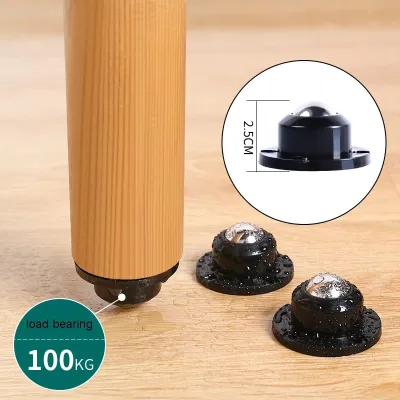
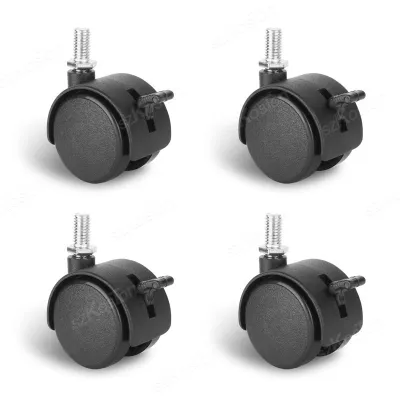

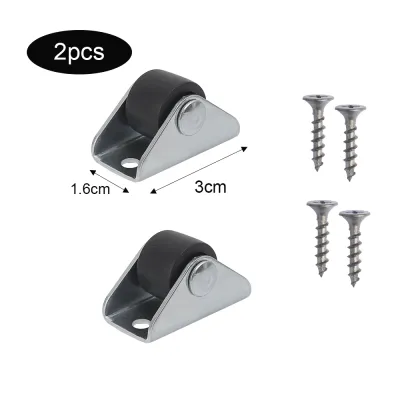
Prices are valid at publication and may change. Please refer to the product page for the latest price.
Stem Mounts feature a single metal post (the stem) that extends upward from the wheel assembly and inserts directly into a pre-drilled hole or sleeve in the furniture leg. This style is highly common on office chairs, light-duty shelving, and small utility carts. To identify a stem mount without removing it, look closely at the connection point between the wheel assembly and the furniture leg; if you see a single metal rod disappearing into the center of the leg, it is a stem mount.
Plate Mounts utilize a flat, square, or rectangular metal plate that is bolted or screwed directly onto the flat underside of the furniture. This mounting style is typically found on heavier items such as large cabinets, sofas, TV consoles, and heavy-duty workbenches. You can easily identify a plate mount by looking for a flat metal base secured with four screws or bolts at the corners.
Socket Mounts are a variation of the stem mount where a separate metal or plastic sleeve (the socket) is permanently embedded inside a hollow tubular leg or a wooden leg. The caster stem then inserts into this socket. This style is frequently found on vintage wooden furniture, metal medical carts, and industrial shelving. Identifying the correct mount style at the beginning prevents you from purchasing incompatible hardware, saving you time and return shipping fees.
How to Safely Remove the Existing Caster
To measure your existing caster accurately, you must first remove it from the furniture. Doing so allows you to inspect the entire assembly without obstruction. Before starting, check the furniture manufacturer’s instructions for any specific disassembly warnings. If the manufacturer’s instructions are unavailable, or if the furniture is highly antique, fragile, or structurally complex, consult a professional furniture repair specialist.

To begin, safely flip or tilt the furniture to expose the underside. For heavy items like oak sideboards or large desks, always enlist a second person to assist you, clear the surrounding area of obstacles, and lay down thick moving blankets or cardboard to protect both the furniture’s finish and your flooring. Ensure the piece is fully stable and supported before you begin working on the wheels.
The tools required for removal are generally basic household items. You may need a flathead screwdriver, an adjustable wrench, a pair of pliers, or a small pry bar.
- Unscrewing Plate Mounts: Use a screwdriver or socket wrench to loosen and remove the screws or bolts holding the plate in place. Support the caster with one hand as you remove the final screw to prevent it from falling and scratching the floor.
- Prying Out Friction Stem Mounts: For grip ring or grip neck stems, insert the flat head of a screwdriver or the claw of a hammer between the caster's swivel base and the furniture leg. Apply gentle, even leverage to pry the stem out of its socket.
- Unthreading Threaded Stems: Look for a hex nut profile at the base of the stem, just above the swivel mechanism. Use an adjustable wrench to turn this nut counter-clockwise to unthread the stem from the furniture leg.
Always observe strict safety boundaries during this process. Never use excessive force or strike wooden furniture legs directly with a metal hammer. Doing so can splinter the wood, split the leg, or ruin the internal threads, turning a simple wheel replacement into a major structural repair.
Measuring Stem Caster Dimensions
Once the caster is removed, you can begin the measurement process. For stem casters, precision is critical; even a fraction of a millimeter difference can prevent the new stem from fitting or cause it to wobble securely inside the leg.
Measuring Wheel Diameter and Tread Width
To measure the wheel diameter, lay the caster flat on a level surface and place a ruler or tape measure straight across the center of the wheel, from one outer edge to the opposite outer edge. Do not measure only the flat tread surface or guess the size based on the housing. Common wheel diameters for household furniture range from 25mm to 75mm.
Next, measure the tread width, which is the thickness of the wheel’s rolling surface. Tread width directly impacts the furniture’s stability and rolling resistance. A wider tread distributes weight more effectively across the floor, which is particularly beneficial for heavy furniture or when rolling over the grout lines of ceramic tiles in Singapore HDB flats. Narrower wheels, conversely, provide less rolling resistance but can put more concentrated pressure on delicate flooring materials.
Measuring Stem Diameter, Length, and Type
To measure the stem diameter, using digital calipers is highly recommended, as standard rulers can easily lead to reading errors. If you do not have calipers, tighten an adjustable wrench around the stem, slide the wrench off, and then measure the gap between the wrench jaws with a ruler. Guessing the diameter of a stem often leads to a poor fit, causing the wheel to fall out when the furniture is lifted.
Measure the total stem length from the flat top of the mounting collar (the swivel base) to the very tip of the stem. Do not include the swivel mechanism itself in this measurement.
Finally, identify the stem type, which will fall into one of three categories:
- Grip Ring Stems: These are smooth metal cylinders with a small split ring (the friction ring) near the top. The ring compresses when pushed into the socket, holding the caster in place.
- Grip Neck Stems: These stems feature a wider base that tapers toward the top, ending in a small bulb or head that snaps into a matching socket.
- Threaded Stems: These stems function like bolts and screw directly into the furniture. If you have a threaded stem, you must determine both the thread diameter and the thread pitch (the distance between individual threads). You can verify this using a thread gauge, or by taking the old caster to a local hardware store to test it against known nut sizes. Common sizes in Singapore include metric threads like M8 and M10.
Measuring Plate and Socket Mounts
If your furniture does not use a standard stem caster, you will need to measure the specific dimensions of your plate or socket mount to ensure a seamless replacement.
Plate Mount Dimensions and Bolt Spacing
For plate-mounted casters, the overall size of the plate is important, but the most critical dimension is the bolt hole spacing. Begin by measuring the overall length and width of the top plate with a ruler.
Next, measure the bolt hole spacing, which is the center-to-center distance between the mounting holes. Measure this distance both lengthwise and widthwise. Matching these dimensions exactly is crucial because it allows you to use the existing screw holes in your furniture. Drilling new holes close to the old ones can weaken the wooden base, leading to structural failure under heavy loads.
You should also check the caster’s offset, which is the horizontal distance between the center of the wheel axle and the vertical axis of the swivel. The offset determines how easily the caster swivels. A larger offset makes turning easier but requires more clearance space beneath the furniture. Ensuring the replacement matches the original offset preserves the furniture’s original turning radius and stability.
Socket Mount Inner Diameter and Depth
For socket-mounted casters, which are designed for hollow tubular metal legs or wooden legs with pre-installed sleeves, you must measure the internal cavity.
After removing the old caster and socket, use calipers to measure the inner diameter of the furniture leg tube. This measurement must be precise to ensure the new socket fits snugly without slipping or rattling.
Next, measure the depth of the socket cavity. Insert a thin dowel, pencil, or ruler into the leg opening until it hits the internal stop, then mark and measure that length. The replacement caster stem must not exceed this depth, or it will bottom out before the mounting collar can sit flush against the bottom of the leg, leaving the furniture unstable and prone to tipping.
Selecting the Right Wheel Material for Your Home
Choosing the correct wheel material is essential to protect your floors, reduce noise, and ensure the longevity of both the caster and your furniture. A material name alone does not guarantee durability; you must inspect the quality of the swivel joints, the protective finish on metal components, and match the wheel to your specific home environment.
- Polyurethane: Highly recommended for modern Singapore homes. They feature a soft outer tread that is quiet, non-marking, and safe for delicate surfaces such as engineered wood, parquet, laminate, and luxury vinyl tiles (LVT). They provide excellent grip without scratching or wearing down floor finishes.
- Soft Rubber: Offers great shock absorption and quiet operation, making them suitable for lightweight furniture on hard surfaces. However, some lower-quality soft rubber wheels can leave dark scuff marks on light-colored ceramic tiles or vinyl sheets if the furniture is dragged sideways.
- Hard Plastic (Nylon or Polypropylene): Highly durable, resistant to moisture, and cost-effective. However, they are noisy when rolled across hard surfaces and can easily scratch or gouge hardwood, laminate, or vinyl floors if a small piece of grit becomes trapped beneath the wheel. They are best reserved for carpeted areas or low-mobility furniture.
- Metal (Steel or Cast Iron): Designed for heavy industrial loads. They should not be used on residential floors like ceramic tiles, parquet, or vinyl, as they will scratch, crack, or dent the surface.
When selecting a material, also consider the load capacity. To calculate the required load capacity per wheel, use the following formula:
Required Capacity per Wheel = (Total Weight of Furniture + Maximum Expected Load) / (Number of Casters – 1)
We divide by the number of casters minus one as a safety margin because floors are rarely perfectly level. At any given moment, the weight of the furniture may be distributed across only three of the four wheels. For example, if a heavy sideboard weighs 80 kg and holds up to 40 kg of items (totaling 120 kg) and rests on four wheels, each replacement caster should have a rated load capacity of at least 40 kg (120 divided by 3). Replacement casters typically range from S$5 to S$20 per pack of four in local hardware stores or online marketplaces, depending on the material and weight capacity.
When to Replace the Entire Caster vs. Just the Wheel
When a furniture wheel stops functioning, you do not always have to replace the entire caster assembly. However, understanding when a full replacement is necessary will save you time and effort.
You should replace the entire caster assembly if you observe structural damage to the housing. This includes bent metal forks, broken or grinding swivel bearings (where ball bearings have fallen out), severe rust, or a cracked mounting plate. In these scenarios, simply swapping the wheel will not restore smooth movement or guarantee safety.
Conversely, you may only need to replace the wheel component if the metal housing, swivel mechanism, and mounting stem are in perfect condition, but the wheel itself has flat spots, a worn-down diameter, or a seized axle. This is often the case with high-end or custom vintage casters where the housing matches the furniture’s aesthetic.
Keep in mind that for standard, mass-produced furniture, replacing the entire caster assembly is generally more cost-effective and much easier. Finding a separate wheel that perfectly matches the fork width, axle diameter, and hub length of your existing caster housing can be highly challenging, whereas complete replacement assemblies are widely available in standard sizes.
Frequently Asked Questions (FAQ)
What if my furniture wheel has a non-standard or metric size?
If your furniture was imported or has non-standard dimensions, check the manufacturer’s original documentation or contact their local distributor in Singapore for exact part numbers. If you cannot find an exact match, you can sometimes use plastic adapter sleeves or washers to fit a slightly smaller metric stem into an imperial socket. Never force an oversized stem into a socket, as this can split wooden furniture legs or crack plastic inserts, permanently damaging your furniture.
Do I need to replace all furniture wheels at the same time?
Yes, it is highly recommended to replace all the wheels on a single piece of furniture simultaneously. Replacing only one or two wheels can result in uneven heights, leading to furniture wobbling, unstable weight distribution, and excessive stress on the frame and joints. Replacing the entire set ensures uniform height, consistent rolling resistance, and equal floor protection across all contact points.
Community discussion
Share your experience or ask a question. Comments are reviewed before publication.