
Fitting a replacement dust cover sheet on your furniture preserves its finish, keeps allergens at bay, and maintains a clean home environment. Achieving a snug, tailored fit that does not slip, bunch, or leave gaps requires a systematic approach to measuring, selecting, and securing the fabric. Whether you are protecting an heirloom sofa, an armchair, or a dining set, the process relies on capturing the absolute maximum outer dimensions of the piece, factoring in all functional movements, and selecting a material that can withstand local environmental conditions.
In humid climates like Singapore, choosing the right material and securing it properly is essential to prevent moisture build-up while keeping dust out. By following a structured installation process and using the correct tools, you can ensure your replacement cover remains securely in place, looks neat, and provides long-lasting protection for your investment.
Gather Your Measuring and Installation Tools
Before attempting to measure your furniture or install a new cover, assembling the correct tools will ensure accuracy and prevent damage to your belongings. For the measurement phase, you will need a high-quality, flexible steel or fiberglass measuring tape. Avoid using plastic dressmaker tapes that can stretch over long distances, as even a minor deviation can lead to an ill-fitting cover. Keep a notepad, pen, or a digital device nearby to record each dimension immediately, preventing memory errors. For taller wardrobes, high-backed bookshelves, or bulky display cabinets, a sturdy step stool or a small stepladder is essential to help you reach the highest points safely without overextending or risking a fall.
Products mentioned in this guide
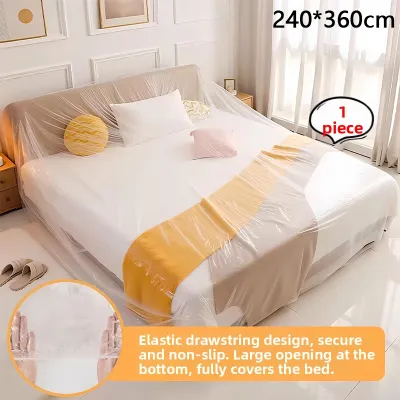
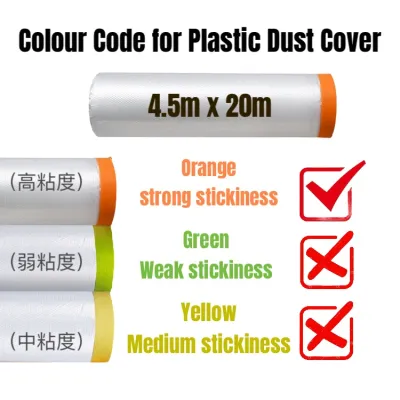
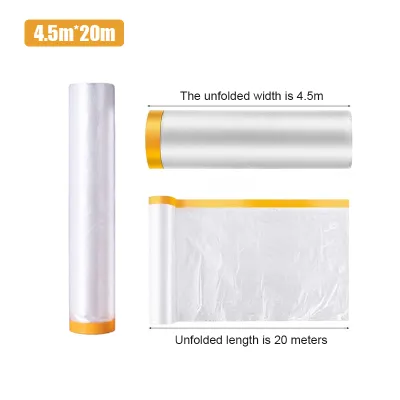
![[2-3 Days Delivery] 4.5m x 20m Plastic Dust Cover Protective Plastic Sheet Disposable Furniture Dustproof Cover Protective Cover Plastic Cover Plastic Film for Home Improvement CNY Gift Present](https://img.lazcdn.com/g/p/37fceab8fc43d4b3b58593d55aae9bcb.jpg_400x400q80.jpg_.webp)
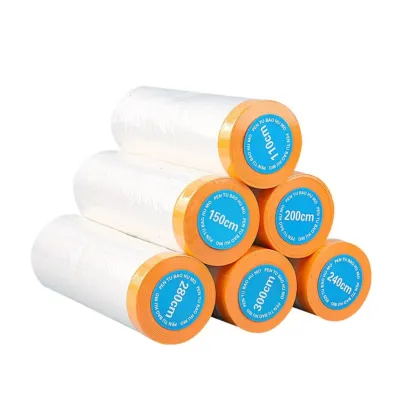
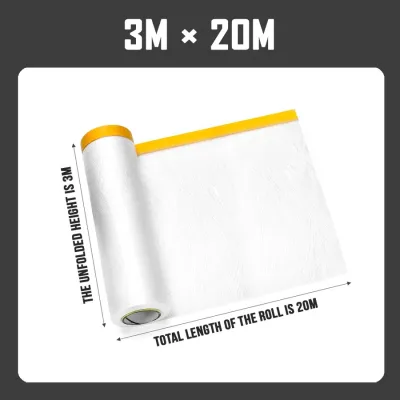
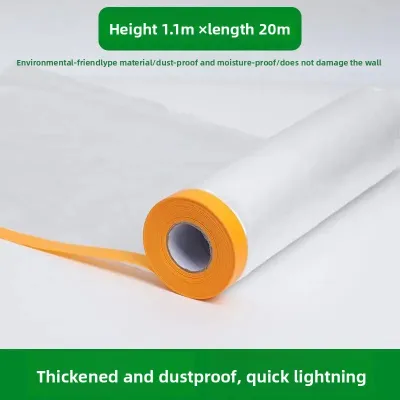
Prices are valid at publication and may change. Please refer to the product page for the latest price.
For the installation phase, have your replacement dust cover sheet ready alongside appropriate securing accessories. Depending on the design of your furniture and the cover itself, these installation aids may include non-slip furniture pads, adjustable Velcro straps, elastic bungee cords, or upholstery twist pins. Non-slip pads are highly effective when placed between the furniture frame and the cover to prevent the fabric from sliding on polished wood or smooth leather surfaces.
Before proceeding with any installation method, locate the furniture manufacturer’s care and assembly instructions. This step is critical; certain securing accessories, such as adhesive Velcro strips or twist pins, can permanently mar delicate finishes, puncture leather, or tear fragile backing fabrics. Reviewing the manufacturer’s guidelines ensures that your chosen securing method does not void any active warranties or cause irreversible damage to the underlying structure.
How to Measure Your Furniture for a Custom Fit
Measuring the Core Dimensions
To achieve a clean, tailored look, you must capture the core dimensions of your furniture with absolute precision. Start by identifying the three primary axes: length (the widest span from left to right), depth (the span from the front-most edge to the back-most edge), and height (the vertical distance from the highest point to the lowest point). When measuring, always pull the tape measure taut and parallel to the floor or wall to avoid diagonal distortions. Always measure from the absolute widest and highest points of the item, rather than simply measuring the flat surfaces of the main body. For instance, on a classic sofa, the widest point is often the outer edges of the rolled armrests, not the base of the frame.

The height measurement requires careful consideration of how you want the cover to hang. If you intend for the dust cover sheet to drape completely to the floor to block dust from accumulating underneath, measure from the very top of the backrest straight down to the floor. However, if the furniture has decorative wooden legs that you prefer to keep exposed, or if you want to prevent the fabric from dragging on the floor where it might gather dirt, measure from the top of the backrest down to the seat or the bottom edge of the main frame. Record all of these measurements consistently in either centimeters or inches. Mixing units mid-project is a common source of calculation errors that can result in ordering a cover that is either far too small or excessively baggy.
Accounting for Protrusions and Moving Parts
Standard rectangular dimensions rarely tell the whole story of a piece of furniture. You must account for any structural protrusions and functional moving parts to ensure the replacement sheet fits comfortably without tearing. Identify any protruding elements such as extended armrests, decorative wooden finials, protruding handles, or base wheels. When measuring over these features, add a specific clearance allowance—typically 2 to 3 centimeters—to the overall dimensions. This extra space prevents the fabric from pulling too taut against sharp edges, which can cause localized friction, premature wear, and eventual tearing of the dust cover.
For furniture with moving parts, such as recliners, adjustable headrests, or extendable dining tables, the measurement process must accommodate the item’s full range of motion. Take a complete set of measurements with the furniture in its standard, compact upright position, and then take a second set with the mechanism fully extended or reclined. If you plan to keep the furniture covered while it is in use or partially extended, the replacement cover must be sized to accommodate the maximum footprint. If the cover is strictly for storage when the item is closed, use the compact dimensions.
Keep in mind that highly irregular shapes, such as wingback chairs with deep contours or asymmetrical sectional sofas, may not fit well under a standard, off-the-shelf rectangular sheet. If your measurements reveal dramatic differences in depth or height across different sections of the piece, you should consider a custom-tailored dust cover sheet rather than a generic size. A poorly matched standard cover on an irregular piece will bunch excessively in some areas while leaving other sections completely exposed to dust and light.
Calculate the Ideal Sheet Size and Check Material Labels
Once you have recorded the exact physical dimensions of your furniture, you must translate these numbers into the actual dimensions of the replacement dust cover sheet. This requires calculating a “drop allowance,” which is the additional fabric needed to tuck into natural crevices, wrap securely around the lower edges, or pool slightly at the base for a neat, finished appearance. As a general rule, if you are using a flat, non-elastic sheet, add at least 15 to 20 centimeters to both the length and depth measurements. This extra fabric provides enough slack to tuck the cover deep into the spaces between sofa cushions or behind backrests, which is essential for keeping the cover anchored when the furniture is approached or moved. If you are using a fitted cover with elastic edges, ensure the pocket depth of the cover matches or slightly exceeds the maximum depth of your furniture cushions or frame.
Beyond physical sizing, verifying material characteristics is a critical step in selecting a high-quality replacement cover. Do not rely solely on generic material names like “polyester” or “canvas” to assume performance benefits like moisture resistance or breathability. Instead, physically locate and read the manufacturer’s product label or technical specification sheet. In Singapore’s hot and highly humid climate, breathability is paramount. A non-breathable, heavy plastic sheet can trap ambient humidity underneath, creating a microclimate that encourages mold, mildew, and musty odors on fabric upholstery or wood finishes. Look for labels that explicitly state “breathable fabric” or “air-permeable membrane” to ensure that moisture can escape while dust particles are kept out.
Additionally, check the care label for specific maintenance instructions and shrinkage limits. Many natural fiber covers, such as cotton duck or linen blends, can shrink by up to 5% to 10% during their first wash. If you calculate your measurements too tightly and purchase a cover without checking its shrinkage profile, the first laundering cycle could shrink the fabric so much that it will no longer fit your furniture. If the label indicates high potential shrinkage, opt for a slightly larger size or follow the recommended cold-water, line-drying instructions strictly to preserve the custom fit.
Step-by-Step Guide to Fitting and Securing the Cover
Positioning and Draping the Sheet Evenly
To begin the installation, clear the area around the furniture so you have unobstructed access to all sides. Unfold the replacement dust cover sheet completely and locate any alignment aids, such as integrated front-to-back seams, corner pockets, or manufacturer tags. Drape the sheet over the highest point of the furniture first—typically the center of the backrest or the top of a cabinet. Align the center seam of the cover with the physical center of the furniture to ensure that the fabric hangs symmetrically on all sides.
Once the cover is anchored on the highest point, begin smoothing the fabric downward and outward toward the edges. Use flat, gentle hand sweeps to distribute the material evenly, working from the center toward the armrests, seats, and base. This systematic smoothing prevents the fabric from bunching in one area while pulling too tight in another, which can put unnecessary stress on the seams. As you drape the fabric, pay close attention to sharp wooden corners, metal hinges, or decorative carvings. Never pull the fabric forcefully over these areas; doing so can tear the sheet or scratch the furniture’s delicate finish underneath. If you encounter resistance, lift the fabric slightly, adjust its position, and let it drape naturally over the obstacle.
Securing the Edges to Prevent Slipping and Gaps
A loose dust cover will quickly slide out of place with daily room activity or air currents from fans and air conditioning units. To prevent slipping and eliminate unsightly gaps, start by tucking any excess fabric deep into the natural crevices of the furniture. For sofas and armchairs, push the extra drop allowance down into the spaces between the seat cushions and the backrest, as well as the gaps along the armrests. This creates a clean, semi-fitted look and uses the weight of the cushions to anchor the fabric.
Next, utilize any built-in securing features that came with your replacement sheet, such as elasticized hems, adjustable drawstrings, or integrated tie-down straps. Pull drawstrings taut and tie them with a secure but easily releasable knot, such as a double bow, near the rear legs of the furniture where they are out of sight. If your replacement cover is a simple flat sheet without built-in fasteners, you can employ safe aftermarket solutions. Slip non-slip rug pads or silicone grip liners between the furniture frame and the cover to add friction. For fabric upholstery, specialized upholstery twist pins can be gently screwed into inconspicuous areas of the frame (such as the lower rear backing) to lock the hem in place. For leather or delicate wooden furniture, avoid pins entirely; instead, use soft Velcro straps wrapped around the furniture legs or weighted hem inserts.
Always observe a strict safety boundary when securing your cover: if you are considering drilling, stapling, or applying strong chemical adhesives to the furniture frame to keep a cover in place, stop immediately. These aggressive methods can cause permanent, irreversible structural and aesthetic damage, and will almost certainly void your furniture’s warranty. If standard non-destructive securing methods are insufficient, consult the furniture manufacturer or a professional upholsterer for approved, model-specific hardware solutions.
Verify the Fit and Maintain Your Dust Cover
After securing the cover, conduct a thorough visual and physical inspection to ensure the installation is successful. Walk slowly around the entire piece of furniture, looking for any exposed areas where dust could enter, or sections of fabric dragging excessively on the floor. Dragging fabric not only collects floor grime but also presents a serious tripping hazard for anyone walking nearby. Conversely, check for areas where the fabric appears overly tight or strained; if a section is pulled taut like a drum, adjust the tension immediately to prevent the seams from splitting over time.
Maintaining your dust cover sheet is essential to preserve its protective qualities and extend its lifespan. Dust does not simply sit on top of the fabric; over time, fine particulates can sift through the weave of a neglected cover and settle onto the furniture underneath. Establish a routine to vacuum the surface of the cover using a soft brush attachment once every few weeks, or carefully remove the cover and shake it out outdoors to release trapped dust.
During your routine cleaning, take a moment to inspect the securing mechanisms. Check elastic bands for loss of elasticity, examine tie-down straps for fraying, and ensure that upholstery pins or Velcro attachments remain firmly in place. Re-tuck any fabric that has loosened from the crevices due to daily movement. If the cover has accumulated significant dust or minor spills, launder it according to the manufacturer’s care label, ensuring you use the correct temperature settings to prevent shrinkage and preserve the customized fit you worked hard to achieve.
Frequently Asked Questions (FAQ)
Can I use a flat bed sheet as a temporary dust cover?
Yes, a standard flat bed sheet can serve as an acceptable temporary barrier against dust during short-term home renovations, painting projects, or brief periods of storage. However, household bed linens are not designed for long-term furniture protection. They lack essential fitting features like elasticized hems, tailored corners, or tie-down straps, making them highly prone to slipping off with the slightest breeze or movement. Additionally, their dimensions rarely align well with irregular furniture shapes, leaving gaps where dust can easily penetrate. If you must use a flat bed sheet temporarily, secure it by using heavy-duty binder clips to clamp the fabric to the underside of the frame, or tie neat knots at the corners of the sheet around the furniture legs to keep it from sliding off.
How do I prevent the dust cover from trapping moisture against the furniture?
Trapped moisture is a major concern in humid environments like Singapore, where it can quickly lead to mold growth and wood rot. To prevent this, never apply a dust cover to furniture that is damp, freshly cleaned with liquid solutions, or located in a damp room; ensure the item is completely clean and dry before covering. Always check the product label of your replacement dust cover sheet to verify that it is made from a highly breathable fabric rather than dense, non-porous plastic. Avoid using heavy plastic tarps for long-term indoor storage, as they seal in ambient humidity. Finally, make it a habit to periodically remove the cover—ideally once every few weeks—to allow both the furniture and the cover to air out, particularly in rooms that lack consistent air conditioning or natural ventilation.
Community discussion
Share your experience or ask a question. Comments are reviewed before publication.