
In Singapore’s compact living spaces, storage beds are essential for maximizing bedroom layouts in HDB flats and condominiums. However, when the hydraulic rods—also known as gas struts or gas springs—lose their lifting power, accessing your stored items becomes a heavy, frustrating, and potentially dangerous chore. Singapore’s humid climate can also accelerate the degradation of the rubber seals inside these struts, leading to gradual pressure loss over time.
To restore your bed’s effortless lift, you must identify the correct replacement hydraulic rod. This requires matching three critical specifications: the extended length, the stroke length, and the force rating measured in Newtons (N). Guessing these dimensions often results in a bed that refuses to close, fails to lift, or damages the bed frame.
Replacing these parts is a straightforward DIY task if you follow the correct steps. By systematically measuring your existing hardware and verifying the mounting fittings, you can safely restore your bed’s functionality without paying for expensive professional repair services.
Products mentioned in this guide
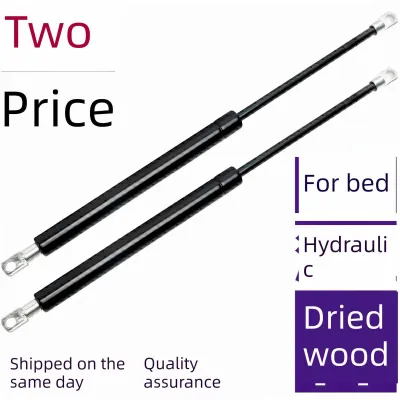
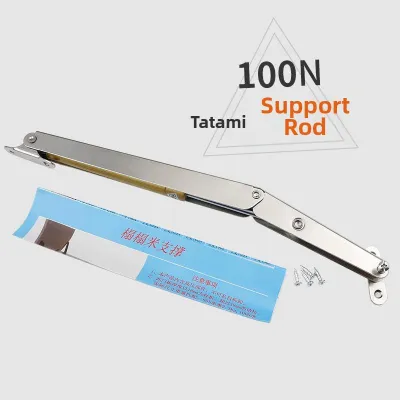
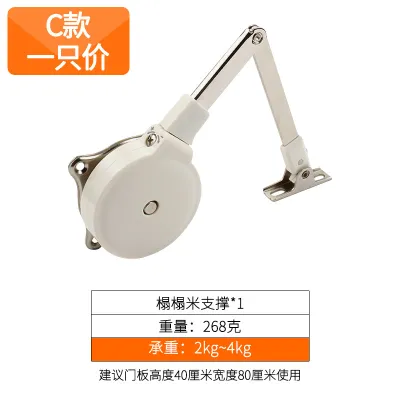
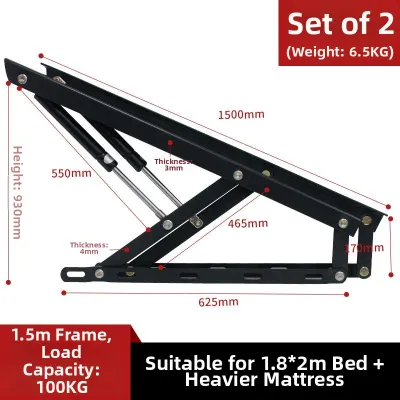
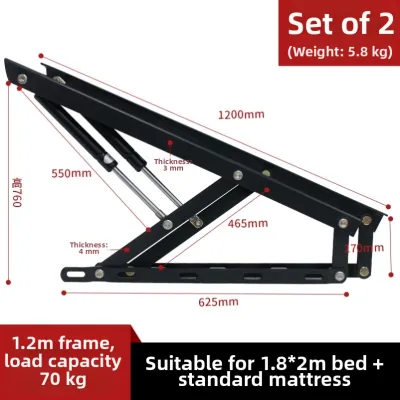
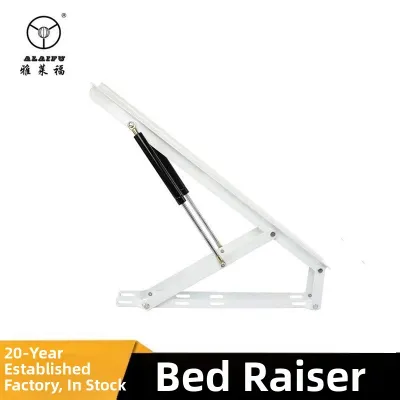
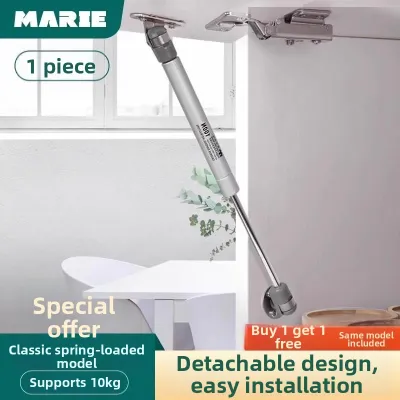
Prices are valid at publication and may change. Please refer to the product page for the latest price.
Key Specifications Decoded: What the Numbers Mean
Understanding the mechanical specifications of your storage bed hydraulic rod is the first step toward a successful replacement. These components are not “one-size-fits-all” accessories; they are precisely engineered gas springs designed to balance a specific weight over a set travel distance.
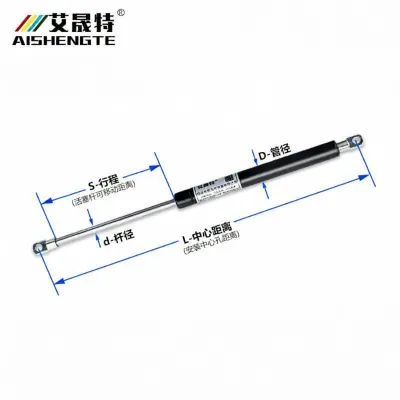
The core specifications you must decode include the extended length, compressed length, stroke, and force rating. The extended length is the total span of the rod when fully open, while the compressed length is its measurement when fully pushed down. The stroke refers to the travel distance of the inner piston rod as it moves in and out of the main cylinder.
The force rating, expressed in Newtons (N), determines how much weight the rod can assist in lifting. Attempting to install a generic “universal” rod without matching these specifications is highly risky. A rod that is too long will physically prevent the bed frame from closing, while a rod that is too short will limit the opening angle, restricting your access to the storage compartment.
How to Measure Length and Center-to-Center Distance
To ensure your new hydraulic rods fit perfectly onto your existing bed frame brackets without requiring you to drill new holes, you must take highly accurate measurements of your old struts.

Measuring Extended Length Fully open the storage bed so the hydraulic rod is completely extended. Use a reliable tape measure to record the distance from the very end of one fitting to the very end of the other.
Calculating Center-to-Center Distance This is the most critical measurement for compatibility. Instead of measuring the overall length of the metal rod, measure from the exact center of one mounting hole (or ball socket) to the center of the opposite mounting hole. Replacement gas struts are sold and categorized by this precise center-to-center distance.
Determining Stroke Length The stroke is the length of the thin, shiny metal shaft that slides in and out of the thicker black cylinder. Measure only this exposed shaft when the rod is fully extended. This distance dictates how high the bed base will lift and the angle at which it rests when open.
Measurement Best Practices For the most accurate measurements, always remove the hydraulic rod from the bed frame first. Attempting to measure a rod that is still installed and under tension can lead to slight errors that prevent your replacement from fitting. If you must measure while it is installed, ensure a second person or a heavy-duty wooden support prop holds the bed base completely open so the rod is under zero compression.
Choosing the Correct Force Rating (Newtons)
Selecting the correct lifting force is essential for a storage bed that is easy to open but stays securely closed when pushed down. This force is measured in Newtons (N) and is printed on the side of the cylinder.
Understanding Newtons (N) The Newton rating represents the outward pressure exerted by the gas inside the cylinder. As a general rule of thumb, 10 Newtons of force is roughly equivalent to 1 kilogram of lifting capacity. Therefore, a pair of 800N rods provides approximately 160kg of total lifting assistance.
Risks of Incorrect Force Selecting the wrong rating can ruin your bed frame. If the Newton rating is too low, the rods will fail to support the weight of your mattress, causing the bed to drop unexpectedly or feel incredibly heavy to lift. Conversely, if the rating is too high, you will find it nearly impossible to push the bed down to close it, which risks bending the metal hinges or ripping the mounting brackets out of the wooden frame.
Locating the Original Rating Look closely at the cylinder body of your old hydraulic rod. Manufacturers print the rating directly on the metal casing, usually formatted as “0800N”, “1100N”, or “1200N”.
Adjusting for Mattress Changes If you have recently upgraded from a light spring mattress to a much heavier natural latex or memory foam mattress, you may need to increase the force rating. A general framework is to adjust the rating by 100N to 200N to compensate for the added weight. Always check with your bed frame manufacturer’s guidelines before making large adjustments to prevent structural damage.
Matching the Mounting Type and End Fittings
Even if you find a hydraulic rod with the perfect length and force rating, it will be useless if it cannot physically connect to your bed frame. You must match the mounting type and end fittings of your existing setup.
Common End Fittings Most storage beds in Singapore utilize ball socket fittings. These are cup-like ends that snap directly onto spherical ball studs attached to the bed frame’s metal brackets. Less common designs may use flat metal eyelets or clevis forks secured with a pin.
Ball Stud Size If your bed uses ball sockets, measure the diameter of the ball stud on the bracket. The standard sizes are typically 10mm or 8mm. The replacement rod’s socket must match this diameter exactly to snap on securely and prevent the rod from slipping off under pressure.
Thread Compatibility Many high-quality hydraulic rods feature removable end fittings. If you plan to reuse your existing brackets or custom fittings, verify the thread size and pitch (such as M8 or M10 threads) on both the old and new rods to ensure a secure, safe connection.
Safe Removal and Installation Guidelines
Replacing storage bed hydraulic rods is a simple task, but because these components are under high pressure, safety must be your top priority.
Safety First Never attempt to remove or install a storage bed hydraulic rod alone or without a safety prop. These rods are under immense pressure, and a falling bed base can cause severe injury. Use a sturdy wooden dowel, a heavy broom handle, or have a helper securely hold the bed frame in its fully open position.
Removal Process Locate the small metal retaining clip or band wrapped around the back of the ball socket. Insert a flathead screwdriver under the clip and gently pry it outward just enough to release the tension. Once the clip is loose, pull the socket straight off the ball stud. Repeat this process for the other end.
Installation and Testing Align the socket of your new hydraulic rod with the ball stud and press it firmly until you hear a distinct click, indicating the retaining clip has locked into place. Install the rod with the cylinder (the wider body) facing upward to ensure internal seals remain lubricated. Slowly lower the bed to test the mechanism, checking for any binding or noise before removing your safety prop entirely.
Frequently Asked Questions (FAQ)
Can I use a hydraulic rod with a higher Newton rating for extra support?
No, using a significantly higher Newton rating is not recommended. While it might seem like a good way to get extra lifting help, excessive upward force makes the bed extremely difficult to close. This constant pressure can warp wooden bed bases, strip the mounting screws out of the frame, or permanently bend the metal hinges. Stick to the original manufacturer’s specifications unless you have significantly changed the weight of your mattress.
Do I need to replace both hydraulic rods if only one is broken?
Yes, you should always replace storage bed hydraulic rods in pairs. Even if only one rod has lost its gas pressure, the remaining old rod is likely worn and weakened. Pairing a brand-new, stiff rod with an old, soft one creates an uneven distribution of force. This imbalance twists the bed frame during operation, accelerates wear on the new rod, and can damage your hinges. Replacing both ensures smooth, balanced lifting.
Community discussion
Share your experience or ask a question. Comments are reviewed before publication.