
Finding the perfect door storage rack for your HDB flat requires looking beyond simple aesthetics to focus on precise physical dimensions. Because HDB doors vary significantly across BTO flats, older resale units, bedrooms, and bathrooms, there is no universal rack size that fits every home. The ideal rack must match your door’s exact thickness, clear the surrounding frame, and leave enough space behind the door so it can open fully without hitting the adjacent wall or built-in cabinetry. By taking a few systematic measurements, you can easily identify a storage solution that maximizes your vertical space without causing structural damage or blocking daily foot traffic.
Understanding HDB Door Dimensions and Clearances
HDB flats feature a variety of door designs, each presenting unique installation challenges for over-the-door storage. The most critical factor for any hanging organizer is the door thickness, which determines whether the top brackets or hooks will slide on smoothly or fail to fit entirely. Standard HDB bedroom doors typically range from 35mm to 40mm in thickness, while main entrance doors are often thicker, sometimes reaching 45mm or more to meet fire-rating specifications. If you purchase a rack with fixed-size hooks designed for thinner doors, you risk scratching the paint or preventing the door from closing securely in its frame.
Beyond the door itself, the physical clearance around the door frame dictates how deep your storage rack can be. When a door swings open, the space between the door face and the adjacent wall shrinks rapidly, often limited by skirting boards, door stops, or protruding door handles. In tight BTO layouts, a rack that is too deep will strike the wall before the door is fully open, reducing your entry clearance and potentially denting the plaster. You must also account for the clearance at the top of the door, as some HDB frames have extremely tight tolerances that leave little room for metal brackets to sit over the top edge without scraping the upper frame.
Products mentioned in this guide
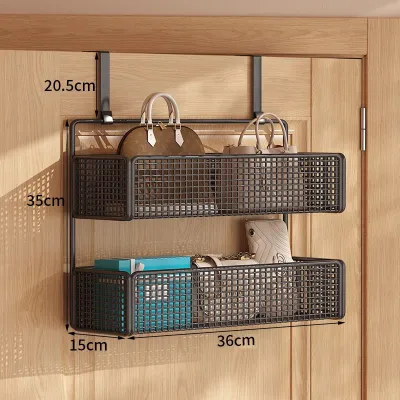
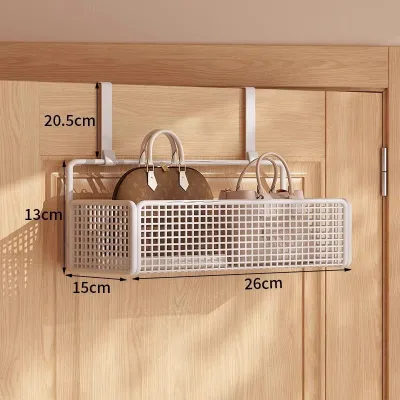
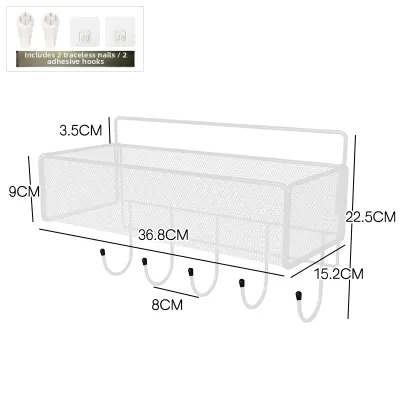
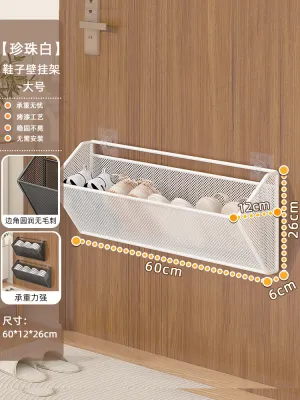
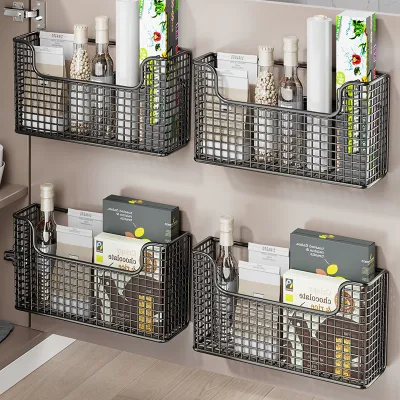
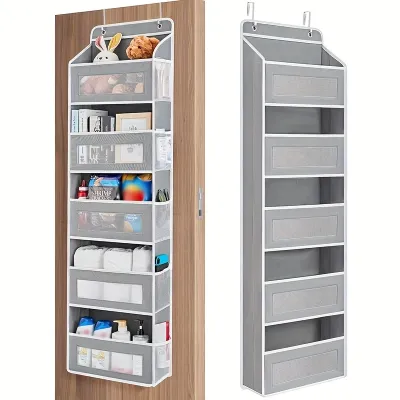
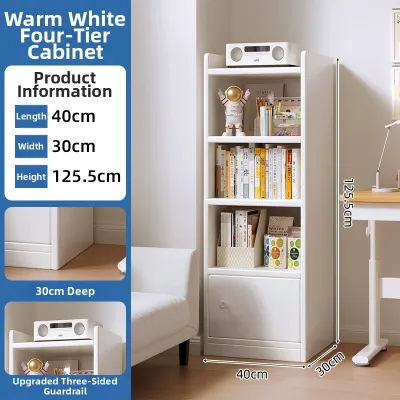
Prices are valid at publication and may change. Please refer to the product page for the latest price.
The material of your HDB door also dictates its weight-bearing capacity and the type of rack it can support. Solid timber doors, commonly used for main entrances and older bedroom designs, are highly stable and can handle heavier hanging loads without warping. In contrast, modern hollow-core bedroom doors are much lighter and more susceptible to structural stress if overloaded. Bathroom doors, often made of aluminum bi-fold panels or moisture-resistant PVC, require entirely different storage approaches because standard over-the-door hooks cannot span their folding tracks or thin profiles.
How to Measure Your Door and Available Space
To ensure a seamless fit, you must gather precise measurements of your door and the surrounding entryway before browsing online marketplaces or local home goods stores. Begin by measuring the thickness of the door leaf using a reliable tape measure. Take this measurement at three different points along the top edge of the door to account for any minor warping or uneven paint layers. This ensures that the bracket depth you select matches the widest part of the door top, preventing the rack from tilting or wobbling when the door is operated.

Next, measure the total width of the door panel from the hinge side to the latch side. Your door storage rack should ideally be at least 10 to 15 centimeters narrower than the door width to ensure it does not interfere with the door handle or strike the door frame when closing. For example, if your bedroom door is 80 centimeters wide, look for a rack that is no wider than 65 centimeters to maintain a safe clearance zone on both sides of the organizer.
Determining the maximum usable depth behind the door is the next crucial step. Open the door fully until it meets its natural stopping point, whether that is a wall, a wardrobe, or a door stop. Measure the perpendicular distance from the back face of the door to the nearest obstruction. This measurement represents the absolute maximum depth your door rack and its stored items can occupy; choosing a rack deeper than this clearance will prevent the door from opening fully, restricting access to the room.
Finally, inspect the top gap between the upper edge of the door and the door frame when the door is closed. You can test this clearance by placing a small coin, like a Singapore one-dollar coin, on top of the door and closing it. If the door closes smoothly without catching the coin, you have sufficient clearance for standard over-the-door brackets, which typically require a gap of at least 1.5mm to 2mm to prevent friction and frame damage.
Matching Rack Dimensions to Your Measurements
Once you have compiled your measurements, you can begin matching them to the specifications of available door storage racks. Start with the hook style, which is the foundation of any over-the-door system. If your door thickness is non-standard or if you want to use the rack across different doors in the future, prioritize racks that feature adjustable hooks or flexible tension brackets. These designs allow you to tighten the bracket against the door face, ensuring a snug fit that eliminates rattling and prevents the rack from shifting when the door is swung open or shut.
The depth of the rack baskets or shelves must be carefully balanced against your measured wall clearance. For tight spaces behind bedroom doors, slimline racks with a depth of 10 to 12 centimeters are ideal, as they provide enough space for small toiletries, spices, or cleaning supplies without protruding excessively. If you have a generous clearance of 20 centimeters or more, you can opt for deeper baskets that accommodate larger items, but always remember to factor in the extra depth of the items themselves, as protruding bottles or boxes can still strike the wall.
The overall height and tier count of the rack should align with both your storage needs and the physical limits of the door. A taller rack with six or eight tiers offers excellent vertical storage but adds significant weight and can make it difficult to reach the top shelves. For standard HDB bedroom doors, a four-to-five-tier rack is generally the most balanced option, keeping the center of gravity low and ensuring that all stored items remain within comfortable arm’s reach. Always check the manufacturer’s specified load capacity and distribute heavier items on the lower shelves to maintain stability.
Installation and Safety Checks for HDB Doors
Installing a door storage rack in an HDB flat requires a careful choice between drill-free over-the-door brackets and semi-permanent screw-in mounts. Over-the-door racks are highly popular because they require no drilling, making them perfect for rental units or homeowners who want to preserve their doors. However, if you are dealing with a hollow-core door, avoid heavy storage loads on hanging racks, as the concentrated weight on the top edge can cause the door panel to sag over time. For solid timber doors, screw-in wall mounts or direct door mounting can offer a more permanent, wobble-free solution, provided you use the correct screw lengths to avoid piercing through to the other side of the door.
Before loading your new rack with items, assess the strength of your door hinges and the overall stability of the door frame. HDB door hinges are designed to support the weight of the door itself, but adding a heavily loaded storage rack can strain the hinge screws, leading to door misalignment or difficulty latching. Inspect the hinges for any signs of wear, loose screws, or rust, and tighten them securely before hanging the rack. If you notice the door sagging or scraping against the floor after installation, reduce the weight on the rack immediately.
The final step of a successful installation is conducting a comprehensive swing test. Slowly open and close the door to its full range of motion, observing how the rack behaves. Listen for any rattling, scraping, or thudding sounds, which indicate that the rack is shifting or hitting the wall. If the rack swings outward when the door stops, consider securing the bottom of the frame to the door using removable adhesive strips, suction cups, or foam tape to keep the unit flush and silent during daily use.
Frequently Asked Questions (FAQ)
Can I use an over-the-door rack on a folding or sliding door?
Over-the-door racks are generally incompatible with folding or sliding doors, such as the bi-fold acrylic doors commonly found in HDB bathrooms or sliding kitchen partitions. These doors rely on overhead tracks and tight side clearances to function, meaning any bracket hanging over the top edge will block the sliding mechanism or prevent the panels from folding together. For these door types, look for lightweight, adhesive-mounted organizers or freestanding slim shelving units that sit adjacent to the doorway instead of mounting directly onto the moving panels.
How do I prevent the rack from scratching my door?
To protect your door’s paint or laminate finish from scratches and scuffs, apply protective padding to all contact points between the rack and the door. Many high-quality racks come with pre-installed foam backing, but you can easily add your own using adhesive felt pads, EVA foam tape, or rubberized hook liners. Focus on padding the inside of the top hooks, the back of the vertical support bars, and any bottom brackets that rest against the door face. Regularly check these pads for wear and tighten any loose fittings to prevent the rack from shifting and causing friction damage over time.
Community discussion
Share your experience or ask a question. Comments are reviewed before publication.