
Replacing a broken or sluggish trolley wheel on your furniture is a straightforward task that restores mobility and protects your floors. To find the correct replacement, you must measure the wheel’s diameter, tread width, and mounting hardware (either stem dimensions or plate hole spacing), calculate the required load capacity, and select a material suited to your flooring. Taking these precise steps prevents unstable furniture, floor damage, and incompatible purchases.
Diagnose Your Current Trolley Wheels: Signs You Need a Replacement
Mobile furniture, such as kitchen carts, office chairs, and storage racks, relies on smooth-rolling casters to function. Over time, constant use and exposure to dust can cause these wheels to fail. Common visual and functional indicators of wear include flat spots on the wheel surface, visible cracking in the material, excessive wobbling during movement, and persistent squeaking that does not go away with lubrication. If your furniture leaves marks, scratches, or dark scuffs on your floors, the outer layer of the wheel has likely degraded.
Before purchasing replacements, differentiate between a dirty wheel and a structurally failed one. Hair, lint, and dust frequently wrap around the wheel axle, causing it to seize or drag. You can often resolve this by using tweezers to clear the debris and applying a small amount of silicone-based lubricant to the bearings. However, if the wheel is cracked, flat-spotted, or missing its internal ball bearings, it has structurally failed and must be replaced.
Products mentioned in this guide
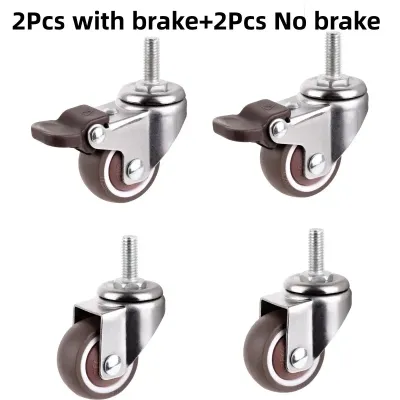
![[SG STOCK]1.5 Inch Heavy Duty Caster Wheel Roller Roda Kecil Roda Trolley Troli](https://img.lazcdn.com/g/p/c55c15d84e8654be4e44faa71295e353.jpg_400x400q80.jpg_.webp)
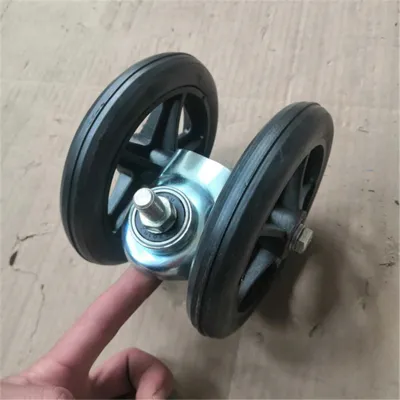

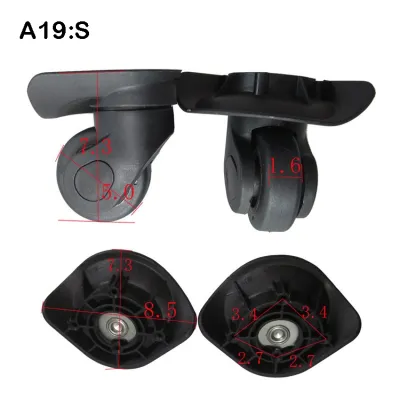
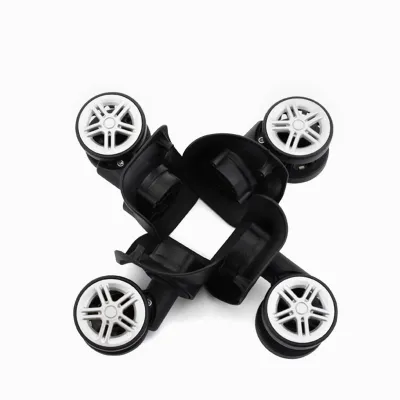

Prices are valid at publication and may change. Please refer to the product page for the latest price.
Additionally, inspect the mounting hardware. Examine the metal stem or plate for signs of rust, bending, or loose fittings. In humid climates like Singapore, moisture from floor mopping or ambient humidity can accelerate rust on metal components. If the mounting plate is bent or the socket in the furniture leg is cracked, installing a new wheel on a compromised base will not solve the issue. In such cases, you must repair or reinforce the furniture leg before attaching the new caster.
How to Measure Your Existing Trolley Wheels for an Exact Match
To ensure a seamless fit, always remove at least one of the existing wheels before taking measurements. Attempting to measure a wheel while it is still attached to heavy furniture is awkward and often leads to inaccurate readings. A digital caliper is the most accurate tool for this task, though a standard metric ruler or tape measure will work if used carefully.

Begin by measuring the wheel diameter, which is the distance across the widest part of the circular wheel. The diameter directly affects the overall height and ground clearance of your furniture. Larger wheels roll more easily over floor transitions, rug edges, and tile grout lines, whereas smaller wheels keep the center of gravity low but may struggle on uneven surfaces. Next, measure the tread width, which is the thickness of the wheel’s rolling surface. A wider tread distributes weight more evenly, reducing the risk of denting softer flooring materials.
Finally, measure the overall height of the caster assembly. This is the vertical distance from the very bottom of the wheel to the shoulder where the mounting hardware begins. If you are only replacing a subset of wheels on a piece of furniture, matching this overall height is critical to keep the piece perfectly level.
Measuring Stem-Mounted Casters
Stem-mounted casters insert directly into a socket or sleeve embedded in the furniture leg. Because these stems come in highly specific, non-interchangeable designs, guessing the size is a frequent cause of return shipments. You must identify the specific stem type and measure both its diameter and length.
Grip ring stems feature a small, split metal ring near the top of the stem. When pushed into the socket, this ring compresses and then expands inside a groove to lock the caster in place. Measure the stem’s diameter at its thickest point (excluding the ring itself) and the length of the metal rod. Common standard sizes include 11mm and 9.5mm diameters.
Grip neck stems are characterized by a flared, bulbous top that tapers down to a narrower neck. These are typically found on traditional wooden furniture. Measure the widest part of the top head and the overall length of the stem.
Threaded stems function like bolts, screwing directly into a threaded metal insert. For these, you must measure the thread diameter (typically metric sizes like M8 or M10 in Singapore) and the thread pitch, along with the length of the threaded portion. Use a thread gauge or test the stem with a matching nut from a hardware store to verify the thread size before ordering.
Measuring Plate-Mounted Casters
Plate-mounted casters feature a flat, rectangular metal plate that screws directly into the flat underside of the furniture. To replace these, you must measure the overall length and width of the mounting plate. However, the most critical measurement is the center-to-center spacing of the bolt holes.
Measure the distance from the center of one screw hole to the center of the adjacent hole, both along the length and the width of the plate. Matching these dimensions ensures the new plate aligns perfectly with the existing screw holes in your furniture. This is particularly important for furniture made of particleboard or medium-density fibreboard (MDF), as drilling new holes close to old, stripped ones can severely weaken the structural integrity of the base.
Choosing the Right Specifications: Load Capacity and Wheel Material
Selecting the correct replacement wheel involves more than matching physical dimensions; you must also ensure the new casters can support the weight of your furniture and its contents. To determine the required load capacity, use a simple calculation. Add the weight of the empty furniture to the maximum weight of the items it will hold. Divide this total weight by the number of wheels (typically four), and then add a safety margin of 20% to 25%.
For example, if you have a kitchen utility trolley that weighs 15 kg and you plan to store up to 25 kg of appliances and pantry items on it, the total weight is 40 kg. Dividing this by four wheels gives 10 kg per wheel. Adding a 25% safety margin means you should look for wheels rated for at least 12.5 kg each. This safety buffer is essential because floors are rarely perfectly flat. When you move a trolley, the weight momentarily shifts, and one or two wheels may bear the entire load as the furniture rolls over bumps or uneven surfaces.
Hard Wheels vs. Soft Wheels for Floor Protection
The material of your replacement trolley wheel determines how smoothly it rolls, how much noise it makes, and whether it will damage your floors. Wheel materials generally fall into two categories: hard and soft.
Hard wheels are made of materials such as nylon, hard plastic (polypropylene), or metal. These materials have low rolling resistance, making them highly efficient for heavy-duty applications or carpeted floors, where they glide through fibers without snagging. However, hard wheels can be noisy on hard surfaces and can easily scratch, dent, or scrape delicate materials like solid timber parquet or polished marble.
Soft wheels are constructed from polyurethane (PU), thermoplastic rubber (TPR), or soft rubber. These materials provide excellent shock absorption and grip, rolling quietly across hard surfaces. If your Singapore home features vinyl, laminate, parquet, or ceramic tile flooring, soft polyurethane wheels are highly recommended. They protect the floor’s finish from scuffs and scratches while dampening the sound of movement.
Swivel vs. Fixed Casters for Maneuverability
Consider how you need the furniture to move. Swivel casters rotate 360 degrees on a vertical axis, allowing the furniture to turn in any direction instantly. This makes them ideal for kitchen trolleys, office chairs, and mobile storage units that must navigate tight corners or narrow hallways.
Fixed, or rigid, casters only roll forward and backward in a straight line. While they offer excellent stability and tracking over longer distances, they cannot turn. For larger, heavy furniture pieces, a common configuration is to use two fixed casters on one end and two swivel casters on the other. This setup—similar to a shopping cart—allows you to steer the furniture easily while maintaining straight-line stability when pushing it forward.
Step-by-Step Guide to Replacing Your Furniture Trolley Wheels
Replacing your furniture wheels is a straightforward task that can be completed with basic household tools. Always check your furniture manufacturer’s weight limits and care instructions before undertaking any repairs. If the instructions conflict with general guidelines, prioritize the manufacturer’s specific steps.
First, prepare your workspace. Empty the furniture completely to prevent items from falling, breaking, or shifting during the process. Lay the furniture gently on its side or upside down on a soft blanket, rug, or clean cardboard. This protects the furniture’s finish and prevents it from tipping over unexpectedly while you work.
To remove a stem caster, grip the wheel housing firmly. Use a flathead screwdriver or a small pry bar wrapped in a cloth for leverage. Place the tool between the shoulder of the caster stem and the furniture socket, then pry straight outward with controlled, steady pressure. Avoid twisting or prying at an angle, as this can crack wooden legs or distort plastic socket sleeves. For plate casters, use a manual screwdriver or an open-ended wrench to loosen the mounting screws. Back each screw out gradually to avoid putting uneven tension on the wood.
To install the new wheels, align the new stem caster with the empty socket. Push it straight in until you feel or hear a distinct click, indicating the grip ring has seated. If the fit is tight, place a block of wood over the metal caster fork (not the wheel itself) and tap it gently with a rubber mallet. For plate casters, align the plate with the existing screw holes. Thread the screws by hand first, then tighten them in a diagonal or star pattern to ensure even pressure. Avoid over-tightening, which can strip the internal wood threads.
Conclude with a thorough safety check. Stand the furniture upright on a flat, level surface. Verify that all wheels make contact with the floor evenly and that the furniture does not wobble. Roll the piece in several directions to check for smooth movement and confirm that any locking brakes engage and disengage securely before reloading the furniture.
Frequently Asked Questions (FAQ)
Can I replace just one broken trolley wheel, or should I replace them all?
While it is tempting to replace only the single broken wheel to save money, it is highly recommended to replace all the wheels on a piece of furniture at the same time. Even if you purchase the exact same model, your old wheels will have experienced wear, slightly reducing their diameter and changing their rolling resistance. Mixing old and new wheels can lead to an uneven height, causing the furniture to wobble. This uneven weight distribution puts excessive stress on the new wheel, leading to premature failure and potential floor damage.
What should I do if the new stem is slightly too loose or too tight for the socket?
Never force a mismatched stem into a socket, as this can easily split a wooden furniture leg or crack a plastic sleeve. If the stem is too tight, do not attempt to sand or file down the metal. If it is too loose, do not use tape or cardboard to pad the gap, as the wheel will eventually wobble, bend, or fall out under load. Instead, use a digital caliper to re-measure both the stem and the socket. If the measurements match but the fit is loose, check if the old socket sleeve inside the furniture leg is worn out; if so, replace the socket sleeve along with the caster.
Community discussion
Share your experience or ask a question. Comments are reviewed before publication.