
Mobile furniture brings incredible convenience to modern living spaces, allowing you to easily reconfigure a home office, roll out a kitchen utility cart, or slide a heavy storage unit out of sight. However, when an individual rollers wheel gets clogged with debris, cracks under pressure, or begins dragging across your flooring, it can turn a smooth-rolling piece of furniture into a frustrating obstacle. Finding the exact replacement caster requires more than a casual trip to the local hardware store or browsing an online marketplace; it demands a systematic approach to diagnosing the issue, taking precise measurements, and understanding the physical requirements of your specific floor type.
Taking the time to understand the mounting mechanism, physical dimensions, and load limits of your furniture will save you from the hassle of return shipping and potential structural damage. This comprehensive guide walks you through the entire process of identifying, measuring, and selecting the ideal replacement wheels, ensuring your furniture glides effortlessly once again.
Diagnose: Does Your Furniture Need New Roller Wheels or Just Maintenance?
Before spending money on new parts, it is highly beneficial to determine whether your existing roller wheels are truly broken or simply crying out for standard maintenance. Common symptoms of wheel distress include a high-pitched squeak, a stubborn resistance to rolling, a tendency to slide rather than spin, or a noticeable wobble that makes the furniture feel unstable. In many cases, these issues are caused by hair, lint, and dust wrapping tightly around the axle, creating friction that locks the wheel. This is especially common in households with pets or high-traffic living areas.
Products mentioned in this guide

![[SG In Stock]3 Inch Universal Mute Whee 5PCS/Set Office Chair Caster Wheels Replacement 60KG Swivel Rubber Soft Safe Rollers](https://img.lazcdn.com/g/p/bf4390964a70a1aadb2b68d0791a27d5.png_400x400q80.png_.webp)
![[SG Ready Stock]5PCS 3 Inch Universal Mute Wheel Office Chair Caster Wheels Replacement 60KG Swivel Rubber Soft Safe Rol](https://img.lazcdn.com/g/p/3436119685ee0f7eb0d4591980aafe0b.png_400x400q80.png_.webp)
![[SG Ready Stock]Office Chair Caster Wheels 3 Inch Universal Mute Whee 5PCS/Set Replacement 60KG Swivel Rubber Soft Safe Rol](https://img.lazcdn.com/g/p/3309f2fd04dad1bc1715850d1e17710a.jpg_400x400q80.jpg_.webp)
Prices are valid at publication and may change. Please refer to the product page for the latest price.
To differentiate between a fixable issue and irreversible damage, start by inspecting the wheel assembly closely. If you see a buildup of fibers, you can often resolve the problem by using a pair of tweezers or a utility knife to carefully cut away the debris, followed by a light application of a dry silicone-based lubricant. However, if you observe a cracked wheel housing, a flattened or chipped tread, a bent metal stem, or if you hear a grinding noise from the internal ball bearings that persists after cleaning, the caster has reached the end of its functional life. Continuing to use damaged wheels can lead to permanent gouges on your floors, so moving forward with a replacement is the safest and most cost-effective path.
Establishing a clear decision path early saves both time and money. If a thorough cleaning and lubrication restore smooth, silent movement, your wheels are fit for continued service. If the physical structure of the wheel is compromised, or if the rolling surface has worn flat, you should immediately transition to the measurement and identification phase to select a compatible replacement.
How to Measure and Identify Your Existing Roller Wheels
Purchasing the wrong size or mount type is the most common mistake when sourcing replacement parts. Because physical standards vary widely between manufacturers, you cannot rely on visual estimation alone. To get accurate measurements, it is highly recommended to use a digital caliper, though a precise metal ruler can also work if used with care. Always remove at least one of the existing wheels from the furniture to measure it in isolation, as taking measurements while the wheel is still attached often leads to errors.

Before attempting any measurements or replacements, always check your furniture manufacturer’s instructions and the original product label for compatibility guidelines and warranty terms. If the manufacturer’s instructions conflict with general guidelines, or if the furniture brand cannot be identified, stop and consult a qualified furniture professional.
Determining the Stem Type and Mount
To ensure your new wheels attach securely, you must identify how the existing casters are mounted to the furniture frame. Casters generally fall into one of four mounting categories:
- Grip Ring Stems: These feature a small metal tension ring near the top of a smooth metal rod. The ring compresses when pushed into the socket and expands to lock the wheel in place.
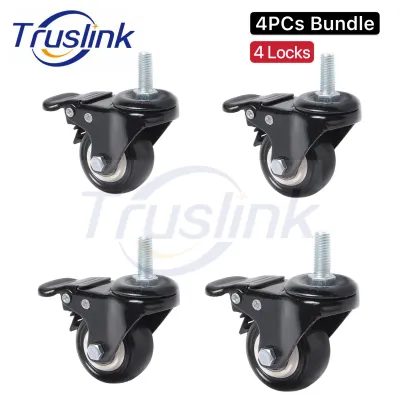
- Threaded Stems: These resemble a standard bolt or screw and must be threaded directly into a matching metal socket or nut built into the furniture leg.
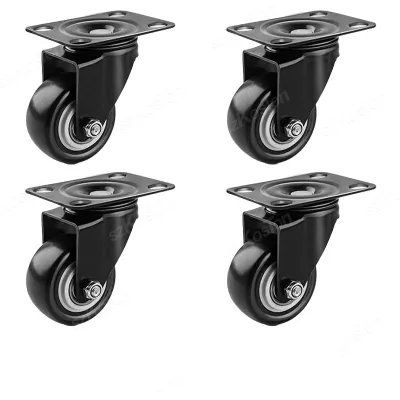
- Plate Mounts: These consist of a flat, square, or rectangular metal plate with pre-drilled screw holes at each corner, designed to be screwed directly into flat wooden or metal bases.
- Socket Fittings: These are separate plastic or metal sleeves inserted into hollow furniture legs to house and support stem casters.
Measuring a grip ring stem requires finding both the exact diameter and the length of the metal pin. Use your caliper to measure the thickest part of the stem below the tension ring; standard office chair stems are typically 11mm in diameter, though some models utilize a 10mm stem. Measure the length from the base of the stem (where it meets the caster body) to the very tip. Even a 1mm difference in diameter can prevent the stem from fitting into the socket or cause it to wobble and fall out.
For threaded stems, you must determine both the outer diameter of the threads and the thread pitch. Common metric sizes include M8 and M10, while imperial sizes like 3/8-inch are also prevalent. You can identify the thread pitch by using a thread gauge or by taking the old caster to a local hardware store to test it against standard nuts. Additionally, measure the length of the threaded portion to ensure it can screw fully into your furniture without bottoming out.
If your furniture uses plate mounts, you must measure the overall dimensions of the metal plate (length and width). More importantly, measure the bolt hole pattern, which is the distance from the center of one screw hole to the center of the adjacent hole. Replacement plates must match these distances precisely so you can reuse the existing screw holes without drilling new, structurally weakening holes nearby.
Measuring the Wheel Diameter and Width
Once you have identified the mounting mechanism, you must measure the physical dimensions of the wheel itself. The wheel diameter is measured from one outer edge of the tread to the opposite outer edge, passing directly through the center axle. Changing the wheel diameter will alter the overall height of your furniture, which can affect ergonomics, desk clearance, or the stability of the piece. Larger wheels roll much more easily over floor transitions, tile grout lines, and thick rugs, while smaller wheels keep the center of gravity low.
Next, measure the tread width, which is the thickness of the wheel face that contacts the floor. You must also measure the fork clearance—the internal width of the metal bracket that houses the wheel. If you select a replacement wheel that is wider than the original, it may rub against the inner walls of the fork, preventing the wheel from rotating freely and causing flat spots to wear into the tread.
Calculating the Required Load Capacity
To prevent premature wheel failure and ensure user safety, you must calculate the minimum load rating required for each replacement wheel. Start by estimating the total weight of the furniture piece itself combined with the maximum weight of its typical contents. For example, a heavy wooden filing cabinet filled with documents or a kitchen utility cart loaded with heavy appliances can easily weigh upwards of 100 kilograms.
To find the required capacity per wheel, apply the industry-standard “divide by three” rule rather than dividing the total weight by four. Even though most mobile furniture pieces have four wheels, floors are rarely perfectly level. When rolling over tile grout lines, door thresholds, or uneven flooring transitions, the entire weight of the furniture is often temporarily distributed across only three, or sometimes even two, wheels.
Once you have divided the total weight by three, add a safety margin of 20% to 25% to the result to account for sudden impacts or uneven loading. For instance, if your fully loaded storage cart weighs 120kg, dividing by three yields 40kg per wheel. Adding a 25% safety margin means you should look for replacement wheels with a certified load capacity of at least 50kg each. This prevents the internal bearings from crushing and ensures the wheels roll smoothly under maximum load.
How to Choose the Right Replacement Roller Wheels for Your Floors
Selecting the correct wheel material and functional features is crucial for protecting your home’s flooring and ensuring quiet, effortless movement. The ideal choice depends heavily on whether your furniture will glide across hard, smooth surfaces or thick, yielding textiles.
Matching Wheel Material to Your Floor Type
For hard flooring surfaces—such as ceramic tiles, homogeneous tiles, luxury vinyl tiles (LVT), and engineered hardwood or parquet common in Singapore homes—soft-tread wheels are highly recommended. Materials like polyurethane (PU), thermoplastic rubber (TPR), or soft vulcanized rubber are excellent choices because they absorb micro-vibrations and roll silently. These soft materials deform slightly under load, which distributes pressure evenly and prevents the wheels from scratching or wearing away the protective polyurethane seal on wooden floors.
Conversely, if your furniture is placed on carpeted areas or thick area rugs, hard-tread wheels made from nylon, polypropylene, or hard plastic are the superior choice. Soft wheels tend to sink into carpet fibers, creating immense rolling resistance that makes the furniture difficult to move. Hard nylon wheels slice cleanly through the carpet pile, allowing the furniture to glide without snagging or damaging the textile backing.
Before finalizing your purchase, always verify the manufacturer’s product specifications for explicit floor compatibility. Do not rely solely on generic material names, as some low-quality plastics can mimic the look of soft rubber but remain hard enough to scratch delicate surfaces. Look for clear labels indicating that the wheels are “floor-safe” or designed specifically for hardwood and tile.
Deciding on Brakes and Swivel Locks
Depending on how you use your furniture, you may need wheels that can lock firmly in place to prevent unwanted drifting. There are two primary types of braking mechanisms available on replacement casters:
- Single Brakes: These lock only the wheel tread, preventing the wheel from rolling forward or backward. However, the caster assembly can still swivel 360 degrees, which may allow the furniture to shift slightly if pushed.
- Dual Brakes (Total Lock): These lock both the wheel rotation and the swivel mechanism simultaneously, rendering the caster completely rigid.
Dual brakes are essential for heavy, functional furniture like mobile kitchen islands, workbenches, utility carts, or appliances that must remain perfectly stationary during use. For lightweight office chairs, side tables, or occasional-move shelving, free-swiveling wheels without brakes, or wheels with simple single brakes, are usually sufficient and offer maximum maneuverability.
Installation Verification and Safety Boundaries
Once your new roller wheels arrive, proper installation is key to ensuring long-term stability and safety. For stem casters, push the stem firmly into the socket until you hear or feel the grip ring “click” into place, indicating it is fully seated. If you are installing threaded stems, screw them in by hand first to ensure the threads align perfectly; forcing a mismatched thread can strip the socket, ruining the furniture leg. Tighten them securely using a thin wrench, but avoid over-tightening, which can crack plastic inserts.
For plate-mounted casters, position the plate over the mounting area and pre-drill small pilot holes if you are attaching them to solid wood. Drive the screws in using a diagonal pattern, tightening each one incrementally to distribute the clamping force evenly across the plate. Once all wheels are installed, place the furniture on a flat surface and perform a manual load test. Apply weight gradually and push the furniture in multiple directions, checking for any signs of wobbling, binding, or uneven height.
It is vital to recognize when a repair exceeds DIY safety limits. If you discover that the furniture’s mounting holes are stripped, cracked, or severely enlarged, do not attempt to force the new wheels in or use makeshift shims like tape, glue, or cardboard. These temporary fixes will fail under load, potentially causing the furniture to tip over and cause injury or property damage. In such cases, stop the installation immediately and consult a professional furniture repair service or purchase manufacturer-approved socket sleeve replacements to restore structural integrity.
Frequently Asked Questions (FAQ)
Can I replace plate-mount casters with stem casters?
Converting from a plate mount to a stem mount is generally not recommended unless you have professional woodworking tools and experience. Doing so requires drilling deep, precise vertical holes into the center of the furniture legs to house the new stem sockets. If the wood is not thick enough or if the hole is drilled slightly off-center, you risk splitting the leg and permanently ruining the furniture piece. Additionally, making such structural modifications will likely void any existing manufacturer warranties. It is always safest to stick to the original mounting style.
Why do my new roller wheels keep falling out?
If your new stem casters keep slipping out of their sockets, it is usually due to a slight mismatch in stem diameter or a worn-out mounting socket. For example, inserting a 10mm stem into an 11mm socket will leave enough clearance for the wheel to drop out whenever the furniture is lifted. Another common cause is a missing or damaged grip ring, which provides the necessary tension to hold the stem in place. To resolve this, re-measure both the old stem and the socket using a digital caliper, and consider replacing the plastic socket inserts if they have stretched or cracked over time.
How often should I lubricate furniture roller wheels?
To maintain smooth rotation and prevent annoying squeaks, you should inspect and lubricate your furniture roller wheels every 6 to 12 months, depending on how frequently the furniture is moved. First, clear away any accumulated hair or debris from the axle. Then, apply a small amount of dry silicone spray or PTFE (Teflon) lubricant directly to the swivel bearings and wheel axle. Avoid using heavy greases or standard WD-40; these products leave a sticky residue that acts as a magnet for dust and pet hair, which will quickly clog the mechanism and cause the wheels to stick again.
Community discussion
Share your experience or ask a question. Comments are reviewed before publication.