
To find the perfect foldable storage box for your closet shelves or HDB wardrobe, you must measure the internal clearance of your shelves—accounting for door hinges, tracks, and lips—and match these dimensions to the box’s outer dimensions while leaving at least 2 to 3 cm of clearance on all sides for easy retrieval. In Singapore homes, built-in wardrobes and modular closet systems often feature standardized depths, but shelf heights and widths can vary significantly. Buying organizers without measuring first often leads to boxes that stick out, block sliding doors, or sit empty because they are too tight to pull out. By taking a few systematic measurements and understanding how different box sizes function across your wardrobe’s vertical zones, you can maximize every square centimeter of your storage space.
How to Measure Your Closet and Wardrobe Shelves
To get started, gather a metal measuring tape and a notepad to record your findings. Avoid using soft sewing tapes or ruler apps on your phone, as these can bend or lack the length needed for a straight, accurate line across deep wardrobe cavities. A metal tape measure remains rigid over long distances, ensuring your numbers are precise.
Begin by measuring the inner width of each shelf compartment. Place the end of your tape measure flat against the left interior wall and extend it to the right interior wall. Do not measure from the outside of the wardrobe frame, as cabinet side panels typically eat up 1.5 cm to 3 cm of space on each side. Repeat this process at both the front and the back of the shelf, as some wardrobes may have slight structural variations.
Products mentioned in this guide
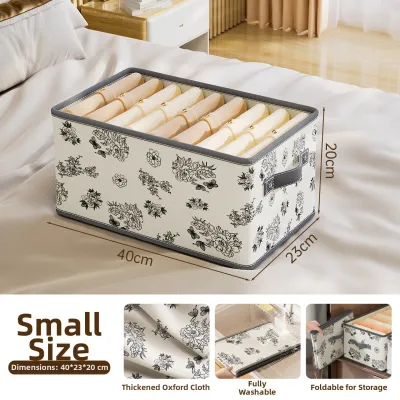
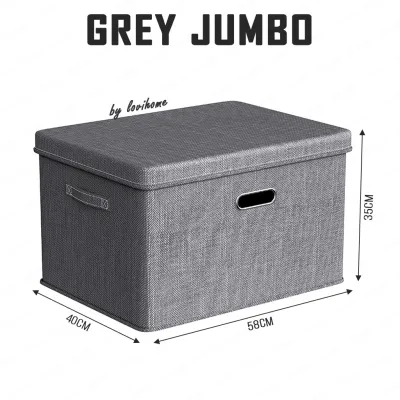
6 Lazada user ratings
The only thing I am not happy with the box is the cover. It is super flimsy and I don’t thing yu can stack anything on top of this box. Shou…Read full reviewShow less
The only thing I am not happy with the box is the cover. It is super flimsy and I don’t thing yu can stack anything on top of this box. Should have made the cover stiffer. I won’t buy again
🎨Design:not same the lastime order
Good material
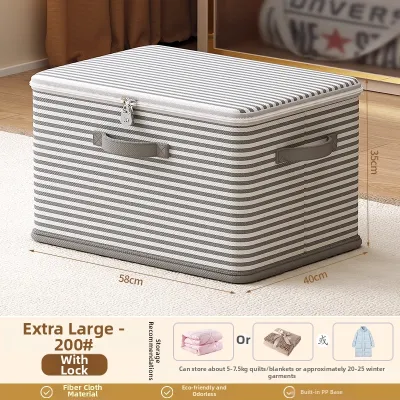
525 Lazada user ratings
wonderful storage. It is big and firm. Love the colour too. And the zip comes on both sides. So u can remove the item from the top and also …Read full reviewShow less
wonderful storage. It is big and firm. Love the colour too. And the zip comes on both sides. So u can remove the item from the top and also from the side.
High quality, sturdy, zip opening from top and sides so it’s easy to access things still. Good for storage.
Convenient foldable design, except that I ordered a size that is too big
I like it,fast delivery with singpost.thank you seller .Thumps Up 👍😁😁
2nd time buying to match earlier purchase. Zip with care though.
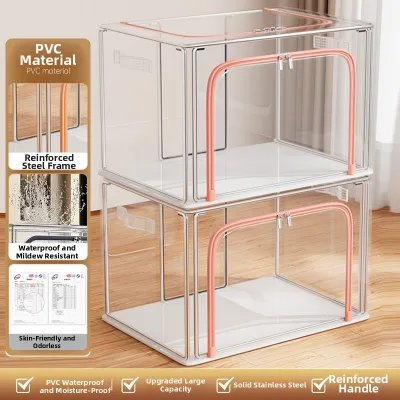
245 Lazada user ratings
🛠️Durability:Yes 👜Portability:Very 🎨Design:Nice 📏Size:good sizes High-quality PVC material, Convenient and space-saving
very good. excellent storage option can keep if dont need to use . very neat and nice. fast delivery too
My order already arrived yesterday. The products quite good & nice looking.
nice to organise my wardrobe. keep the dust out also can can zip
Great for organizing clothes, Convenient and space-saving,
Prices are valid at publication and may change. Please refer to the product page for the latest price.
Next, measure the inner depth from the back wall of the closet to the front edge of the shelf. If your wardrobe has hinged doors, measure up to the point where the door sits when fully closed. For sliding doors, place the end of your tape measure against the back wall and pull it to the inner edge of the sliding door track. Sliding door tracks are notorious for consuming valuable depth, often requiring 5 cm to 10 cm of clearance that cannot be used for storage boxes.
Finally, measure the vertical height of the compartment from the surface of the shelf to the underside of the shelf or ceiling panel above it. If your shelves are adjustable, note down the current position but also check if you can reposition them to accommodate taller boxes. Always measure the clearance of the opening itself, as some wardrobes have a decorative face frame or a lower lip that restricts the actual entry height even if the interior space is taller.
To calculate the true ‘usable space’, you must subtract a safety clearance from your raw measurements. As a general rule, deduct at least 2 cm to 3 cm from the width and height, and at least 1 cm to 2 cm from the depth. This buffer ensures that you can easily slide the foldable storage box in and out without scraping the wardrobe walls, catching on shelf support pegs, or preventing the doors from closing completely.
Understanding Standard Foldable Storage Box Dimensions
Foldable storage boxes are highly versatile, but their physical dimensions are not universally standardized. Manufacturers categorize them into broad size brackets, which you must verify against their official product specifications before purchasing.

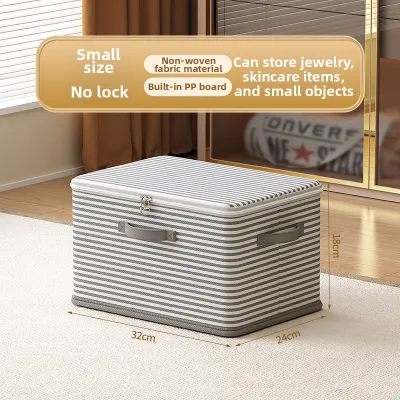
Small or accessory-sized boxes typically measure around 20 cm to 25 cm in width, 15 cm to 20 cm in depth, and 12 cm to 15 cm in height. These compact organizers are ideal for sorting smaller, loose items such as socks, underwear, ties, belts, and daily accessories. Because of their small footprint, you can often fit two or three of these boxes side-by-side on a single standard shelf, making them excellent for dividing up drawer space or shallow cabinet compartments.
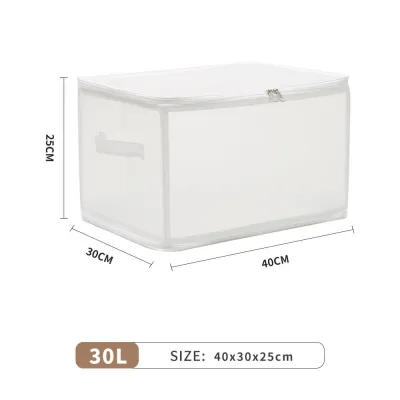
Medium or standard-sized boxes generally range from 30 cm to 35 cm in width, 25 cm to 30 cm in depth, and 15 cm to 20 cm in height. This is the most common size category, designed specifically to hold folded t-shirts, light sweaters, activewear, and everyday clothing. They are sized to sit comfortably on standard wardrobe shelves, allowing you to slide them out like drawers to access your daily outfits without disrupting the rest of the closet.
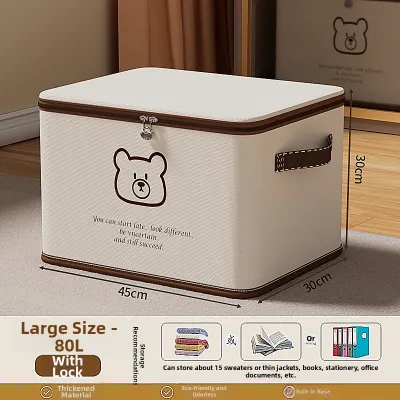
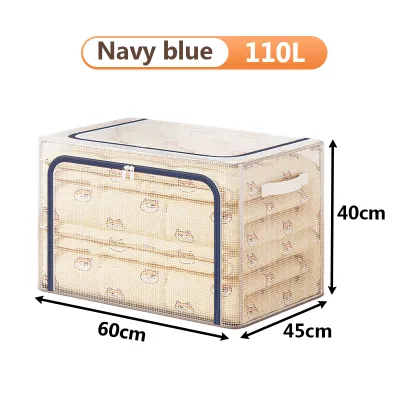
Large or bulky-sized boxes often measure 40 cm to 50 cm in width, 30 cm to 40 cm in depth, and 25 cm to 30 cm in height. These high-capacity containers are built to house bulkier items such as blankets, bedsheets, winter coats, pillows, and seasonal garments. Because they hold a significant volume of fabric, they require sturdier construction and are best suited for deep shelves or the base of your wardrobe.
While these categories offer a helpful starting point, you must always check the exact outer and inner dimensions listed on the product packaging or online store listing. One brand’s ‘medium’ might be another brand’s ‘large’. Additionally, pay attention to whether the listed dimensions include protruding elements like fabric handles, lid lips, or decorative buttons, as these small details can prevent a box from fitting into a tightly measured space.
Matching Box Sizes to Specific Wardrobe Zones
Organizing your wardrobe efficiently requires matching the size and style of your foldable boxes to the specific vertical zones of your closet. Wardrobe ergonomics dictate that items you use daily should be the easiest to access, while seasonal or rarely used items can be placed in harder-to-reach areas.
Top Shelves and Bulk Storage
The highest shelves in your wardrobe are best reserved for large or extra-large foldable storage boxes containing off-season clothing, spare bedding, or travel gear. Since these shelves are difficult to reach without a step stool, using large boxes allows you to consolidate many items into a single container, reducing the number of trips you need to make up and down.
Before loading these large boxes, check the weight capacity of both your wardrobe’s top shelf and the box’s fabric handles. Heavy blankets or winter coats can quickly add up in weight, putting stress on the shelf supports and making the box difficult to lower safely. Ensure the box height leaves at least 5 cm of vertical clearance below the top frame of the wardrobe, giving you enough room to lift the box up and over any shelf lips without scraping your knuckles.
Mid-Level Shelves for Daily Clothes
Mid-level shelves sit between your waist and eye level, making them the prime real estate in your closet. For these highly accessible spaces, medium-sized foldable boxes are the most practical choice. They allow you to retrieve and put away daily wear quickly without physical strain.
When organizing mid-level shelves, consider whether stacking two smaller, shallow boxes is more efficient than using one deep, large box. Stacking allows you to separate different clothing categories—such as activewear in the bottom box and t-shirts in the top—preventing you from having to dig through a single deep pile. Always leave adequate finger space of about 2 cm to 3 cm beside and above the boxes so you can grab the handles and pull them out smoothly.
Lower Compartments and Floor Space
The bottom of your wardrobe, including lower shelves and the floor space beneath hanging rods, is highly susceptible to dust and is often deeper than the upper shelves. When placing foldable storage boxes directly on the wardrobe floor, select models with reinforced bases, such as those with inserted MDF or thick cardboard panels, to maintain their shape on flat surfaces.
Because lower compartments in built-in wardrobes often extend deeper than mid-level shelves, you can maximize this space by choosing deeper boxes that utilize the full depth of the cabinet. To make these low-lying items easier to identify without bending down completely, look for foldable boxes that feature front-opening magnetic flaps or clear plastic viewing windows. This allows you to see and retrieve items from the front of the box without having to lift a heavy lid or pull the entire container out.
Common Sizing Mistakes and How to Avoid Them
One of the most frequent mistakes when buying closet organizers is measuring the external frame of the wardrobe rather than the internal shelf compartments. Wardrobe side panels, backboards, and door frames can reduce the actual interior width and depth by several centimeters, leading to boxes that are too large for the space. Always place your measuring tape inside the cabinet cavity to get the true clearance.
Another common oversight is failing to account for internal obstructions. Sliding door tracks, door hinges, magnetic catches, and internal wardrobe lighting fixtures can all protrude into the usable storage space. If a box is wide enough to fit the shelf but sits directly behind a thick door hinge, you will not be able to slide it out. Measure the clearance between these hardware components rather than the bare walls.
Buying boxes that fit perfectly flush against the shelf edges is another trap. While a flush fit looks neat in photos, it leaves no physical room for your fingers to grip the sides or handles of the box. Without this small gap, pulling the box out becomes a frustrating struggle that can eventually wear down the fabric or damage the wardrobe finish. Aim for a minimum of 2 cm of clearance on the sides and top.
Finally, do not ignore the collapsed or folded dimensions of the boxes. The primary benefit of foldable storage is that you can tuck them away when they are not in use. Check how flat the boxes fold and ensure you have a designated spot, such as a shallow drawer or the space under your bed, to store them when they are empty.
Tips for Maximizing Space with Foldable Organizers
To get the most out of your foldable storage boxes, use internal dividers or small fabric bins inside the larger boxes. This prevents soft items like socks, underwear, or light t-shirts from slumping into a messy pile when you remove one item. Keeping the contents organized internally ensures the box maintains its structural shape and does not bulge outward at the sides.
Group similar items tightly using the file-folding method, where clothes are folded into neat rectangles and stood upright rather than stacked vertically. This method allows you to see every garment at a glance when you open the box and prevents you from disrupting the entire stack when pulling out a single shirt. It also maximizes the internal volume of the box, reducing the need for multiple half-empty containers that waste valuable shelf width.
Take full advantage of the foldable design by collapsing any boxes that are not currently in use. Storing empty, fully expanded boxes on your shelves wastes prime storage space. Simply remove the bottom support panel, fold the fabric walls flat, and stack them neatly in a drawer or on a top shelf until you need them again.
Lastly, label the front of each box clearly. Since foldable fabric boxes are opaque, it is easy to forget what is stored inside, leading to unnecessary searching. Use clip-on label holders, fabric tags, or simple adhesive labels on the front handle or face of the box so you can identify the contents instantly without having to pull the box down from a high shelf.
Frequently Asked Questions (FAQ)
Can I use foldable storage boxes on wire shelving?
Yes, you can use foldable storage boxes on wire shelving, but you must check that the box has a rigid base. Soft-bottomed fabric boxes tend to sag into the gaps between the wires when loaded with clothes, which makes them difficult to slide and can damage the fabric over time. If your chosen boxes have soft bottoms, place a thin acrylic sheet, a cut-to-size piece of heavy cardboard, or a plastic shelf liner over the wire shelf first to create a flat, stable surface.
How much clearance should I leave above and around the box?
For comfortable daily use, you should leave a finger-width clearance of at least 2 cm to 3 cm on the sides and top of each foldable storage box. If the box has an open-top design, leaving 5 cm to 10 cm of space above it allows you to reach in and grab items without sliding the box out at all. For boxes with rigid lids or front-opening flaps, ensure there is enough clearance to lift the lid or open the flap without hitting the shelf above or the wardrobe door frame.
Community discussion
Share your experience or ask a question. Comments are reviewed before publication.