
Finding the perfect wooden long bench for your dining table is a balancing act between spatial efficiency and visual harmony. In many modern homes, particularly compact apartments where every square meter counts, a bench offers a streamlined alternative to traditional dining chairs. It eliminates visual clutter, slides out of sight when not in use, and easily accommodates extra guests during gatherings. However, choosing the wrong length can lead to a cramped dining experience, bruised knees, or a bench that awkwardly blocks your main walkways.
To make an informed decision, you must look beyond the basic length of your tabletop. The ideal bench size depends on your table’s leg design, the surrounding room clearance, and how you plan to use the seating daily. By taking precise measurements and understanding how these elements interact, you can select a bench that is both highly functional and aesthetically pleasing.
Understanding Bench-to-Table Length Ratios
When pairing a wooden long bench with a dining table, the first decision is whether you want a tuck-in fit or a flush-end look. A tuck-in configuration means the bench is short enough to slide completely underneath the table when not in use. This setup is highly recommended for narrow dining areas or open-plan layouts where saving floor space is a priority. It keeps the dining zone tidy and ensures that walkways remain completely unobstructed when the table is idle.
Products mentioned in this guide
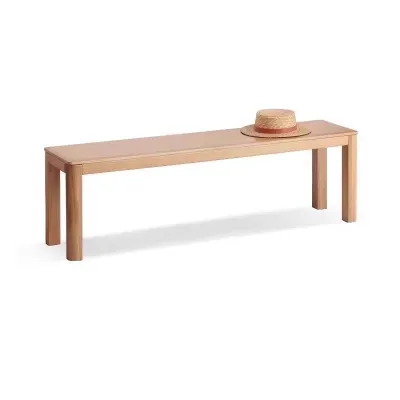
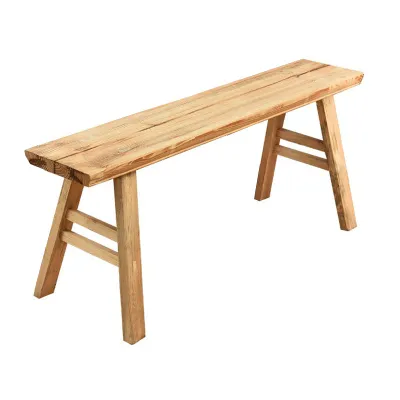
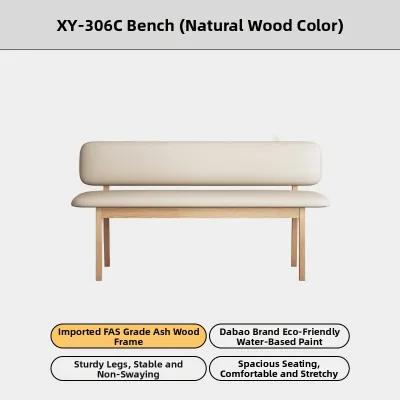
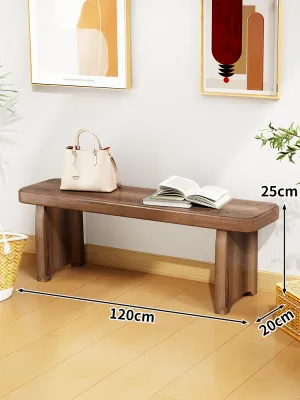
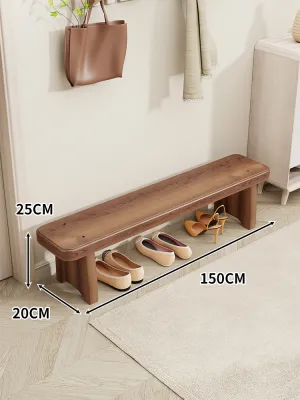

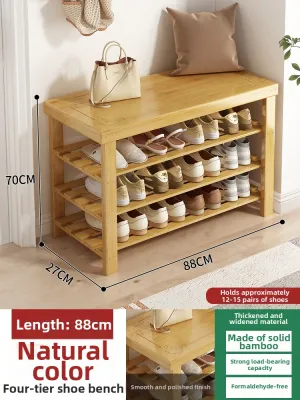
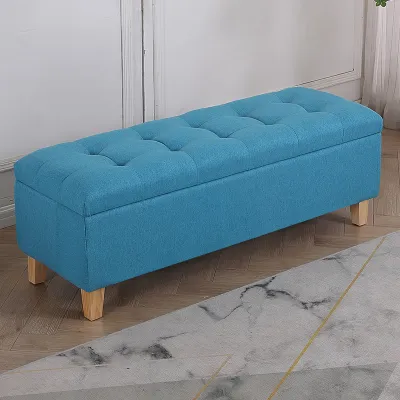
Prices are valid at publication and may change. Please refer to the product page for the latest price.
While wood is a classic choice, a material name alone does not guarantee scratch or moisture resistance. To ensure long-term durability in a busy dining environment, check the protective finish applied to the timber, inspect the quality of the joints, and follow the manufacturer’s care instructions to prevent warping or staining.
Alternatively, a flush-end or extended bench runs the full length of the table or even projects slightly past the outer edges. This style creates a bold, grounded aesthetic that mimics traditional farmhouse or rustic dining setups. While visually striking, this configuration requires a permanent footprint on your floor. Because the bench cannot be tucked away, it remains a fixed obstacle, meaning you must have a spacious dining room to accommodate it comfortably.
To determine the maximum length for a tuck-in bench, you must measure the usable span beneath the table rather than the tabletop itself. For a comfortable fit, the bench should have at least 5 to 10 centimeters of clearance on either side of the table legs. This gap prevents the bench from scraping against the table legs during use and protects your hands from getting pinched when sliding the seat in and out.
The visual weight of your table also plays a role in selecting the right bench length. A table with a thick, heavy top and a deep apron requires a bench with similar visual substance to maintain design balance. Conversely, a sleek, minimalist table with thin legs pairs best with a slender, low-profile wooden long bench. Matching these design proportions ensures that the bench looks like an intentional part of a curated set rather than an afterthought.
Evaluating Table Base and Leg Configurations
The physical design of your dining table’s base is the ultimate deciding factor for what bench length will physically fit. Traditional four-legged tables are the most restrictive because the legs sit at the outermost corners of the frame. For these tables, the bench must be short enough to fit entirely within the inner distance between the legs if you want to tuck it away. If you overlook this inner measurement, you may end up with a bench that collides with the legs, leaving it permanently protruding into the room.

Pedestal and trestle tables offer significantly more flexibility for bench placement. Because these designs feature central support columns or recessed trestle bases rather than corner legs, there are fewer physical barriers at the ends of the table. This allows you to choose a longer bench that can slide underneath without interference. However, you must still check the dimensions of the central pedestal base to ensure the bench’s legs or support stretchers do not bump into it.
To get an accurate measurement of the inner clearance, stretch your measuring tape between the innermost points of the table legs. Be sure to measure at the exact height where the bench seat will sit. Many contemporary tables feature tapered or angled legs that are wider at the floor and narrower at the top, or vice versa. Measuring at the wrong height can lead to an incorrect clearance calculation, preventing a clean tuck-in.
Additionally, inspect the underside of your table for any structural crossbars, metal brackets, or wooden stretchers. Some rustic or industrial tables feature low-hanging support beams that run horizontally between the legs. If these beams are positioned too low or too close to the edge, they can block the bench from sliding in fully, even if the length of the bench is technically correct.
Measuring Your Space and Clearance Requirements
A successful dining setup requires ample breathing room around the furniture to ensure comfortable movement. When planning your layout, you must account for the pull-out clearance needed when someone is actively sitting on the bench. Diners need to slide the bench back to sit down and stand up comfortably. As a general rule, allow at least 60 to 75 centimeters of open floor space behind the bench to accommodate this movement without forcing guests to squeeze against walls.
Walkway clearance is another critical factor, especially in high-traffic areas of the home. If your dining table sits adjacent to a main corridor, kitchen entrance, or balcony door, you must ensure that the bench does not block the flow of traffic when in use. Aim for a minimum of 90 centimeters of clearance between the back of the active bench and any parallel walls or large furniture pieces. This allows family members to walk past comfortably while someone is seated.
Before finalizing your bench purchase, take a close look at the architectural details of your dining space. Low window sills, wall-mounted radiators, baseboards, and door swings can all impact how your furniture fits. For instance, thick baseboards can prevent a table from sitting flush against a wall, which in turn shifts the entire dining set forward and reduces the available clearance for your wooden long bench.
Finally, consider the logistics of getting the bench into your home. In high-rise urban environments, such as apartments in Singapore, elevator dimensions and tight stairwell corners can pose significant delivery challenges. A very long, solid wooden bench cannot be disassembled like a flat-pack item. Always verify the finished dimensions of the bench against your building’s lift doors, ceiling height, and entryway clearances to ensure a smooth delivery and installation process.
Translating Bench Length into Seating Capacity
One of the main advantages of a wooden long bench is its flexible seating capacity, but this capacity is still bound by basic ergonomics. To calculate how many people can comfortably sit on a bench, allocate roughly 50 to 60 centimeters of linear space per adult. This measurement provides sufficient room for natural movement and prevents diners from bumping elbows while eating. For children, you can reduce this allocation slightly, making a bench an incredibly practical option for family-focused households.
When selecting a wooden long bench, prioritize its load capacity and structural stability. A solid wood bench must support multiple adults simultaneously without bowing or tipping. Check the manufacturer’s specifications for weight limits and ensure the joinery is robust, especially if the bench will be used daily by children or guests.
The depth of the bench seat also influences overall comfort and usability. A standard dining bench typically features a seat depth of 30 to 40 centimeters. A bench that is too narrow can feel unstable and uncomfortable for longer meals, while an excessively deep bench takes up valuable floor space and may prevent a clean tuck-in. Ensure the seat depth is proportional to the table’s scale so that diners can sit upright and reach their plates comfortably.
Keep in mind that the physical presence of table legs can reduce the usable seating space at the ends of the bench. If your table has thick corner legs and the bench is tucked inside them, the guests sitting on the outer edges of the bench may find their legs clashing with the table structure. To avoid this, ensure that the functional seating area of the bench aligns with the open, unobstructed space beneath the tabletop.
Common Sizing and Fit Mistakes to Avoid
A common pitfall when buying a wooden long bench is ignoring the height of the table’s apron. The apron is the wooden panel that connects the tabletop to the legs, and it can significantly reduce the vertical clearance beneath the table. If you purchase a bench with a high seat or a thick cushion, it may not fit under a deep apron, leaving you with a bench that cannot be tucked away as planned.
Another frequent mistake is relying solely on the manufacturer’s listed tabletop dimensions. A table that is advertised as 150 centimeters long may have legs that are inset by 10 centimeters on each side, reducing the actual inner clearance to 130 centimeters. Always base your bench length on the physical footprint of the table base rather than the top surface.
Lastly, avoid mismatching the bench height with the table height. Standard dining tables are usually around 75 centimeters high, while standard benches sit at about 45 centimeters high. Maintaining a consistent height difference of 30 centimeters ensures proper ergonomic alignment, preventing discomfort in the knees, back, and shoulders during extended dining sessions.
Frequently Asked Questions (FAQ)
Can a wooden long bench be longer than the dining table?
Yes, a wooden long bench can be longer than the dining table, but this setup requires a spacious room with plenty of clearance. An oversized bench creates a distinct, modern look where the seating extends past the ends of the table. However, because the bench cannot be tucked underneath, it will permanently occupy floor space. You must ensure that the protruding ends do not block walkways or create tripping hazards in your dining area.
What is the ideal height difference between a dining table and a bench?
The ideal height difference between the top of the bench seat and the top of the dining table is between 25 and 30 centimeters. To ensure comfortable thigh clearance, measure from the floor to the lowest point of the table’s underside, such as the bottom of the apron. Compare this to the height of your bench seat; you should have at least 15 to 20 centimeters of open vertical space to allow diners to sit and move their legs comfortably.
Community discussion
Share your experience or ask a question. Comments are reviewed before publication.