
A mattress that feels too soft can quickly disrupt your sleep, leading to morning stiffness, lower back pain, and general fatigue. Before you commit to the high cost of purchasing an entirely new bed, there are several practical, cost-effective methods to increase the firmness of your current sleeping surface. Whether your bed has naturally softened over time or was simply too plush from the day of delivery, understanding how to modify its feel can restore your sleep quality and protect your physical health.
To successfully make a mattress firmer, you must first determine whether the issue lies within the mattress comfort layers, the underlying support foundation, or a mismatch with your sleeping posture. Applying the wrong fix can waste money and potentially damage your bed, whereas the correct adjustment can extend the lifespan of your mattress by several years.
Diagnose the Problem: Why Your Mattress Feels Too Soft
Before implementing any remedies, you must identify whether your mattress has lost its structural integrity or if it is simply too plush for your sleeping preferences. A mattress that is structurally compromised cannot be saved by surface-level fixes. Look closely for visible sagging, deep body impressions that remain long after you get out of bed, or areas where the internal support feel uneven. If you notice permanent indentations deeper than 2.5 centimetres, the internal comfort layers or spring systems have likely collapsed.
Products mentioned in this guide
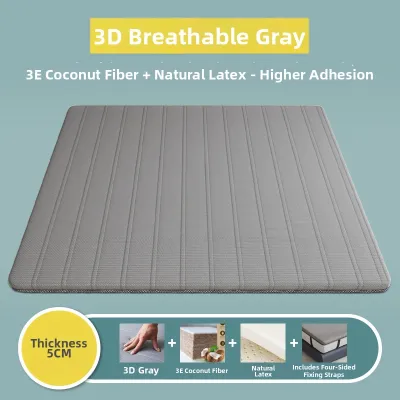
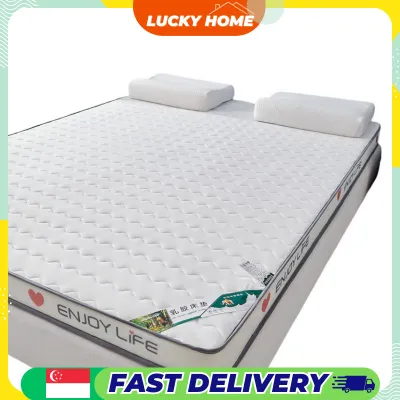
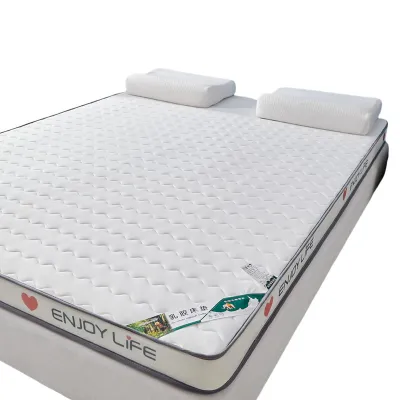
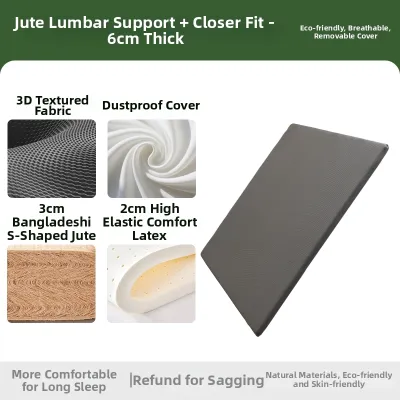
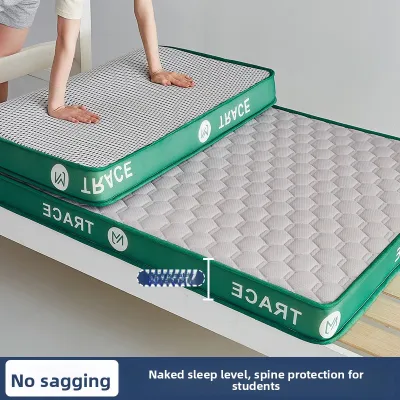
Prices are valid at publication and may change. Please refer to the product page for the latest price.
Conversely, if the mattress surface is completely flat and rebounds perfectly but still leaves you feeling unsupported, the mattress is simply too soft for your current physical needs. Changes in your body weight, fitness levels, or preferred sleeping positions can shift your support requirements. For example, stomach and back sleepers require a much firmer surface to keep the pelvis aligned with the spine, whereas side sleepers generally need a bit more cushioning for their shoulders and hips.
Environmental factors and foundation wear also play major roles in how firm a bed feels. In humid climates like Singapore, ambient moisture and heat can accelerate the softening of certain polyurethane foam layers over time. Additionally, a bed frame with weak, flexible, or widely spaced slats will cause even a brand-new, firm mattress to sag and feel incredibly soft. Strip away all your bedding, remove the mattress from the frame, and inspect both components separately to pinpoint the exact source of the issue.
Practical Solutions to Make Your Mattress Firmer
Resolving a soft mattress requires targetted action based on your diagnosis. The following methods address either the surface comfort layers or the underlying support system to help you achieve a firmer, more supportive sleep environment.

Add a Firm Mattress Topper
If your mattress is structurally sound and flat but simply too plush, adding a high-density mattress topper is the most effective way to modify the surface feel. A mattress topper acts as an auxiliary comfort layer, absorbing your body weight and distributing it more evenly before it reaches the softer layers underneath. To achieve a firmer feel, you must avoid soft, fluffy materials like down, feathers, or low-density memory foam, as these will only increase sinkage and heat retention.
Instead, opt for high-density natural latex or high-density polyurethane foam toppers. Natural latex is highly recommended for tropical climates because of its open-cell structure, which promotes airflow and prevents heat build-up while offering a responsive, springy push-back. When selecting a topper, pay close attention to the density and thickness specifications on the product label:
- Density: Look for a latex density of at least 70 to 80 kg/m³, or a foam density of at least 60 kg/m³. Higher density translates directly to better support and longevity.
- Thickness: A thickness of 5 to 7.5 centimetres (2 to 3 inches) is ideal. A topper that is too thin (under 5 centimetres) will not provide enough resistance, while one that is too thick (over 10 centimetres) may cause you to sink too deeply, defeating the purpose of the modification.
To ensure a stable sleeping setup, verify the finished dimensions of the topper match your mattress size (such as Singapore Standard Single, Queen, or King) so there is no overhang. Secure the topper firmly to prevent shifting during the night. You can use a high-quality non-slip mattress pad between the topper and the mattress, or wrap both layers together using a deep-pocket fitted sheet with a pocket depth of at least 40 to 45 centimetres.
Install a Bunkie Board or Plywood Support
If your mattress is softening because it is dipping between the gaps of your bed frame slats, you need to create a more rigid, solid foundation. A bunkie board is a slim, fabric-covered wooden or metal barrier (typically 2.5 to 5 centimetres thick) designed to sit directly on top of your bed slats. It provides a perfectly flat, uniform surface that prevents the mattress from sagging into empty spaces, instantly increasing the overall firmness of the bed.
As a budget-friendly alternative, you can use a solid sheet of plywood cut to the exact dimensions of your bed frame. If you choose this route, use plywood that is at least 1.5 centimetres thick to prevent bowing under the weight of the mattress and sleepers. However, using a solid, unventilated board in a humid environment carries distinct risks. Moisture from sweat and ambient humidity can become trapped between the mattress and the solid wood, leading to mold, mildew, and unpleasant odors.
To mitigate this risk, take the following precautions before installation:
- Sanding: Ensure the plywood is sanded completely smooth on all sides and corners to prevent the wood fibers from snagging or tearing the delicate fabric of your mattress cover.
- Ventilation: Drill a series of ventilation holes (approximately 5 centimetres in diameter, spaced 15 to 20 cm apart) across the entire surface of the plywood sheet to facilitate necessary airflow.
- Warranty Check: Before placing any solid board or unapproved foundation under your bed, consult your mattress manufacturer's warranty terms. Some brands explicitly state that using solid plywood or non-breathable bases voids the warranty coverage.
Rotate or Flip the Mattress
Rotating your mattress is a zero-cost maintenance step that redistributes the daily pressure exerted by your body. Over months of sleeping in the exact same position, the comfort layers directly beneath your hips and shoulders will naturally soften and compress. By rotating the mattress 180 degrees, you position these softened areas at the foot of the bed, allowing your torso to rest on firmer, less-utilized sections of the mattress.
Before attempting to flip your mattress over, check the manufacturer’s care label to confirm its construction. The vast majority of modern mattresses—including hybrid, memory foam, and pillow-top models—are strictly single-sided. They are engineered with a heavy support core at the bottom and softer comfort layers on top. Flipping a single-sided mattress upside down means you will be sleeping directly on a harsh, unyielding base layer, which can cause severe physical discomfort and damage the mattress structure. Only rotate these models.
If you own a traditional, double-sided innerspring or a solid, uniform latex mattress designed for dual-sided use, you can safely flip it over to access a fresher, firmer side. For optimal wear distribution, establish a routine to rotate your mattress 180 degrees every three to six months. Keep in mind that while rotation is highly effective for smoothing out minor, localized body impressions, it cannot restore structural integrity to a mattress that is suffering from deep, permanent center sagging.
Reinforce or Replace the Bed Frame
Sometimes, the mattress is not the problem at all; instead, a weak or damaged bed frame is failing to provide adequate support. Strip your bed down and inspect the support system underneath. If you have a slatted bed frame, check if the slats are bowing downward, cracking, or shifting out of place. Wooden slats that are spaced more than 7 centimetres apart fail to meet the support requirements of most modern pocket spring and heavy foam mattresses, causing the bed to feel excessively soft and dip in the center.
To resolve foundation issues, you can reinforce your existing frame by adding extra wooden slats to reduce the gaps between them. Ensure any replacement slats are made from sturdy, kiln-dried solid wood rather than flexible, bowed plywood slats. For Queen and King-sized beds, verify that the frame features a robust center support rail equipped with at least one adjustable center leg that extends directly to the floor. This center leg is critical for stabilizing the frame and preventing mid-bed sagging.
If your bed frame is made of thin metal that has bent over time, or if the wooden frame is structurally compromised, upgrading to a sturdier, high-capacity bed base is the safest course of action. When purchasing a new frame, check the manufacturer’s maximum load capacity to ensure it can easily support the combined weight of the mattress, the bedding, and the sleepers. Additionally, ensure the finished dimensions of the new frame match your bedroom’s available space and can easily clear doorways and lifts during delivery and assembly.
When to Stop Fixing and Replace Your Mattress
While DIY adjustments and accessories can successfully resolve minor surface softness and foundation issues, they have clear limitations. You cannot fix a mattress that has suffered a complete structural failure. Attempting to force a broken mattress to feel firmer by placing plywood underneath or stacking thick toppers on top will not restore proper spinal alignment. Instead, the topper will simply sink into the existing depression, continuing to strain your muscles and joints.
Watch for these critical red flags that indicate your mattress is beyond repair and must be replaced:
- Deep, Permanent Depressions: Visible valleys or body indentations deeper than 3 to 4 centimetres that do not rebound when you get off the bed.
- Damaged Internal Components: Squeaking, shifting, or protruding metal coils that indicate the internal spring system has collapsed or broken.
- Persistent Physical Pain: Waking up with consistent, severe lower back stiffness, neck strain, or hip pain that does not improve after reinforcing your bed frame or adding a firm topper.
- Age of the Mattress: If your mattress is more than seven to ten years old and has grown soft and uncomfortable, the core materials have simply reached the end of their natural lifespan.
If you continue to experience sleep-disrupting physical pain despite adjusting your sleeping setup, consult a healthcare professional, such as an orthopedic specialist or a physiotherapist, to assess your spinal health. Ultimately, investing in a new, high-quality mattress that matches your current firmness and support needs is the only safe, long-term solution for your physical well-being.
How to Maintain Mattress Firmness Over Time
Once you have achieved your desired level of firmness, practicing consistent mattress maintenance will preserve the structural integrity of the materials and prevent premature softening. Protecting your investment requires just a few simple, preventative habits.
First, adhere strictly to a regular rotation schedule. Mark your calendar to rotate your mattress 180 degrees every three to six months. This simple action ensures that weight is distributed evenly across the entire surface over time, minimizing localized wear and preventing the early development of soft spots where you sleep.
Second, always protect your mattress from moisture by using a high-quality, breathable, waterproof mattress protector. Sweat, accidental spills, and high ambient humidity can easily seep deep into foam and fabric layers. Over time, moisture triggers the chemical breakdown of polyurethane foam and memory foam, causing them to lose their density and soften rapidly. A protective barrier keeps the internal materials dry and structurally sound.
Finally, establish healthy usage boundaries within your household. Avoid sitting repeatedly on the exact same spot on the mattress edge, such as when putting on your shoes or watching television, as this localized pressure breaks down the edge support system. Additionally, never allow children to jump on the bed. The high-impact force of jumping can easily snap wooden slats, bend metal frames, damage pocket springs, and tear the internal foam comfort layers, leading to irreversible sagging.
Frequently Asked Questions (FAQ)
Can I put a board directly under my mattress without a bed frame?
While placing a solid board or the mattress itself directly on the floor will create an incredibly firm sleeping surface, it is highly discouraged for long-term use. Placing a mattress directly on a solid, unventilated flat surface blocks all bottom airflow. In humid climates, this traps body heat and sweat, creating a damp environment that rapidly promotes the growth of mold, mildew, and dust mites. Always use a raised, ventilated bed base to protect your health and preserve the lifespan of your mattress.
Will a firm mattress topper fix a sagging mattress?
No, a firm mattress topper cannot fix a sagging mattress. Toppers are designed to alter the surface comfort layer of a mattress that is structurally flat and sound. If the underlying support core or spring system of your mattress has collapsed, any topper you place on top will simply sink into the existing dip. To resolve structural sagging, you must either reinforce the underlying bed frame slats or replace the mattress entirely.
How do I know if my bed slats are causing the mattress to feel soft?
To determine if your bed frame is the culprit, remove the mattress from the frame and place it directly on a clean, flat, solid floor. Lie down on the mattress in your typical sleeping position. If the mattress suddenly feels significantly firmer, more supportive, and no longer dips, your bed slats are failing to provide adequate support. Inspect the slats for visible bowing, cracks, or spacing wider than 7 centimetres.
Community discussion
Share your experience or ask a question. Comments are reviewed before publication.