
Selecting the right mattress firmness is the most critical decision you will make for your sleep health. To find the ideal Zinus mattress firmness, you must match your primary sleeping position with your body weight and the mattress’s structural design. Side sleepers generally require softer, pressure-relieving surfaces, whereas stomach and back sleepers need firmer support to prevent spinal misalignment.
In Singapore’s warm and humid climate, factoring in material breathability alongside firmness is essential to ensure your bed remains comfortable throughout the night. Furthermore, because many Singapore homes, such as HDB flats and condominiums, feature tight lift access and narrow corridors, understanding how a mattress’s construction affects its delivery and setup is highly practical. Zinus mattresses are compressed and delivered in a compact box, making them exceptionally easy to maneuver through restricted spaces before they expand to their finished dimensions.
Decode Zinus Mattress Firmness Labels
When browsing Zinus mattresses, you will encounter a variety of firmness descriptions, typically ranging from plush to extra firm. Understanding how these labels translate to actual sleep comfort requires looking at both the initial feel of the mattress and its underlying support structure. Firmness refers to how soft or hard the top comfort layers feel when you first lie down, whereas support refers to how well the mattress core keeps your spine in a neutral position.
Products mentioned in this guide
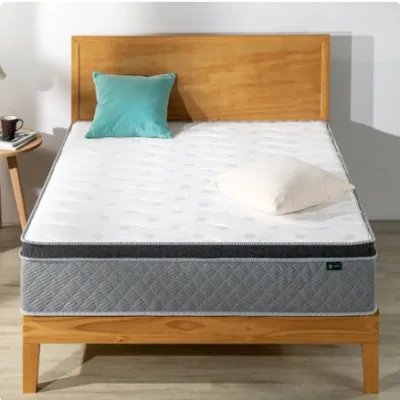
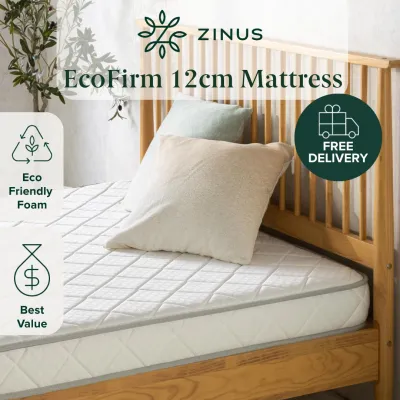
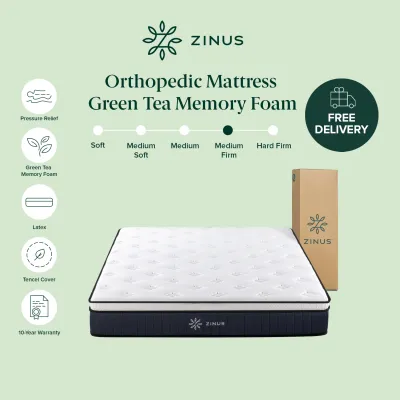
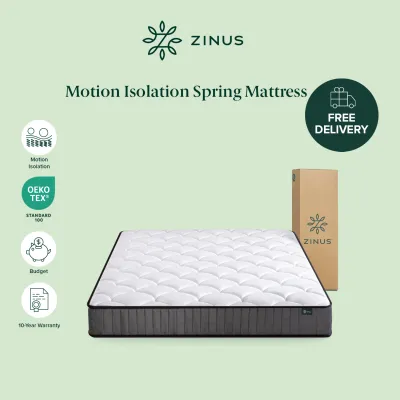
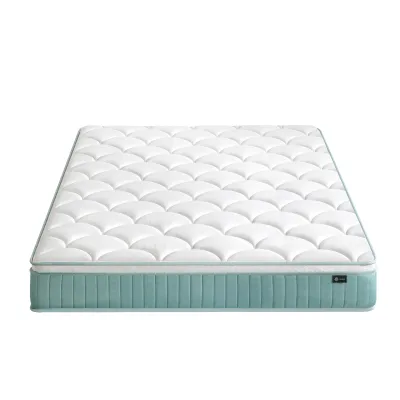
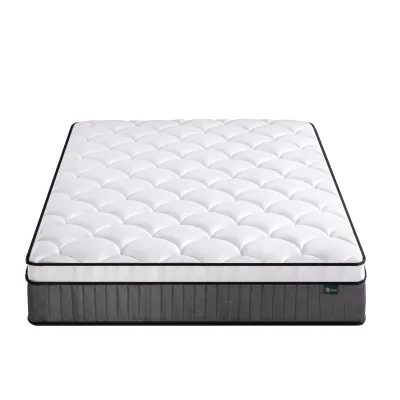
Prices are valid at publication and may change. Please refer to the product page for the latest price.
Most mattress manufacturers use a standard 1-to-10 firmness scale to categorize their models. On this scale, a rating of 1 represents an incredibly soft surface with almost no resistance, while a 10 represents a surface as rigid as a wooden floor. Zinus models generally span from a 3 (plush) to an 8 (extra firm), allowing sleepers to find a suitable match for their specific preferences.
- Plush (3 to 4 out of 10): These mattresses offer deep contouring and a noticeable "hug" sensation. They are designed to let the sleeper sink deeply into the comfort layers.
- Medium (5 to 6 out of 10): Offering a balanced blend of pressure relief and upward support, this is the most versatile category and serves as the default choice for many households.
- Firm to Extra Firm (7 to 8 out of 10): These models prioritize structural stability and minimal sinkage, keeping the body floating on top of the sleep surface rather than sinking into it.
It is important to note that naming conventions can vary slightly across different Zinus collections. For example, a “Medium” in the Zinus Green Tea Memory Foam line may feel noticeably softer than a “Medium” in one of their pocket spring hybrid collections. This variance occurs because all-foam models rely entirely on the compression of foam layers, whereas hybrids utilize the active upward pushback of steel coils. Always verify the specific material specifications and read customer reviews on authorized retail platforms to gauge how a particular model feels in real-world conditions.
Match Your Sleep Position to the Right Firmness
The primary goal of any mattress is to maintain neutral spinal alignment from your neck down to your lower back. When your spine is aligned, your muscles can fully relax, and you avoid waking up with chronic aches. The right firmness level prevents your heaviest body parts, such as your hips and shoulders, from sinking too deeply while ensuring your lighter body parts are fully supported.

Because everyone holds tension differently, your dominant sleeping posture dictates where you need cushioning and where you need resistance. Failing to align your mattress firmness with your sleep position can lead to poor posture during the night, resulting in long-term musculoskeletal discomfort.
Side Sleepers
Side sleepers require a mattress that offers excellent pressure relief for the shoulders and hips. When you sleep on your side, these two areas bear the majority of your body weight. If the mattress surface is too firm, it will push back against these pressure points, cutting off circulation and causing you to wake up with numbness or stiffness.
To prevent this, side sleepers should look for Zinus models labeled as plush, soft, or medium, which typically sit between 3 and 5 on the firmness scale. Models featuring thicker memory foam or fiber-quilted pillow tops are ideal because they contour to the natural curves of your body. This contouring allows your shoulders and hips to sink in just enough to keep your spine perfectly straight from your neck to your tailbone.
Back Sleepers
Back sleepers need a balanced surface that supports the natural “S” curve of the spine. If a mattress is too soft, the hips will sag into the comfort layers, pulling the lower back out of alignment and creating a painful hammocking effect. Conversely, if the mattress is too firm, it will leave a gap between the lower back and the sleep surface, forcing the lumbar muscles to work overtime to support themselves.
A medium to medium-firm mattress, rating between 5 and 7 on the firmness scale, is generally the best fit for back sleepers. Zinus options that combine a supportive transition foam with a contouring memory foam top layer provide the necessary lumbar support. This ensures your hips remain level with your shoulders, allowing your back muscles to fully relax.
Stomach Sleepers
Stomach sleeping is the most demanding position when it comes to mattress support. When you sleep on your stomach, the bulk of your body weight is concentrated around your midsection. If your mattress is too soft, your pelvis will sink deeply into the bed, arching your lower back into an unnatural position and placing immense strain on your lumbar spine.
To prevent lower back pain, stomach sleepers must choose a firm to extra-firm mattress, typically rating a 7 or 8 on the firmness scale. Zinus models with high-density foam bases or robust hybrid coil systems are highly recommended. These materials keep your hips elevated and aligned with your shoulders, ensuring your spine remains straight throughout the night.
Combination Sleepers
Combination sleepers are individuals who shift between multiple positions during the night, perhaps starting on their back and waking up on their side. For these sleepers, the main challenge is finding a mattress that is versatile enough to accommodate different postures while making it easy to move and turn over.
If you are a combination sleeper, a medium or medium-firm mattress (rating 5 to 6) is usually the safest choice. You should also look for responsive materials that do not leave you feeling “stuck” in the bed. Zinus hybrid models, which feature individually pocketed coils beneath responsive foam layers, provide the necessary bounce to facilitate effortless movement while offering balanced support across all sleeping positions.
Adjust for Your Body Weight and Type
While your sleeping position is the primary indicator of the firmness you need, your body weight plays a major role in how you actually perceive that firmness. A mattress that feels like a true “medium” to an average-weight individual may feel incredibly soft to a heavier person or exceptionally hard to a lighter person.
- Lighter Sleepers (Under 60 kg): Lighter individuals exert less gravitational pressure on the mattress surface. Because they do not compress the comfort layers very deeply, standard mattresses will often feel firmer than advertised. A lighter side sleeper, for instance, may find a "medium" mattress too rigid and should opt for a plush or soft model to achieve adequate pressure relief.
- Average Sleepers (60 kg to 90 kg): Sleepers in this weight range generally experience mattresses close to their designated manufacturer ratings. A medium Zinus mattress will provide them with the intended balance of contouring and support.
- Heavier Sleepers (Over 90 kg): Heavier individuals compress the comfort layers of a mattress much more deeply. A medium mattress can quickly feel too soft, causing them to sink straight through the comfort layers and bottom out against the hard support core. To compensate, heavier sleepers should select a firmer mattress than typically recommended for their sleep position, or opt for models constructed with high-density foams and reinforced pocket springs.
When finalizing your decision, always cross-reference your weight with your sleeping position. For example, a heavier side sleeper will need a mattress with a thick, plush comfort layer for pressure relief, but a highly supportive, firm coil core underneath to prevent excessive sinking.
How Material Construction Changes the Feel
Zinus offers two primary types of mattress constructions: all-foam and hybrid. Understanding how these designs behave will help you select a model that aligns with both your firmness needs and your secondary comfort preferences.
All-foam mattresses are constructed entirely from layers of polyurethane and memory foam. They are known for their deep contouring, excellent pressure relief, and superb motion isolation. When you lie on an all-foam Zinus mattress, you will experience a classic “hug” feel as the foam conforms to your body shape. However, because memory foam reacts to body heat to soften, it can sometimes trap warmth. In Singapore’s humid climate, this can lead to sleeping hot unless you choose a model infused with cooling gel or green tea, and keep your room well-ventilated.
Hybrid mattresses combine a supportive pocket spring core with top layers of foam. These models offer a more responsive, bouncy feel and superior edge support. A medium-firm hybrid mattress will feel distinctly different from a medium-firm all-foam mattress; the pocketed coils provide an active upward pushback that keeps you resting on top of the bed rather than sinking into it. Additionally, the open space between the steel coils allows for excellent airflow, making hybrids a naturally cooler option for warm tropical nights.
If you prioritize motion isolation because your partner tosses and turns, an all-foam model or a hybrid with individually wrapped pocket coils is ideal. If you struggle with getting out of bed or prefer sitting on the edge of the mattress to get dressed, a hybrid model with reinforced perimeter edge support will serve you best.
Signs Your Current Mattress Firmness Is Wrong
If you are unsure whether your current mattress is the right firmness, or if you are currently testing a new Zinus mattress during its trial period, your body will provide clear physical indicators of a poor match. Recognizing these signs early can help you make the necessary adjustments before chronic pain develops.
- Waking Up with Shoulder or Hip Stiffness: This is a classic sign that your mattress is too firm. Your body is resting on hard pressure points, which restricts blood flow and prevents your muscles from relaxing.
- Waking Up with Lower Back Pain: This typically indicates that your mattress is too soft. Your hips are sinking too deeply into the bed, causing your spine to sag and putting constant tension on your lower back muscles.
- Feeling "Stuck" and Struggling to Turn Over: If you find it physically exhausting to change positions during the night, your mattress is likely too soft or lacks responsive transition layers.
- Frequent Tossing and Turning: When your body cannot find a comfortable, pressure-free position that maintains spinal alignment, you will constantly shift throughout the night, leading to fragmented, poor-quality sleep.
If you find yourself experiencing these symptoms, there are several actionable steps you can take. If you have recently purchased a new Zinus mattress, make full use of the manufacturer’s sleep trial period to let your body adjust. It often takes up to a month for your muscles and joints to adapt to a new sleep surface. If the mattress still feels incorrect after this period, review the return or exchange policy of your retailer.
For an existing mattress that is slightly too firm, adding a high-quality, plush mattress topper can temporarily soften the feel and improve pressure relief. However, keep in mind that a topper cannot fix a sagging or overly soft mattress; if your bed has lost its structural support, a full replacement is the only effective solution. Always ensure your mattress is placed on a compatible, sturdy bed frame, as an unsupportive slatted base can cause even a firm mattress to sag prematurely.
Frequently Asked Questions (FAQ)
Can two people with different sleep positions share the same mattress?
Yes, couples with different sleeping positions can successfully share a mattress by opting for a medium-firm hybrid model. A medium-firm rating (around 6 out of 10) serves as an excellent middle ground, offering enough surface cushioning for a side-sleeping partner while providing the necessary upward support to keep a back- or stomach-sleeping partner’s spine aligned.
Additionally, look for models utilizing pocketed coils rather than traditional interconnected innersprings. Pocketed coils compress independently, which dramatically reduces motion transfer across the bed. This means that even if one partner shifts positions or gets up in the middle of the night, the other partner will experience minimal disturbance.
Does a new mattress feel softer after a break-in period?
Yes, all new mattresses go through a temporary break-in period. When a mattress is brand new—especially one delivered compressed in a box—the foam cells and physical components are tight and highly compressed. Over the first two to four weeks of regular use, your body weight and warmth will naturally stretch and open up these materials, causing the mattress to feel slightly softer and more contouring.
It is important to distinguish this normal structural softening from premature sagging. Normal break-in results in a more responsive, comfortable feel without any loss of support. If you notice deep, permanent body indentations that do not recover when you get out of bed, check the manufacturer’s warranty terms, as this may indicate a structural defect rather than standard wear.
Community discussion
Share your experience or ask a question. Comments are reviewed before publication.