
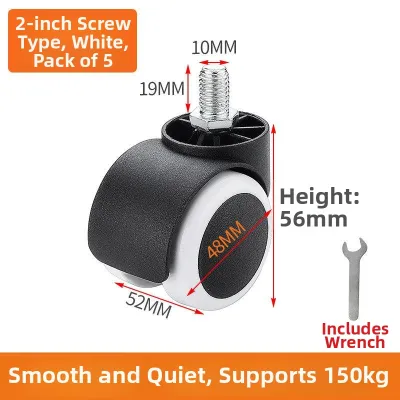
Finding the perfect replacement office chair wheels for your home study or office setup requires looking closely at the metal stem that connects the wheel to the base. While many assume all office chair casters are universal, choosing the wrong size or attachment type can lead to a wobbly seat, damaged flooring, or a wheel that constantly falls out. To ensure a perfect fit, you must identify whether your chair uses a grip ring, smooth, or threaded stem, and measure its diameter—most commonly 11mm or 10mm.
Quick Diagnostic Checklist for Your Chair Base
Before purchasing any replacement parts, a quick physical inspection will save you the hassle of dealing with incorrect orders. Use this diagnostic checklist to evaluate your current chair setup:
- Remove one existing caster: Pull a single wheel completely out of the chair base to inspect the stem directly, as you cannot determine the attachment style or get an accurate measurement while it is still inserted.
- Identify the attachment mechanism: Look closely at the metal pin to see if it features a small, compressible metal ring near the top, a completely smooth cylinder, or a threaded screw-in design.
- Measure the stem diameter: Use a precise measuring tool to distinguish between the two most common industry sizes, which differ by only a single millimeter.
How to Identify the Stem Attachment Type
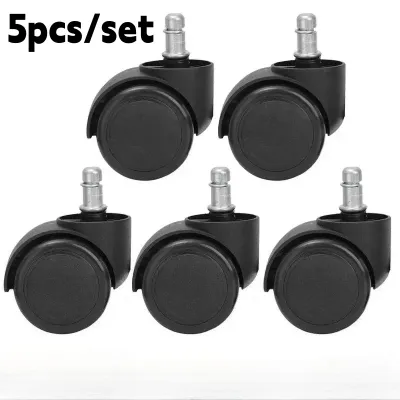
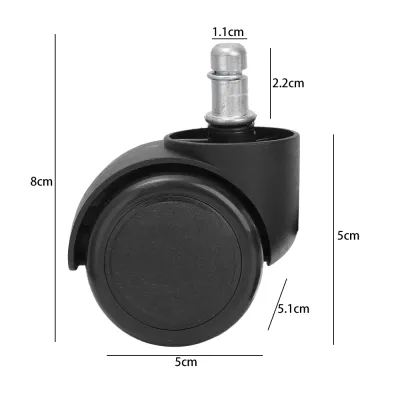
The vast majority of modern office chairs rely on a grip ring stem mechanism to hold the wheels in place. This design features a small, split metal ring—often called a friction ring—positioned in a groove near the top of the metal cylinder. When you push the stem into the chair base socket, this ring compresses slightly, then expands once it reaches a designated recess inside the socket, locking the wheel securely in place.
Products mentioned in this guide
![[SG Seller]Truslink 5PCs 3 Inch Office Chair Caster Wheels Roller Rollerblade Style Castor Wheel Replacement PU Wheel](https://img.lazcdn.com/g/p/4157aea7284404087fad9be9f0d36a0d.png_400x400q80.png_.webp)
![[SG Ready Stock]Office Chair Caster Wheels 3 Inch Universal Mute Whee 5PCS/Set Replacement 60KG Swivel Rubber Soft Safe Rol](https://img.lazcdn.com/g/p/3309f2fd04dad1bc1715850d1e17710a.jpg_400x400q80.jpg_.webp)
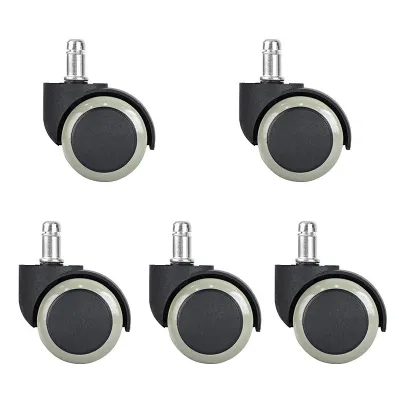

Prices are valid at publication and may change. Please refer to the product page for the latest price.

In contrast, some chairs utilize smooth or threaded stems. A smooth stem relies purely on a tight friction fit or a separate retaining clip inside the base socket, without any visible ring on the stem itself. Threaded stems function like standard bolts, requiring you to screw the caster directly into a threaded metal insert in the chair base. These threaded designs often require a specific thread pitch and socket depth to sit flush and support weight safely.
Attempting to force an incompatible attachment type into your chair base can cause permanent damage. For example, forcing a grip ring stem into a threaded socket can strip the internal threads, rendering the entire chair base unusable. Conversely, inserting a smooth stem into a socket designed for a grip ring may result in the wheel slipping out whenever you lift or tilt the chair.
How to Measure the Stem Diameter Accurately
To distinguish between the two dominant industry sizes, precision is key. The most reliable tool for this task is a pair of digital calipers, which provide an exact reading down to a fraction of a millimeter. When measuring, place the caliper jaws across the widest, unworn section of the metal stem, avoiding the compressed grip ring itself if one is present.
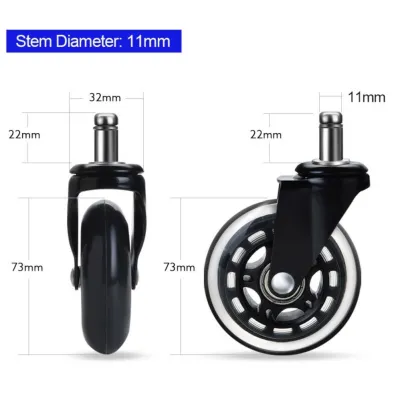
Standard office chair wheels typically come in two main diameters: 11mm (approximately 7/16 inch) and 10mm (approximately 3/8 inch). The 11mm size is the standard for the vast majority of commercial and home office chairs sold globally. The smaller 10mm size is frequently used by specific European furniture brands and certain specialty ergonomic manufacturers.
If you do not own digital calipers, you can use alternative verification methods. A standard ruler with clear millimeter markings can work if you align the stem carefully against the markings and take a straight-on photograph to avoid parallax error. Additionally, you can check the manufacturer’s specification label, which is often pasted on the underside of the seat cushion or stamped directly onto the plastic chair base.
Verifying Overall Wheel and Base Compatibility
Beyond the stem dimensions, you must verify that the overall wheel profile matches your chair’s design and your flooring. Standard replacement wheels usually have a diameter of 50mm or 60mm. Changing this diameter alters the overall height of your chair, which can affect your seating ergonomics, armrest clearance under your desk, and the overall stability of the base.
You should also inspect the chair base for integrated caster hoods or decorative shrouds. Some premium or ergonomic chairs feature molded plastic covers that wrap closely around the top of the wheel. If your replacement casters have a wider profile or a different hood shape than the originals, they may rub against these shrouds, preventing the wheels from swiveling freely or causing loud squeaking noises.
Finally, consider the floor surface in your workspace. Hard nylon wheels are ideal for thick carpets as they glide easily, but they can scratch and dent hard surfaces like parquet, vinyl, or ceramic tiles common in Singapore homes. For hard floors, look for wheels with a soft polyurethane or rubber tread, which provides grip and protects delicate surfaces from wear without the need for a bulky plastic floor mat.
Safe Removal and Installation Steps
Removing old, stubborn casters requires the right technique to avoid damaging the chair base. Lay the chair on its side on a soft surface, such as a rug or towel, to prevent scratching the frame. Grip the wheel firmly and pull straight outward; if it resists, slide the flat head of a screwdriver or a pry bar between the top of the caster and the chair base, using gentle leverage to pop the grip ring out of its socket.
When installing the new wheels, alignment is critical for a secure fit. Hold the new caster so the stem is perfectly straight and aligned with the socket opening. Push the stem directly into the hole using steady, firm pressure from the palm of your hand until you feel or hear the grip ring click into place. Avoid hitting the wheel with a hammer, as this can crack the plastic caster housing or bend the metal stem.
If you encounter unusual resistance, or if the socket appears stripped, cracked, or severely worn, stop immediately. Forcing a stem into a damaged socket can cause the base to split under your weight, leading to sudden wheel failure and potential injury. In these cases, consult the chair manufacturer or a professional furniture repair service to determine if the entire base needs to be replaced.
Frequently Asked Questions (FAQ)
Can I use a 10mm stem wheel in an 11mm socket?
No, you should not use a 10mm stem wheel in an 11mm socket. The 1mm difference prevents the grip ring from engaging securely, leaving the stem loose inside the socket. When weight is applied or when you roll the chair, the stem will tilt, causing the wheel to wobble, damage the socket walls, or fall out entirely when the chair is lifted. While some aftermarket plastic sleeves or adapters exist to bridge this size gap, they often wear down quickly under daily use and do not offer the same structural stability as a native-fitting stem.
Do all office chairs use grip ring stems?
While grip ring stems are the overwhelming standard for commercial and home office seating, they are not universal. Some specialized ergonomic chairs, heavy-duty industrial stools, and antique wooden office chairs utilize threaded stems or smooth stems with specialized locking plates. Always pull out at least one caster to verify your specific chair’s attachment mechanism before purchasing replacements, as assuming a standard grip ring fit can lead to incompatible parts and return hassles.
Community discussion
Share your experience or ask a question. Comments are reviewed before publication.