
To choose the correct adjustable support for your furniture repair, you must first identify the furniture type and diagnose the underlying stability issue. From there, you need to measure the existing support dimensions—including the stem diameter, thread pitch, and required height adjustment range—before matching the mounting style to your furniture’s structure. Finally, calculate the total load capacity and verify that the support’s material finish can withstand your local environmental conditions, such as high indoor humidity.
Taking these systematic steps prevents purchasing incompatible hardware that could damage your furniture or fail under load. This guide walks you through the entire diagnostic, measurement, and selection process so you can restore your furniture’s stability safely and permanently.
Assess Your Furniture and the Problem
Before purchasing any replacement hardware, you must analyze the specific furniture piece and the exact nature of its instability. Different types of furniture experience different forces and load distributions, which directly dictates the type of adjustable support required.
Products mentioned in this guide

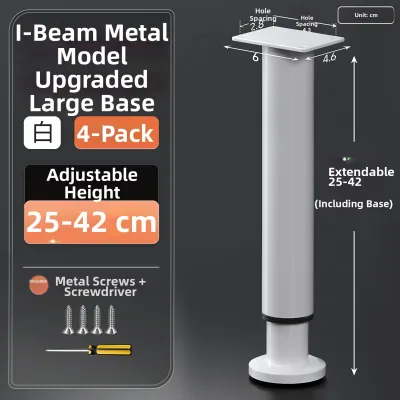
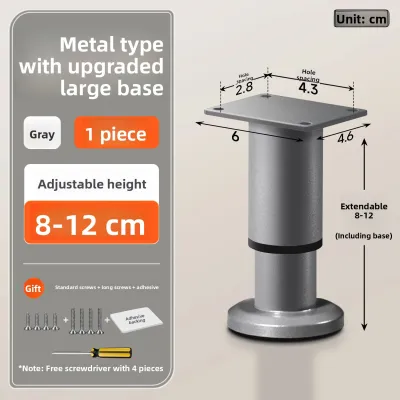
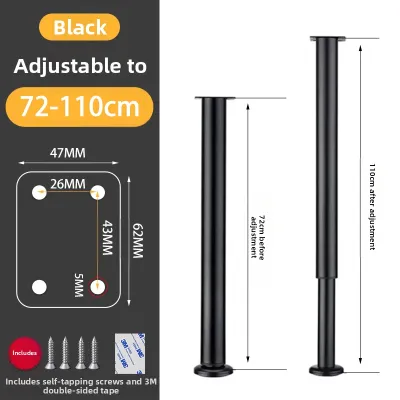
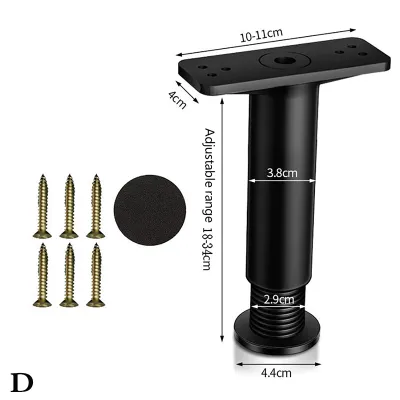
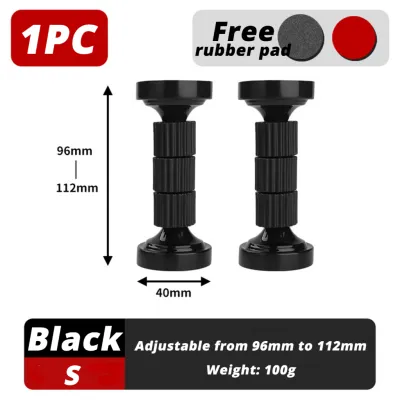
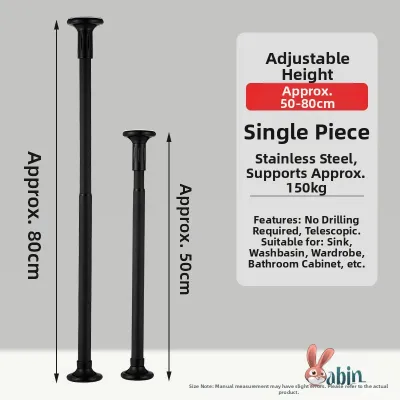
Prices are valid at publication and may change. Please refer to the product page for the latest price.
- Dining Tables and Desks: These pieces experience frequent dynamic loads and lateral forces when people lean on them or move items across the surface. They require highly stable, wide-base adjustable feet with robust threaded stems to prevent wobbling.
- Kitchen Cabinets and Sideboards: These carry heavy, static loads from stored items like plates, cookware, or appliances. Supports here must prioritize high weight capacity and moisture resistance, especially near wet areas.
- Bed Frames: Bed supports endure severe dynamic loads and lateral shifting. They require heavy-duty center support legs with wide feet to distribute weight evenly and protect the floor.
- Heavy Bookcases and Shelving Units: These tall units are prone to tipping if the floor is uneven. Adjustable supports for shelving must allow for precise leveling to keep the center of gravity stable.
Once you identify the furniture type, observe the physical symptoms of the failure. Examine the base of the furniture for visible wobbling, sagging frames, uneven gaps between cabinet doors, or wood swelling caused by water exposure.
Next, determine the root cause of the issue. Move the furniture to a known flat surface to verify if the wobbling is caused by an uneven floor or a structural defect in the furniture itself. Inspect the joints where the legs meet the main frame; if these joints are cracked or loose, simply adding an adjustable foot will not solve the problem. You must establish whether the furniture requires a simple height adjustment, a localized hardware repair, or a complete structural overhaul.
Measure for the Correct Size and Clearance
Accurate physical measurements are critical to ensure your new adjustable support fits perfectly and functions safely. Using incorrect dimensions can lead to stripped threads, unstable furniture, or damaged flooring.

Start by measuring the existing support hardware. If you are replacing an old threaded glide, unscrew it completely and measure the stem diameter and the total length of the threaded portion. You must also determine the required height adjustment range. Measure the gap between the bottom of the furniture leg and the floor at the lowest and highest points of your uneven floor to find the minimum and maximum height extension needed.
Next, check the available clearance under the furniture. Ensure that the base diameter of the new adjustable support will not interfere with nearby cabinet doors, drawers, or decorative baseboards. If the support base is too wide, it may prevent doors from opening fully or stick out past the edges of the furniture leg, creating a tripping hazard.
Identifying the correct thread size and pitch is the most common hurdle in furniture repair. In Singapore, imported furniture may use either metric threads (such as M6, M8, or M10) or imperial threads (such as 1/4″-20 or 5/16″-18). Do not attempt to guess the thread size by sight. Instead, use a thread pitch gauge, or take the old support to a local hardware store to test it against known nuts. Alternatively, you can try threading a known bolt from your toolbox into the furniture’s insert to verify the fit.
Finally, account for your floor type and any floor coverings. If your furniture sits on a plush rug or carpet, you will need a support with a slightly longer stem to reach the solid floor beneath without compressing the carpet fibers unevenly. For hard floors like parquet, marble, or polished tiles, ensure the support base can accommodate protective pads to prevent scratching.
Identify the Mounting Style and Installation Requirements
Matching the mounting style of the replacement support to your furniture’s existing structure ensures a secure attachment and prevents wood splitting during installation.
Screw-In and Threaded Inserts
Screw-in supports rely on a threaded stem that mates with a female insert embedded inside the furniture leg. First, inspect the existing threaded insert or T-nut inside the leg. Look closely for signs of wear, stripped threads, or cross-threading, which will prevent a new support from tightening securely.
If the existing insert is intact, you must verify the exact thread diameter and pitch to ensure a perfect match. If the original wooden threads are stripped, or if the wood surrounding the insert has softened or crumbled, a direct replacement is not possible. In this scenario, you must plan to install a new threaded insert, such as a hex-drive threaded wood insert or a pronged T-nut. These inserts provide a fresh, durable metal thread inside the wood, restoring the structural integrity of the mounting point.
Plate-Mounted and Bolt-On Styles
Plate-mounted supports use a flat metal bracket or plate that screws directly onto the flat underside of the furniture base. This style is ideal for furniture with wide, flat bottoms or pieces made from engineered woods where drilling a deep vertical hole is not practical. Measure the dimensions of the existing mounting plate and the exact distance between its screw holes to see if you can reuse the original mounting holes.
Before installing a plate-mounted support, measure the thickness of the furniture base. You must ensure that the mounting screws are short enough that they will not penetrate through the top visible surface of your cabinet or shelf, yet long enough to provide adequate holding power.
When dealing with softer engineered materials like particleboard or medium-density fibreboard (MDF), standard wood screws can easily tear out under lateral pressure. For these materials, select a larger, reinforced mounting plate. A larger plate distributes the vertical and lateral loads over a wider surface area, reducing the stress on the fragile engineered wood fibers.
Determine Load Capacity and Environmental Needs
An adjustable support must be strong enough to carry the weight of the furniture and its contents, and resilient enough to withstand the local climate without degrading.
To determine the required load capacity, calculate the total weight the supports must bear. This is the sum of the furniture’s empty weight plus the maximum weight of its contents. For example, a heavy kitchen cabinet might weigh 30 kg empty, but hold another 50 kg of heavy stoneware, small appliances, and pantry goods, bringing the total load to 80 kg.
Divide this total weight by the number of adjustable feet (usually four) to find the minimum load capacity required per foot. However, because floors are rarely perfectly flat, the weight is often distributed unevenly across only three feet at any given time. To ensure a safe setup, choose supports that have a rated capacity higher than your minimum calculation. Always check the manufacturer’s product specifications for the official weight rating; never estimate load capacity based on the visual thickness of the hardware alone.
Environmental factors are equally important, especially in Singapore’s tropical climate where indoor relative humidity often exceeds 80%. High humidity accelerates the oxidation of untreated metals, leading to rust, seized threads, and structural failure. This risk is even higher in moisture-prone areas like kitchens, bathrooms, or ground-floor spaces.
Rather than assuming a metal support is durable simply because it is labeled “metal” or “steel,” verify the manufacturer’s specified surface treatment or coating. Look for high-grade stainless steel (such as Grade 304 or 316), solid brass, or steel with a certified heavy-duty zinc plating or powder-coated finish. These finishes provide a protective barrier against moisture, ensuring the adjustable threads remain smooth and rust-free over years of service.
Decide Your Next Step: Adjust, Repair, or Replace
Once you have completed your assessment and measurements, you can choose the most efficient and cost-effective path forward. You do not always need to buy new hardware; a structured decision-making process will save you time and money.
- Adjust: If the existing adjustable feet and mounting points are physically undamaged but the furniture is simply wobbly, a basic adjustment is all that is required. Clean any accumulated dust, pet hair, or light rust from the threads using a wire brush. If recommended by the manufacturer, apply a drop of light machine oil to the threads, then turn the feet to level the furniture on the floor.
- Repair: If the adjustable foot itself is in good condition but the mounting point in the wood is loose, stripped, or damaged, focus on repairing the furniture base. You can reinforce stripped wooden holes using a high-quality wood epoxy, or by drilling out the damaged area and installing a larger threaded insert or a heavy-duty T-nut. Once the mounting point is secure, reattach the original hardware.
- Replace: If the stem of the adjustable support is visibly bent, the threads are stripped, the plastic base is cracked, or the metal is severely corroded, you must replace the hardware. Refer to your measurements to purchase a new, appropriately rated adjustable support that matches your mounting style and load requirements.
Before undertaking any drilling, adhesive application, or hardware installation, always check your furniture manufacturer’s care instructions and warranty guidelines. If the instructions conflict, or if you find that the main structural frame of the furniture is cracked, sagging severely, or compromised at key load-bearing joints, stop immediately. An adjustable foot cannot compensate for a failing structural frame. In these cases, consult a professional carpenter or furniture repair specialist to evaluate and repair the frame before installing any new support hardware.
Frequently Asked Questions (FAQ)
Do I need floor protectors with adjustable furniture supports?
Yes, installing floor protectors is highly recommended for any adjustable support resting on hard surfaces like parquet, marble, laminate, or vinyl tiles. Adjustable feet made of hard plastic, nylon, or bare metal can easily scratch, dent, or scuff these sensitive floors when the furniture is moved or when you turn the feet to adjust the height. Check if your chosen adjustable support features an integrated non-slip rubber or polyurethane base. If it does not, apply heavy-duty, self-adhesive felt pads or slip-on rubber cups to the bottom of the feet to protect your flooring and reduce sliding noise.
How often should I check and readjust furniture supports?
It is best practice to inspect and readjust your furniture supports at least once every six months, or whenever you notice a slight wobble or misalignment in cabinet doors. Over time, natural structural settling of the building, changes in indoor humidity that cause wooden furniture frames to expand or contract, and shifts in the weight distribution of stored items can affect the leveling. Periodically checking the tightness of the mounting screws and turning the adjustable feet slightly ensures your furniture remains perfectly stable and safe to use.
Community discussion
Share your experience or ask a question. Comments are reviewed before publication.