
Finding a seat cover that fits your office chair correctly requires moving past “one-size-fits-all” claims. Because office chairs vary wildly in shape, contour, and mechanical design, a loose or poorly sized cover will slide, bunch up, or even restrict your chair’s adjustment controls. To achieve a tailored, slip-free fit, you must identify your specific chair category, measure the cushion dimensions precisely, and select an attachment method that accommodates the under-seat hardware.
By treating the seat cover as a precise component rather than a generic accessory, you protect your chair’s ergonomic benefits and ensure long-term comfort. This guide walks you through the exact steps to evaluate your chair, take reliable measurements, choose compatible materials for your local environment, and install the cover safely.
Identify Your Office Chair Style and Cover Requirements
To select a compatible cover, first classify your chair into one of three primary categories: standard task chairs, ergonomic chairs, or executive chairs. Standard task chairs typically feature relatively flat, rectangular, or gently rounded seat cushions with accessible undersides and minimal adjustment levers. These chairs are the most straightforward to cover, as their simple geometry accommodates a wide range of basic slip-on designs.
Products mentioned in this guide
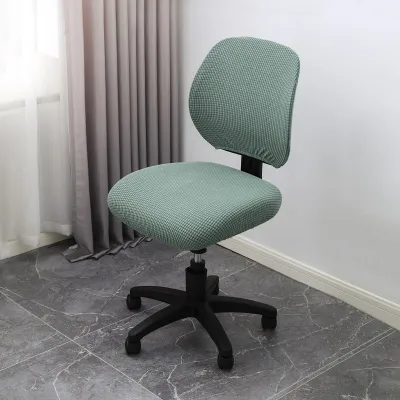
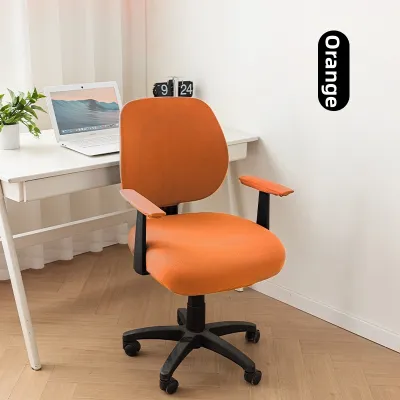
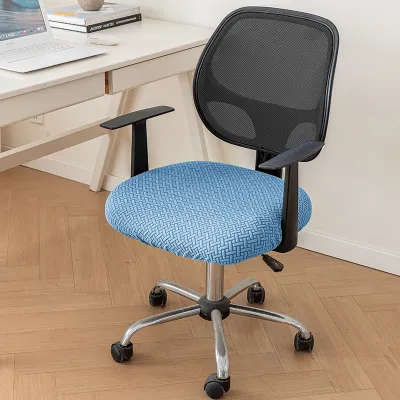
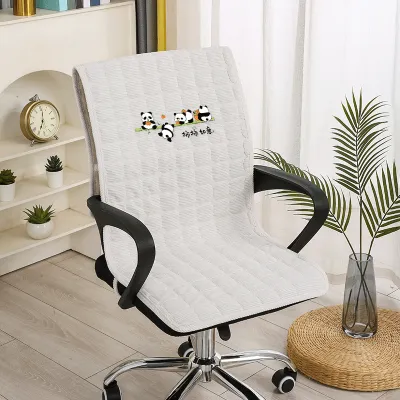
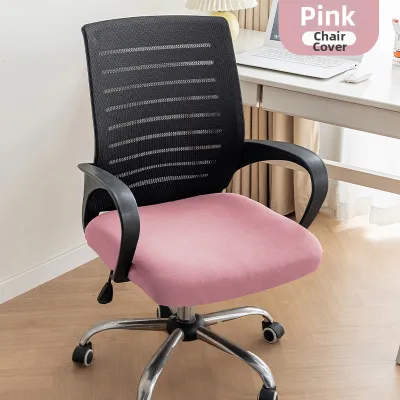
Prices are valid at publication and may change. Please refer to the product page for the latest price.
Ergonomic office chairs present a more complex challenge because they are engineered with contoured seat pans, pronounced waterfall front edges, and integrated lumbar supports. A waterfall edge curves downward at the front to reduce pressure on your thighs, while contoured seats feature deep recessions to distribute your weight evenly. Generic, flat-cut covers cannot conform to these distinct three-dimensional curves; instead, they stretch tightly across the hollows like a drum skin, completely neutralizing the chair’s ergonomic design and reducing sitting comfort.
Executive chairs are characterized by their generous proportions, thick padding, and often high backrests with integrated headrests. The cushions on an executive chair are significantly wider, deeper, and thicker than those on standard task chairs, meaning standard covers will simply not stretch far enough to cover them. Attempting to force a standard cover onto an executive chair can tear the seams of the cover or compress the plush padding, altering the chair’s support profile.
Before searching third-party marketplaces, check your chair manufacturer’s specifications or the original user manual. High-end ergonomic brands frequently design and sell model-specific official covers tailored to the exact dimensions and curves of their chairs. If official options are unavailable or fall outside your budget, understanding your chair’s specific category is your first line of defense against buying an incompatible universal product.
How to Measure Your Office Chair Seat Accurately
To find a cover that fits like a glove, you must rely on exact measurements rather than generic small, medium, or large sizing charts. Manufacturers of seat covers use different dimensional boundaries for these size labels, meaning a “Medium” from one brand might correspond to a “Large” from another. Gathering your own measurements ensures you can verify compatibility against the product’s detailed sizing specification sheet.

To begin, gather a flexible fabric measuring tape, a notepad, and a pen. Avoid using a stiff metal construction tape, as it cannot bend around the curved edges of the cushion, which will lead to inaccurate, inflated measurements. For the most accurate results, perform these measurements while the chair is unoccupied and resting on a flat, level surface.
First, measure the seat width by finding the widest point of the seat cushion, which is typically across the middle or toward the backrest. Lay the flexible tape flat against the cushion, following the natural curve of the surface from the left edge to the right edge. Do not pull the tape too tight, but ensure it does not sag.
Second, measure the seat depth by placing the start of the tape at the very front edge of the seat cushion. Run the tape along the center of the seat pan directly to the rear junction where the seat cushion meets the backrest. If your chair has an adjustable seat depth slider, set the seat to your preferred daily position before measuring, as this affects how much fabric is required to cover the exposed underside.
Third, measure the cushion thickness or height. Place the tape vertically against the side of the cushion, measuring from the hard plastic or wooden support pan at the bottom to the highest crowned point of the foam padding. If your chair has a highly contoured seat, measure the thickness at both the thinnest point (usually the center) and the thickest point (often the outer bolster edges).
If you have a two-piece ergonomic design where the backrest and seat pan are physically separated by a gap or an external support spine, you must measure the seat and the backrest as two entirely separate components. Many specialized covers are sold as two-piece sets specifically for this configuration. For the backrest, measure the maximum height from the bottom edge to the top edge, the maximum width across the lumbar region, and the thickness of the backrest frame.
Choosing the Right Attachment Type for a Secure Fit
The way a cover attaches to your chair determines whether it will stay firmly in place during daily use or slide around every time you shift your weight. Different chair bases and mechanical configurations require specific fastening styles to avoid interfering with adjustment levers.
Elastic bands and elastic skirts are the most common attachment types and are highly effective for standard task chairs. These covers feature a continuous elasticized hem that slips over the edges of the cushion and grips the underside. This style works best when the bottom of the seat pan is flat, smooth, and free of protruding mechanical parts, allowing the elastic to snap securely underneath without obstruction.
For ergonomic chairs with complex under-seat mechanisms, look for covers equipped with adjustable straps and buckles. Ergonomic chairs often feature intricate tilt-tension knobs, seat-angle adjusters, and structural support bars directly beneath the seat pan. Straps that feed through the gaps in the chair’s frame and snap together with plastic side-release buckles allow you to route the fasteners safely around these mechanical components, preventing the cover from slipping without blocking your chair’s moving parts.
Thick executive cushions benefit most from zippered or envelope closures. Zippered covers often feature a three-sided opening that allows you to slide the cushion inside before zipping it shut, creating a clean, tailored look that mimics original upholstery. Envelope closures use overlapping fabric flaps, similar to a pillowcase, which work well for deep cushions but require a highly stretchable fabric to maintain tension.
Hook-and-loop fasteners (such as Velcro) are frequently used as secondary securing methods on seat covers. They are highly useful for making minor tension adjustments or securing overlapping flaps around irregular frame shapes, such as where the armrests connect directly to the seat pan. Look for wide, heavy-duty hook-and-loop strips, as narrow strips can easily degrade or pull apart under the friction of daily sitting.
Before finalizing your installation, perform a comprehensive safety and functionality check under the seat. Ensure that no straps, buckles, or excess fabric flaps drape near the gas lift cylinder, the tilt tension spring, or the seat slide tracks. If a strap is routed too close to these components, it can become caught in the gears, tear the cover, or cause the chair’s height adjustment mechanism to fail unexpectedly.
Selecting the Material Based on Your Workspace Needs
The material of your seat cover directly impacts your physical comfort, especially when sitting for long hours in a tropical climate like Singapore. Evaluating fabric properties based on breathability, stretch, and maintenance requirements will help you choose a cover that enhances rather than detracts from your seating experience.
In warm and humid environments, prioritizing breathability is essential to prevent heat buildup and sweating. Mesh fabric blends, 3D spacer fabrics, and lightweight cotton weaves are excellent choices because they allow air to circulate freely between your body and the chair’s foam core. Avoid heavy polyester, synthetic velvet, or non-breathable faux leather covers, as these materials trap body heat and moisture, leading to an uncomfortable, sticky seating experience within a few hours.
To achieve a snug, custom-looking fit over contoured ergonomic seats, look for fabrics that incorporate stretch fibers, such as spandex or elastane blends. A high percentage of spandex (typically 5% to 15%) allows the fabric to stretch in multiple directions, conforming tightly to waterfall edges and seat recessions without creating loose wrinkles or air pockets. These stretch fabrics also distribute tension evenly, reducing the risk of seam failure at high-stress points.
Before purchasing, always verify the surface treatments, stain resistance, and washing instructions directly from the product’s care label or manufacturer specifications. Do not assume a material is stain-resistant or machine-washable simply based on its generic name. For example, while some treated polyester covers can handle frequent machine washing and liquid spills, untreated variations may shrink or degrade rapidly when exposed to water. Choosing a cover with clear, low-risk care instructions ensures you can maintain a hygienic workspace without damaging the fabric.
Verifying the Fit and Troubleshooting Common Issues
Once your new seat cover is installed, you must verify that it fits correctly and safely before settling into your daily routine. A properly fitted cover should look neat, feel stable, and preserve all of your chair’s mechanical adjustments.
Begin with a visual inspection. Check that all edges are smooth and that the seams of the cover align naturally with the outer corners of your chair’s cushion. If the seams are pulled taut and look strained, or if you see light shining through the stitching holes, the cover is over-stretched. Next, perform a physical test by sitting down, shifting your weight from side to side, and standing back up. The cover should remain firmly anchored to the seat pan without sliding, bunching, or pulling away from the backrest.
If you find that the cover is too tight, it can cause several issues. An overly tight cover acts like a drum skin, compressing the chair’s original foam cushion and neutralizing its ergonomic contours. This excess tension also puts immense strain on the seams and zippers, leading to premature tearing. If the cover is too tight, do not force it; instead, exchange it for a larger size or a model with a higher spandex content.
Conversely, a cover that is too loose will slip, wrinkle, and bunch up beneath you. This excess fabric is not just an aesthetic issue; it can cause physical discomfort and skin irritation from sitting on folded creases for extended periods. If your cover is slightly loose, you can often troubleshoot the issue by tightening the adjustable straps beneath the seat or adding non-slip shelf liner material between the chair cushion and the cover to increase friction.
Always define clear stop conditions for your seat cover usage. If you find that the cover restricts any of the chair’s mechanical functions—such as preventing the seat slider from locking, blocking the tilt tension knob, or binding the gas lift lever—remove the cover immediately. Additionally, never use a cover that obscures essential safety warning labels on the base of the chair or creates a slippery surface that compromises your stability while sitting.
Frequently Asked Questions (FAQ)
Can I use a standard car seat cover on my office chair?
Using a standard car seat cover on an office chair is generally not recommended due to fundamental structural differences between automotive and office seating. Car seat covers are specifically tailored for bucket seats, which feature deep side bolsters and integrated, non-adjustable headrests. When draped over an office chair, these covers will have excessive loose fabric, leading to slipping and bunching. Furthermore, the thick straps, heavy elastic bands, and metal hooks used to secure car seat covers are designed to wrap around a car’s seat frame. On an office chair, these heavy-duty fasteners can easily wrap around the central gas lift cylinder or interfere with the tilt and height adjustment levers, creating a mechanical hazard.
How do I clean my office chair seat cover without shrinking it?
To clean your office chair seat cover safely, always check and follow the specific care label attached to the product. As a general low-risk guideline, wash the cover in cold water on a gentle or delicate cycle using a mild, liquid detergent. Avoid using chlorine bleach or fabric softeners, as these chemicals can break down the elastic fibers (spandex or elastane) that provide the cover’s stretch and recovery. After washing, avoid using a mechanical tumble dryer, as high heat is the primary cause of fabric shrinkage and elastic degradation. Instead, hang the cover to air dry in a well-ventilated indoor space or a shaded outdoor area away from direct sunlight, ensuring it is completely dry before reinstalling it on your chair.
Community discussion
Share your experience or ask a question. Comments are reviewed before publication.