
Finding a reliable sofa with storage that fits the spatial constraints of a typical Housing & Development Board (HDB) flat requires balancing space-saving utility with structural durability. While many furniture brands advertise multifunctional designs, selecting the right option for your home involves looking past marketing claims to verify physical dimensions, storage mechanisms, and local after-sales support. Because HDB living rooms often have tight entryways and limited floor areas, a storage sofa must be evaluated not just as a seat, but as a functional piece of cabinetry and a logistical delivery challenge. By focusing on verifiable construction standards, precise spatial measurements, and practical fabric choices, you can identify which local brands offer the reliability and utility your household needs.
Assessing Space and Dimensions for HDB Layouts
The journey of a sofa with storage begins long before it sits in your living room. Homeowners must measure the entire delivery path, starting from the lift lobby. Standard HDB passenger lifts have specific door clearance heights and internal cabin depths that can restrict long, single-frame three-seater sofas. Measuring the lift door width, height, and diagonal clearance is essential. If your flat is located at the end of a narrow corridor or requires navigating tight staircase turning radiuses, these dimensions must be cross-referenced with the sofa’s packaged shipping dimensions.
Once inside the flat, the main door frame and any foyer obstacles present the next hurdle. Many storage sofas are heavier and bulkier than standard sofas due to their integrated wooden or metal storage boxes. This extra bulk makes them less forgiving when maneuvering through tight entryways. Homeowners should measure the clear opening width of the main door, taking into account the space occupied by the door leaf when fully open, as well as any adjacent shoe cabinets or wall fixtures that cannot be moved.
Products mentioned in this guide
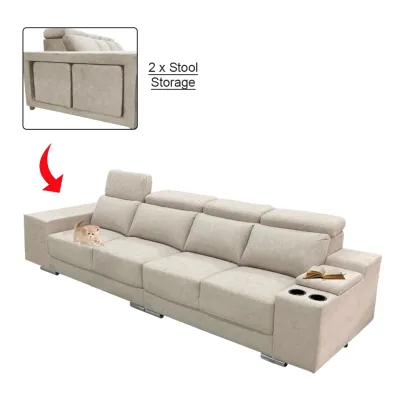
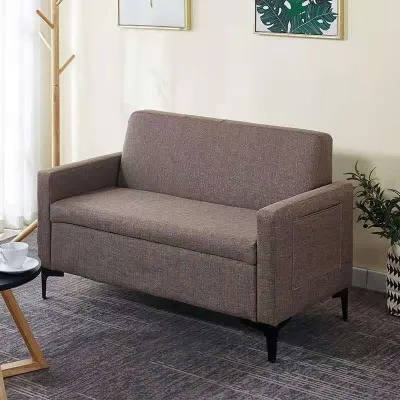
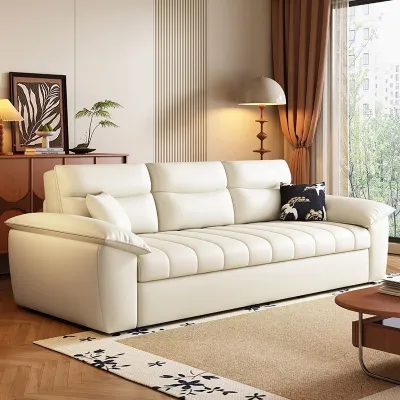
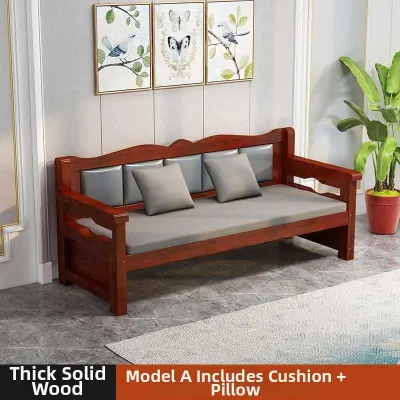
Prices are valid at publication and may change. Please refer to the product page for the latest price.
Within the living room itself, calculating the optimal footprint requires a careful balance between seating capacity and traffic flow. A standard HDB living room layout typically requires maintaining a walkway clearance of at least 60 to 75 centimeters between the edge of the sofa and any coffee table or television console. When selecting a sofa depth, consider how a deeper seat affects this walkway. A sofa that is too deep can make the living room feel cramped and restrict movement, especially in smaller three-room or four-room BTO layouts.
The storage mechanism itself introduces unique spatial requirements that are often overlooked. For sofas featuring lift-up hydraulic compartments, you must verify the overhead and front clearance required for the lid to open fully. If the sofa is placed directly against a wall, some lift-up mechanisms require the backrest to tilt slightly backward or slide forward during operation. Without this clearance, the fabric can rub against the wall, causing premature wear to both the upholstery and the paint. Similarly, if the sofa uses pull-out drawers, you must ensure there is enough floor space in front of the sofa to pull the drawers out completely without hitting coffee tables or rugs.
Comparing Storage Mechanisms and Fabric Maintenance
Choosing between lift-up hydraulic seats and pull-out drawers depends heavily on what you plan to store and how often you need to access it. Hydraulic lift-up mechanisms utilize the entire footprint of the sofa base, making them ideal for storing bulky, infrequently used items such as seasonal bedding, extra pillows, or travel luggage. However, accessing this space requires removing any loose seat cushions and lifting the entire seating platform. This can be physically demanding if the mechanism lacks sufficient gas-lift assistance or if the weight capacity of the platform is exceeded.

Pull-out drawers, on the other hand, offer much easier access for daily-use items like children’s toys, board games, or extra throw blankets. Because they slide out from the bottom front or sides of the sofa, you do not need to disturb anyone sitting on the sofa to retrieve items. However, drawers typically offer less total storage volume than hydraulic compartments because of the space required for drawer runners, internal wooden dividers, and clearance tracks. Additionally, drawers require smooth, level flooring to operate correctly without scratching laminate or vinyl finishes.
Safety is a critical factor when evaluating storage mechanisms, particularly for heavy lift-up lids. High-quality brands equip their hydraulic lifts with slow-close mechanisms or safety locking pins that prevent the heavy seating platform from slamming down unexpectedly. When visiting a showroom, test the resistance of the hydraulics. The lid should rise smoothly with minimal effort once unlocked and remain securely in the open position without wobbling. Avoid mechanisms that feel loose, squeak excessively, or require significant physical strain to close, as these are signs of inferior hardware that may fail over time.
The choice of fabric is just as important as the storage structure, especially in high-traffic HDB living rooms. Because storage sofas are handled frequently during opening and closing, the fabric must withstand both seating wear and manual handling. Look for brands that offer removable, machine-washable covers, which make cleaning spills and dust much simpler. If removable covers are not available, prioritize synthetic fabrics treated with stain-resistant coatings. These performance fabrics allow liquids to bead on the surface rather than soaking into the fibers, giving you time to blot away spills before they stain.
When evaluating fabric durability, check the manufacturer’s specifications for the Martindale rub count, which measures a fabric’s resistance to abrasion. For a busy household, a rub count of 20,000 or higher is recommended for heavy domestic use. Additionally, consider the weave of the fabric; tight weaves are less likely to snag on drawer corners, belt buckles, or pet claws. Avoid delicate materials like silk blends or loose linens, which can stretch or tear under the mechanical stresses of opening and closing the storage compartments.
Criteria for Evaluating Sofa Brands in Singapore
To find a reliable sofa brand in Singapore, start by verifying the availability of local showrooms. Purchasing a storage sofa online without testing it in person carries significant risk. A physical showroom visit allows you to evaluate the actual firmness of the seat cushions, the texture and thickness of the fabric samples, and the overall stability of the frame. Sit on the sofa, lean against the backrest, and operate the storage compartments multiple times to ensure there is no flexing, creaking, or misalignment in the joints.
A brand’s warranty terms offer a clear indication of its confidence in its product’s build quality. When reviewing the warranty, look for specific coverage details rather than a generic “limited warranty” label. A robust warranty should separately cover the internal wooden frame (typically five to ten years), the metal hinges and hydraulic gas lifts (at least one to two years), and the fabric stitching. Be sure to ask whether the warranty covers the cost of transport and labor for repairs, as moving a heavy storage sofa back to a workshop can incur substantial fees if not covered.
Material sourcing transparency is another hallmark of a reputable brand. Inquire about the type of wood used for the internal frame and storage box. Solid hardwoods like kiln-dried birch, larch, or oak are preferred for load-bearing structures, as they resist warping in Singapore’s humid climate. Avoid brands that rely heavily on thin, untreated particleboard or medium-density fibreboard (MDF) for the main structural frame, as these materials can sag or degrade rapidly under the weight of both the occupants and the stored items.
Finally, check the long-term availability of replacement parts. Hydraulic gas lifts and mechanical hinges are moving parts that will eventually wear out after years of repeated use. A reliable brand should maintain a local inventory of compatible replacement hardware and offer repair services long after the initial warranty period has expired. If a brand cannot guarantee the availability of replacement parts, you run the risk of having to replace the entire sofa simply because a single hinge or gas strut has failed and cannot be sourced.
Planning Your Purchase and Delivery Logistics
Successful integration of a storage sofa into your HDB flat depends heavily on meticulous delivery planning. Before finalizing your purchase, request the exact packaging dimensions of the sofa from the retailer. Do not rely solely on the assembled dimensions, as sofas are often shipped in large, protective cardboard boxes that add several centimeters to the width, height, and depth. Compare these packaging dimensions against your lift door height, lift cabin depth, and any low-hanging pipes or exit signs in your corridor to ensure a clear path.
It is also crucial to understand the retailer’s return and exchange policies, particularly if you are ordering a custom fabric or a made-to-measure configuration. Many brands classify custom orders as non-refundable, meaning you cannot return the sofa if it does not fit through your doorway or if the color looks different under your home’s lighting. If returns are permitted, clarify the restocking fees, which can range from ten to thirty percent of the purchase price, as well as the cost of return transportation.
Delivery fees and assembly services vary widely among furniture retailers in Singapore. Some brands include free delivery and professional on-site assembly in their list prices, while others charge separate fees based on your location, delivery timing, or the complexity of the assembly. Because storage sofas require precise alignment of hydraulic lifts or drawer tracks, professional assembly is highly recommended. Ensure that the delivery team is trained to calibrate the mechanisms on-site so that the storage compartments open and close smoothly from day one.
If you are replacing an existing sofa, plan for its disposal well in advance. Many furniture retailers offer old sofa disposal services for an additional fee, which must be booked at the time of purchase. Alternatively, HDB residents can contact their local Town Council to arrange for free bulk household waste removal, though this service typically requires several days of advance notice and requires you to move the old furniture to a designated void deck collection point yourself. Clarifying these logistics early prevents the stress of having two large sofas in your living room simultaneously.
Frequently Asked Questions (FAQ)
Can a storage sofa fit through standard HDB lift doors?
Yes, most storage sofas can fit through standard HDB lift doors, but you must verify the packaged dimensions before purchasing. Many brands design their storage sofas in modular sections or flat-packed components specifically to navigate tight lift doors and narrow corridors. Always request the exact carton dimensions from the retailer and compare them against your lift’s door height and cabin depth. If the packaged sofa exceeds these dimensions, ask if the delivery team can unbox the sofa in the void deck or if a modular configuration is available.
Are fabric sofas with storage prone to mold in humid climates?
Fabric sofas with storage can be susceptible to mold and musty odors in Singapore’s humid climate if moisture becomes trapped inside the enclosed compartments. To prevent this, avoid storing damp items, such as freshly washed linens that are not completely dry, inside the sofa. Place disposable moisture absorbers or silica gel packets inside the storage compartments and replace them regularly. Additionally, make it a habit to leave the storage lids or drawers open for a few hours during dry, sunny days to allow fresh air to circulate through the interior.
Do retailers offer old sofa disposal services in Singapore?
Many furniture retailers in Singapore offer old sofa disposal services for an additional fee, which typically ranges from S$50 to S$150 depending on the size of the sofa and the complexity of the removal. This service must usually be booked in advance when scheduling your delivery. If your retailer does not offer this service, or if you prefer a free alternative, you can contact your local Town Council to arrange for bulk household waste removal. Keep in mind that Town Council services require you to move the sofa to the void deck yourself at a scheduled time.
Community discussion
Share your experience or ask a question. Comments are reviewed before publication.