
Selecting a modular wheeled bookshelf involves finding a balance between storage capacity, structural stability, and effortless mobility. Unlike static shelving, a rolling unit must withstand the dynamic forces of movement while carrying heavy weight. To find the right fit, you must evaluate your floor surface, calculate the weight of your book collection, and verify how the individual modules connect.
A well-chosen unit maximizes vertical space, allows for easy room reconfiguration, and simplifies cleaning. By focusing on the specifications of the casters, the load limits of each tier, and the physical constraints of your home, you can select a system that adapts to your changing needs.
Assess Your Room Layout and Mobility Requirements
Before purchasing any mobile furniture, you must measure your physical space with precision. Start by mapping out the footprint of the bookshelf in its designated resting spot, ensuring there is sufficient clearance to pull the unit out from walls, corners, or adjacent furniture. In compact living environments, such as typical apartments, even a few centimeters of overhang can obstruct walkways or block access to power outlets.
Products mentioned in this guide
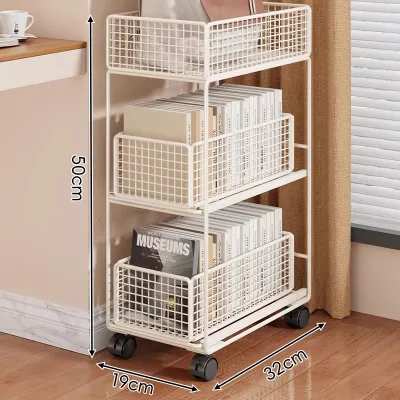
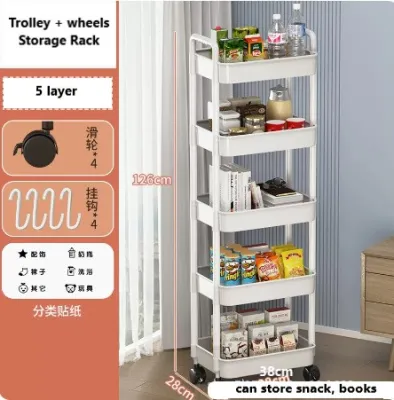
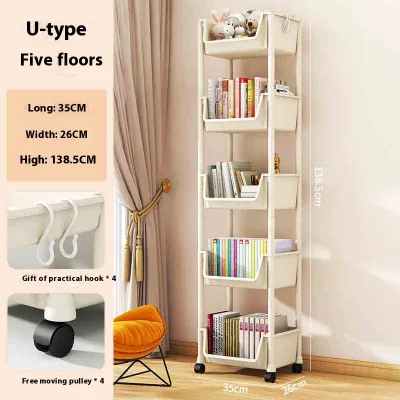
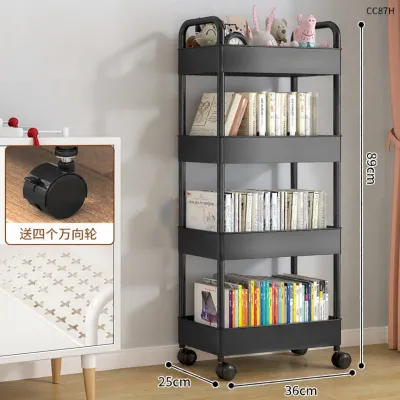
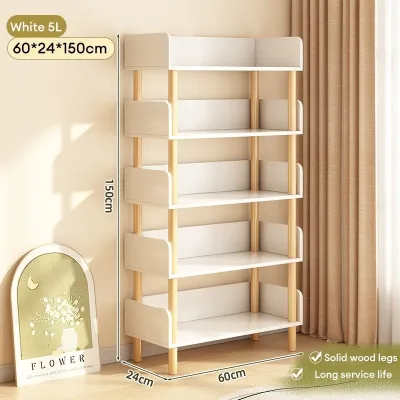
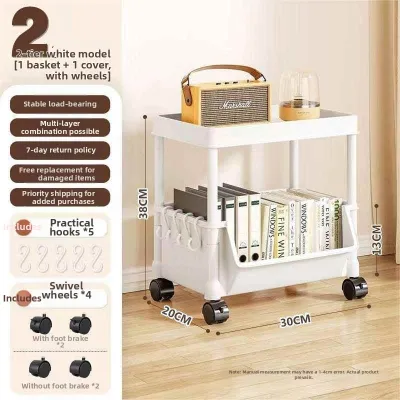
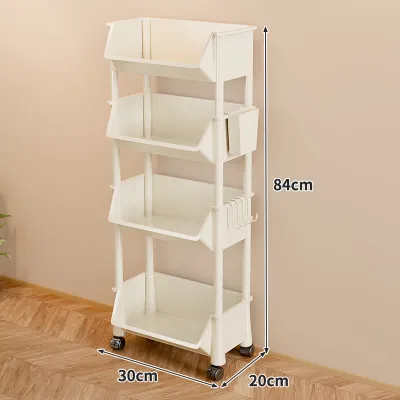
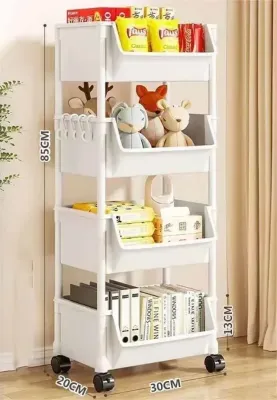
Prices are valid at publication and may change. Please refer to the product page for the latest price.
Next, examine the flooring where the unit will operate. Hardwood, laminate, and vinyl floors require soft, non-marking wheels to prevent scratches, while ceramic tiles with deep grout lines can cause a rolling shelf to bump and rattle. If your room features carpet, the pile height will dictate how easily the unit glides.
You should also define how often you plan to move the bookshelf. If you intend to roll it daily to sweep underneath or reconfigure a multi-purpose room, you will need highly responsive, durable casters. For units that will remain stationary for months and only move during deep cleaning or seasonal redecorating, a simpler wheel setup may suffice, provided the wheels do not flat-spot under prolonged pressure.
Match Load Capacity to Your Book Collection
Books are deceptively heavy, and a fully loaded shelf can easily exceed the structural limits of lightweight furniture. To prevent sagging, warping, or catastrophic structural failure, you must match the bookshelf’s load capacity to the actual weight of your collection. Start by weighing a typical stack of your books to estimate the average weight per linear meter.

Always check the manufacturer’s specifications for the maximum weight limit per tier, as well as the total weight capacity for the entire assembled unit. High-quality modular systems often feature reinforced shelf bases or underlying metal support bars to distribute weight evenly. If your collection consists primarily of heavy hardcovers, art books, or dense textbooks, look for thicker shelving materials and robust joint connections.
Adjustability is another critical factor for load distribution. Shelves with adjustable heights allow you to place heavier, oversized volumes at the bottom of the unit, which lowers the overall center of gravity and improves rolling stability. Ensure that the shelf support pins or brackets lock securely into place so they cannot slip when the unit is in motion.
Choose the Right Caster Type and Locking Mechanism
The performance of any wheeled bookshelf depends heavily on its casters. For maximum maneuverability in tight spaces, look for units equipped with 360-degree swivel casters, which allow you to guide the bookshelf in any direction. If you only need to pull the unit straight out from a niche, a combination of two fixed casters at the back and two swivel casters at the front can provide better tracking.
Safety dictates that at least two of the casters—ideally those positioned at the front for easy access—must feature reliable locking mechanisms. A high-quality lock should secure both the wheel rotation and the swivel joint simultaneously. This dual-locking action prevents the bookshelf from drifting, pivoting, or rolling unexpectedly when you pull a heavy book from an upper shelf.
Pay close attention to the wheel material. Polyurethane and thermoplastic rubber wheels are excellent choices for indoor residential spaces, as they offer a quiet roll, good grip, and excellent floor protection. Hard nylon or plastic wheels are cheaper but can scuff delicate hardwood floors and make significant noise when rolling over hard surfaces.
Verify Modular Expansion and Stability Options
Modular wheeled bookshelves offer the unique advantage of growing alongside your book collection, but this flexibility requires careful structural evaluation. Examine how the individual modules connect to one another. Look for positive-locking connection systems, such as heavy-duty dowels, interlocking brackets, or metal bolt-through configurations, rather than simple gravity-fit stacking, which can separate when rolling over thresholds.
As you stack modules vertically, the center of gravity rises, increasing the risk of tipping. Always assess the base footprint relative to the height of the fully expanded unit. A narrow, tall rolling tower is inherently unstable when loaded unevenly or pushed across a room.
If you plan to expand your unit vertically, check if the manufacturer specifies a maximum safe height for mobile configurations. Some brands require you to transition the unit to stationary feet or install specific wall-anchoring hardware once it exceeds a certain height. Keep in mind that a wall-anchored unit loses its immediate mobility, so you must plan your layout accordingly.
Complete Your Pre-Purchase Safety and Clearance Checklist
Before finalizing your purchase, you must verify the logistics of delivery and assembly. Ensure that the packaged boxes, as well as the fully assembled unit, can easily pass through your building’s entryways, narrow corridors, and lift doors. In high-rise apartments, lift clearance is often the primary bottleneck for pre-assembled or large-scale modular furniture.
Review the assembly instructions and tool requirements provided by the manufacturer. Some modular systems require specialized tools or complex hardware, while others utilize tool-free interlocking designs. Knowing the assembly complexity beforehand helps you decide whether to opt for professional installation services.
Finally, inspect the physical design of the bookshelf for safety features, especially if it will be placed in high-traffic areas or homes with young children or pets. Rounded corners, smooth edge banding, and recessed hardware reduce the risk of painful bumps. Ensure that all shelves have backboards or lip guards to prevent books from sliding off the back of the unit when it is being rolled.
Frequently Asked Questions (FAQ)
How do I clean and maintain the caster wheels?
Over time, caster wheels inevitably collect hair, dust, and carpet fibers, which can wrap around the axles and impede smooth rolling. To maintain them, periodically flip or tilt the empty bookshelf to access the wheels, and use a pair of tweezers or a utility knife to carefully cut away any tangled debris. Wipe the wheel treads with a damp cloth to remove accumulated dirt that could scratch your floors. If the swivel bearings begin to squeak or feel stiff, apply a small drop of manufacturer-approved silicone lubricant to the bearing race, wiping away any excess to prevent it from attracting more dust.
Can I use a wheeled bookshelf on thick carpets?
Using a wheeled bookshelf on thick or plush carpeting presents unique challenges, as small wheels will sink into the pile and resist rolling. To ensure mobility on carpeted floors, choose a unit with larger caster wheels—ideally those with a diameter of 75 millimeters or more—which distribute weight more effectively. If the casters still struggle to roll or leave deep indentations, you can place a rigid chair mat or a low-profile wooden runner along the unit’s path of travel. Always exercise extreme caution when moving a fully loaded bookshelf on carpet, as the increased physical effort required to push it can cause the unit to tip if pushed from the top rather than the base.
Community discussion
Share your experience or ask a question. Comments are reviewed before publication.