
Finding the perfect storage solution for your entryway is more than just an aesthetic decision; it is a matter of daily efficiency and home organization. In Singapore’s compact apartments, a cluttered foyer can quickly make an entire home feel chaotic. To restore order, you must first determine the exact capacity your household requires.
Choosing the right shoes rack involves balancing your current footwear collection, potential future acquisitions, and the physical limitations of your entryway. By taking a systematic approach to counting your shoes and measuring your available space, you can select a storage unit that keeps your home tidy and preserves the condition of your footwear.
Calculate Your Baseline Capacity and Future Shoe Needs
Establishing a realistic baseline capacity starts with a thorough inventory of your household’s footwear. Rather than guessing or estimating based on a standard average, you should conduct a physical count of every single pair of shoes currently owned by every family member.
Products mentioned in this guide
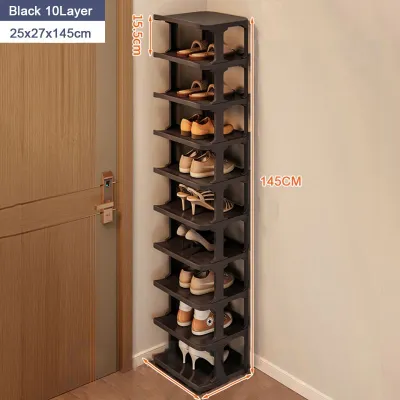
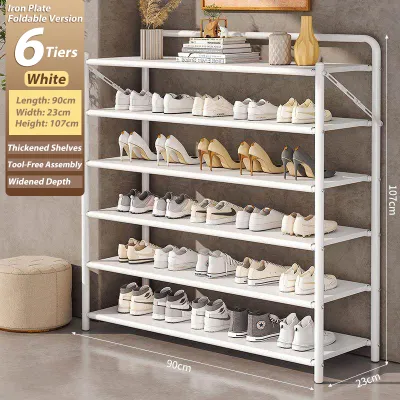
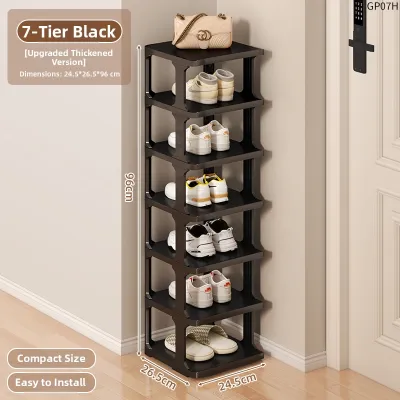
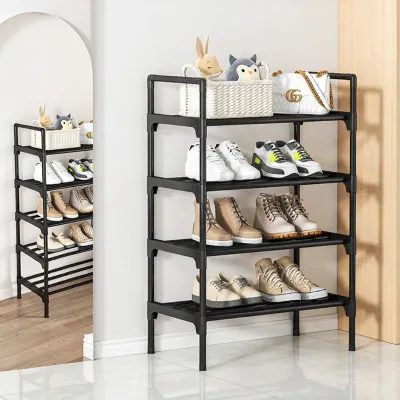
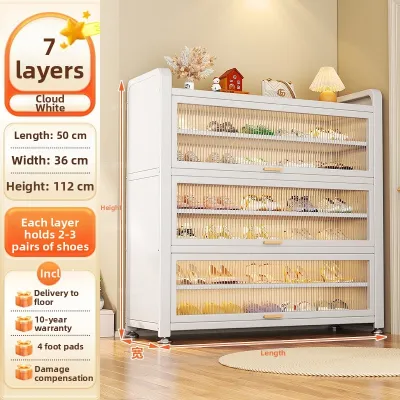
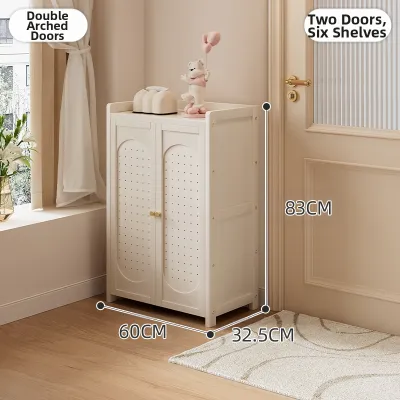
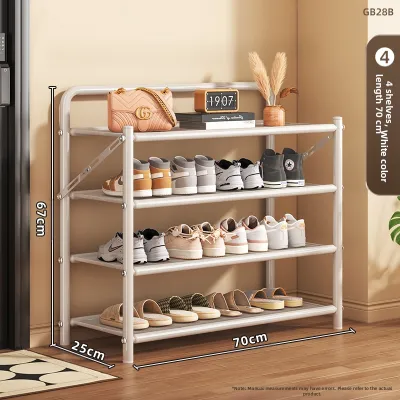
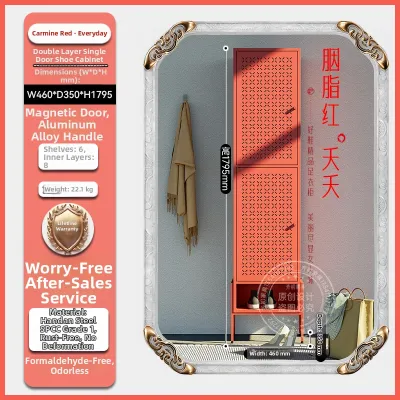
Prices are valid at publication and may change. Please refer to the product page for the latest price.
Conduct a physical count Gather all shoes from around your home, including those tucked away in closets, left by the door, or stored in boxes. Group them by category: daily wear, formal or work shoes, athletic footwear, and seasonal or specialty items. Do not forget to include casual slippers, sandals, and slip-ons, which often accumulate near the entrance without being counted. Write down the final number for each person to get an accurate starting point.
Factor in household dynamics Your shoe storage needs are not static; they evolve alongside your household’s lifestyle and composition. If you have growing children, their shoe sizes will increase rapidly, requiring larger slots over time. Consider your social habits as well; if you frequently host gatherings, you will need dedicated space for guest slippers or temporary storage for visitors’ footwear. Additionally, think about upcoming lifestyle changes, such as joining a running club or taking up golf, which will introduce bulky, specialized shoes to your home.
Evaluate shoe profiles Footwear comes in various shapes and sizes, and assuming all pairs occupy the same amount of space is a common miscalculation. Flat sandals, canvas slip-ons, and children’s shoes require minimal vertical and horizontal clearance. On the other hand, high-top sneakers, heavy work boots, and high heels demand significantly more room. Measure the height and width of your largest and bulkiest pairs to ensure your future storage can accommodate them without bending or damaging the materials.
Apply a buffer rule Once you have your total shoe count, do not purchase a rack that matches that exact number. Instead, apply a buffer rule by adding 15% to 20% extra capacity to your final figure. This safety margin accommodates future purchases, seasonal footwear changes, and unexpected storage needs without forcing you to upgrade your furniture prematurely. For example, if your current household count is 25 pairs, aim for a storage solution that comfortably holds at least 30 pairs.
Measure Your Entryway Space and Clearance Constraints
Once you know how many shoes you need to store, the next step is to evaluate the physical space where the storage unit will sit. In Singapore’s residential layouts, particularly in HDB flats and condominiums, entryway space is highly optimized, making precise measurements crucial.

Map the dimensions Use a reliable measuring tape to map out the width, depth, and height of the designated entryway area. Note down these dimensions carefully, keeping in mind any architectural features that cannot be altered. When planning the height, consider whether you want a low bench-style rack that doubles as seating or a tall cabinet that utilizes vertical space.
Check door swing clearances A common installation pitfall is forgetting to account for the clearance needed to open doors. Measure the swing path of your main entrance door, metal gate, and any adjacent interior doors or closet panels. Ensure that when these doors are fully opened, they do not collide with the shoes rack or any shoes protruding from it. Collisions can cause unsightly scratches on your doors and structural damage to the rack over time.
Maintain walkway width A clear and unobstructed walkway is essential for safety, especially in high-traffic entryways. As a general rule, aim to maintain a clear passage width of at least 90 cm. This ensures that family members can carry groceries, maneuver strollers, or walk past each other comfortably without bumping into the furniture. If your foyer is exceptionally narrow, a bulky freestanding cabinet may restrict movement and make the space feel cramped.
Evaluate depth requirements Standard shoe storage units typically require a depth of 30 cm to 35 cm to accommodate adult-sized shoes placed flat on a shelf. If your entryway corridor is narrow, look into slim-profile or tilt-out shoe cabinets. These specialized designs store shoes at an angle, reducing the cabinet’s exterior depth to as little as 15 cm to 20 cm, making them ideal for tight spaces.
Consider ceiling and wall obstacles Before finalizing your placement, inspect the surrounding wall and ceiling area for potential obstacles. Look out for electrical distribution boards (DB boxes), intercom systems, light switches, and fiber optic termination points. Your storage unit must not block access to these critical utilities. If you plan to install a tall or wall-mounted unit, verify that it will not obstruct these fixtures or prevent you from accessing them in an emergency.
Match Your Capacity Needs to the Right Shoes Rack Type
With your capacity requirements and space measurements in hand, you can now explore the different types of storage configurations available. Each design offers unique benefits depending on your spatial layout and organizational preferences.
Freestanding racks Freestanding models are popular due to their versatility, ease of assembly, and mobility. They can be easily moved during spring cleaning or rearranged if you decide to reconfigure your entryway. When choosing a freestanding shoes rack, look for options with adjustable or removable shelves. This feature is invaluable for accommodating boots, high heels, or high-top sneakers, allowing you to customize the shelf heights to match your changing collection. When selecting materials, remember that a material name alone does not guarantee moisture or scratch resistance; verify if the finish is specifically treated to withstand Singapore’s high humidity.
Wall-mounted and floating racks Wall-mounted or floating cabinets are excellent for maximizing floor space and creating a modern, minimalist aesthetic. By raising the storage unit off the ground, you make floor cleaning, sweeping, and mopping much easier. However, installation requires careful safety checks. Always verify the wall’s material and load-bearing capacity before drilling. Ensure you use high-quality wall anchors and mounting brackets suitable for your wall type to prevent the unit from sagging or pulling away under the weight of your shoes.
Built-in or custom carpentry For large households with extensive shoe collections, custom carpentry offers the ultimate high-capacity storage solution. Built-in cabinets can be designed to run from floor to ceiling, maximizing every centimeter of vertical space. In Singapore, many homeowners choose to integrate custom shoe cabinets near their HDB household shelter (bomb shelter) walls. Note that you must never drill into or structurally alter the reinforced concrete walls of an HDB household shelter, as this violates local building safety guidelines. Instead, design your custom cabinetry to stand adjacent to or wrap around the shelter exterior without compromising its structural integrity.
Modular and stackable units If your budget is flexible or your household size is expected to change, modular and stackable units are a highly practical choice. These systems allow you to start with a compact setup and purchase matching add-on units as your shoe collection grows. This incremental approach prevents you from spending money on excess capacity upfront while ensuring your entryway furniture remains cohesive and organized over the long term.
Common Sizing and Capacity Mistakes to Avoid
To ensure your new storage solution serves your household effectively, keep these common sizing and design mistakes in mind during your selection process.
Assuming uniform shelf capacity Many manufacturers advertise a shoes rack capacity based on standard, low-profile footwear, such as women’s flats or slim sneakers. If members of your household wear larger shoe sizes (such as US size 10 and above) or bulky athletic shoes, the actual number of pairs that can fit side-by-side on a single shelf will be lower than advertised. Always calculate capacity based on the actual physical width of your widest shoes rather than relying solely on the manufacturer’s pair estimates.
Ignoring vertical clearance Fixed-shelf designs can lead to wasted space or damaged footwear if the vertical clearance is insufficient. Forcing mid-cut sneakers, high heels, or ankle boots into tight shelves can bend the shoe collars, crease leather uppers, and ruin their structural shape. If you choose a unit with fixed shelves, measure the height of your tallest shoes beforehand and ensure the shelves offer at least 2 cm of clearance above the highest point of the footwear.
Overlooking ventilation Singapore’s tropical, high-humidity climate makes proper ventilation a critical consideration for shoe preservation. Storing worn, damp shoes in a completely sealed, tightly packed wooden cabinet traps moisture, sweat, and odors. This creates an ideal environment for mold, mildew, and bacterial growth, which can ruin leather and fabric shoes. To protect your investment, look for shoe cabinets featuring louvered doors, open-back panels, or breathable wire-mesh shelving that promotes continuous airflow.
Neglecting base clearance The area underneath a low-lying shoe rack is a notorious trap for dust, hair, and small pests. If the gap between the bottom shelf and the floor is too narrow for a broom or robotic vacuum, cleaning becomes exceptionally difficult. To maintain high hygiene standards, choose either a floating design with ample base clearance (at least 10 cm to 15 cm) for easy cleaning access, or select a solid-base cabinet that sits completely flush on the floor to prevent debris from gathering underneath.
Frequently Asked Questions (FAQ)
How many pairs of shoes should a shoe rack hold per person?
While general industry guidelines suggest an average of 6 to 10 pairs of shoes per person, actual storage needs vary widely based on individual lifestyles. A sneaker collector, a fitness enthusiast, or a professional with a strict corporate dress code will require significantly more space than a minimalist. The most reliable approach is to physically count your current collection, categorize the footwear, and add a 20% buffer rather than relying on generic per-person estimates.
Can I place a shoe rack outside my HDB flat door?
No. Under HDB corridor safety regulations, residents are strictly prohibited from placing personal items, including shoe racks, in common corridors. This rule is strictly enforced to ensure that fire escape routes and emergency access paths remain entirely clear and unobstructed at all times. All shoe storage solutions must be kept inside your flat, utilizing your internal entryway, foyer, or living room space.
Community discussion
Share your experience or ask a question. Comments are reviewed before publication.