
Finding the perfect shoe cabinet for your home is more than just matching your household size to a product listing. While a general rule of thumb suggests that a single person needs space for 10 to 15 pairs, a couple requires 25 to 30 pairs, and a family of four needs 50 to 60 pairs, these numbers rarely tell the whole story. If you rely solely on these estimates, you risk buying a cabinet that is either too small, leaving your entryway cluttered, or unnecessarily large, consuming precious floor space in your foyer.
To make an informed decision, you must conduct a physical audit of your household’s actual footwear, translate those numbers into physical dimensions, and carefully evaluate your entryway’s architectural limits. In Singapore’s tropical climate, where daily life involves a constant rotation of sandals, school shoes, athletic gear, and formal wear, an organized entryway is essential. By aligning your storage capacity with your lifestyle and space constraints, you can select a furniture piece that is both highly functional and visually appealing.
Audit Your Current Shoe Collection and Future Needs
Before browsing online marketplaces or visiting showrooms, you need an accurate count of the shoes currently in your household. Guessing your storage needs based on the number of residents almost always leads to underestimating. Instead, gather every member of the household and perform a physical audit of all footwear, categorizing them systematically.
Products mentioned in this guide
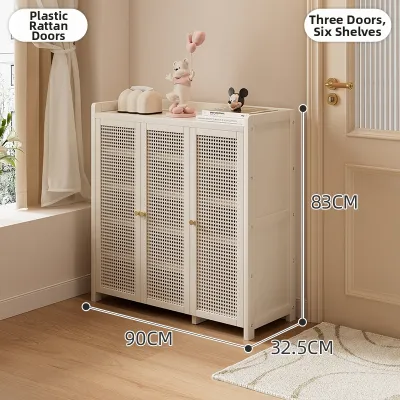
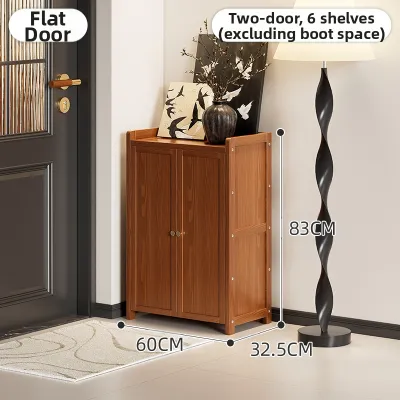
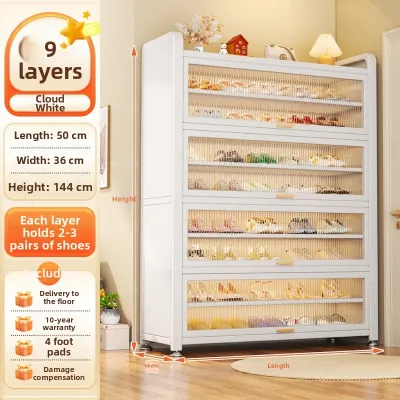
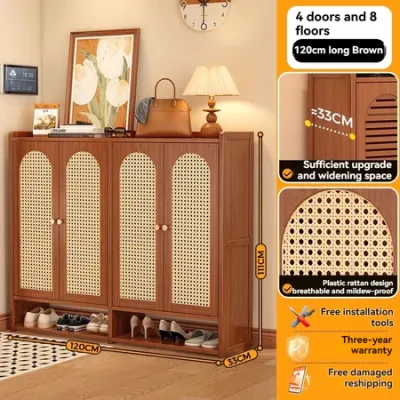
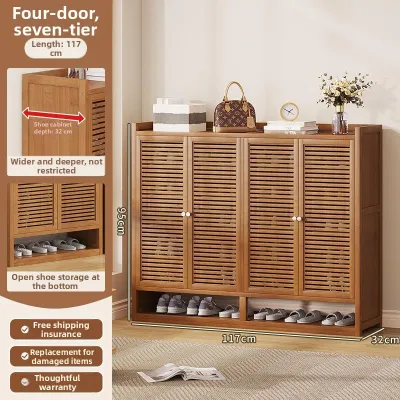
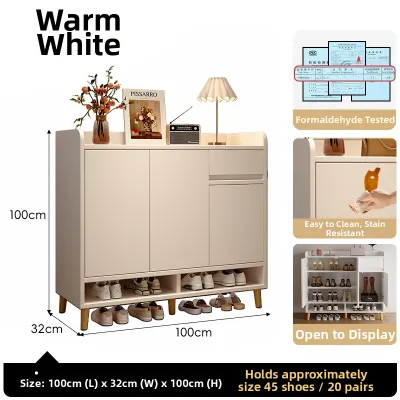
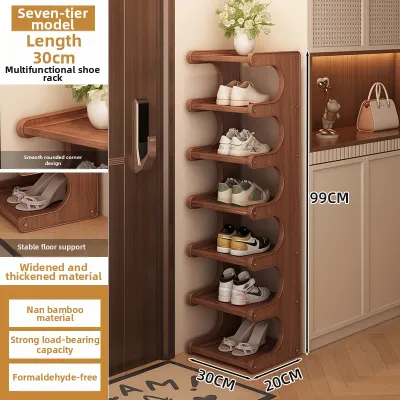
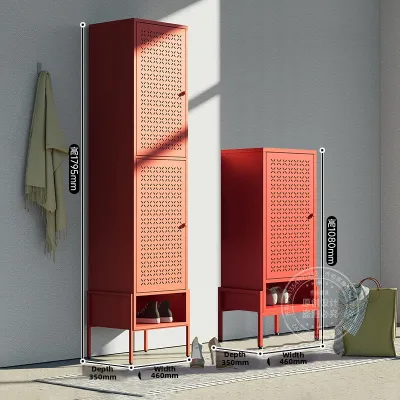
Prices are valid at publication and may change. Please refer to the product page for the latest price.
Begin by grouping your collection into distinct categories: daily wear, seasonal or weather-specific footwear, sports or specialized gear, and guest slippers. Daily wear includes flats, loafers, and sandals that see constant use near the front door. Seasonal footwear might include heavy boots reserved for overseas winter travel, which do not need prime entryway real estate. Sports gear, such as running shoes or football boots, often has bulkier outsoles that require more physical volume. Do not forget to account for guest slippers, which are a staple for hosting visitors in Singaporean homes.
Next, consider household dynamics. If you have growing children, their shoe sizes will change frequently; planning for adult-sized slots now prevents the cabinet from becoming obsolete. Additionally, an adult with an extensive sneaker collection or a passion for high heels will require significantly more storage space and different shelf configurations than someone with a minimalist wardrobe.
Once you have your total count, add a 15% to 20% buffer to the number. This extra space ensures your cabinet can accommodate future purchases, holiday gifts, or temporary storage for guests’ shoes without becoming overcrowded. Overcrowding not only damages your shoes by squishing them out of shape but also restricts airflow, which can lead to mold and unpleasant odors in humid climates. Remember that household size is merely a starting metric; your personal lifestyle, shopping habits, and hobbies ultimately dictate the actual volume of storage you require.
Translate Shoe Counts into Physical Cabinet Dimensions
Once you have a realistic shoe count, including your buffer, the next step is translating that number into concrete physical dimensions. Not all shoes occupy the same space. A pair of flat sandals takes up a fraction of the vertical and horizontal space required by high-top sneakers or platform heels.

To plan your internal layout, break down the spatial requirements of your specific footwear. Flat sandals, slippers, and low-profile loafers typically need only 10 to 12 centimeters of vertical clearance. Standard running shoes, dress shoes, and low heels require about 15 to 18 centimeters of height. High-top sneakers, ankle boots, and high heels demand 20 centimeters or more. If your collection is diverse, a cabinet with fixed shelves will result in wasted vertical space above flat shoes, while bulkier pairs will be forced to bend or lie on their sides.
This is why adjustable or removable shelves are highly recommended. Shelves supported by adjustable pegs allow you to customize the vertical spacing of each compartment to match your exact inventory. You can set tight, narrow shelves for flat sandals and slippers, and wider, taller compartments for boots and athletic shoes. This level of customization maximizes the internal volume of the cabinet, allowing you to fit more shoes into a smaller external footprint.
When evaluating product specifications, look closely at the difference between the cabinet’s internal usable width and its external width. Side panels, backing boards, and middle partitions can easily reduce the actual storage width by 2 to 4 centimeters. For example, a cabinet with an external width of 80 centimeters might only have an internal shelf width of 76 centimeters. Since an average pair of adult shoes is about 18 to 25 centimeters wide, a 76-centimeter shelf will comfortably fit three pairs, leaving a useless gap.
To maximize shelf capacity for flat shoes or narrow loafers, you can utilize a “staggered” or “heel-to-toe” placement method. By placing one shoe facing forward and its partner facing backward, you can often save valuable horizontal space. However, this is impractical for high heels, stiff boots, or chunky sneakers, which must be stored side-by-side to avoid damage.
Measure Your Entryway and Check Clearance Requirements
Even the most spacious shoe cabinet is useless if it does not fit comfortably within your entryway or if it violates local residential guidelines. Before making a purchase, take precise measurements of your foyer’s available width, depth, and vertical height. This step is crucial for maintaining smooth traffic flow and ensuring your home remains safe and accessible.
When measuring depth, consider how far the cabinet will protrude. A cabinet that is too deep can turn a spacious foyer into a cramped bottleneck. Ensure there is plenty of room for household members to stand, bend down, and put on their shoes comfortably without blocking the main passage.
Next, evaluate the swing radius of your main entrance door and any nearby room or closet doors. The cabinet must be positioned so that it does not obstruct these doors from opening fully. A door that repeatedly collides with the side of a shoe cabinet will quickly suffer scratches. Furthermore, account for the swing radius of the cabinet doors themselves. Standard swing doors require at least 50 to 60 centimeters of clear space in front of the cabinet so you can stand comfortably while retrieving or putting away your footwear.
For residents living in HDB flats or condominiums in Singapore, check local estate management and municipal regulations regarding corridor placements. The Singapore Civil Defence Force (SCDF) enforces strict fire safety guidelines, requiring a minimum clear escape passage of 1.2 meters along common corridors. If you are planning to place a shoe cabinet outside your front door, ensure the unit does not violate these safety limits. Condominium developments often have even stricter bylaws that completely prohibit personal items in common lobbies, meaning your storage solution must reside entirely within your unit’s footprint.
Finally, account for the skirting boards running along the bottom of your walls. Skirting boards typically protrude about 1 to 1.5 centimeters from the plaster. Without a recessed base, a shoe cabinet cannot sit flush against the wall, creating an unstable gap where dust accumulates. Look for cabinets designed with a skirting cutout or a recessed base to ensure a clean, flush fit.
Common Shoe Cabinet Sizing Mistakes to Avoid
Avoiding common pitfalls during the selection process can save you from buyer’s remorse and the hassle of returning heavy furniture. One widespread mistake is falling for the “nominal capacity” myth. Manufacturers frequently advertise cabinets with claims like “holds up to 30 pairs of shoes.” However, these calculations are almost always based on small, flat footwear. If your household consists of adults who wear larger sizes or chunky athletic sneakers, that same cabinet may only accommodate 18 to 20 pairs.
Another frequent oversight is ignoring the internal depth of the cabinet. Standard men’s shoes (ranging from UK sizes 9 to 11) typically measure between 28 and 32 centimeters in length. If you purchase a cabinet with an internal depth of only 26 centimeters, your shoes will protrude past the edge of the shelves, preventing the doors or drawers from closing completely. Always verify the internal storage depth in the product specifications rather than relying solely on the external depth of the unit.
Additionally, ensure you measure the delivery pathway. A large, fully assembled shoe cabinet is useless if it cannot fit through your apartment’s entry door, the narrow lift lobby, or tight staircase turns. Always verify these dimensions before delivery.
Lastly, if you are considering a wall-mounted or floating shoe cabinet, carefully evaluate the weight capacity of your walls. Floating units create a beautiful, modern look, but they put immense structural stress on the wall. Solid concrete walls can support these heavy loads easily when installed with high-quality masonry plugs. However, internal partition walls are often made of drywall, which can fail under the weight of a fully loaded cabinet. Always identify your wall type and consult a professional installer to ensure the unit is anchored safely.
Space-Saving Alternatives for Compact Entryways
If your entryway is exceptionally tight but your shoe count remains high, traditional swing-door cabinets might not be the best fit. Clever, space-saving alternatives designed specifically for compact foyers allow you to maximize storage without sacrificing valuable floor space.
One popular solution is the tilt-out or flip-drawer shoe cabinet. These units feature a slim-profile design, often measuring just 15 to 24 centimeters in external depth. Instead of flat shelves, they utilize compartments that tilt outward, allowing shoes to be stored vertically. While highly efficient for flats, sandals, and low-profile sneakers, they struggle to accommodate high-top shoes, thick platform heels, or ankle boots, which can prevent the mechanism from closing.
To make the most of limited floor space, utilize vertical height. Tall, narrow shoe towers store a significant number of pairs while occupying a minimal footprint, keeping your entryway clean. Alternatively, use over-the-door hanging organizers on utility closet doors for lightweight, frequently worn pairs.
Dual-purpose furniture is another excellent way to save space. An entryway bench with built-in shoe compartments underneath provides a convenient place to sit while putting on footwear. Integrating open shoe racks into the lower section of an entryway console table also keeps daily pairs organized while maintaining a clean, decorative surface above.
No matter which style you choose, safety remains a primary concern. Tall, narrow, or top-heavy cabinets present a tipping hazard, especially in households with young children or active pets. Always anchor these units securely to the wall using safety brackets to prevent accidental tip-overs.
Frequently Asked Questions (FAQ)
How do I store tall boots in a standard shoe cabinet?
Storing tall boots in a standard shoe cabinet is easiest if you choose a model with adjustable or removable shelves. By removing one or two shelves, you can create a dedicated tall vertical compartment to accommodate the height of the boots. To prevent the boot shafts from creasing or collapsing over time, use plastic boot shapers, inflatable inserts, or even rolled-up magazines to keep them upright. If your entryway cabinet lacks the necessary height, clean and dry your off-season boots thoroughly, then store them in plastic under-bed storage boxes to free up prime entryway real estate for daily footwear.
What is the standard depth required for a shoe cabinet?
A standard enclosed shoe cabinet typically requires an internal depth of at least 32 to 35 centimeters. This depth comfortably accommodates larger men’s shoes (up to UK size 11 or 12) and chunky athletic sneakers without the toes or heels pressing against the closed doors. In contrast, ultra-slim tilt-out cabinets can operate with an external depth of just 15 to 24 centimeters because they store shoes at an angle, though this design restricts the storage of bulkier footwear. Always check the internal storage depth listed in the product specifications, rather than relying solely on the external footprint, to ensure your specific collection fits.
Community discussion
Share your experience or ask a question. Comments are reviewed before publication.