
To determine the right capacity for a foldable shoe box system, you must audit your current footwear collection, account for future purchases, and match your shoe profiles to the internal dimensions of the storage units. In space-constrained homes, such as Singapore’s HDB flats and condominiums, selecting the wrong box size leads to wasted vertical space or damaged footwear. A systematic approach ensures your storage solution remains structurally stable, easily accessible, and highly efficient.
Assess Your Shoe Collection Size and Footwear Types
An accurate capacity calculation begins with a thorough physical inventory of your footwear. Empty your current shoe cabinets, entryways, and closets to count every pair of shoes you own. Once you have a baseline number, add a buffer of 10% to 20% to accommodate near-future purchases, seasonal rotations, or guest footwear. For example, if you currently own 20 pairs of shoes, you should plan a storage configuration that can hold at least 22 to 24 pairs. This prevents your new storage system from immediately overflowing the next time you acquire a new pair.
Next, categorize your collection by footwear type, as different shoe designs occupy internal volume in vastly different ways. Group your shoes into the following categories:
Products mentioned in this guide
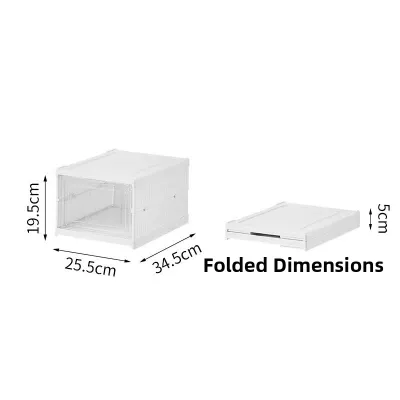
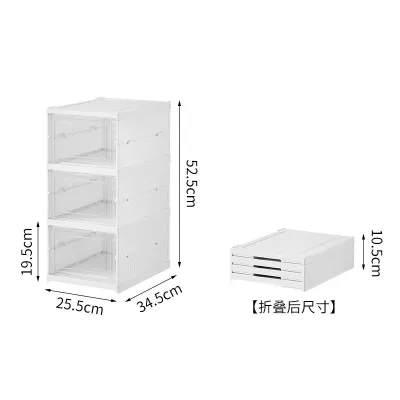
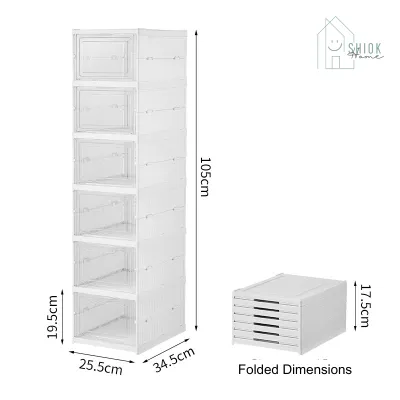
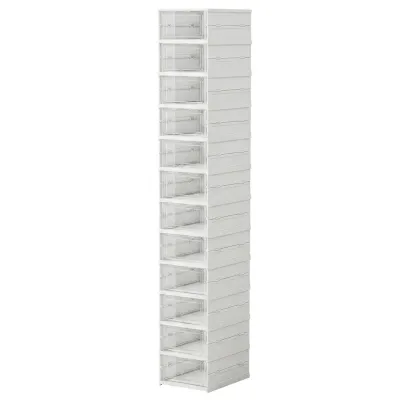
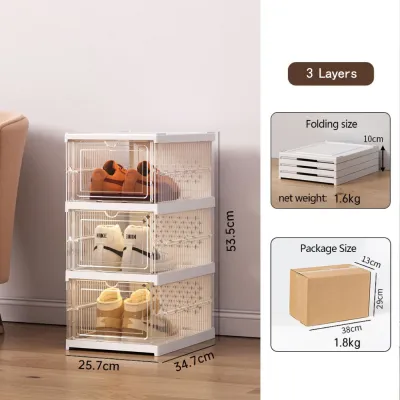
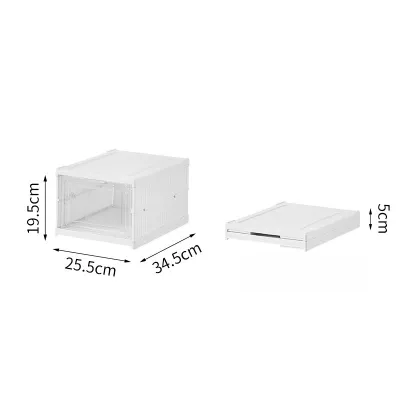
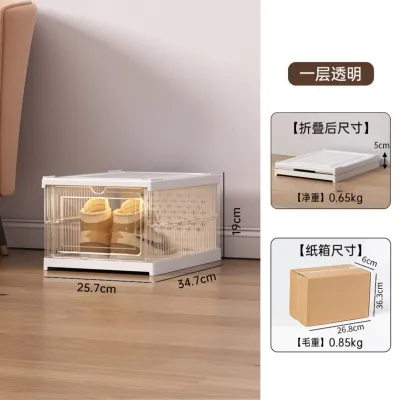
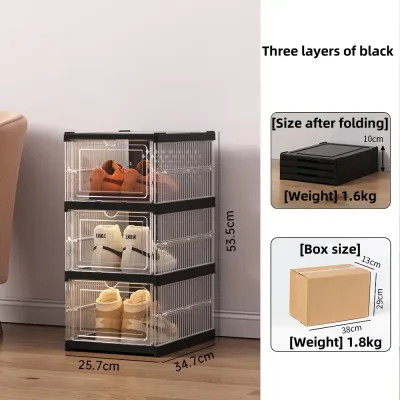
Prices are valid at publication and may change. Please refer to the product page for the latest price.
- Low-profile footwear: This includes flat sandals, slippers, flip-flops, and low-top canvas shoes. These items have minimal vertical height and can often be stored compactly.
- Standard-profile footwear: This includes everyday running shoes, lifestyle sneakers, leather brogues, and mid-top trainers. These shoes have wider outsoles and structured uppers that require dedicated, individual compartments.
- High-profile footwear: This includes high heels, platform shoes, ankle boots, and high-top basketball sneakers. These shoes require maximum vertical clearance and wider box openings to prevent the uppers from being bent or crushed.
Finally, separate your everyday wear from occasional or seasonal footwear. Shoes that you wear daily should be allocated to boxes placed at waist or eye level near your main entryway for quick access. Occasional dress shoes, formal heels, or heavy boots can be designated for higher stacks or tucked away in less accessible areas, such as under-bed storage or the top shelves of a bedroom wardrobe.
Decode Foldable Shoe Box Capacity Metrics and Dimensions
When shopping for a foldable shoe box, it is easy to be misled by generic marketing labels such as “large,” “extra-large,” or “fits up to size US 12.” These descriptions are often based on external measurements or standard shoe shapes, which may not match your specific footwear. To ensure a proper fit, you must look past the marketing claims and verify the actual internal dimensions (Length x Width x Height) provided by the manufacturer.

Standard foldable shoe boxes generally fall into a few common size categories:
- Standard boxes: Typically measuring around 33 cm in length, 23 cm in width, and 14 cm in height, these are optimized for standard sneakers, flats, and low-top shoes up to men's size US 10.
- Oversized or high-top boxes: Typically measuring 36 cm or more in length, 26 cm in width, and 18 to 20 cm in height, these are designed to accommodate large athletic shoes, high-top sneakers, and high heels.
The material thickness and folding mechanisms of these boxes also directly affect the usable interior space. Foldable shoe boxes are commonly constructed from flexible plastic panels, such as polypropylene (PP), paired with rigid front and back frames made of acrylonitrile butadiene styrene (ABS) or polystyrene (PS). The interlocking tabs, folding joints, and structural frame borders can protrude into the box interior. When calculating your clearance, always subtract approximately 0.5 to 1 cm from the manufacturer’s stated external dimensions to estimate the true usable internal space.
Additionally, you must verify the manufacturer’s stated weight capacity and maximum stacking limits. Foldable designs are engineered to distribute weight through their reinforced outer frames, but they have physical limits. A typical single-pair box may support a weight of 2 to 3 kg, with a maximum safe stack height of 6 to 10 units. Exceeding these limits can cause the lower boxes to warp, buckle, or deform, compromising the stability of the entire stack and potentially damaging the shoes stored inside.
Match Your Collection Size to the Ideal Box Configuration
Once you have audited your collection and understood box dimensions, you can calculate the exact number and configuration of boxes required. Use this simple calculation as your starting point:
Number of Boxes Needed = (Total Pairs of Shoes x 1.15) / Effective Box Capacity
The “effective box capacity” adjusts for your specific footwear types. For instance, while a standard box is designed for one pair of shoes, you might be able to fit two pairs of slim flat sandals or flip-flops into a single standard compartment, effectively increasing its capacity. Conversely, a pair of chunky ankle boots will require a dedicated oversized box, reducing your overall capacity efficiency.
Depending on the size of your collection, consider the following configuration strategies:
- Small collections (10 to 20 pairs): Focus on individual, single-pair foldable shoe boxes. These offer maximum flexibility, allowing you to stack them in a single column in a narrow entryway or arrange them side-by-side on closet shelves. They are easy to move, clean, and reconfigure as your space needs change.
- Medium collections (20 to 50 pairs): A hybrid setup works best. Utilize individual single-pair boxes for your premium sneakers, leather shoes, or delicate heels to protect them from dust and friction. For your flat shoes, sandals, and slippers, consider multi-pair foldable storage bins or multi-tier integrated foldable shoe organizers. These integrated units feature an accordion-style folding mechanism that expands into a multi-tier rack in seconds, providing superior structural stability and saving significant assembly time.
- Large collections (50+ pairs): Prioritize high-capacity, multi-tier foldable shoe cabinets or modular storage walls. Managing fifty or more individual boxes can become visually cluttered and physically unstable. Dedicate individual premium boxes only to your most valuable footwear, and use large, integrated multi-pair foldable trunks for bulk storage.
You must also decide between purchasing uniform boxes for a cohesive aesthetic or mixing sizes for space efficiency. A uniform grid of identical boxes looks clean and organized, which is ideal if your shoe storage is highly visible in your living room or foyer. However, if your collection is highly diverse, a uniform setup will result in wasted space for flat shoes and insufficient space for boots. A practical compromise is to buy uniform boxes in two distinct, complementary sizes from the same manufacturer, allowing you to stack them together seamlessly while matching the box size to the shoe height.
Finally, take advantage of the collapsible nature of these storage solutions. Keep two or three extra foldable boxes collapsed and stored flat in a drawer. They take up virtually no space when empty but can be popped open instantly when you purchase new shoes or need temporary storage for house guests.
Measure Your Available Storage Space and Stacking Limits
Before purchasing your foldable shoe boxes, you must measure your designated storage area to ensure the assembled stack will physically fit and remain safe. Whether you plan to place the boxes in an entryway foyer, inside a bedroom wardrobe, or under a hydraulic storage bed, take precise measurements of the available width, depth, and vertical height.
To calculate the maximum safe stack height for your space, use the following formula:
Maximum Safe Stack Height = Total Available Vertical Height / Assembled Height of One Box
Always cross-reference this calculated number with the manufacturer’s maximum stacking limit. If your bedroom wardrobe has 180 cm of vertical clearance, and your chosen boxes are 15 cm high, you could mathematically stack 12 boxes. However, if the manufacturer specifies a maximum safe stack limit of 8 boxes to prevent tipping, you must respect the manufacturer’s limit. To go higher, you would need to split the boxes into two side-by-side columns of 6 boxes each, or secure the stack to the wall using anchoring straps.
When planning your layout, pay close attention to clearances and accessibility:
- Door and walkway clearance: Ensure that the depth of the assembled boxes (typically 30 to 40 cm) does not block narrow hallways or prevent nearby doors from swinging open fully.
- Ventilation and moisture control: In Singapore's hot, humid climate, trapping stagnant air behind plastic boxes can encourage mold and mildew growth on leather and fabric shoes. Leave a gap of 2 to 3 cm between the back of the shoe boxes and the wall to promote natural airflow. Ensure your chosen boxes feature ventilation holes or mesh panels on the rear doors.
- Access routes: If you are purchasing large, multi-tier integrated foldable shoe cabinets, verify the dimensions of your apartment's lift door, main entryway, and corridors. Ensure the flat-packed packaging or the pre-assembled frame can be easily navigated through these tight spaces.
- Collapsed storage: Check the collapsed thickness of the boxes (usually 2 to 4 cm per box) to ensure they can be easily tucked away in your utility closet or under the sofa when not in use.
Common Capacity and Sizing Mistakes to Avoid
To avoid the hassle of returning products or dealing with a structurally unsound storage system, keep these common pitfalls in mind:
- Relying solely on generic capacity claims: Never assume a box labeled "holds 2 pairs" will fit two pairs of your specific shoes. Always compare the physical measurements of your shoes against the internal dimensions of the box.
- Overstacking past rated weight limits: Placing heavy leather boots, work shoes, or safety boots at the top of a tall stack of lightweight plastic boxes will cause the lower frames to bow, warp, or collapse. Always place your heaviest footwear in the bottom boxes to maintain a low center of gravity.
- Forgetting to account for original shoe boxes: If you are a collector who prefers to store your shoes inside their original cardboard retail boxes, you must measure the cardboard boxes themselves. Cardboard retail boxes add significant width, height, and length, requiring much larger foldable storage containers than the shoes alone.
- Buying a single uniform size for a highly diverse collection: Purchasing only standard-sized boxes for a collection that includes both flat sandals and tall high heels leads to inefficient space usage. You will end up with empty, wasted air space in some boxes, while your taller shoes will be forced to bend, permanently damaging their structural shape.
Frequently Asked Questions (FAQ)
Can I stack foldable shoe boxes to maximize vertical capacity?
Yes, you can stack foldable shoe boxes to maximize vertical space, but you must strictly follow the manufacturer’s specified stacking limits and weight capacities. To maintain structural stability and prevent the stack from tipping over, always place your heaviest footwear, such as boots and heavy trainers, in the bottom boxes. Reserve the upper tiers of the stack for lighter shoes, such as sandals, slippers, and flats.
Do standard foldable shoe boxes fit high heels and boots?
Standard foldable shoe boxes are typically designed for flat shoes, low-top sneakers, and standard trainers. High heels with tall stilettos, platform soles, or ankle and knee-high boots usually do not fit in standard boxes without being bent, squeezed, or crushed. To protect these footwear types, look for oversized, high-clearance foldable boxes specifically designed for tall shoes and boots.
Community discussion
Share your experience or ask a question. Comments are reviewed before publication.