
To find the right firmness for a portable mattress, you must balance your primary sleeping position, body weight, and the surface where you plan to lay the bed. Unlike a standard bedroom mattress, a portable mattress is typically thinner, meaning the risk of sinking directly onto a hard floor is much higher. The ideal firmness keeps your spine aligned without causing painful pressure points on your shoulders, hips, or lower back. By evaluating how your body weight interacts with different foam densities or inflation levels, you can select a portable sleep surface that offers both supportive rest and easy storage.
Quick Diagnostic: Matching Firmness to Your Sleep Profile
Choosing a portable mattress requires a quick look at how you sleep and what you weigh. Because these mattresses are designed for temporary use—such as hosting guests in a compact apartment or going on a weekend camping trip—they must deliver immediate comfort without the benefit of a thick box spring.
A standard firmness scale ranges from 1 (extremely soft) to 10 (extremely firm). For portable options, most models fall between a 4 (medium-soft) and an 8 (firm) to prevent sleepers from sinking directly onto the hard ground.
Products mentioned in this guide

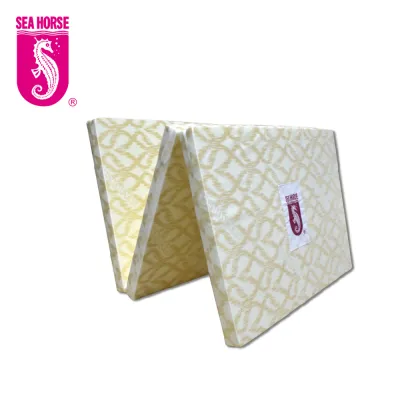
![[1-2 day delivery] Foldable Foam Mattress 3-Fold Mattress](https://img.lazcdn.com/g/ff/kf/Se38f308a460b4ba3aef73a3da6703c621.jpg_400x400q80.jpg_.webp)
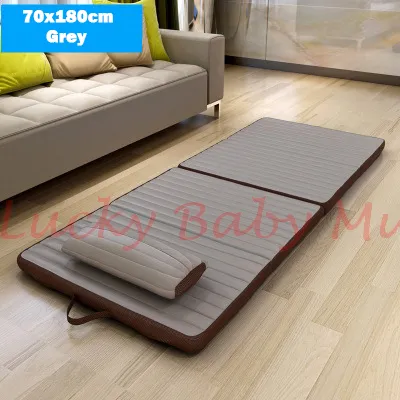
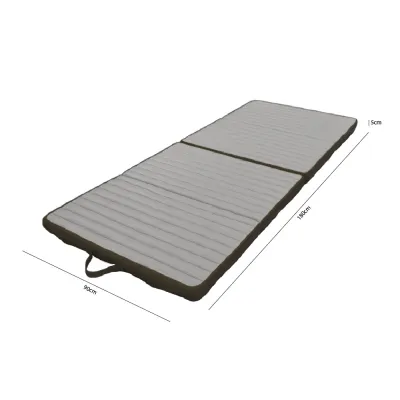

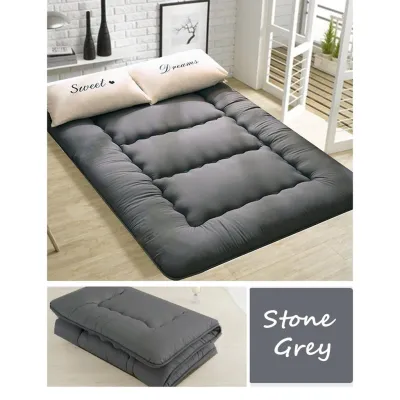
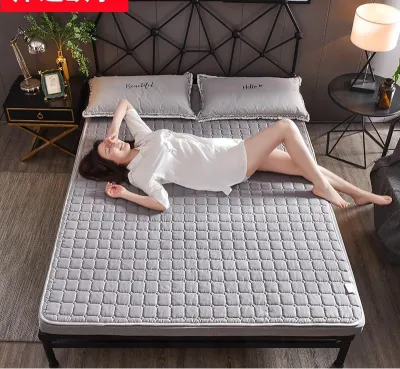
Prices are valid at publication and may change. Please refer to the product page for the latest price.
- Side Sleepers: Typically require a medium-soft to medium feel (4 to 6 on the scale) to cushion the shoulders and hips.
- Back Sleepers: Benefit from a medium to medium-firm feel (5 to 7 on the scale) to support the natural curve of the spine.
- Stomach Sleepers: Need a firm feel (7 to 8 on the scale) to keep the hips from sinking, which can strain the lower back.
- Lighter Sleepers (Under 60 kg): Often prefer softer surfaces, as they do not exert enough pressure to compress firmer foams.
- Heavier Sleepers (Over 90 kg): Require firmer, thicker options to prevent sinking completely through the mattress material.
Assess Your Sleeping Position and Body Weight
The physical relationship between your body and the mattress determines how well you sleep and how you feel the next morning. When you lie down, gravity pulls your heaviest body parts downward, and the mattress must push back with enough resistance to keep your spine straight.

Side sleepers face the greatest challenge on thin portable mattresses. Because your body weight is concentrated on the narrow areas of your shoulders and hips, a mattress that is too firm will cause these joints to ache. However, if the portable mattress is too soft or too thin, you will sink right through the cushioning and press against the hard floor. Look for multi-layered foam options where a soft top layer provides pressure relief while a denser base layer prevents bottoming out.
Back and stomach sleepers require a more uniform distribution of support. If you sleep on your stomach, a soft mattress allows your midsection to sag, creating an unnatural arch in your lower back that leads to morning stiffness. A firm portable mattress keeps your hips level with your shoulders. Back sleepers need a balanced medium-firm surface that fills the gap in the lumbar region while allowing the hips to settle slightly.
Your body weight directly influences how firm a mattress feels. A lightweight individual might find a medium-firm mattress feels like a solid board because they do not compress the foam layers. Conversely, a heavier individual will compress soft foam entirely. If you are on the heavier side, prioritize high-density polyfoam or adjustable self-inflating mattresses that allow you to increase the internal pressure to handle higher loads without sagging.
Factor in Your Comfort Preferences and Use Case
While physical alignment is crucial, your personal comfort preferences and the specific environment where you use the mattress play equally important roles. Support and comfort are distinct concepts: support refers to spinal alignment, while comfort is the immediate, subjective sensation of softness or firmness on your skin.
Consider where the portable mattress will be deployed. If you are using it as a temporary guest bed on a tiled or hardwood floor, the underlying surface offers zero give. In this scenario, a slightly thicker mattress with a medium-firm profile is necessary to buffer the hard ground. If you are using it on a flexible canvas camping cot, the cot itself will sag slightly, meaning you might prefer a firmer mattress to counteract the natural dip of the frame.
Material behavior also changes based on the environment. Memory foam is highly sensitive to temperature; it softens when exposed to body heat but can become exceptionally stiff in a highly air-conditioned room or during a cool night outdoors. Standard polyurethane foam (polyfoam) tends to maintain a more consistent firmness regardless of room temperature, making it a reliable choice for unpredictable environments. Self-inflating hybrid pads combine open-cell foam with air chambers, allowing you to manually adjust the firmness by adding or releasing air.
How to Verify Firmness When Shopping
Evaluating a portable mattress online or in a physical showroom requires a systematic approach to avoid buying a model that is too soft or too rigid. Since you cannot always sleep on a mattress before buying, you must rely on specific specifications and testing methods.
When browsing online marketplaces or specialty furniture sites, look closely at the manufacturer’s technical specifications. While standard mattresses often list Indentation Load Deflection (ILD) ratings, portable foam mattresses are more likely to list foam density (measured in kilograms per cubic meter). A higher density generally indicates better structural support and durability, even if the surface feel is soft. For inflatable models, check the material thickness and the presence of internal coil beams, which help distribute weight evenly and maintain firmness.
If you are shopping in a physical retail store, do not simply press your hand or elbow into the display model. Your hand exerts concentrated pressure that does not represent how your body weight is distributed when lying down. Instead, ask to lay the mattress on the floor—not on a soft display plinth—and lie down in your typical sleeping position for at least five to ten minutes. Pay attention to whether you can feel the hard floor beneath your hips or shoulders.
Always review the return policy and sleep trial terms before finalizing your purchase. Many reputable brands offer a trial period, allowing you to test the portable mattress at home. Ensure the warranty covers premature sagging or loss of firmness, and check if you are responsible for return shipping fees if the mattress does not meet your comfort expectations.
Signs Your Current Portable Mattress Firmness Is Wrong
If you already own a portable mattress, your body will quickly tell you if the firmness level is incorrect. Ignoring these signs can lead to poor sleep quality and chronic physical discomfort.
Waking up with localized joint pain, numbness in your arms, or a dull ache in your lower back is a clear indicator of a mismatch. If your shoulders and hips feel bruised or sore, the mattress is likely too firm for your sleeping position. If you wake up with a stiff lower back or feel like you are climbing out of a deep hole every time you try to turn over, the mattress is too soft or has lost its structural integrity.
You can also perform a visual and physical check. Lay the mattress on the floor and lie down on your side. Have someone look at your spine, or slide your hand underneath your lower back. If there is a large gap between your body and the mattress, or if your spine curves sharply downward toward the floor, the support is inadequate.
If the mattress is too firm, you can easily soften the surface by adding a plush mattress topper made of memory foam or fiberfill. If the mattress is too soft, your options are more limited. You can try placing a rigid board or a non-slip mat underneath the mattress to prevent it from sliding and sinking, but if the core foam has degraded and softened permanently, it is time to replace the unit.
Frequently Asked Questions (FAQ)
Can I change the firmness of a portable mattress after buying it?
Yes, you can adjust the feel of your portable mattress using a few practical methods. To make a firm mattress softer, add a separate, low-density foam topper or a padded mattress protector. To make a soft mattress feel firmer, place it directly on a solid, flat floor rather than a flexible cot, or insert a thin sheet of plywood beneath it. If you use an inflatable or self-inflating portable mattress, you can easily customize the firmness by adding more air for a stiffer feel or releasing a small amount of air to soften the surface.
Does the underlying surface affect how firm a portable mattress feels?
The surface beneath your portable mattress significantly impacts its overall feel and support. Placing a thin portable mattress directly on a solid concrete, tile, or hardwood floor will make it feel substantially firmer because the ground provides zero deflection. If you place the same mattress on a flexible camping cot, a slatted guest bed frame, or a plush carpet, the base will absorb some of the downward pressure, making the mattress feel softer and potentially causing more sinkage. Always check the manufacturer’s guidelines to ensure your chosen base supports the mattress properly.
Community discussion
Share your experience or ask a question. Comments are reviewed before publication.