
To replace a damaged wooden plank in your furniture, you must match the original piece’s structural role, material type, and exact thickness. Choosing the wrong wood or thickness can compromise the stability of your furniture, cause alignment issues with hinges and drawers, or lead to premature warping under Singapore’s high humidity. The ideal choice balances load-bearing needs with aesthetic compatibility, requiring careful measurement and material selection.
Assessing Your Existing Furniture Plank
Before purchasing a replacement wooden plank, you must safely evaluate the damaged piece to identify its specifications. Removing the old plank carelessly can damage the surrounding frame or joints. If the plank is still partially attached, use appropriate hand tools to gently back out screws or tap joints loose, avoiding excessive force that could split adjacent wood. If the original plank is missing entirely, measure the receiving opening or grooves directly.
If you are replacing a large component, such as a dining table top or wardrobe side panel, verify the finished dimensions against your home’s doorway and lift access to ensure the new plank can be delivered safely. Determining whether the plank is structural or decorative dictates the strength requirements. Structural planks, such as bed slats, load-bearing shelves, or chair seats, directly support weight and require high bending strength. Decorative or non-structural planks, including cabinet door panels or drawer bottoms, prioritize visual appearance, weight reduction, or dimensional stability over raw load capacity.
Products mentioned in this guide

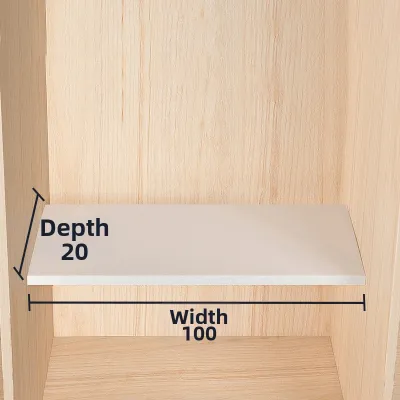
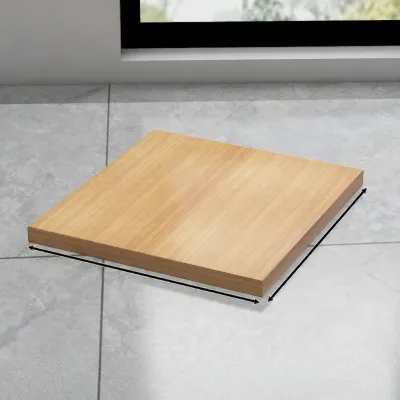
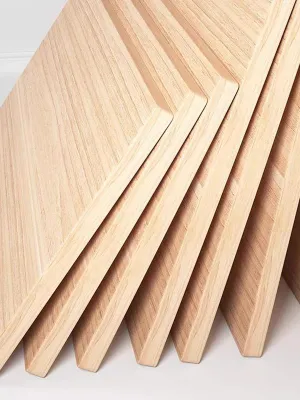
Prices are valid at publication and may change. Please refer to the product page for the latest price.
Check the furniture for manufacturer labels, stamps, or original assembly instructions. Many modern flat-pack or designer furniture pieces feature stickers on the underside or back panel listing the exact model number, materials used, or original dimensions. Finding these OEM details can save significant time and help you source an identical replacement part or match the specifications precisely.
Finally, document the assembly method by taking clear photographs of the joints. Pay close attention to how the plank connects to the frame, noting whether it slides into a dado groove, sits on a rabbet edge, or relies on dowels, pocket screws, or support brackets. Understanding these joint configurations ensures that your replacement wooden plank is cut with the correct edge profiles to fit the existing assembly method without requiring complex modifications.
Decoding Wood Types for Your Replacement Wooden Plank
Selecting the correct material type involves choosing between solid wood and engineered wood. Solid wood offers exceptional strength, natural beauty, and refinishing potential, making it ideal for structural frames and visible surfaces. Engineered wood, such as plywood, medium-density fibreboard (MDF), and particleboard, provides superior dimensional stability and resistance to warping, which is highly beneficial in humid environments.

When matching visible areas, identifying the wood species is crucial for grain pattern and staining compatibility. Common species like oak and walnut are prized for their distinct grain patterns and hardness, while pine offers a softer, budget-friendly alternative. In Singapore, rubberwood is a widely used, sustainable hardwood that offers excellent stability and a uniform grain, making it a common choice for mid-range furniture repairs.
Remember that a wood’s name alone does not guarantee durability or moisture resistance; you must also check the quality of its protective finish, the strength of its joints, and the manufacturer’s care instructions for your specific use environment. For hidden structural parts where appearance is secondary, utility woods or standard plywood are excellent choices. A high-grade birch plywood, for example, offers outstanding structural integrity and resistance to sagging, making it ideal for hidden drawer supports or internal shelving.
Avoid substituting weaker, low-density materials for load-bearing components without verifying their span limits and load capacity. Replacing a solid wood bed slat with a low-grade particleboard of the same thickness can result in sudden structural failure under load. Always verify the original material’s density, hardness, and stiffness, especially if the furniture experiences heavy daily use or supports substantial weight.
Determining the Correct Thickness and Dimensions
To ensure a precise fit, measure the thickness of the existing plank using highly accurate tools. Standard household tape measures are often too imprecise; instead, use a digital caliper or a steel ruler. Take multiple readings along the length of the plank, as edge wear, paint buildup, or moisture-induced swelling can distort the true original thickness.
Standard timber and plywood are manufactured in specific thickness increments, and even a minor deviation of 1 to 2 millimetres can cause significant installation issues. A replacement plank that is slightly too thick will not slide into existing dado grooves, while a plank that is too thin will rattle, compromise joint strength, or cause drawer slides and hinges to misalign. If your measurements fall between standard commercial sizes, buy the next size up and plane or sand it down to the exact dimension required.
While it might seem logical to use a thicker plank to increase load-bearing capacity, doing so can interfere with the furniture’s overall design. Thicker planks can disrupt frame clearances, block the smooth operation of drawer runners, or prevent cabinet doors from closing flush. Always prioritize matching the original thickness and, if additional strength is required, look for stiffer wood species or reinforce the underside of the plank with support cleats.
In Singapore’s tropical climate, planning for wood movement is essential when working with solid wood. Solid timber naturally expands and contracts across its grain as relative humidity levels fluctuate between air-conditioned interiors and natural outdoor air. When cutting your replacement wooden plank, allow for a slight expansion gap—typically 1 to 2 millimetres—within the receiving grooves to prevent the wood from buckling, warping, or cracking the surrounding furniture frame.
Matching Grade, Finish, and Moisture Considerations
Selecting the appropriate visual grade of wood ensures that your repair blends seamlessly with the rest of the furniture. High-grade timber, often labeled as “clear” or “select,” is virtually free of knots and splits, making it the best choice for clear-coated or stained surfaces where the natural grain is exposed. Lower grades, such as “common” or “utility,” contain natural character marks and knots, which are perfectly acceptable if the plank will be painted or hidden from view.
Before installing the replacement plank, prepare and pre-finish it to match the existing patina or paint color. Sand the surface smooth, starting with a medium grit and finishing with a fine grit to open the wood pores evenly. Apply a matching stain or paint, followed by a protective topcoat such as polyurethane or lacquer, ensuring you coat all sides—including the edges and underside—to seal out moisture.
Acclimating the new wooden plank to your home’s ambient humidity is a critical step. Store the unfinished wood in the room where the furniture will reside for at least three to five days prior to cutting or installation. This allows the wood’s internal moisture content to stabilize, minimizing the risk of dramatic shrinking, warping, or cracking after the repair is completed.
Always recognize the safety boundaries of DIY furniture repair. If the existing furniture frame is severely warped, the primary joint sockets are split, or the repair requires complex structural modifications to load-bearing parts, stop and consult a professional carpenter. Before applying any new wood treatments, adhesives, or finishes, consult the manufacturer instructions for both the furniture piece and the finishing products to ensure compatibility and preserve safety.
Frequently Asked Questions (FAQ)
Can I use a thicker wooden plank if the original one keeps bowing?
Using a thicker wooden plank is generally not recommended as a direct fix for bowing, as it can cause hardware misalignment, add excessive weight, and stress the surrounding frame joints. Instead of increasing the thickness, consider upgrading to a stiffer wood species, such as replacing a soft pine plank with a dense hardwood or a high-grade plywood. Alternatively, you can reinforce the existing thickness by adding a center support bracket, installing an under-shelf metal stiffener, or reducing the unsupported span of the plank.
How do I know if my furniture plank is MDF or solid wood?
You can identify the material of your furniture plank by examining its weight, edges, and grain pattern. Solid wood planks feature continuous grain lines that wrap naturally around the edges and ends, and they are generally heavier and have a distinct natural texture. Medium-density fibreboard (MDF) is typically covered with a thin wood veneer or plastic laminate to mimic real wood, which you can identify by looking for edge banding seams along the sides. If there are damaged or chipped areas, MDF will reveal a very fine, uniform, powdery wood-fibre core, whereas particleboard will show distinct wood chips, and solid wood will show natural splintered fibres.
Community discussion
Share your experience or ask a question. Comments are reviewed before publication.