
Finding the perfect tv unit for your Singapore living room is more than just an aesthetic choice; it is a balancing act between screen size, physical wall space, and room layout. In Singapore’s diverse housing landscape—ranging from compact Build-To-Order (BTO) HDB flats to expansive executive maisonettes and luxury condominiums—maximizing floor space while maintaining visual harmony is essential. To choose the right size, you must ensure your TV unit is wider than your television, matches the scale of your living room, accommodates your media devices, and preserves comfortable walkways. Taking the time to plan your layout and measure your space carefully will help you avoid costly returns or custom carpentry mistakes.
Step 1: Measure Your Wall Space and Room Layout
To avoid buying a unit that is too large or too small, start by taking precise measurements of your designated TV wall. Use a metal measuring tape to record the total width and height of the wall. Do not just measure the open space; you must account for architectural features that can restrict your options. Note the location of structural pillars, recessed niches, windows, and balcony doors, as these elements will dictate the maximum allowable length of your furniture.
Next, identify the placement of all wall fixtures and outlets. In Singapore homes, power sockets, network ports (RJ45), cable TV points, and fiber termination points are often grouped together on one wall. Your TV unit must either sit in front of these outlets or feature a backing design that allows easy access to them. Additionally, check for skirting boards along the base of the wall. Skirting boards typically protrude by 1 to 2 centimetres, which will prevent a flat-backed cabinet from sitting flush against the wall unless the furniture has a built-in base cutout.
Products mentioned in this guide
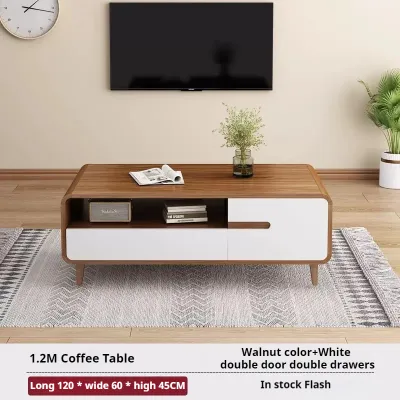
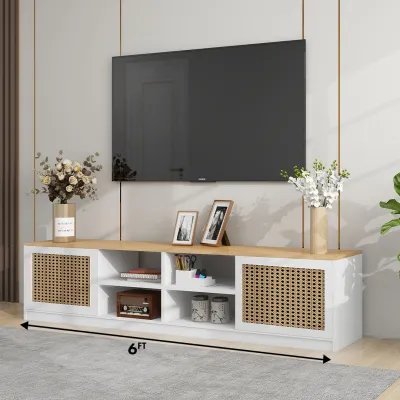
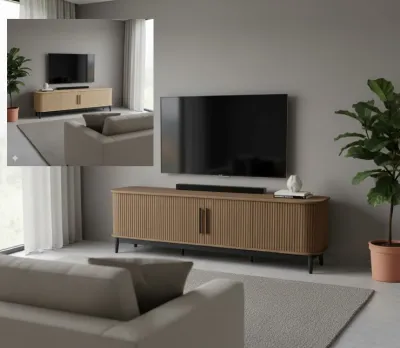
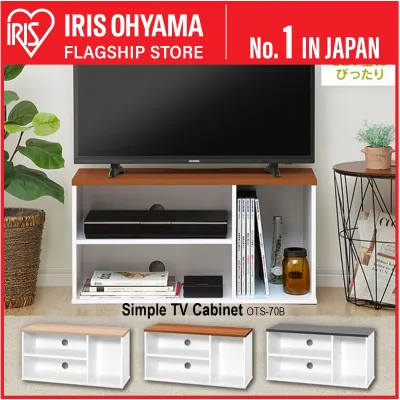
![[SG Ready Stock] Designer TV Cabinet (Wooden TV Console) Home And Style](https://img.lazcdn.com/g/p/87e73cf2dcca66015fc1d6ab80d2c425.jpg_400x400q80.jpg_.webp)
![[CozyNest ]Console Solid TV Wood Cabinet Suspended TV Cabinet Household Load-Bearing Strong TV Console Wall Mounted](https://img.lazcdn.com/g/p/8f7dd553ce36801975fb8a9bc8f35f55.jpg_webp_400x400q80.jpg_.webp)
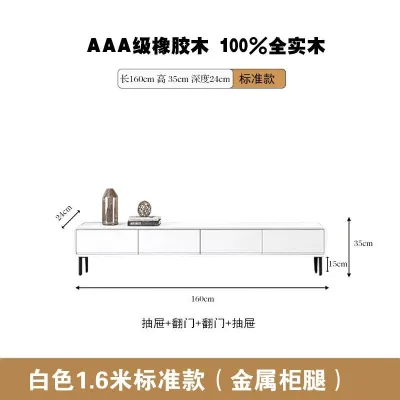
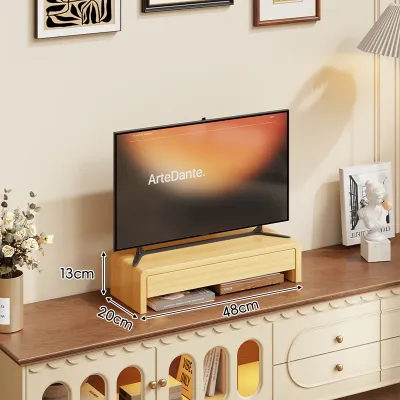
Prices are valid at publication and may change. Please refer to the product page for the latest price.
Do not overlook the presence of air-conditioning trunking. In many HDB flats and older resale apartments, white plastic trunking runs horizontally or vertically along the walls to house refrigerant pipes. If your trunking is positioned low on the wall, it can prevent a standard-height console from sitting flush. You must measure the height and depth of this trunking to ensure your chosen console can either fit underneath it or accommodate it with sufficient clearance.
Finally, evaluate the physical flow of the room. A TV unit should never obstruct primary walking paths or make the living room feel cramped. Measure the distance between the TV wall and the edge of your sofa, coffee table, or dining set. Ensure there is at least 60 to 70 centimetres of clear walkway space in front of the console to allow household members to pass comfortably. If your living room features nearby bedroom doors, main entryways, or balcony sliding tracks, verify that the console does not interfere with their full swing radius or physical operation.
Step 2: Balance TV Dimensions and Cabinet Proportions
Achieving visual balance in your entertainment zone requires understanding the relationship between the physical size of your television and the dimensions of your cabinet. A common mistake is assuming that a 55-inch TV only requires a 55-inch wide console. Television sizes are measured diagonally across the screen, whereas TV units are measured horizontally from end to end. Consequently, a 55-inch television is actually about 122 centimetres wide, while a 65-inch television is approximately 145 centimetres wide.

To create a grounded, visually balanced look, your TV unit should always be wider than your television. Ideally, the console should extend at least 10 to 20 centimetres beyond the outer edges of the TV screen on both sides. This extra width prevents a top-heavy appearance where the television seems to overwhelm the furniture below it. For example, a 55-inch TV pairs best with a unit that is at least 150 to 160 centimetres wide, while a 65-inch TV looks most balanced on a unit that is 180 to 200 centimetres wide.
Cabinet depth is another critical dimension to verify before purchasing. Standard media consoles generally range from 35 to 45 centimetres in depth. To determine your depth requirement, physically measure your specific media players, gaming consoles, soundbars, and smart home hubs. Remember to add an extra 5 to 10 centimetres of depth behind these devices to accommodate power plugs, HDMI cables, and rear ventilation needs. If your console is too shallow, your devices may protrude or their cables may bend at extreme angles, risking damage to the ports.
Lastly, consider the height of the unit relative to your seating arrangement. For a comfortable viewing experience that prevents neck strain, the center of your television screen should align with your natural eye level when seated. For most standard sofas with a seat cushion height of 40 to 45 centimetres, average eye level is roughly 100 to 110 centimetres from the floor. If you plan to place your TV directly on its stand on top of the console, a unit height of 45 to 55 centimetres is generally ideal. If you plan to wall-mount your TV, you can opt for a lower console height of 30 to 40 centimetres to maintain a modern, low-profile aesthetic.
Space-Saving and Layout Strategies for HDB and Condo Homes
Singapore’s residential properties require smart spatial planning to balance functionality and style. The layout of your living room will largely dictate whether you should opt for a compact, wall-mounted solution or a larger, multi-functional storage system.
Compact HDB Living Rooms
In modern 3-room and 4-room HDB BTO flats, living room floor space is highly optimized, making floating TV units an excellent choice. By mounting the console directly to the wall and leaving the floor space beneath it completely clear, you create the illusion of a larger room. This floating design also facilitates easy cleaning, allowing robotic vacuum cleaners to navigate the space without obstacle. When opting for a floating unit, ensure the depth is kept to a slim profile of 30 to 35 centimetres to preserve walkway clearance.
To maximize storage without cluttering the floor, utilize vertical wall space. You can install open shelves or slim overhead cabinets above the TV to store books, decorative items, or media accessories. However, avoid covering the entire wall with heavy cabinetry, as this can make a compact living room feel claustrophobic. Instead, opt for light-coloured wood finishes, whites, or soft greys to reflect natural light and keep the space feeling open and airy.
Spacious Condo and Executive Layouts
For larger condominium units, 5-room HDB flats, and executive maisonettes, a small TV console can look lost and disproportionate on a large, expansive wall. To anchor these larger living areas, consider using an extra-long lowboard that spans 2.4 meters or more, or invest in a full-height modular storage wall. These larger units provide a cohesive focal point that matches the grander scale and higher ceilings of executive layouts.
To prevent a large wall unit from looking overly bulky, select a design that integrates a mix of open display shelving and concealed storage. Closed cabinets are perfect for hiding messy cables, board games, and extra household items, while open shelves let you showcase art, indoor plants, and books. This combination breaks up the visual mass of the furniture, ensuring the entertainment zone feels sophisticated rather than imposing.
Essential Clearances for Safety and Functionality
When planning the placement and installation of your TV unit, safety and hardware longevity must be prioritized. Media equipment such as gaming consoles, AV receivers, and media boxes generate significant heat during operation. If you plan to place these devices inside closed cabinets, check the manufacturer’s specifications for ventilation requirements. Ensure the cabinet features slatted doors, open backs, or built-in ventilation grilles to allow continuous airflow and prevent expensive electronics from overheating.
Wall structural integrity is another critical safety factor, especially when installing floating TV units or heavy wall-mounted shelving. In Singapore, HDB flats typically feature solid concrete structural walls or precast lightweight concrete partition walls. Condominiums, however, frequently use drywall partitions for internal room dividers. While concrete walls can easily support heavy floating consoles when installed with appropriate masonry plugs, drywall partitions require careful reinforcement. Never mount a heavy floating unit directly to drywall without anchoring it to the internal metal or wood studs, or verifying that the wall has been reinforced with plywood backing. Consult a professional installer to assess your wall type before proceeding.
Cable management and physical clearance for plugs must also be planned. Pushing a heavy TV cabinet tight against the wall can pinch power cords and HDMI cables, which may damage the internal copper wiring or strain the ports on your devices. Always allow at least 5 centimetres of space between the back of the console and the wall. Alternatively, you can use right-angle HDMI adapters and recessed wall boxes to manage cables safely within a tighter footprint.
Common TV Unit Sizing Mistakes to Avoid
To ensure your living room is both functional and beautiful, keep these common sizing and placement pitfalls in mind before making your purchase:
- Buying a unit that is too deep: A deep console might offer more storage, but in a narrow living room, it will encroach on your walking paths and force your sofa too close to the television screen, leading to a cramped layout and eye strain.
- Ignoring the height of skirting boards: If you purchase a floor-standing cabinet with a completely flat back and no skirting board cutout, it will sit 1 to 2 centimetres away from the wall, leaving an awkward gap where dust, small items, and cables can fall.
- Choosing a cabinet that is too narrow: A TV console that is the exact same width as—or narrower than—the TV screen creates a top-heavy, visually unstable look that poses a higher risk of accidental bumps and tip-overs.
- Failing to account for door and window swings: Always double-check that the length and depth of your TV unit do not block the smooth opening of nearby bedroom doors, main entrance doors, or balcony sliding tracks.
Frequently Asked Questions (FAQ)
What is the standard depth for a TV unit?
The standard depth for a TV unit typically ranges from 35 to 45 centimetres. Shallow, space-saving floating consoles designed for compact rooms may have a depth of 30 to 32 centimetres, while larger media units designed to house heavy AV receivers and gaming consoles can extend up to 50 centimetres. Before finalizing your purchase, physically measure the depth of your largest media device, and add an additional 5 to 10 centimetres of clearance to accommodate rear cable connections and ensure adequate ventilation.
Community discussion
Share your experience or ask a question. Comments are reviewed before publication.