
The ideal size of a trolley shelf for an HDB flat depends entirely on the specific gap or corner you want to fill, typically requiring a slim profile of 12 to 20 centimeters in width for tight kitchen and bathroom gaps, or a standard utility width of 30 to 45 centimeters for open corners. Because public housing layouts in Singapore feature structural columns, household shelters, and compact service yards, finding the right fit is a matter of matching the trolley’s physical footprint to the exact clearance of your target zone. By measuring the space carefully, accounting for baseboards and pipes, and verifying movement paths, you can select a mobile storage solution that maximizes vertical space without blocking doorways or daily foot traffic.
How to Measure Your Space for a Trolley Shelf
Before browsing online marketplaces or local furniture stores, you must gather precise measurements of the intended location. Start by measuring the exact width, depth, and height of the alcove, corner, or gap where you plan to park the trolley shelf. Use a metal measuring tape for accuracy, as fabric tapes can stretch and lead to errors.
When measuring the width of a gap, do not just measure at floor level. Take measurements at three different points: near the floor, in the middle, and near the top. Walls in HDB flats, especially older units or those with wall tiles, are not always perfectly plumb. A gap that measures 20 centimeters at the bottom might narrow down to 18 centimeters near the top, which could cause a tall trolley to jam.
Products mentioned in this guide
![2/3/4 Tiers Kitchen Bathroom Organizer Trolley Shelf/Rack/ Storage/Utility Cart with Rollers Wide - White / Grey Color [Stock in SG]](https://img.lazcdn.com/g/p/c3b7bda38d6f5ae35cdc88c062c34715.jpg_400x400q80.jpg_.webp)
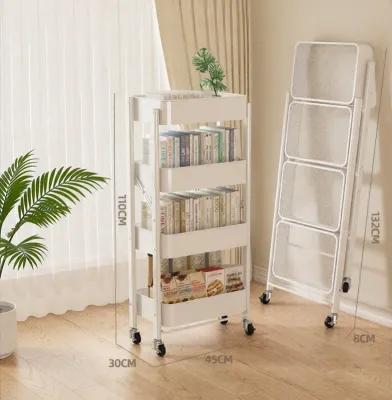
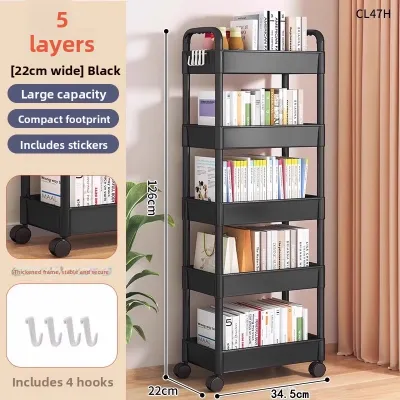
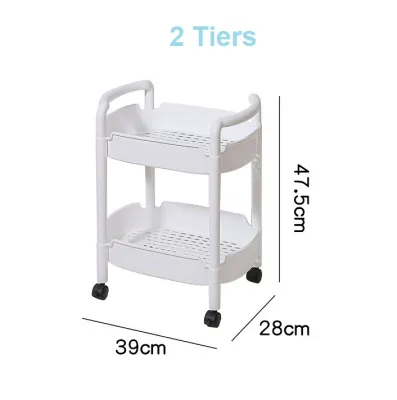
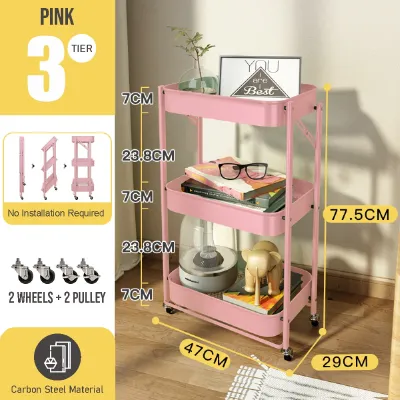
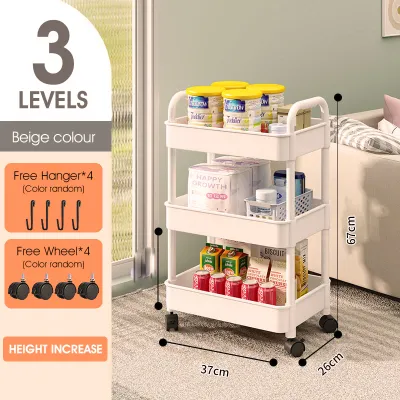
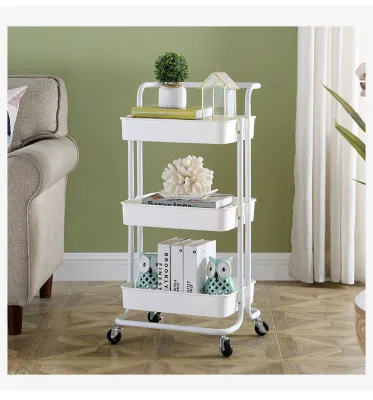
Prices are valid at publication and may change. Please refer to the product page for the latest price.
Next, account for physical obstructions that reduce the usable footprint. Skirting boards along the wall can easily shave off 1.5 to 2 centimeters of width near the floor. Look out for exposed copper gas pipes, PVC drainage pipes, electrical trunking, and wall-mounted power sockets. If a pipe runs along the back of the gap, your usable depth will be shallower than the wall-to-counter distance.
Vertical limitations are equally critical to document. Check for overhanging kitchen cabinets, wall-mounted water heaters, towel racks, window sills, or toilet paper holders that might block a tall trolley. If you plan to slide the trolley under a kitchen countertop or a bathroom sink vanity, measure the exact clearance from the floor to the underside of the counter edge.
Finally, record all your measurements in a single unit, preferably centimeters or millimeters. Most furniture retailers and online product listings specify dimensions in these units. Keeping your records consistent prevents conversion mistakes and allows you to quickly filter out products that are even a few millimeters too wide for your space.
Matching Trolley Shelf Profiles to Common HDB Zones
Different areas within an HDB flat present unique spatial challenges, meaning a trolley shelf that works perfectly in the kitchen might be entirely unsuitable for the bathroom.

In the kitchen, the most common placement for a trolley shelf is in the narrow gap beside the refrigerator, the washing machine, or the main kitchen counter. These gaps are often deep but extremely narrow. For these spots, a slim, deep trolley profile is ideal, allowing you to slide the unit deep into the gap while keeping the front flush with your cabinetry. However, you must check the heat ventilation requirements of your appliances. Refrigerators and washing machines generate heat and vibrate during operation; placing a trolley too close without adequate breathing room can affect appliance efficiency or cause annoying rattling noises.
Bathroom corners require a completely different approach. HDB bathrooms, especially in BTO flats, are highly compact and prone to high humidity. Here, you should prioritize shallow-depth profiles that do not block the swing of the shower screen door or interfere with toilet clearance. The trolley must also be positioned away from floor waste traps to ensure water drains freely. Because of the wet environment, look for rust-resistant materials like powder-coated steel, heavy-duty plastic, or stainless steel, and ensure the shelf baskets have drainage holes to prevent water from pooling.
Narrow hallways and utility yards demand slim, tall, or low-profile designs that do not impede walking paths. In the service yard, space is at a premium due to the presence of the washing machine, clothes drying rack, and sometimes the rubbish chute. A tall, narrow trolley can hold laundry detergents and cleaning supplies vertically, taking up minimal floor space. In narrow hallways or walkways near the household shelter, a low-profile trolley that sits below hip height can provide storage without making the corridor feel cramped or dark.
Verifying Clearances and Daily Movement Paths
A trolley shelf is designed to be mobile, but it can quickly become a nuisance if it blocks daily movement or prevents you from opening other fixtures.
Before finalizing your purchase, verify that the trolley will not block the swing of nearby doors. This includes kitchen cabinet doors, oven doors, refrigerator doors, bathroom doors, and even the main service yard door. Open every door and drawer in the vicinity to its full extension and ensure there is still enough clearance for the trolley to sit comfortably without being struck.
You must also calculate the required pulling distance and turning radius. A trolley parked in a deep, narrow gap must be pulled out completely to access the items stored on the lower shelves. Ensure you have enough clear floor space in front of the gap to pull the trolley out fully. If the walkway in front of the gap is narrower than the length of the trolley, you will not be able to roll it out straight, forcing you to maneuver it at an awkward angle.
Maintaining safe walking widths in high-traffic zones is essential for home safety. In busy areas like the kitchen work triangle (between the sink, fridge, and stove), a misplaced trolley can create a tripping hazard or a bottleneck. Aim to maintain a clear walkway width of at least 90 centimeters wherever possible, allowing family members to pass each other comfortably without bumping into the storage unit.
Lastly, check the manufacturer’s guidelines for required ventilation gaps if you plan to place the trolley near heat-generating appliances. For instance, if the trolley sits next to a built-in oven or a freestanding cooker, it must be kept at a safe distance to prevent the frame or the stored items from overheating, warping, or melting.
Choosing Space-Saving Features for Restricted Layouts
When dealing with the tight layouts of HDB flats, choosing a trolley shelf with smart, space-saving design features can significantly improve usability.
Consider tiered, foldable, or drop-leaf designs that offer maximum flexibility. Foldable trolley shelves are particularly useful in multi-purpose spaces like the service yard or utility room. When you have a large load of laundry to sort, you can unfold the trolley for extra holding space, and fold it flat to store behind a door once the chore is complete. Drop-leaf designs allow you to extend the top shelf only when you need an extra prep surface in the kitchen.
Assess the wheel types, locking mechanisms, and handle placements carefully. High-quality swivel castors are essential for smooth movement, especially when navigating tight corners or transitioning from kitchen tiles to living room vinyl. At least two of the wheels should feature reliable locking brakes. This is crucial in HDB bathrooms and service yards, where the floor is sloped towards the drain; without locking wheels, the trolley may slowly roll away on its own.
Review the load capacity labels and structural materials relative to what you plan to store. A slim plastic trolley might be perfect for light bathroom toiletries, but it may bow or crack if loaded with heavy glass jars, canned food, or small kitchen appliances. Check the manufacturer’s specified weight limit per tier and ensure the frame construction matches your storage needs.
Adjustable shelf heights are another highly valuable feature. Many standard trolleys have fixed basket heights, which can prevent you from storing tall items like olive oil bottles, laundry liquid jugs, or spray bottles. Choosing a model with adjustable tiers allows you to customize the vertical spacing, ensuring you do not waste valuable storage space.
Frequently Asked Questions (FAQ)
Can a trolley shelf fit between a washing machine and a wall?
Yes, a trolley shelf can fit in this gap, provided you measure the space precisely and account for protruding hoses, water taps, and power plugs at the back. It is crucial to leave a clearance gap of at least 2 to 3 centimeters on either side of the washing machine. This prevents the trolley from absorbing the machine’s natural vibrations during high-speed spin cycles, which could otherwise cause items on the shelf to rattle or fall off.
How do I prevent a tall, slim trolley shelf from tipping over?
To ensure stability, always place your heaviest items—such as laundry detergent bottles, liquid refills, or heavy glass jars—on the bottom tier of the trolley. This lowers the overall center of gravity and reduces the risk of tipping when the unit is rolled. Additionally, check the product specifications for models with a wider wheelbase or built-in wall-anchoring options if you plan to use a very tall, narrow unit.
Are slim trolley shelves stable enough for heavy kitchen appliances?
Slim trolley shelves can support kitchen appliances only if their rated load capacity matches the weight of the items. Always check the manufacturer’s maximum weight limit per tier and the total weight capacity of the frame. For heavy appliances like microwave ovens, stand mixers, or rice cookers, prioritize trolleys made of heavy-duty carbon steel or stainless steel with reinforced joints, and avoid lightweight plastic models.
Community discussion
Share your experience or ask a question. Comments are reviewed before publication.