
Finding the right mattress in Singapore requires balancing personal comfort with the physical constraints of local bedrooms. A super single mattress offers a practical middle ground, providing more sleeping surface than a standard single without occupying the extensive footprint of a queen-size bed. However, selecting the ideal model is not just about finding a bed that fits your room; it is about matching the mattress firmness to your unique sleeping posture, body weight, and physical support needs. Understanding how different firmness levels interact with your body will help you make an informed investment that supports restful sleep for years to come.
Understanding Super Single Dimensions and Room Fit
Before exploring firmness levels, you must verify that a super single mattress is the correct size for your bedroom and existing furniture. In Singapore, a standard super single mattress typically measures 107 cm in width and 190 cm in length. This makes it 16 cm wider than a standard single mattress (91 cm x 190 cm) but significantly narrower than a standard queen mattress, which measures 152 cm in width. This extra width provides valuable turning space for single sleepers, making it a popular choice for growing teenagers, young professionals, and guest rooms.
To ensure a comfortable room layout, you should measure the available floor space in your bedroom, keeping clearance paths in mind. A functional bedroom layout requires at least 60 cm to 70 cm of walking space around the sides and foot of the bed. This clearance ensures you can move freely without bumping into walls or other furniture. Additionally, you must account for the swing radius of wardrobe doors, dresser drawers, and bedroom doors to prevent physical obstructions once the bed is installed.
Products mentioned in this guide
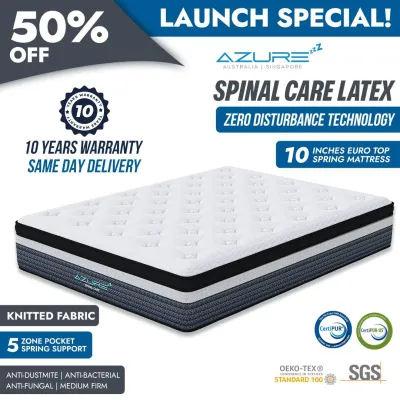
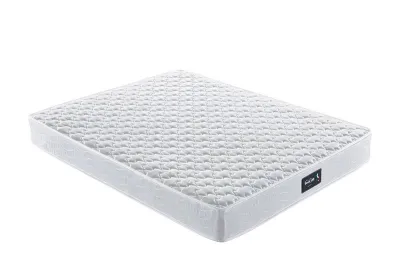
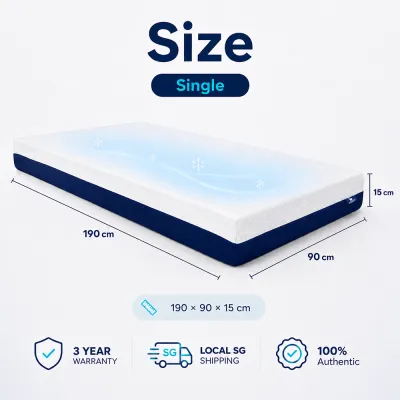
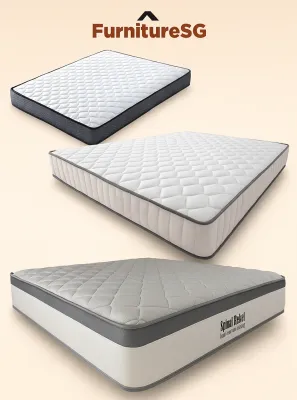
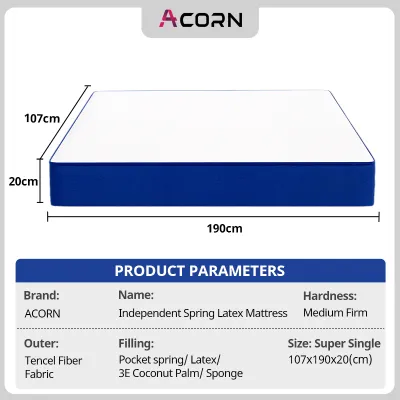
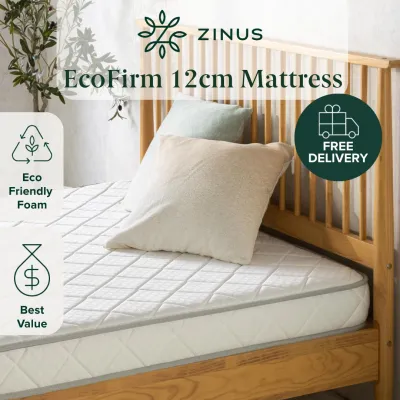
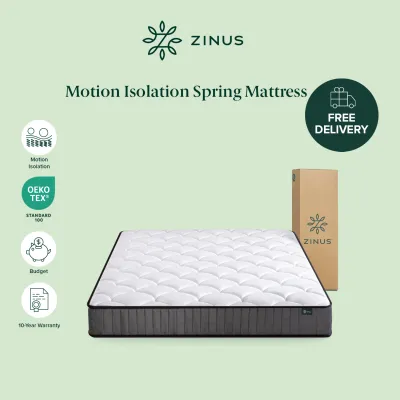
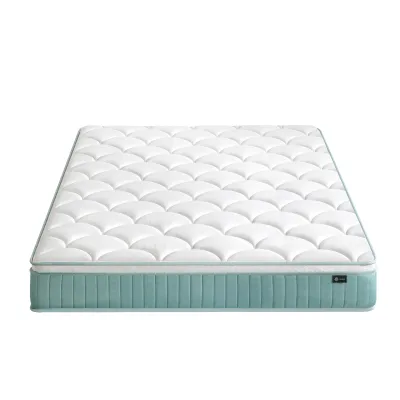
Prices are valid at publication and may change. Please refer to the product page for the latest price.
Your existing bed frame must also be compatible with the super single dimensions. Placing a super single mattress on a frame designed for a standard single will cause the mattress to overhang, which damages the mattress edges and voids most manufacturer warranties. Conversely, using a queen-size frame leaves large, hazardous gaps. You should also inspect the bed frame’s support system; slat spacing should ideally be less than 7.5 cm apart to prevent the mattress from sagging, and the frame’s load capacity must comfortably support the combined weight of the mattress and the sleeper.
Decoding Mattress Firmness Levels for Your Sleep Profile
Mattress firmness is not a universal metric, as a bed that feels soft to one person might feel incredibly rigid to another. This subjectivity exists because firmness is an interactive experience determined by your body weight, shape, and primary sleeping position. When you lie down, your body exerts pressure on the mattress materials, and the mattress pushes back to support your spine. Finding the correct balance between this contouring pressure relief and structural support is the key to preventing morning aches and stiffness.

To help consumers navigate their options, manufacturers generally rate mattress firmness on a scale from 1 to 10, with 1 being extremely soft and 10 being exceptionally firm. Soft mattresses (typically rated 3 to 4) allow for deep sinkage and contouring, while medium to medium-firm options (rated 5 to 7) offer a balanced blend of surface cushioning and upward support. Firm mattresses (rated 8 to 10) prioritize structural alignment, keeping the sleeper positioned on top of the mattress rather than sinking into it.
The primary goal of selecting the right firmness is to maintain neutral spinal alignment throughout the night. When your spine is aligned, your muscles can fully relax, and your body can transition through deep sleep cycles without interruption. If a mattress is too soft, your hips will sink too deeply, curving your lower back unnaturally. If it is too firm, the mattress will fail to cushion your shoulders and hips, creating painful pressure points and forcing your spine out of its natural alignment.
Soft to Medium-Soft Options
Soft to medium-soft mattresses are highly beneficial for dedicated side sleepers who require targeted pressure relief. When sleeping on your side, your shoulders and hips bear the majority of your body weight, creating concentrated pressure zones. A softer mattress allows these protruding areas to sink comfortably into the comfort layers, distributing your body weight more evenly and preventing numbness or tingling in your arms.
When reviewing mattress specifications, look for models featuring thicker comfort layers, such as plush memory foam, gel-infused foam, or natural latex toppers. These materials are designed to contour closely to the curves of your body, cradling your joints and reducing tossing and turning. Some high-quality soft mattresses also incorporate plush pillow-top or Euro-top designs stitched directly onto the surface for an immediate feeling of cushioning.
However, softer mattresses do come with specific trade-offs that you must consider before purchasing. Because these materials wrap closely around your body, they tend to restrict airflow, which can lead to heat retention—a significant concern in Singapore’s warm, humid climate. Additionally, very soft mattresses often exhibit weaker edge support, meaning the edges may compress significantly when you sit on the side of the bed or sleep near the perimeter.
Medium to Medium-Firm Options
Medium to medium-firm mattresses represent the most versatile category, making them the standard choice for guest rooms and combination sleepers. If you frequently change positions during the night—alternating between your side, back, and stomach—a medium-firm surface provides the necessary adaptability. It offers enough surface give to cushion your shoulders when you are on your side, while maintaining enough upward resistance to support your hips when you roll onto your back.
This category achieves its balance by pairing a contouring comfort layer with a highly responsive transition layer. The top layers provide initial pressure relief, while the underlying layers prevent your body from sinking too deeply into the support core. This structural design ensures that your spine remains aligned regardless of your sleeping posture, making it an excellent default option if you are unsure of your exact firmness preference.
Despite its broad appeal, a medium-firm mattress may not suit everyone. If you have a lighter body frame, you may not exert enough force to compress the comfort layers, causing the mattress to feel much firmer than advertised. Conversely, heavier individuals may find that a medium mattress does not offer sufficient resistance, leading to excessive sinkage in the midsection and a lack of overall support.
Firm to Extra-Firm Options
Firm to extra-firm mattresses are specifically engineered for back sleepers, stomach sleepers, and individuals with heavier body weights. When sleeping on your back or stomach, your pelvis requires robust support to prevent it from bowing downward, which is a common cause of lower back strain. A firm mattress keeps your body aligned in a relatively flat plane, ensuring your hips stay level with your shoulders throughout the night.
It is important to distinguish between a high-quality firm mattress and a hard, unforgiving surface. A well-designed firm mattress still incorporates thin, high-density comfort layers or responsive transition foams that cushion your joints without allowing deep sinkage. This design ensures that while the mattress feels solid and supportive, it does not create painful pressure points on your tailbone, shoulder blades, or knees.
Body weight plays a critical role in how firmness is perceived. Heavier individuals naturally exert more downward force, which can make a medium-firm mattress feel soft and unsupportive. For these sleepers, a firm or extra-firm mattress is often necessary to achieve the same level of spinal alignment and support that a lighter sleeper would experience on a medium-firm bed.
Evaluating Construction and Materials for Firmness Clues
To accurately predict how a super single mattress will feel and perform over time, you must look beyond marketing descriptions and evaluate its internal construction. The core support system is the foundation of any mattress, and it directly influences both firmness and durability. Traditional innerspring systems and pocketed coil structures offer excellent pushback and breathability, as the open space between the coils allows air to circulate freely. Pocketed coils are particularly effective because each spring is individually encased, allowing them to compress independently to contour to your body shape while minimizing motion transfer.
Foam core mattresses, such as those made from high-density polyurethane foam or memory foam, provide a different sensation characterized by deep contouring and pressure relief. When evaluating foam mattresses, pay close attention to the foam density specifications rather than just the thickness. High-density foams are more resilient and retain their original firmness and shape over years of use, whereas low-density foams tend to soften rapidly, leading to premature sagging and a loss of support.
Edge support is another critical factor to verify, especially for a super single mattress where the sleeping surface is relatively compact. A mattress with reinforced edge support—typically achieved through thicker coils around the perimeter or a high-density foam encasement—prevents the edges from rolling or sagging when you sleep near the side. This feature effectively maximizes the usable sleeping area, allowing you to utilize the entire width of your super single bed without feeling like you might slide off.
Rather than relying on subjective marketing terms like “orthopedic” or “luxury,” you should carefully examine the manufacturer’s material specifications and care instructions. Look for certifications regarding foam safety and emissions, and check if the mattress cover is removable and washable, which is highly beneficial for maintaining hygiene in Singapore’s humid environment. Understanding these structural details allows you to make an objective decision based on physical construction rather than promotional claims.
Pre-Purchase Checklist and Trial Considerations
Purchasing a mattress is a long-term investment in your health, making a systematic pre-purchase evaluation essential. If you are testing mattresses in a physical showroom, avoid the common mistake of simply sitting on the edge or lying down for a few seconds. To get an accurate assessment of how a mattress supports your body, you should lie down in your typical sleeping position for at least 10 to 15 minutes. This allows your muscles to relax and gives the mattress materials time to respond to your body heat and weight.
Before finalizing your purchase, clarify the retailer’s policies regarding sleep trials, returns, and warranties. Many modern mattress brands offer sleep trials ranging from 30 to 100 nights, allowing you to test the mattress in your own home. Ensure you read the fine print of these trials, noting any return shipping fees, packaging requirements, or restocking charges. Additionally, verify that the warranty covers physical defects such as permanent sagging or indentations greater than a specified depth, rather than just structural coil failures.
Logistical planning is equally important to ensure a smooth delivery process. You must measure the dimensions of your home’s entryways, including stairwells, elevators, and doorways, to confirm that the delivery team can safely transport the mattress to your bedroom. This is particularly crucial for non-bendable pocketed coil mattresses, which cannot be folded or compressed without causing permanent structural damage.
Finally, while the right mattress firmness can significantly improve sleep comfort and reduce minor muscle tension, it is not a cure for chronic medical conditions. If you suffer from persistent, severe back pain or joint issues, a mattress change alone may not resolve the underlying problem. In such cases, you should stop trying to self-diagnose with different firmness levels and consult a qualified healthcare professional for a comprehensive medical evaluation.
Frequently Asked Questions (FAQ)
Can I use a standard single bed frame for a super single mattress?
No, you cannot use a standard single bed frame for a super single mattress due to the significant difference in width. A standard single bed frame is designed to accommodate a mattress that is 91 cm wide, whereas a super single mattress is 107 cm wide. Attempting to force a super single mattress onto a smaller frame will cause the mattress to overhang by 16 cm, leaving a substantial portion of the bed unsupported. This lack of support puts excessive strain on the mattress core, compromises the integrity of the edge support, and will likely void the manufacturer’s warranty. Before purchasing, always measure the internal lip of your bed frame to ensure it matches the 107 cm by 190 cm dimensions of a super single mattress.
Does a firmer mattress always last longer than a softer one?
A common misconception is that a firmer mattress is inherently more durable than a softer one, but durability is actually determined by material density and construction quality rather than surface feel. A firm mattress made with low-density foam can soften and sag much faster than a soft mattress constructed with high-density memory foam or a robust pocketed coil system. When evaluating longevity, you should look at the density of the foam layers (measured in kilograms per cubic meter) and the gauge of the steel coils rather than the firmness rating. Additionally, review the manufacturer’s warranty terms to see what depth of permanent sagging is required to trigger a replacement, as this is a reliable indicator of the mattress’s expected lifespan.
How do I know if my current mattress is the wrong firmness for me?
Your body will provide clear physical signals if your current mattress is not the correct firmness for your sleep profile. Waking up with lower back stiffness or a dull ache often indicates that your mattress is too soft, causing your hips to sink and misaligning your spine. Conversely, if you wake up with shoulder pain, hip soreness, or numbness in your arms, the mattress is likely too firm, creating excessive pressure points that restrict circulation. You should also inspect the physical condition of your mattress; visible sagging, deep body impressions that do not bounce back, or frequent tossing and turning throughout the night are strong indicators that the mattress no longer provides the support you need. If physical pain persists after adjusting your mattress setup, consult a medical professional to rule out other health issues.

Community discussion
Share your experience or ask a question. Comments are reviewed before publication.