
Selecting the perfect wooden floating shelf requires balancing visual aesthetics with structural physics. To find the right size, you must match the shelf’s length to your wall’s proportions, choose a depth that accommodates your items without blocking movement, and verify that your wall type can support the intended weight. Getting these dimensions right ensures your shelving looks intentional, fits your space seamlessly, and functions safely over years of use.
While floating shelves look weightless, their installation requires careful planning. A shelf that is too deep can sag under load, while one that is too long can overwhelm a compact room. By understanding how finished dimensions, wall materials, and practical clearances interact, you can confidently choose a shelf system that enhances both your storage capacity and your interior design.
Quick Sizing Principles for Wooden Floating Shelves
When choosing a wooden floating shelf, three primary dimensions dictate your purchase: length, depth, and thickness. Depth should always be dictated by the specific items you plan to store or display. A shelf that is too deep for its contents not only wastes space but also increases the leverage exerted on the wall bracket, reducing its overall weight capacity.
Products mentioned in this guide
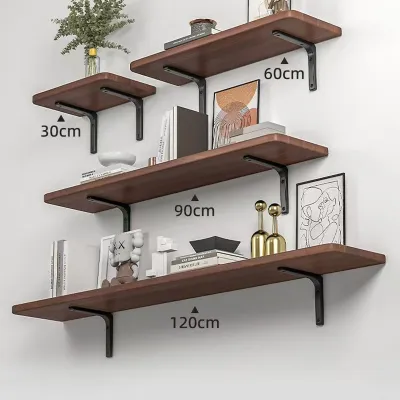
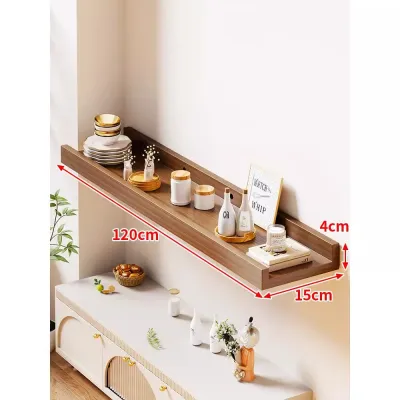
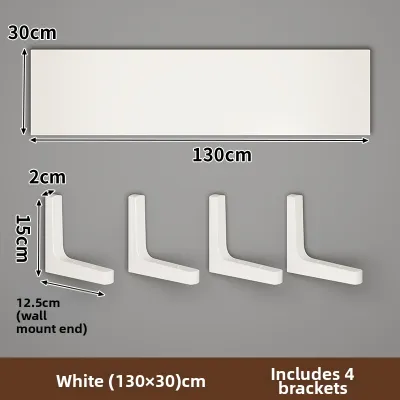
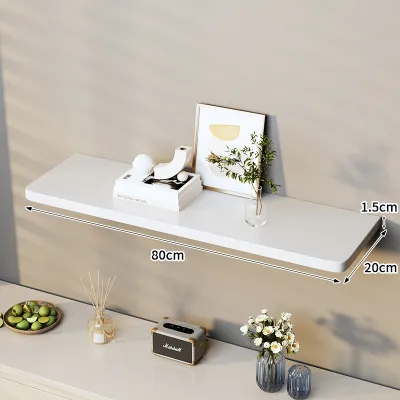
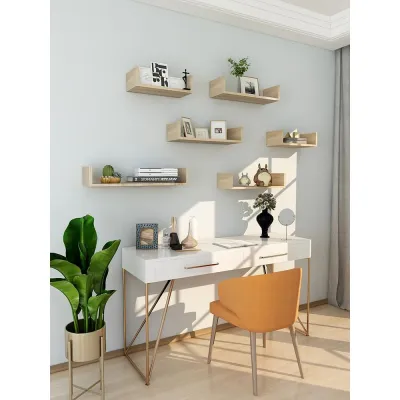
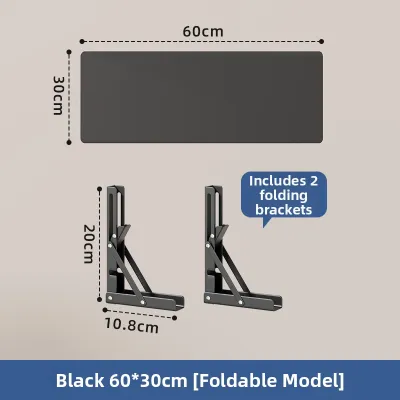
Prices are valid at publication and may change. Please refer to the product page for the latest price.
Length depends on your wall proportions and the furniture situated directly below the shelf. To maintain visual balance, a floating shelf should generally align with the scale of your existing furniture, rather than stretching awkwardly across an empty wall. A shelf that is too short can look lost, while one that is too long can make the entire wall feel top-heavy.
Weight capacity is determined by the hidden internal bracket and the wall material, not just the wooden board itself. Even the thickest, most durable solid wood shelf will fail if it is mounted with weak anchors or attached to an unsuitable wall type. Always remember that the bracket design and the anchoring method are the true anchors of your shelf’s load-bearing limit.
Measuring Wall Space and Practical Clearances
Before purchasing any shelving, you must accurately measure the width and height of your available wall space. Use a metal measuring tape and mark the potential footprint of your shelf using painter’s tape. This physical outline allows you to step back and evaluate the visual scale from different angles in the room, ensuring the shelf does not look disproportionate.

Account for walking clearances, door swings, and the height of furniture placed below the shelf. In high-traffic zones, a protruding shelf can become a safety hazard. Ensure there is at least 2 meters of overhead clearance if the shelf is placed in a walkway, or position it safely above head height to prevent accidental bumps.
In compact residential spaces, such as typical HDB flats or condominium units in Singapore, managing visual weight is essential. Thick, dark wooden shelves can make a small room feel cramped and enclosed. For tight spaces, consider shorter lengths or lighter wood tones that blend more naturally with the wall, preserving an airy, open feel.
Always check your delivery path, doorway clearances, and lift access before ordering long shelves. If you live in a high-rise building and plan to install a continuous shelf longer than 1.8 meters, verify that the packaged product can fit inside your building’s passenger lift and navigate tight entryways. Measuring your lift’s interior height and doorway width beforehand prevents costly delivery failures.
Finally, check the wall surface for hidden hazards or obstacles. Look for nearby electrical outlets, light switches, wall-mounted air conditioning units, and surface-mounted aircon trunking. Ensure your shelf placement leaves enough clearance for routine maintenance of these systems and does not interfere with electrical conduits hidden behind the plaster.
Matching Shelf Depth to Your Storage Needs
Shallow Depths (10 cm to 15 cm)
Shallow wooden floating shelves are best suited for small decor, picture frames, spice jars, or lightweight collectibles. Because the center of gravity remains very close to the wall, these shelves place minimal leverage on the internal bracket. They are highly stable and work exceptionally well in narrow hallways, bathrooms, or kitchen backsplashes where space is limited.
Standard Depths (15 cm to 25 cm)
Standard depths are ideal for paperback books, small potted plants, smart speakers, and everyday storage boxes. This range represents the sweet spot for most residential applications, offering versatile storage without protruding too far into the room. It provides a stable platform for standard-sized items while keeping the physical strain on the wall anchors within safe, manageable limits.
Deep Shelves (25 cm to 35 cm)
Deep shelves are necessary for large hardcover books, vinyl records, kitchen appliances, or bulkier display items. However, deeper shelves act as longer levers, multiplying the downward force on the wall bracket. If you choose a deep shelf, you must pair it with a heavy-duty, reinforced internal bracket and ensure it is anchored into a highly stable wall structure.
To ensure a perfect fit, physically measure the deepest item you intend to store before finalizing your purchase. Add at least 2 centimeters of extra clearance to this measurement. This safety margin ensures that your items do not overhang the front edge, which can cause them to slip or make the shelf look cluttered and unstable.
When choosing a wooden material like oak, walnut, or teak, remember that the wood species itself does not guarantee resistance to scratches, moisture, or warping. In humid environments like Singapore, check the manufacturer’s care instructions and verify the type of protective finish applied. A high-quality polyurethane or moisture-resistant lacquer finish is essential to protect the wood from swelling or mold in damp areas.
Selecting Shelf Length for Visual Balance
To achieve a balanced look, coordinate the shelf length with the furniture situated directly below it, such as a console table, desk, or sofa. A classic design guideline is the two-thirds rule: your floating shelf should ideally span roughly 60% to 80% of the width of the furniture piece underneath. This creates a grounded, cohesive look that connects the shelf to the rest of the room’s layout.
When deciding between one continuous long shelf or multiple shorter shelves, consider both your aesthetic preferences and installation flexibility. A single long shelf (such as 120 cm to 150 cm) offers a clean, ultra-minimalist line that draws the eye across the room. However, long shelves require precise leveling during installation and must align perfectly with multiple wall studs or anchor points to prevent sagging in the middle.
Using multiple shorter shelves (such as 40 cm to 60 cm) arranged in a staggered, tiered, or asymmetrical layout offers greater versatility. This configuration allows you to work around wall obstacles, distribute weight across different sections of the wall, and adjust the spacing to fit items of varying heights. It also makes transport and lift access much easier in high-rise apartments.
Always leave adequate negative space on the sides of your shelf. Squeezing a shelf tightly between two walls or crowding it close to window treatments makes the installation look cramped and unprofessional. Leaving at least 15 cm to 20 cm of open wall space on either side allows the floating design to “breathe” and ensures you have enough physical hand clearance to secure the shelf onto its bracket during assembly.
Understanding Weight Capacity and Wall Limits
Weight capacity is a complete system that depends on the shelf construction, the hidden internal bracket, and the wall material. A solid wood shelf board is incredibly strong, but its load capacity is entirely limited by how securely the bracket is anchored to your wall. Understanding your wall’s composition is the single most important step in ensuring a safe installation.
In Singapore, residential interior walls generally fall into two categories: solid masonry and drywall partition walls. Solid concrete, brick, or precast concrete walls (highly common in HDB flats and older condos) provide excellent anchoring strength. When fitted with high-quality masonry wall plugs and screws, these walls can support heavy-duty floating brackets and substantial weight loads.
In contrast, drywall, plasterboard, or gypsum partition walls (often found in newer condominium bedrooms or office partitions) have much lower load-bearing capacities. Mounting a floating shelf directly onto drywall without securing it to the internal metal or timber studs can lead to sudden structural failure. For partition walls, you must locate the vertical studs using a stud finder or use specialized heavy-duty hollow-wall anchors, such as toggle bolts, while keeping your storage items lightweight.
Always locate and carefully interpret the manufacturer’s maximum load specifications before buying. These ratings typically assume a correct installation into a solid wall using the provided hardware. If you plan to purchase a shelf online, expect broad price bands ranging from budget-friendly engineered wood options under S$50 to premium, custom-sized solid teak shelves exceeding S$200, with higher-end options often including superior, engineered steel bracket systems.
If your wall type is unknown, if the wall surface feels hollow or crumbly when tapped, or if you plan to store exceptionally heavy items like a dense collection of textbooks, stop and consult a qualified professional installer. Never guess your wall’s internal structure or attempt to mount heavy shelves on a compromised surface. A professional can verify the wall’s integrity and select the precise anchoring system required for a safe, permanent mount.
Common Sizing and Placement Mistakes to Avoid
One of the most frequent errors is overestimating weight capacity without verifying the specific bracket and anchor specifications. Many homeowners assume that a thick, heavy solid wood shelf can naturally support heavy items. In reality, the weight of the shelf itself adds to the load on the bracket, leaving less remaining capacity for your books or decor. Always subtract the shelf’s self-weight from the bracket’s maximum rating to find your true usable capacity.
Another common mistake is choosing an inappropriate shelf depth that subsequently obstructs walkways, door swings, or window treatments. A shelf that juts out too far in a narrow corridor or bedroom entry will inevitably be bumped, risking injury to family members and causing the wall anchors to loosen over time. Always measure physical clearances with doors fully open and walking paths clear.
Finally, do not ignore the visual scale of your room. Placing a tiny, thin shelf on a massive, double-height blank wall makes the shelf look like an afterthought. Conversely, squeezing a thick, bulky shelf into a small study room can make the space feel incredibly claustrophobic. Use painter’s tape to test the visual impact of both the length and thickness before making your final purchase.
Frequently Asked Questions (FAQ)
How far apart should multiple floating shelves be spaced?
For tiered or stacked floating shelves, a general guideline is to space them 25 cm to 40 cm apart vertically. The ideal spacing should be determined by the height of the tallest items you plan to display on the lower shelf. Always leave at least 3 cm to 5 cm of empty clearance above your tallest item so you can easily lift and remove it without scraping the shelf above.
To maintain a clean, professional look, ensure your vertical spacing remains consistent across all tiers. When marking your installation points, measure from the center of each shelf bracket or from the top edge of each board rather than guessing. This precise measurement ensures a uniform visual rhythm that makes your shelving system look cohesive and balanced.
Community discussion
Share your experience or ask a question. Comments are reviewed before publication.