
Choosing the right size wall TV cabinet requires balancing the physical dimensions of your television with the available wall space to achieve a cohesive, balanced look. A well-proportioned wall-mounted console anchors your living room visually and ensures your media equipment is safely supported. To find the perfect fit, you must look beyond the diagonal screen size of your television and evaluate the actual physical width, the structural capacity of your wall, and the functional layout of your living space. Taking precise measurements and understanding visual weight will help you select a cabinet that complements your interior design while avoiding common installation pitfalls.
Measure Your TV and Available Wall Space
Before browsing online catalogs or visiting furniture showrooms, you must gather the exact physical dimensions of your television and the target wall. Many homeowners make the mistake of using the advertised diagonal screen size of their TV as the actual width. Because screen sizes are measured diagonally, they do not represent the true horizontal width or vertical height of the television frame, including the outer bezel. Use a physical measuring tape to record the total horizontal width from the far-left edge to the far-right edge of the TV frame, and the vertical height from the top edge to the bottom edge.
Once you have the television dimensions, shift your attention to the target wall. Measure the total usable width and height of the wall area, making careful note of any fixed architectural features. Mark the exact locations of power outlets, cable ports, light switches, windows, doors, and adjacent furniture pieces. This step is crucial because a wall TV cabinet must not block access to electrical sockets or obstruct the natural swing path of nearby doors and cabinet panels.
Products mentioned in this guide
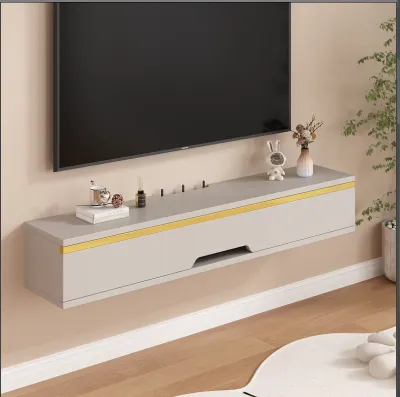
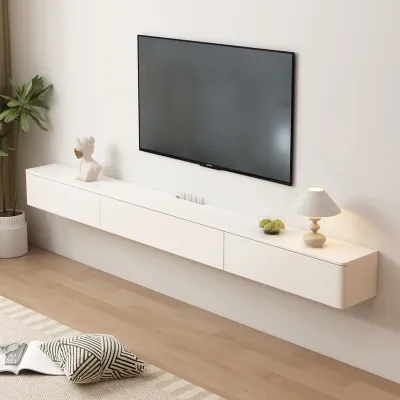
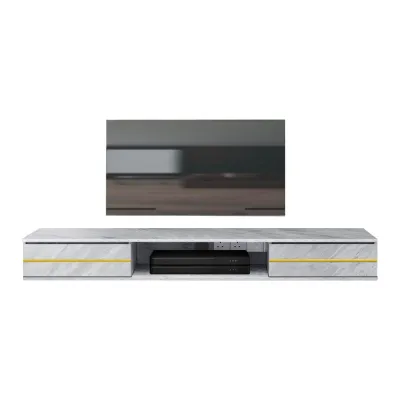
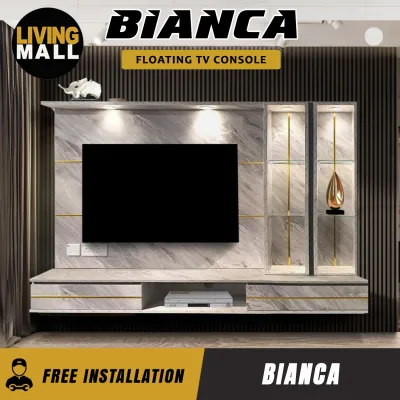
![[Ready Stock] TV console nordic wall-mounted TV cabinet wall cabinet wall racks set-top rack set-top cabinet TV cabinets simple small-sized TV rack wall TV console wall TV cabinet](https://img.lazcdn.com/g/p/cfdf1ff4d0a9e38b9b7833f1ef9be69d.jpg_webp_400x400q80.jpg_.webp)
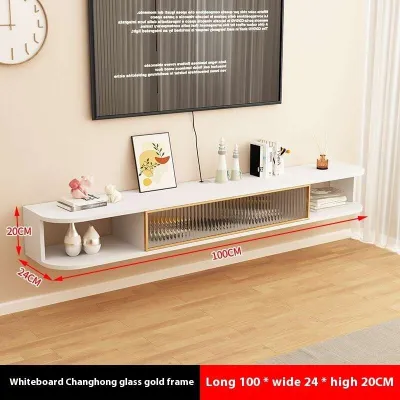
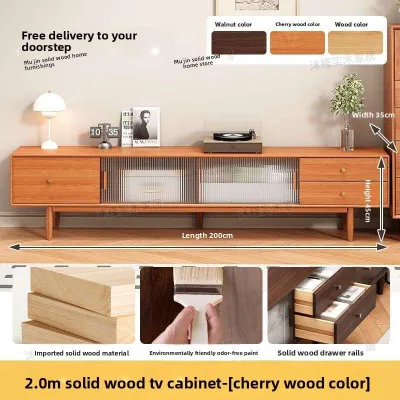
Prices are valid at publication and may change. Please refer to the product page for the latest price.
Finally, identify the construction material of your wall, as this directly influences the mounting hardware you will need. In Singapore, residential walls are commonly constructed from solid concrete, brick, or drywall partitions. Solid concrete and brick walls, typical in HDB flats and BTO apartments, offer robust structural support but require specialized masonry drill bits and heavy-duty wall plugs. Drywall partitions, often found in newer condominium layouts, require locating the internal timber or metal studs to ensure a secure installation.
Determine the Ideal Cabinet Width for Visual Balance
Achieving visual balance is the key to making your wall TV cabinet look like an intentional design choice rather than an afterthought. As a general rule, the cabinet should always be wider than the television itself. A console that is narrower than the TV creates a top-heavy, unstable appearance that can make your entire living room feel cramped and poorly proportioned. Aim for a cabinet that extends past the outer edges of your television on both sides to provide a sense of physical stability.

The layout of your room also dictates how wide your cabinet should be. In narrow alcoves or recessed wall niches, you may want to opt for a custom-fit or semi-custom cabinet that spans the entire width of the recess to create a seamless, built-in look. For expansive, open-plan living areas, a longer floating console can help define the entertainment zone, preventing the television from looking lost on a massive, empty wall.
Before finalizing your purchase, verify that the total width of the cabinet does not impede daily movement or block walking paths. In compact living spaces, every centimeter counts, and a cabinet that extends too close to a doorway can create a physical bottleneck. Additionally, consider the delivery logistics of longer, fully assembled cabinets. Ensure that the dimensions of the cabinet can easily clear your building’s lift doors, stairwells, and main entryway during delivery.
Select the Right Height and Depth
Determining the correct installation height and physical depth of your wall TV cabinet is essential for both viewing comfort and practical storage. The primary goal when positioning your television and cabinet is to align the center of the screen with your eye level when you are seated in your primary viewing position. Mounting the television too high can lead to neck strain over time, while mounting it too low can compromise your viewing experience.
To find the ideal height, sit on your sofa and measure the distance from the floor to your comfortable eye level. Use this measurement as the target center point for your television screen. Once you know where the TV will sit, you can determine the mounting height of your floating cabinet. Leaving a clear gap between the bottom of the cabinet and the floor creates a sense of spaciousness and visual lightness, which is especially beneficial in smaller rooms.
This floor clearance also serves a highly practical purpose. If you use a robot vacuum cleaner, ensure the gap beneath the cabinet is high enough to allow the device to pass underneath without getting stuck. For manual cleaning, a generous clearance makes it easy to sweep and mop without having to bend down or squeeze tools into tight spaces.
When evaluating the physical depth of the cabinet, consider the specific items you plan to store inside. Standard media players, game consoles, and audio receivers often require a deeper shelf than simple streaming sticks. Measure the depth of your largest device, including any cables or connectors plugged into the back, to ensure the cabinet doors can close fully without bending or damaging the cords. If you plan to place a soundbar on top of the cabinet, verify that the surface depth can accommodate it without the speaker overhanging.
Verify Weight Capacity and Wall Compatibility
Safety must be your top priority when selecting and installing a wall-mounted TV cabinet. Unlike freestanding consoles that rest their weight on the floor, floating cabinets rely entirely on the structural integrity of your wall and the strength of the mounting hardware. Before making a purchase, always check the manufacturer’s specified maximum weight capacity for the cabinet.
Calculate the combined weight of your television (if it will rest on the cabinet), media consoles, sound systems, books, and any decorative objects you plan to display. This total weight must remain well within the manufacturer’s recommended limit. Keep in mind that the weight capacity specified by the manufacturer assumes the cabinet is installed correctly on a compatible, structurally sound wall using the appropriate hardware.
The type of wall in your home determines the installation method and the overall load capacity. Solid concrete and brick walls provide the most secure foundation for heavy floating furniture, allowing you to use robust masonry anchors. If you are mounting the cabinet on a drywall partition, you must secure the mounting brackets directly into the internal timber or metal studs. Mounting a heavy cabinet solely to drywall sheets using hollow-wall anchors is highly risky and can lead to structural failure.
If you are unsure about the material composition of your wall, cannot locate the internal studs, or do not have the appropriate tools for drilling into solid concrete, do not attempt the installation yourself. Define a clear stop condition: halt the process and consult a qualified professional installer or carpenter. A professional can assess your wall’s load-bearing capacity, select the correct heavy-duty anchors, and ensure the cabinet is mounted level and secure.
Plan for Cable Management and Device Clearance
A clean, minimalist aesthetic is one of the main reasons homeowners choose wall-mounted TV cabinets. However, achieving this look requires careful planning for cable routing and device ventilation. Before purchasing a cabinet, check if it features pre-drilled cable management holes, wire channels, or open back panels that align with your wall’s electrical outlets.
Proper cable routing prevents a cluttered mess of tangled wires from hanging beneath your floating console. If your wall outlets are located below the cabinet, you may need to install a paintable cable cover or route the wires behind the wall casing to keep them completely hidden. Ensure that the cabinet’s internal compartments allow cables to pass easily between shelves so you can connect multiple devices without hassle.
Ventilation is another critical factor that is often overlooked. Modern game consoles, media players, and amplifiers generate significant heat during operation. If these devices are enclosed in a tight cabinet without adequate airflow, they can overheat, leading to performance issues or permanent damage. Look for cabinets with open shelving, slatted doors, or built-in ventilation cutouts that allow hot air to escape and cool air to circulate.
Finally, consider how your remote control signals will reach your media devices. Standard infrared (IR) remotes require a direct line of sight to function. If your cabinet has solid wooden or metal doors, the signals will be blocked when the doors are closed. To solve this, you can choose a cabinet with glass doors, opt for slatted designs that allow signals to pass through, or install an external IR repeater system that routes the remote signals to your hidden equipment.
Frequently Asked Questions (FAQ)
Can I mount a wall TV cabinet on drywall?
Yes, you can mount a wall TV cabinet on drywall, but you must take specific precautions to ensure safety. The mounting brackets must be anchored directly into the internal timber or metal studs behind the drywall sheets. Never rely solely on hollow-wall anchors or toggle bolts to support the weight of a heavy floating cabinet, as this can cause the drywall to tear and the cabinet to fall. If the stud spacing does not align with your cabinet’s mounting points, or if you are unsure of the wall’s internal structure, consult a professional installer to reinforce the wall or handle the installation.
How much wider should the cabinet be than the TV?
While there is no single mandatory ratio, a wall TV cabinet should ideally be at least ten to twenty percent wider than your television on each side. This extra width creates a balanced visual anchor, preventing the setup from looking top-heavy. For example, if your television is approximately 120 centimeters wide, choosing a cabinet that is 150 to 180 centimeters wide provides excellent visual proportion and leaves sufficient space on the ends for small decorative items or speakers without crowding the screen.
What is the best height to mount a floating TV console?
The optimal mounting height for a floating TV console depends on your seated eye level and the height of your sofa. Generally, the center of your television screen should align with your eye level when you are sitting down. Once you determine the TV’s position, mount the floating cabinet so that there is a clearance of approximately 15 to 30 centimeters between the bottom of the cabinet and the floor. This gap maintains a light, spacious aesthetic and provides enough clearance for easy cleaning and the passage of robot vacuum cleaners.
Community discussion
Share your experience or ask a question. Comments are reviewed before publication.