
Determining the right size for an upholstered headboard in a Housing & Development Board (HDB) bedroom requires balancing comfort with spatial efficiency. To prevent a headboard from overwhelming a compact room, you must align its physical dimensions with your bed frame while preserving essential circulation paths. A well-proportioned headboard should ideally match your bed frame’s width, stand between 100 cm and 130 cm tall from the floor, and maintain a slim profile of under 10 cm in thickness. This ensures you retain at least 60 cm of clear walkway space around the bed, allowing for comfortable daily movement and unobstructed furniture operation.
In Singapore’s high-density housing, master and common bedrooms are designed with efficiency in mind. Adding a bulky, oversized headboard can quickly turn a cozy sanctuary into a cramped, impractical space. By focusing on precise measurements, architectural constraints, and visual weight, you can enjoy the plush comfort of an upholstered headboard without sacrificing the flow of your room.
Understand Your HDB Room Layout and Bed Footprint
HDB bedroom layouts vary significantly depending on whether you live in a newly built Build-To-Order (BTO) flat or an older resale apartment. Modern BTO master bedrooms typically offer around 11 to 14 square metres of space, while common bedrooms are more compact, often measuring between 8 and 10 square metres. Resale flats may offer slightly more generous proportions, but they often feature structural pillars or unusual wall angles that complicate furniture placement. Understanding these spatial baselines is crucial before introducing a prominent furniture piece like an upholstered headboard.
Products mentioned in this guide
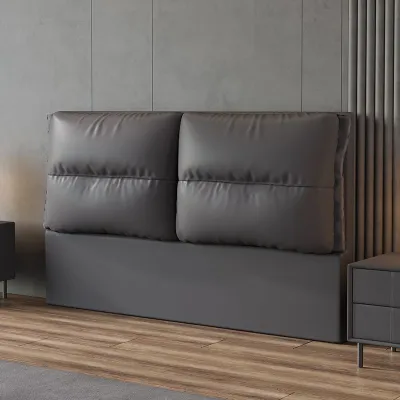
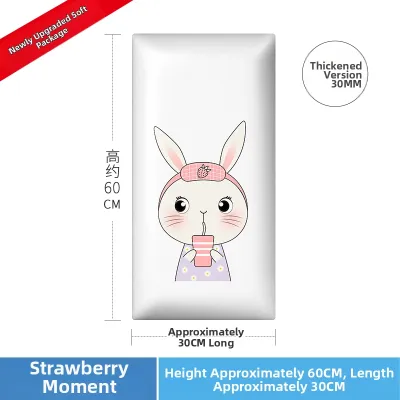
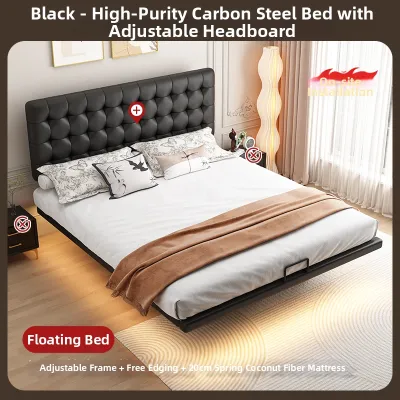
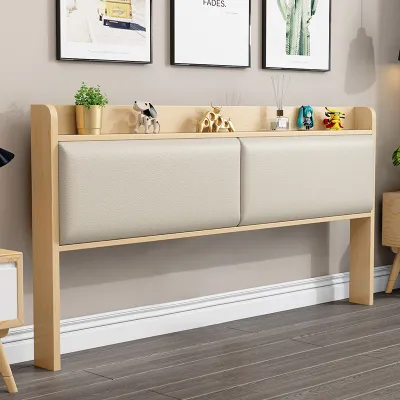
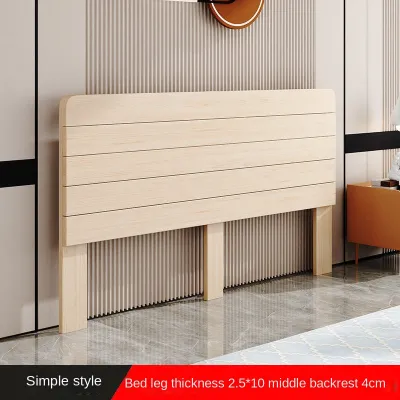
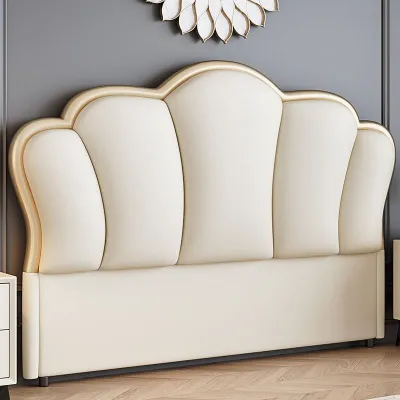
Prices are valid at publication and may change. Please refer to the product page for the latest price.
The dimensions of your mattress form the starting point for your spatial planning. In Singapore, standard mattress sizes are highly consistent:
- Single: 91 cm wide by 190 cm long
- Super Single: 107 cm wide by 190 cm long
- Queen: 152 cm wide by 190 cm long
- King: 183 cm wide by 190 cm long
However, relying solely on mattress dimensions is a common pitfall. The actual bed frame—especially upholstered frames, divans, or storage bed bases with hydraulic lifts—frequently extends several centimetres beyond the mattress on all sides. For example, a standard Queen-size storage bed frame might actually measure 156 cm in width and 205 cm in length. Your headboard must be sized relative to the finished dimensions of the bed frame, not just the mattress, to ensure a flush and stable fit.
Before finalizing any purchase, you must thoroughly measure the available wall space and identify potential architectural obstacles. Take note of the following features on your headboard wall:
- Air-Conditioning Trunking: In many HDB flats, the refrigerant pipes and drainage trunks run along the upper portion of bedroom walls. A tall headboard can collide with this trunking, forcing the bed frame away from the wall.
- Ceiling Fans: If your bedroom features a ceiling fan, a tall headboard can bring your head and pillows closer to the rotating blades when you sit up, posing a safety hazard.
- Window Pelmets and Curtains: Thick curtains or window tracks require about 10 cm to 15 cm of clearance. If your bed is pushed close to a window wall, the headboard must not block the natural drape of the curtains.
- Electrical Sockets and Switches: HDB flats typically place power outlets and light switches on either side of the bed. A headboard that is too wide will cover these sockets, forcing you to use awkward extension cords or rendering your bedside light switches useless.
Choose the Right Width, Height, and Thickness
Once you have mapped out your room’s physical constraints, you can determine the specific dimensions of your upholstered headboard. The three critical dimensions to evaluate are width, height, and thickness.

Finding the Ideal Width
To maintain a balanced look, the width of your upholstered headboard should closely match the width of your bed frame. A headboard that is exactly the same width as the frame creates a clean, modern silhouette. Alternatively, you can select a headboard that extends slightly beyond the frame—by about 2 cm to 5 cm on each side—to provide a softer, more forgiving edge.
Avoid the temptation to install an oversized, wall-to-wall upholstered panel in a standard HDB bedroom. While these expansive designs look stunning in spacious hotel suites, they visually overpower a compact room. A wall-to-wall headboard leaves no distinct visual boundary for the bed, making the entire sleeping area feel blocky and leaving insufficient space for bedside tables to sit naturally against the wall.
Determining the Correct Height
Standard HDB ceiling heights hover around 2.6 metres. In a room with these proportions, a headboard that is too tall will make the ceiling feel lower and the room more confined. The ideal height range for an upholstered headboard in an HDB bedroom is between 100 cm and 130 cm, measured from the floor to the top of the headboard.
This height range provides several practical benefits:
- Comfortable Support: It offers ample backrest height when you are sitting up in bed to read or use a laptop.
- Visual Proportion: It occupies roughly one-half to two-thirds of the vertical wall space behind the bed, maintaining a balanced ratio between the bed and the ceiling.
- Clearance: It leaves sufficient clearance below standard wall-mounted air-conditioning units, which are typically installed around 2.1 to 2.3 metres from the floor.
Optimizing Thickness (Depth)
When dealing with limited square footage, the thickness of your headboard is the most critical dimension. Every centimetre of headboard depth directly reduces the remaining walkway space at the foot of your bed. For HDB bedrooms, a slim-profile upholstered headboard with a thickness of 5 cm to 10 cm is highly recommended.
Deeply tufted, heavily padded, or Chesterfield-style headboards can easily measure 15 cm to 25 cm in thickness. While they offer luxurious cushioning, they physically push the entire bed assembly forward. In a typical 3-metre-deep HDB bedroom, losing an extra 15 cm of floor space can make the difference between a comfortable walkway and a tight squeeze where you constantly bump your shins against the bed frame.
Plan for Walkways, Wardrobes, and Daily Movement
A bedroom must remain functional for daily activities beyond sleeping. When planning the dimensions of your bed and headboard, you must ensure that your layout supports easy movement and the proper operation of other furniture pieces.
Maintaining Walkway Clearance
The primary circulation path around your bed—especially the walkway between the foot of the bed and the opposite wall—should ideally be at least 60 cm wide. This clearance allows you to walk naturally without having to turn sideways. If this path leads to an ensuite bathroom, a built-in wardrobe, or the bedroom door, increasing the clearance to 70 cm or 80 cm will significantly improve the room’s usability.
If your measurements show that a thick headboard will reduce your walkway to less than 50 cm, you should prioritize an ultra-slim headboard or a wall-mounted panel to reclaim those vital centimetres.
Coordinating with Built-In Wardrobes
Built-in wardrobes are a staple in HDB bedrooms, and their proximity to the bed requires careful planning. If your wardrobe features traditional swing doors, you must calculate the door’s swing radius. A headboard that is too thick or a bed frame that is pushed too far forward can block the wardrobe doors from opening fully, restricting access to your clothes.
Even if your wardrobe has sliding doors, a headboard that extends too far horizontally can block the end panels. This can prevent internal drawers or pull-out accessories from extending properly. Ensure there is a gap of at least 10 cm between the edge of your headboard and the start of any wardrobe doors or drawers.
Factoring in Skirting Boards
HDB flats are finished with skirting boards along the base of the walls, typically measuring 1 cm to 1.5 cm in thickness. A standard floor-standing headboard with a flat back cannot sit completely flush against the wall because the skirting board blocks the bottom. This creates a gap at the top, causing the headboard to tilt forward or wobble when you lean against it.
To resolve this, you can look for headboards designed with a skirting board cutout at the base. Alternatively, wall-mounted headboards can be installed slightly above the skirting line, allowing the bed frame to slide neatly underneath. If you are using a bed-frame-attached headboard, ensure the mounting brackets are adjustable to accommodate the skirting gap without pushing the entire bed further into the room.
Use Visual Tricks to Keep the Room Feeling Airy
In addition to physical dimensions, the visual weight of your upholstered headboard plays a major role in how spacious your bedroom feels. You can use specific design and installation strategies to keep a compact room feeling light and airy.
Wall-Mounted vs. Floor-Standing Models
Wall-mounted, or floating, upholstered headboards are highly effective for small HDB bedrooms. Because these headboards hang directly on the wall and do not extend to the floor, they leave the floor area beneath the bed visible. Seeing the continuous line of the floor and skirting board creates a psychological illusion of more space.
Furthermore, wall-mounted headboards are incredibly secure when properly anchored to HDB concrete walls. Ensure you use high-quality wall plugs and brackets suitable for concrete or brickwork. If you rent your home or prefer not to drill into the walls, a slim, bed-attached headboard is a practical alternative that still keeps the footprint minimal.
Fabric and Color Selection
The color and texture of your headboard’s upholstery can dramatically alter the perception of space. In a compact bedroom, lighter, neutral tones are your best choice:
- Beige and Oatmeal: These warm neutrals add cozy texture without absorbing too much light.
- Light Grey and Cream: These cool-toned shades blend seamlessly with standard HDB wall colors, helping the headboard recede visually into the background.
Avoid dark, saturated colors like deep navy, charcoal, or dark brown, as well as heavy fabrics like thick, high-pile velvet. These materials act as visual anchors, drawing immediate attention to the bed and making the surrounding space feel smaller. Instead, opt for lightweight, breathable fabrics such as linen blends, flat-woven polyesters, or low-pile microfibres, which are also easier to maintain in Singapore’s humid climate.
Minimalist Design Details
To keep the headboard looking sleek, opt for simple design details. Clean vertical or horizontal channeling, a simple border stitch, or a completely smooth panel will look elegant without adding visual clutter. Avoid busy patterns, oversized button tufting, or heavy metallic nailhead trims, which can make the headboard appear bulkier than its actual dimensions suggest.
Avoid These Common Headboard Sizing Mistakes
To ensure your bedroom renovation or furniture upgrade is a success, steer clear of these frequent headboard sizing pitfalls.
Mistake 1: Prioritizing Showroom Aesthetics Over Real-World Dimensions
It is easy to fall in love with a grand, deeply tufted headboard in a spacious furniture showroom. However, showrooms have high ceilings and open layouts that disguise the true scale of the furniture. Always rely on your written measurements rather than visual estimates made in-store.
Mistake 2: Obstructing Airflow and Safety Paths
A headboard that is too tall can block the air intake or louvres of a wall-mounted air-conditioner, reducing cooling efficiency and making routine maintenance difficult. Additionally, ensure that sitting upright against your headboard does not put you or your family members in the path of low-hanging ceiling fans or light fixtures.
Mistake 3: Overlooking Bed Frame and Storage Compatibility
If you use a storage bed with side-opening drawers, a headboard that extends beyond the mattress width will block those drawers from opening. Always check how your bed frame operates before choosing a headboard width. If your frame has built-in storage, a headboard that matches the exact width of the frame is essential.
The Painter's Tape Solution
To guarantee a perfect fit, use blue painter’s tape to map out the planned dimensions of your headboard on your bedroom wall and floor. Leave the tape in place for a few days. Walk around the bed, open your wardrobe doors, and access your bedside tables. This simple, low-risk test will immediately reveal if your chosen headboard size is too large or if it perfectly complements your HDB bedroom layout.
When purchasing your upholstered headboard, always check the manufacturer’s installation instructions and load capacity ratings. If you plan to wall-mount the headboard, verify that your wall type (typically concrete or drywall in HDB flats) is compatible with the supplied mounting hardware. If you are unsure about drilling into concrete or handling heavy hydraulic bed frames, consult a qualified local handyman or professional installer to ensure a safe, secure, and stable setup.
Community discussion
Share your experience or ask a question. Comments are reviewed before publication.