
Finding the perfect round coffee table is a balancing act between the physical dimensions of your seating and the layout of your room. A round table is highly prized for its ability to soften the angular lines of modern sofas, eliminate sharp corners in high-traffic areas, and facilitate easy movement. To make an immediate decision, you can rely on two fundamental rules of thumb.
First, the diameter of your round coffee table should ideally measure approximately two-thirds of your sofa’s total seating length. Second, you must maintain a clear clearance zone of 14 to 18 inches (approximately 35 to 45 cm) between the edge of the sofa cushions and the perimeter of the table. This spacing ensures you can comfortably reach for a beverage or a book without knocking your knees or feeling cramped. Finally, the table must sit comfortably within your overall floor plan, leaving ample space for walkways so that your living room remains highly functional.
Matching Table Diameter to Your Sofa Size
Choosing a coffee table requires looking at your sofa as the primary anchor. Because round tables lack corners, their surface area is distributed differently than rectangular or square alternatives. To ensure visual balance and physical convenience, you must match the table’s diameter directly to the length and style of your seating.
Products mentioned in this guide
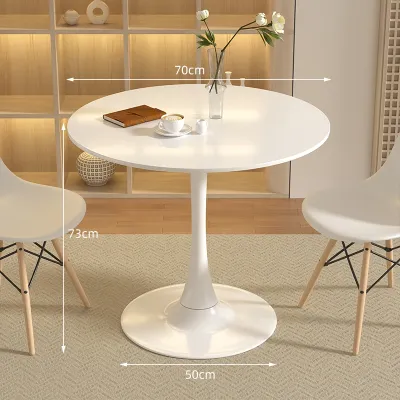
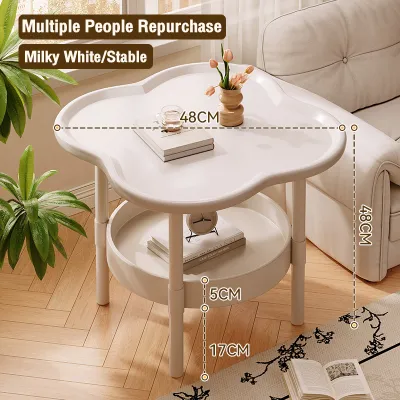
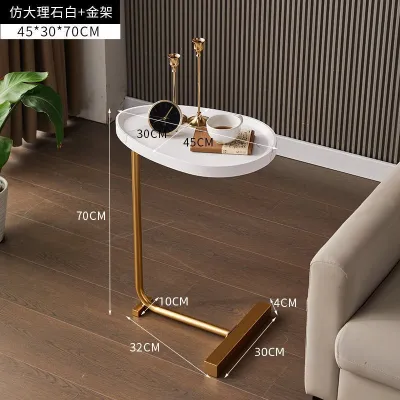
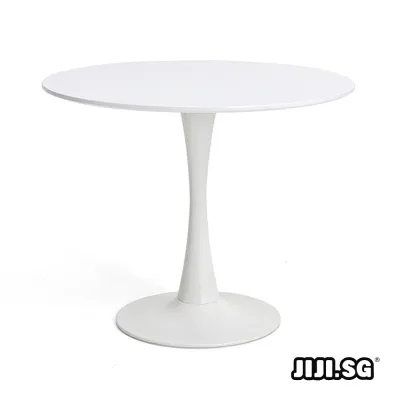
Prices are valid at publication and may change. Please refer to the product page for the latest price.
Compact and Two-Seater Sofas
For smaller living spaces, such as cozy apartments, study rooms, or secondary seating areas, a compact two-seater sofa or loveseat is a common choice. These sofas typically range from 50 to 65 inches (127 to 165 cm) in length. To complement this scale without overwhelming the room, look for a round coffee table with a diameter of 24 to 30 inches (60 to 76 cm).
A table within this size range offers sufficient surface space for daily essentials—like a remote control, a couple of mugs, and a small decorative tray—without making the seating zone feel congested. It also preserves precious floor space, allowing the room to feel open and airy. When selecting a table for a compact setup, always verify the manufacturer’s specified dimensions and check if the piece can easily pass through your home’s entryways and lifts during delivery.
Standard Three-Seater Sofas
The classic three-seater sofa, measuring between 75 and 90 inches (190 to 228 cm) in length, is the centerpiece of many family living rooms. To achieve proper proportions with a sofa of this size, a round coffee table with a diameter of 30 to 40 inches (76 to 102 cm) is highly recommended.
Selecting a table in this range ensures that everyone seated on the sofa can use it comfortably. If the table is too small, individuals sitting on the outer left or right cushions will find themselves stretching awkwardly or standing up just to set down a glass. A 36-inch (91 cm) table is often considered the sweet spot for standard three-seaters, providing an elegant focal point while maintaining a proportionate relationship with the sofa’s visual weight.
Sectional and L-Shaped Sofas
Sectional and L-shaped sofas present a unique layout challenge because they create a distinct “pocket” of empty space. A round coffee table is an exceptional choice for this configuration because its curved edges soften the sharp 90-degree angle of the seating and make it easier to slide in and out of the corner seat.
When sizing a table for a sectional, measure the interior dimensions of the open pocket. The table’s diameter should be large enough to anchor the space but must not extend past the front edge of the chaise lounge or the secondary seating section. Generally, a diameter of 36 to 48 inches (91 to 122 cm) works beautifully, depending on the scale of the sectional. Ensure that you maintain the standard 14-to-18-inch (35 to 45 cm) clearance from all adjacent seat cushions so that the table remains functional without blocking the natural pathways into the corner of the couch.
Adapting to Your Living Room Layout and Traffic Flow
While matching your table to your sofa is critical, you must also evaluate the surrounding layout. In many modern homes, particularly HDB flats and condominiums in Singapore, living room configurations must accommodate multiple functions within a compact footprint. This requires precise physical measurements before purchasing any furniture.

To map out your space, start by measuring the distance from the front of your sofa to the opposite wall or TV console. Subtract the depth of any accent chairs, sideboards, or media units that project into the room. This calculation reveals your actual available floor space.
Next, apply the walkway rule: maintain at least 24 to 30 inches (60 to 76 cm) of clear passage around the outer perimeter of the coffee table. This is especially vital for major traffic routes through the living room. If the path between your coffee table and the TV console is a primary walkway to the kitchen or balcony, squeezing this clearance down will lead to daily frustration and bumped shins.
For highly compact layouts where space is at a premium, traditional single-unit coffee tables might feel too restrictive. In these scenarios, nesting round tables are an excellent alternative. These sets feature two or three tables of varying heights and diameters designed to slide partially or completely underneath one another. When you have guests, you can slide them out to expand your surface area; on quiet days, they can be stacked together to free up floor space. Alternatively, look for lightweight designs with slender metal frames or open bases that can be effortlessly moved to the side when you need extra room for home workouts or entertaining.
Before placing an order, always confirm that the fully assembled table can fit through your building’s lift doors, your home’s main entrance, and any narrow hallways. Many high-quality round tables are delivered fully assembled to ensure structural integrity and seamless joints, making delivery access a crucial step in your planning process.
Getting the Height and Visual Proportions Right
The functionality of a round coffee table is deeply tied to its height. As a general standard, the top of your coffee table should sit level with or up to 2 inches (5 cm) lower than the top of your sofa’s seat cushions. Most standard sofa cushions sit between 17 and 18 inches (43 to 46 cm) off the floor, meaning a coffee table height of 15 to 18 inches (38 to 46 cm) is typically ideal. A table that is too tall will disrupt the visual sightlines of the room and feel awkward when you reach down, while a table that is too low can be uncomfortable to use and may look disproportionately small.
Beyond physical measurements, visual weight plays a significant role in how spacious your living room feels. The base design and materials of a round table heavily influence its visual impact:
- Solid Drum and Plinth Bases: Tables with solid, block-like bases have high visual weight. They act as strong anchor points and work best in larger, open-concept spaces. In a small room, a solid drum table can make the layout feel crowded.
- Open Pedestal and Multi-Leg Designs: Tables featuring slender legs, tripod bases, or open geometric frames allow light to pass through. This creates an illusion of spaciousness, making them perfect for compact apartments.
- Material Choices: A solid timber or concrete table feels heavy and grounded, whereas a table with a tempered glass or light-colored stone top paired with a slender metal frame feels visually light and airy.
If your living room is compact, prioritizing visual lightness will help maintain an open, uncluttered aesthetic without sacrificing the convenience of a central tabletop.
Common Sizing and Placement Mistakes to Avoid
Avoiding common design missteps can save you from the hassle of returning heavy furniture or living with an uncomfortable layout.
- Choosing an Under-Sized Table: A common mistake in larger living rooms is choosing a table that is too small out of fear of crowding the space. A tiny round table placed in front of a grand three-seater sofa looks lost, lacks visual presence, and forces guests to stretch uncomfortably to reach it.
- Ignoring the Traffic Clearance: Selecting a table that leaves less than 14 inches (35 cm) of space from the sofa or blocks major walkways makes the room feel cramped and creates a constant tripping hazard.
- Mismatched Rug Proportions: Your coffee table and rug must work in harmony. A round coffee table should sit fully on your area rug, with a generous border of the rug extending beyond the table's edge. If the rug is too small, the table will look disconnected from the rest of the seating arrangement.
Frequently Asked Questions (FAQ)
Can I use a round coffee table in a long, rectangular living room?
Yes, a round coffee table is highly effective in long, rectangular living rooms. It helps break up the harsh, linear lines of the space and prevents the room from feeling like a narrow corridor. By softening the layout, a round table encourages a more circular, conversational seating arrangement. To make this work, ensure the table’s diameter is scaled appropriately to your main sofa, and consider pairing it with accent chairs placed at angles to fill any excess empty floor space naturally.
What size rug do I need to fit under a round coffee table?
To maintain visual balance, your area rug should extend at least 12 to 18 inches (30 to 46 cm) beyond the outer edge of your round coffee table on all sides. Ideally, the rug should be large enough that the front legs of your sofa and any surrounding accent chairs can rest comfortably on top of it. This unifies the seating area, anchors the coffee table as a central focal point, and prevents the rug from looking like a small, isolated island in the middle of the room.
Community discussion
Share your experience or ask a question. Comments are reviewed before publication.