
Choosing the right plastic shoe rack for your HDB entryway or bedroom comes down to matching the physical footprint of your space with the exact dimensions of your footwear collection. In Singapore’s compact apartments, every centimeter counts. An ill-fitting rack can quickly block a doorway, obstruct a walking path, or fail to hold your daily shoes. By systematically measuring your available floor area, calculating your household’s storage capacity, and checking the structural limits of the plastic material, you can find an organizer that keeps your home tidy without creating a physical bottleneck.
Measure Your Available Space Accurately
Before browsing online marketplaces or local home goods stores, you must establish the absolute physical boundaries of your designated storage area. Start by measuring the maximum width, depth, and height of the spot where the rack will sit. Do not rely on general floor plans; instead, use a physical measuring tape to capture the actual space, taking care to subtract the thickness of baseboards, protruding door frames, light switches, and wall-mounted electrical boxes. These small architectural features can easily prevent a rigid plastic frame from sitting flush against the wall.
Next, evaluate the traffic flow and functional clearance of the room. In a typical HDB foyer, the main entrance door swings inward, requiring a clear radius that must remain completely unobstructed. Open your front door fully and mark the arc of its path on the floor with masking tape to ensure your proposed shoe rack sits well outside this zone. If you are placing the rack in a bedroom, perform the same check with wardrobe doors, bedroom doors, and drawer paths to maintain a comfortable walking corridor of at least 60 to 90 centimeters.
Products mentioned in this guide
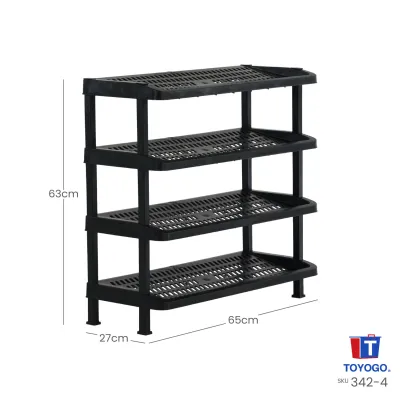
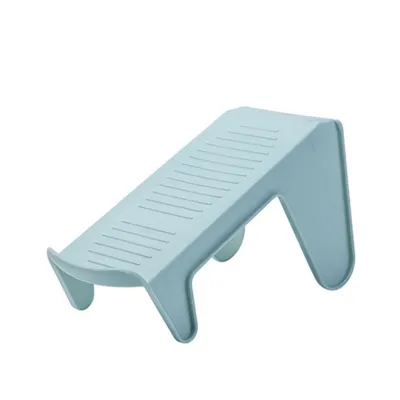
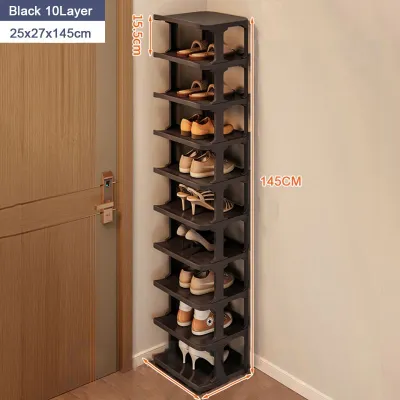
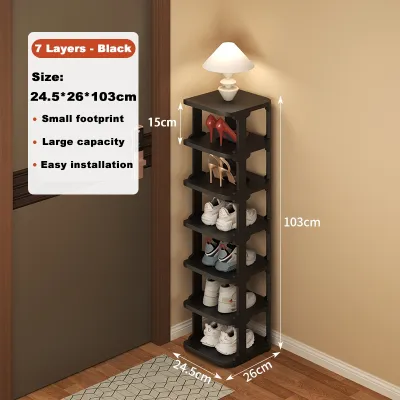
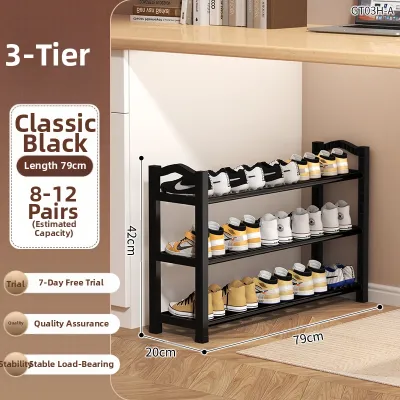
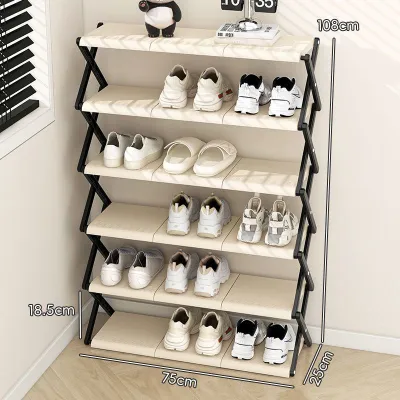
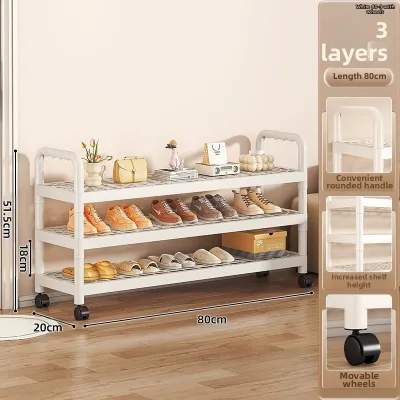
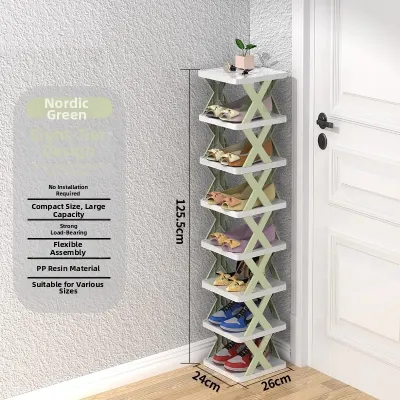
Prices are valid at publication and may change. Please refer to the product page for the latest price.
Finally, assess the physical condition of the walls and corners. Older HDB flats may not have perfectly square corners or completely flat surfaces. Measure the width at both the floor level and the top height of your intended rack to identify any tapering. If the wall bows or the corner is slightly off-angle, select a slightly narrower rack to prevent it from jamming during assembly or sitting at an unstable angle.
Determine Your Shoe Storage Capacity Needs
A shoe rack is only useful if it accommodates your actual footwear collection without overloading the structure. Gather every pair of shoes currently used by your household and sort them by type, such as flats, sandals, running shoes, heels, and boots. Count the total number of pairs and add a 10% to 20% buffer for future purchases or guests. This total count dictates the number of tiers or compartments you need.

Different types of footwear require vastly different vertical clearances, which directly impacts the overall height of the rack. Standard flat shoes and sandals typically need only 10 to 15 centimeters of vertical space, whereas high-top sneakers, heels, and ankle boots require 15 to 25 centimeters. If you have taller boots, you may need a dedicated section with 30 centimeters or more of clearance. Grouping your shoes by height allows you to calculate how many standard tiers and how many tall tiers your rack must provide.
You must also consider the physical weight of your footwear to prevent structural damage. While plastic is highly resistant to moisture, individual tiers can bow under heavy loads like work boots or thick-soled athletic shoes. Plan to distribute your heaviest pairs across the bottom tiers. Placing heavier shoes at the base lowers the overall center of gravity, which improves the stability of the entire unit and prevents the plastic shelves from warping.
Select the Right Plastic Shoe Rack Dimensions
Translating your measurements and capacity needs into a physical product requires choosing between distinct structural configurations. For narrow HDB corridors, a tall, narrow vertical tower is often the most efficient choice. These units utilize vertical wall space, allowing you to store multiple pairs while occupying a minimal floor footprint. Conversely, for a bedroom corner or under a low window, a wide, low-profile unit with two or three tiers provides a stable, easily accessible storage solution.
The depth of the shoe rack is a critical dimension that directly affects both shoe placement and walkway safety. Standard shoe racks typically range from 25 to 35 centimeters in depth. If members of your household wear larger shoe sizes, ensure the internal shelf depth accommodates the full length of the sole. If the rack is too shallow, shoes will overhang the front edge, reducing the usable walkway space and creating a tripping hazard in a narrow foyer.
To maximize long-term flexibility, look for modular plastic designs or units with adjustable tiers. Stackable plastic organizers allow you to start with a low-profile setup and add additional tiers vertically as your collection grows. Some modular systems feature removable plastic panels, enabling you to customize the height of individual compartments to fit taller boots or high heels. This adaptability ensures that your storage system can evolve alongside your household’s changing footwear needs without requiring a completely new purchase.
Evaluate Material Quality and Structural Stability
Because you cannot always test a plastic shoe rack in person before buying, you must know how to evaluate its structural integrity through product descriptions and visual cues. Look for racks made from thick, high-density plastics such as polypropylene (PP) or acrylonitrile butadiene styrene (ABS). Examine product images for reinforcement ribs—molded plastic ridges on the underside of the shelves—which increase load capacity and prevent the tiers from bowing under the weight of heavy shoes.
The connection points between modular panels or tiers are the most common failure points on plastic racks. Inspect the design of the interlocking joints, connectors, or snap-fit mechanisms to ensure they provide a deep, secure engagement. Loose or shallow joints can cause the rack to wobble or lean under a full load. Additionally, check the base of the unit; a quality rack should feature wide, flat feet or anti-slip rubber pads to prevent the slick plastic from sliding on smooth floor tiles.
Singapore’s warm, humid climate requires materials that can withstand moisture without degrading, warping, or harboring mold. High-quality plastic is naturally waterproof and easy to maintain, making it an excellent choice for entryways where wet umbrellas or damp shoes are common. Ensure the plastic surface is smooth and non-porous, allowing you to easily wipe away dirt, mud, and water with a damp cloth. Avoid designs with deep, intricate crevices that can trap dust and moisture, as these areas are difficult to clean and can become breeding grounds for bacteria.
Common Sizing Mistakes to Avoid
One of the most frequent errors when selecting a plastic shoe rack is failing to account for the clearance required by nearby cabinet doors or room entryways. Even if a rack physically fits into a corner, it may block the swing of a built-in shoe cabinet, a bedroom wardrobe, or a bathroom door. Measure the clearance of all adjacent doors in both their fully open and fully closed positions to ensure the rack does not interfere with daily movements.
Another common mistake is underestimating the vertical clearance needed for thick-soled modern footwear. Chunky platform sneakers, running shoes with thick foam midsoles, and high-top boots require several centimeters of extra height compared to traditional flat shoes. If you purchase a rack with uniform, low-clearance shelves, you may find yourself unable to fit your most frequently worn shoes, forcing you to store them on top of the rack or on the floor, defeating the purpose of the organizer.
Finally, avoid buying a shoe rack that is too deep for your entryway corridor. In many HDB layouts, the space immediately inside the front door is a high-traffic zone. A rack that protrudes even a few centimeters too far can narrow the walkway, making it difficult to carry groceries, move furniture, or navigate safely. Stick to slim-profile designs that keep your footwear neatly aligned with the wall, preserving a clear, safe path for everyone in the home.
Frequently Asked Questions (FAQ)
Can I stack multiple plastic shoe racks to increase height?
Yes, you can stack modular plastic shoe racks, but only if the manufacturer has explicitly designed them with secure, interlocking connectors. Never attempt to stack non-modular racks or units from different brands, as they will lack the necessary alignment pins and can easily slide off and tip over. When stacking units, always place the heaviest shoes on the bottom tiers to maintain a low center of gravity. If your stacked rack exceeds one meter in height, it is highly recommended to secure the top unit to the wall using adhesive anchors or safety straps to prevent accidental tipping.
How do I check if a shoe rack is deep enough for large sneakers?
To verify if a shoe rack will accommodate large sneakers, measure the physical length of your longest shoe from the tip of the toe to the outermost edge of the heel using a ruler or measuring tape. Compare this measurement directly against the product’s listed internal shelf depth rather than its overall external dimensions, as the frame and back panels can reduce the usable space by several centimeters. If your shoes are longer than the internal depth, look for a deeper model, or consider an open-front, angled-shelf design that allows the heels to overhang slightly without blocking the walkway.
Community discussion
Share your experience or ask a question. Comments are reviewed before publication.