
Choosing the right TV cabinet size requires balancing your television’s physical dimensions with the spatial limits of your living room. A well-proportioned media unit secures your entertainment setup and preserves the visual flow of your home. In space-conscious environments, such as typical apartments in Singapore, selecting the correct dimensions prevents the room from feeling cramped while ensuring optimal viewing ergonomics. By taking systematic measurements and understanding how furniture proportions interact with your room’s layout, you can select a media console that offers both structural stability and a clean, modern aesthetic.
Measure Your Available Wall and Floor Space
Before browsing specific furniture collections, you must establish the exact physical boundaries of your designated entertainment area. Begin by measuring the total width of the wall where the cabinet will stand. Use a high-quality metal measuring tape and measure along the floor line, as baseboards or skirting boards can reduce the actual usable width by several centimeters. Do not forget to locate all wall outlets, cable connections, light switches, and internet ports. Your chosen cabinet must not block access to these essential utilities unless it features specific rear cutouts designed to accommodate them.
Next, evaluate the floor depth. A TV cabinet should never protrude into primary walkways, door swings, or paths leading to balconies. Measure the distance from the wall to the edge of your main traffic lane, leaving at least 60 to 90 centimeters of clear walking space in front of the furniture. If your living room features sliding doors or built-in cabinetry nearby, ensure the cabinet’s depth allows these elements to operate without interference.
Products mentioned in this guide
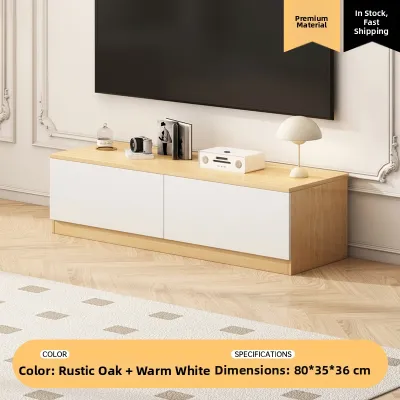
Prices are valid at publication and may change. Please refer to the product page for the latest price.
If you are considering a floating or wall-mounted unit, structural verification is critical. Wall-mounted furniture places significant stress on your walls. You must determine whether your wall is made of solid concrete, brick, or drywall with studs. Drywall installations require anchoring directly into the wooden or metal studs to support the weight of both the cabinet and the television. If you are unsure about your wall’s load-bearing capacity, consult a professional installer before making a purchase.
Match Cabinet Width to Your Television Dimensions
A common mistake is matching a TV cabinet’s width directly to the advertised screen size of the television. Screen sizes are measured diagonally, meaning a 65-inch television is actually much narrower than 65 inches in physical width. Always measure the actual outer width of your television frame from left to right, as well as the depth and width of its stand or base footprint.

For optimal safety and visual balance, your TV cabinet should be wider than the television itself. A good rule of thumb is to choose a cabinet that extends at least 10 to 15 centimeters beyond the outer edges of the TV on both sides. This extra space prevents the television from looking cramped or top-heavy. It also provides a physical buffer zone, reducing the risk of the TV being accidentally bumped or knocked over by pets, children, or passing guests.
Before finalizing your choice, check the manufacturer’s product specifications for weight limits and recommended maximum TV sizes. Even if a television physically fits on top of a cabinet, the unit must be rated to support the weight of the screen and any accompanying media devices. Placing an excessively heavy television on a cabinet not designed for that load can cause the top panel to sag, warp, or fail over time, potentially damaging your electronics and creating a safety hazard.
Evaluate Depth, Height, and Viewing Ergonomics
Achieving a comfortable viewing experience depends heavily on the height of your TV cabinet. To prevent neck and eye strain, the center of your television screen should ideally align with your eye level when you are seated on your sofa. For most standard living room setups, this means the center of the screen should sit approximately 100 to 110 centimeters above the floor.
To calculate your ideal cabinet height, sit on your sofa and measure the distance from the floor to your eyes. Next, measure the distance from the bottom of your television stand to the center of the screen. Subtract this second measurement from your seated eye height to find the target height for your TV cabinet. If you have a very large television, a low-profile cabinet is usually necessary to keep the screen from sitting too high. Conversely, smaller televisions benefit from taller cabinets to bring the display up to a comfortable viewing level.
Cabinet depth is equally important for housing your media equipment. Measure the depth of your television stand, soundbar, gaming consoles, and media players. Ensure the cabinet’s top surface and internal shelves can accommodate these devices without any overhang. If you plan to place a soundbar in front of the television, verify that the cabinet has enough depth to hold both items comfortably without blocking the bottom of the TV screen or the remote control sensor.
Check Clearance, Ventilation, and Cable Management
Electronic devices generate heat during operation, and confined spaces can cause them to overheat, leading to performance issues or premature hardware failure. When planning your cabinet layout, ensure there is adequate clearance around your gaming consoles, cable boxes, and receivers. Check the device manuals for specific ventilation requirements, but generally, leaving at least 5 to 10 centimeters of open space on all sides of each device is recommended.
Look for built-in cable management features when selecting your cabinet. High-quality media units often include pre-drilled rear cutouts, wire channels, or concealed compartments that allow you to route power cords and HDMI cables neatly behind the scenes. These features keep your entertainment center looking tidy and prevent dust from accumulating around tangled wires.
When routing cables, avoid bending them at sharp angles or pinching them between the cabinet and the wall. Ensure that power strips and surge protectors are easily accessible but safely tucked away from foot traffic. If the cabinet does not have built-in ventilation grilles or open backs, consider choosing a model with slatted doors or open shelving to promote natural airflow around your active electronic components.
Plan for Delivery, Assembly, and Room Layout
Even the most perfectly sized TV cabinet is of no use if it cannot fit into your home. Before placing an order, measure the dimensions of all entry points, including front doors, hallways, stairwells, and elevator cabins. This is particularly important for high-rise apartments where tight corners and low elevator ceilings can restrict the transport of large, fully assembled furniture pieces or bulky packaging.
Review the assembly requirements for your chosen model. Some cabinets are delivered fully assembled, while others require flat-pack assembly. Determine if you have the necessary tools, such as a level, screwdriver, or drill, and assess whether you need a second person to help lift heavy panels. For wall-mounted units, check if the package includes the appropriate anchoring hardware for your specific wall type, or if you need to purchase specialized heavy-duty wall plugs separately. Additionally, verify if delivery and assembly services incur extra fees in S$ before finalizing your purchase.
Finally, assess how the cabinet integrates into your overall room layout. Ensure that when the cabinet doors or drawers are fully opened, they do not block natural light from windows, obstruct air conditioning vents, or impede the flow of movement through the room. A well-placed cabinet should complement the existing furniture arrangement, creating a balanced and functional living space.
Frequently Asked Questions (FAQ)
Can I place a TV larger than the recommended size on an iloom cabinet?
It is highly discouraged to place a television that exceeds the manufacturer’s recommended size or weight limits on your cabinet. Doing so can cause the cabinet’s top surface to bow or crack, compromising its structural integrity. Furthermore, a TV that overhangs the edges of the cabinet is highly vulnerable to accidental bumps, increasing the risk of tipping. Always prioritize safety by verifying the exact weight capacity and physical dimensions of the cabinet before installation.
How much space should I leave between the TV cabinet and the sofa?
The optimal distance between your TV cabinet and your sofa depends primarily on the size and resolution of your television. For a standard high-definition or 4K screen, a common guideline is to maintain a viewing distance of approximately 1.5 to 2.5 times the diagonal screen size. For example, a 55-inch television is best viewed from a distance of about 2 to 3.5 meters. Adjust this distance slightly to accommodate your personal comfort, room layout, and the placement of coffee tables or footstools.

Community discussion
Share your experience or ask a question. Comments are reviewed before publication.